If you’re researching Cadillac Lyriq common problems in 2026, you’ve probably seen two very different stories: glowing owner reviews and horror stories about buybacks and software meltdowns. The truth, as usual, sits in the middle, especially if you’re considering a used Lyriq built between 2023 and 2025.
Snapshot: Lyriq reliability so far
Why Cadillac Lyriq problems matter in 2026
The Lyriq is Cadillac’s first Ultium-based EV and a showcase for the brand’s future. That also means it’s a first-generation product with more teething issues than a mature gas SUV. In 2026, plenty of 2023–2025 Lyriqs are hitting the used market, some are rock-solid, while others have long repair histories and multiple recalls. Understanding which common problems to watch for can be the difference between landing a great luxury EV value and inheriting someone else’s science experiment.
Cadillac Lyriq reliability at a glance (early 2026)
Quick overview: Lyriq reliability from 2023–2025
Across 2023–2025 model years, a few patterns have emerged. Early 2023 builds saw the highest concentration of serious bugs: blacked-out screens, random warning messages, charging failures, and multiple visits to the dealer. Many of those issues have been gradually addressed with over-the-air (OTA) updates and hardware fixes, but they still show up in owner forums and consumer surveys.
By the 2024 and 2025 model years, the Lyriq’s basic driving experience and battery durability look strong. Where it still lags is in-car electronics, infotainment, charging logic, and some build-quality details. That’s why you see such polarized feedback: some owners have zero issues, while others are deep into lemon-law proceedings.
Model year vs. build date matters
Most common Cadillac Lyriq problems in 2026
Let’s walk through the most common Cadillac Lyriq problems owners are still reporting in 2026, especially on 2023–2025 vehicles you’re likely to see on the used market. We’ll group them by system so you can connect what you read online to what you feel on a test drive.
1. Software and infotainment glitches
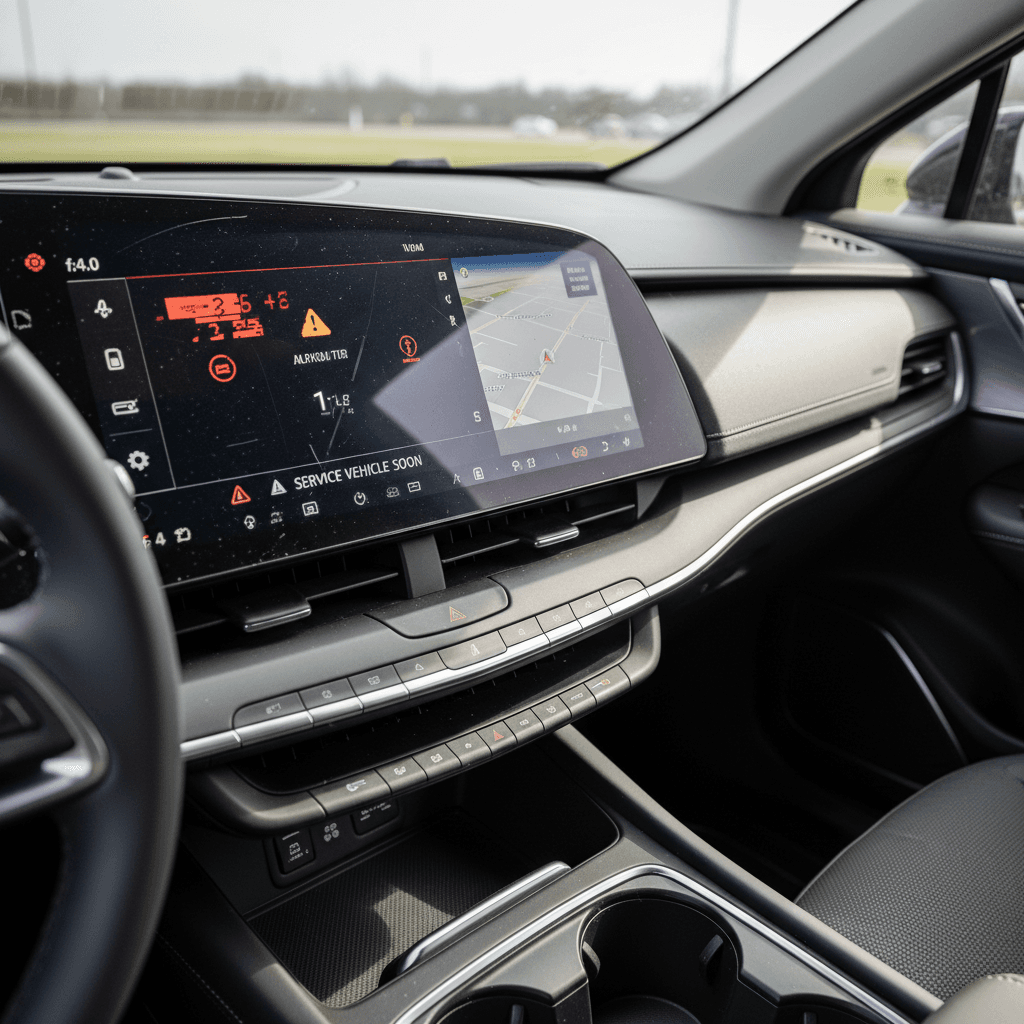
If there’s a single theme across Lyriq owner complaints, it’s software. This shows up in several ways:
- Center screen or digital gauge cluster going black, lagging, or randomly rebooting
- Unresponsive touch controls, frozen backup camera view, or glitchy climate controls
- Random error or warning messages that can’t be replicated easily at the dealer
- Issues with Google Built-In features, navigation freezes, or poor voice-recognition behavior
- Intermittent problems with phone connectivity, Bluetooth audio, or CarPlay/Android Auto on certain trims and software versions
Why this matters
The good news is that many of these issues can be improved with OTA updates and, in some cases, replacement of specific modules under warranty. The bad news is that not every dealer has deep EV software experience yet, and some owners report long back-and-forth cycles before a real fix is applied.
2. Charging and DC fast-charging issues
Charging complaints are common enough that you should pay close attention to them when shopping a Lyriq. They generally fall into four buckets:
Typical Lyriq charging complaints
Most are fixable, but a few are red flags on a used EV
Home Level 2 charging stops early
Some owners report the Lyriq stopping a home charging session prematurely after 20–60 minutes, even when the wall unit and outlet are fine. Sometimes this can be resolved with updated software or replacing the onboard charger or charge port components.
DC fast-charging curve quirks
Lyriq drivers often notice an odd DC fast-charging curve, with rate drops around 40–50% state of charge and inconsistent speeds depending on the station. That’s more of a usability quirk than a defect, but it can surprise road-trippers used to other EVs.
Charge port or cable errors
Occasional complaints mention “charging stopped” or “charger fault” messages across multiple stations and cables. That pattern suggests an issue with the vehicle, not the station, and deserves a careful diagnostic.
Scheduled charging misbehavior
Because many Lyriq owners rely on time-of-use electricity rates, glitches in scheduled charging (car starts or stops at the wrong time) show up frequently in owner discussions.
On a test drive, test the charger too
3. Build quality, noises, and hardware quirks
The Lyriq’s cabin looks and feels upscale at first glance, but early-build vehicles, especially some 2023s, have drawn criticism for squeaks, rattles, and inconsistent panel fit. Common nitpicks include:
- Creaks from the dash or center console over bumps
- Rattles near the panoramic roof or hatch area
- Wind noise around doors or mirrors at highway speed
- Power liftgate that fails to open/close or mis-latches
- Misaligned exterior trim or minor paint defects on early production runs
The upside: Most of this is fixable
4. Driver-assist and brake-related concerns
Because the Lyriq leans heavily on advanced driver-assist tech, issues in this area are understandably unnerving for owners. Concerns have centered around:
- ABS or stability-control behavior that feels inconsistent on slippery surfaces
- Recall campaigns on certain AWD models for potential low-speed brake behavior problems
- Lane-keeping and adaptive cruise systems that disengage unexpectedly or warn of blocked sensors
- Overly sensitive or inconsistent parking sensors and collision alerts
Safety-related issues are non‑negotiable
5. Battery degradation and high-voltage component issues
The good news: as of early 2026, real-world data suggests that most Lyriq packs are holding up well. Many owners report over 95% of original capacity through the first 20,000–30,000 miles, which is in line with other modern EVs. Cadillac backs the high-voltage battery with an 8‑year/100,000‑mile warranty in the U.S., which is important for second owners.
That said, there are scattered reports of Lyriqs with abnormal range loss, faults in battery cooling components, or repeated electrical-system warnings that ultimately trace back to high-voltage hardware. Those cases are still the minority, but they’re the ones that can lead to long service stays or, in rare cases, buybacks.
Battery health vs. software estimates
Cadillac Lyriq recalls through early 2026
Because this is a first-generation EV, you should expect to see recall history on almost any 2023–2025 Cadillac Lyriq. Recalls themselves aren’t a reason to walk away; the question is whether they’ve been completed and the car behaves normally afterward.
Major Lyriq-related recall themes (2023–2025 builds)
Representative recall categories you’re likely to encounter when shopping Lyriqs in 2026. Exact coverage varies by model year, trim, and VIN.
| Area affected | Typical concern | What shoppers should do |
|---|---|---|
| Digital displays & cluster | Instrument cluster or infotainment display may go blank or fail, potentially affecting visibility of critical information. | Confirm recall completion, then verify all screens function normally during a long test drive. |
| Brake & ABS behavior | Certain AWD Lyriqs recalled for specific low-speed or ABS-related braking behavior under rare conditions. | Check that recall work is done and perform repeated low-speed stops in a safe area to confirm normal feel. |
| Suspension / stabilizer bar fasteners | Loose stabilizer bar bracket bolts on some 2023–2025 Lyriqs could detach and damage nearby components. | Ask for service records showing the inspection or repair; listen for clunks over bumps. |
| Seat / head restraint compliance | Some 2025 Lyriqs flagged for noncompliance with head restraint regulations, prompting corrective action. | More of a paperwork and parts-update item, but make sure it’s closed out for safety and resale value. |
| Various software updates | Campaigns to address charging logic, driver-assist tuning, and warning-message behavior. | Confirm the car is on the latest software and that the owner hasn’t ignored update prompts. |
Always run the specific VIN through NHTSA and Cadillac to confirm open or completed recalls.
How to check a Lyriq’s recall status in minutes
How serious are these Lyriq problems for everyday owners?
What most owners experience
For a large share of Lyriq drivers, especially those with later‑build 2024 and 2025 models, life with the car looks like this:
- Occasional infotainment hiccup that’s fixed by a restart or update.
- A rattle or trim issue that shows up once and is handled under warranty.
- Charging behavior that’s quirky but predictable once you learn it.
Annoying? Sometimes. Catastrophic? Usually not.
Where the horror stories come from
The “never again” posts you see online typically involve one or more of the following:
- Multiple total screen blackouts or system failures.
- Repeated charging faults across different stations and chargers.
- Long dealership stays with parts on backorder and unclear timelines.
- Stacked issues, software, hardware, and build quality, all on the same car.
Those cases exist, but they’re not the norm. The trick in 2026 is to avoid buying that particular Lyriq.
Checklist: Shopping a used Cadillac Lyriq in 2026
If you’re considering a 2023–2025 Lyriq, you want to separate solid examples from problem children. Use this checklist as you evaluate any car, whether you’re buying from a private seller, a franchise dealership, or an EV specialist like Recharged.
Used Cadillac Lyriq problem-checking checklist
1. Review recall and service history
Ask for a full service printout and verify recall completion via NHTSA. Multiple visits for the same concern, especially electrical or charging issues, are a red flag.
2. Take an extended, mixed-condition test drive
Don’t settle for a quick lap. Drive on rough pavement, at highway speeds, and in stop‑and‑go traffic. Listen for rattles, wind noise, and pay attention to brake feel and steering assist.
3. Stress-test the software
During the drive, adjust climate controls, switch drive modes, use navigation, pair your phone, and park/restart the car. Watch for slow responses, error messages, or screen glitches.
4. Verify home and DC fast-charging behavior
If possible, plug into a Level 2 charger and, separately, a public DC fast charger. Confirm the car starts and maintains a session without unexplained faults or early stops.
5. Inspect for build-quality issues
Look carefully at door alignment, hatch operation, weatherstripping, and paint. Inside, check for loose trim, misaligned panels, or evidence of water leaks around the panoramic roof or hatch.
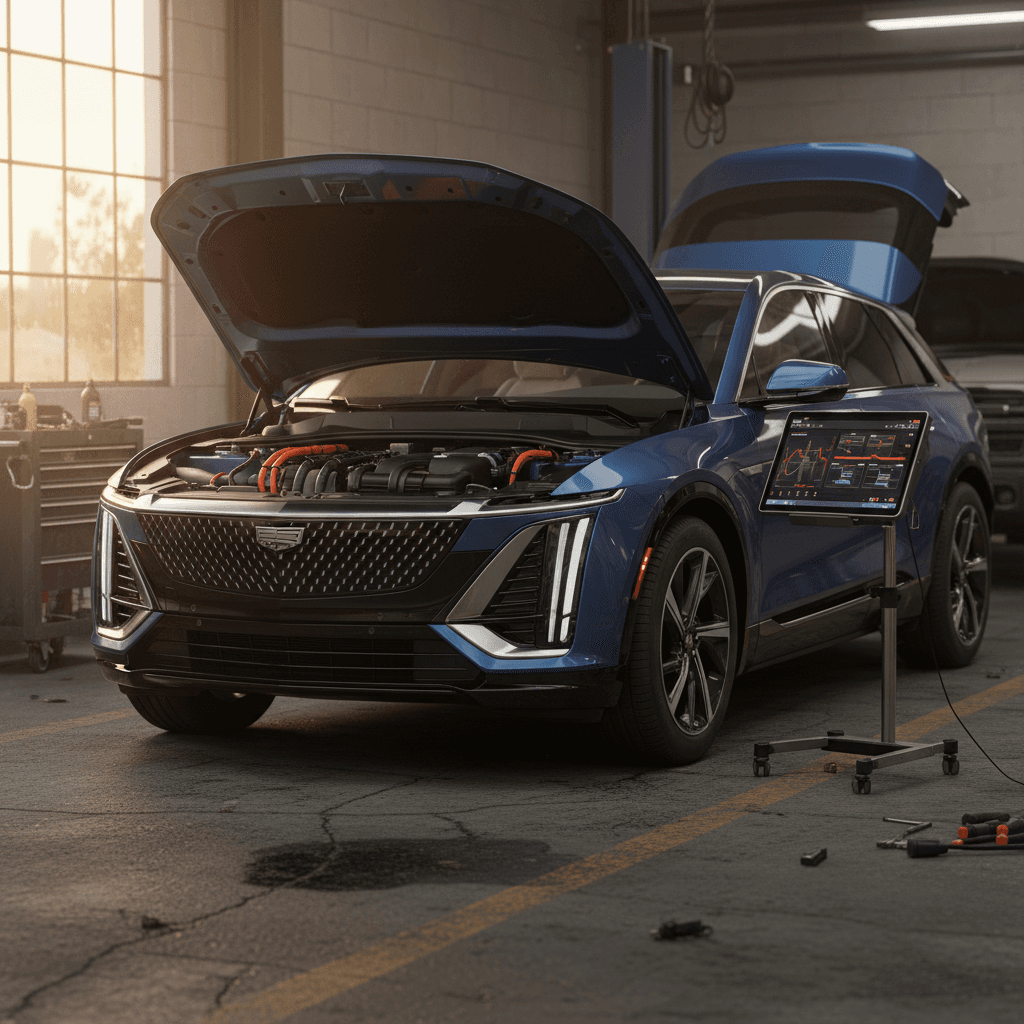
6. Get independent EV-specific diagnostics
Because the Lyriq is a complex EV, consider a <strong>third‑party inspection</strong> that includes high‑voltage system checks, battery health estimation, and scan‑tool diagnostics. Recharged includes this kind of insight in our <strong>Recharged Score</strong> on every Lyriq we list.
How Recharged helps de‑risk a used Lyriq
Ready to find your next EV?
Browse VehiclesWhen a Lyriq problem might be a dealbreaker
Not every quirk should scare you away, but some patterns should put you firmly in “thanks, I’ll pass” territory, especially when you have other used EV options at similar price points.
- Documented repeat failures of the infotainment system or digital cluster, with multiple module replacements and no lasting fix.
- Charging problems that show up at different stations and on different hardware, suggesting a vehicle-side defect.
- Evidence of water leaks, corrosion, or significant electrical repairs in the past (harness replacements, repeated 12‑volt battery failures, etc.).
- A thick stack of service records with vague descriptions like “could not replicate customer concern” attached to safety systems or high‑voltage components.
- Unresolved safety recalls or a seller who downplays recall or software update requirements.
Walk away when your gut says “project car”
Is the Cadillac Lyriq worth buying in 2026?
From a driving and design standpoint, the Lyriq is one of the most compelling luxury EV SUVs on the road: quiet, comfortable, with strong performance and a distinctive look. Its battery tech appears solid so far, and discounts on new and used examples can make it a smart financial play compared with some European rivals.
Where it stumbles is software polish and long-term reliability confidence. Independent surveys have rated it below average, and early build issues gave the model a rough first impression. In 2026, that means you should be choosier than usual: prioritize later-build 2024 or 2025 cars with clean histories, up-to-date software, and thorough inspection records.
If you approach the Cadillac Lyriq like any other first-generation luxury product, eyes open, paperwork in hand, and with a willingness to walk away from problem children, it can absolutely be worth owning. And if you’d rather let someone else do the sorting, shopping a vetted Lyriq through a specialist like Recharged can remove much of the guesswork from the process.