If you’re shopping for a Nissan Ariya, or already own one, the question that really matters isn’t just range. It’s **charging cost per mile**. How much does every mile in your Ariya actually cost compared with a gas SUV, and what changes when you fast charge on the road instead of charging at home?
Key takeaway up front
Overview: What does it cost per mile to drive a Nissan Ariya?
Let’s start with ballpark numbers so you have a mental anchor before we dig into the math. We’ll assume **average U.S. electricity prices in 2025–2026** and **real‑world Ariya efficiency**, not just perfect‑world EPA tests.
Nissan Ariya cost per mile at a glance (typical U.S. driver)
In plain English, if you primarily **charge your Ariya at home**, your “fuel” costs are usually **less than half** what you’d pay to feed a comparable gas crossover. If you live on DC fast charging, your cost per mile can creep much closer to a traditional SUV, still competitive, but not the screaming bargain many people expect.
Your numbers will vary
How efficient is the Nissan Ariya in kWh per mile?
Before you can talk cost per mile, you need **kWh per mile** (energy use), because that’s what you’re paying for on your utility bill or at the charger. The Ariya’s rated efficiency varies a bit by battery size, front‑wheel drive vs. e‑4ORCE all‑wheel drive, wheel size, and how you actually drive.
Typical Nissan Ariya efficiency ranges
Approximate real‑world energy use; your numbers will sit somewhere in these bands depending on temperature, speed, and terrain.
| Scenario | mi/kWh (miles per kWh) | kWh/mi (kWh per mile) | Comments |
|---|---|---|---|
| Efficient city / mixed driving | 3.5–4.0 | 0.25–0.29 | Mild weather, speeds under 60 mph, gentle acceleration. |
| Typical mixed commuting | 3.0–3.4 | 0.29–0.33 | What many Ariya owners see day to day. |
| Fast highway (75–80 mph) | 2.5–2.9 | 0.34–0.40 | Winter temps, headwinds, or heavy cargo can push you to the low end. |
| Cold winter, short trips | 2.0–2.4 | 0.42–0.50+ | Cabin and battery heating dominate on short hops. |
Use these as realistic efficiency anchors rather than chasing perfect EPA numbers.
To keep the math concrete but realistic, this article will mostly use **3.2–3.4 mi/kWh (about 0.30–0.31 kWh per mile)** as a “typical” mixed‑driving number, with call‑outs for more aggressive or harsher‑climate driving.
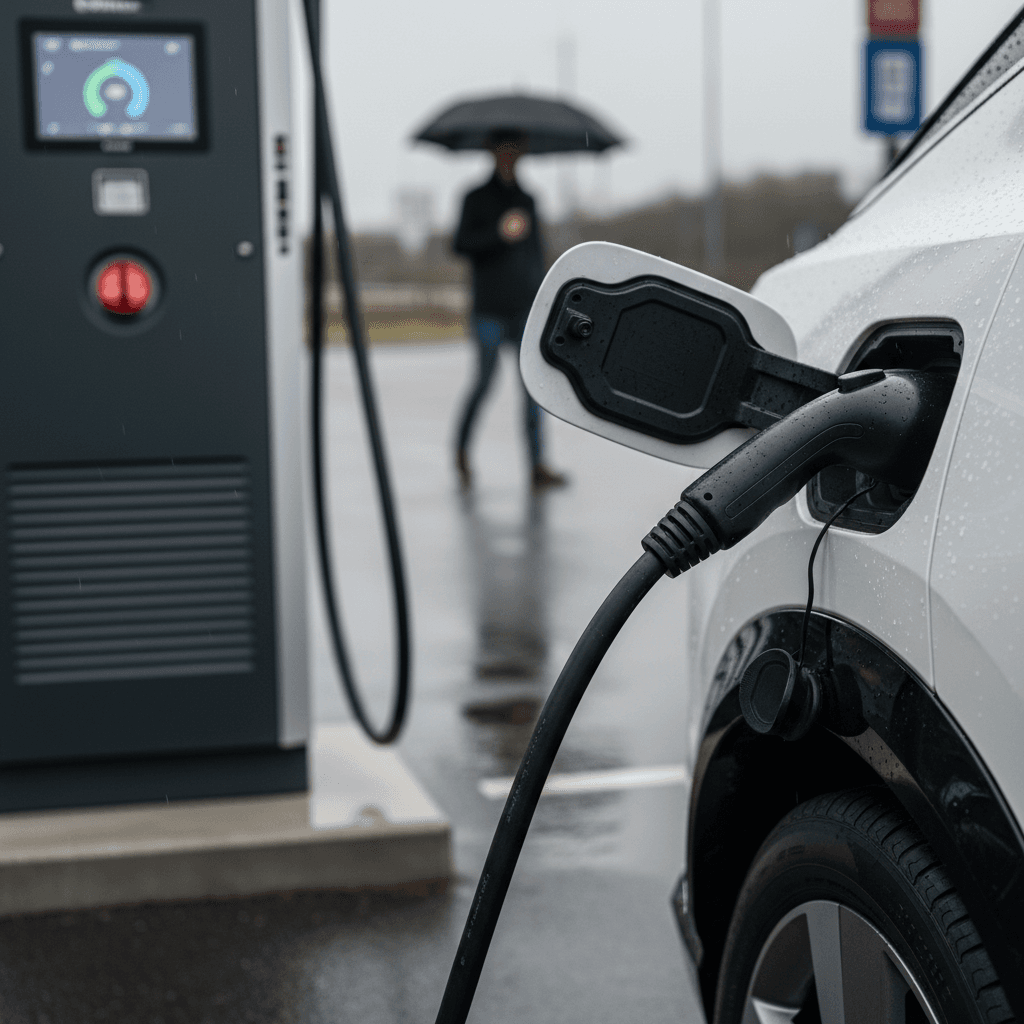
Home charging: Nissan Ariya cost per mile
Home is where the Ariya really shines. You’re typically paying your local residential electricity rate, and in much of the U.S. that works out to the **EV equivalent of paying $1.00–$2.00 per gallon of gas** when you translate it into cost per mile.
Step 1: Know your electricity rate
Grab your latest utility bill and look for the **$/kWh** or **cents per kWh** line. Nationally, many households now fall around $0.17–$0.19 per kWh, but states like California or Hawaii can be much higher, while parts of the Midwest or South can be lower.
If you’re on a **time‑of‑use plan**, note your off‑peak rate, that’s when you want your Ariya to charge.
Step 2: Turn efficiency into cost
Here’s the basic formula, whether you drive a front‑drive Engage or an e‑4ORCE Premiere:
Cost per mile = (Electricity price per kWh) × (kWh per mile)
If you’re seeing **3.3 mi/kWh**, that’s about 0.30 kWh/mi. Multiply that by your local rate and you’ve got a pretty solid estimate.
Quick mental shortcut
Nissan Ariya home charging cost per mile
Approximate cost per mile for an Ariya at different electricity prices, assuming 3.3 mi/kWh (0.30 kWh/mi).
| Home electricity price | Cost per kWh | Assumed efficiency | Cost per mile | Cost per 1,000 miles |
|---|---|---|---|---|
| Low‑cost power | $0.12/kWh | 3.3 mi/kWh | $0.036/mi | $36 |
| Average U.S. rate | $0.17/kWh | 3.3 mi/kWh | $0.051/mi | $51 |
| Higher‑cost state | $0.25/kWh | 3.3 mi/kWh | $0.075/mi | $75 |
| Very high‑cost (e.g., island grids) | $0.35/kWh | 3.3 mi/kWh | $0.106/mi | $106 |
Use your actual rate from your utility bill for the most accurate comparison.
How this compares to gas
Public DC fast charging: Cost per mile
Public fast charging is your **road‑trip lifeline** and, for some apartment dwellers, your weekly “gas station.” It’s also where EV cost per mile can surprise people. Convenience, speed, and infrastructure build‑out all show up in the price.
Most big DC networks now price energy somewhere around **$0.40–$0.60 per kWh**, with memberships and off‑peak discounts sometimes shaving that down. Using the same efficiency math as before, the Ariya’s cost per mile climbs quickly at those rates.
Nissan Ariya DC fast‑charging cost per mile
Approximate cost per mile using public DC fast chargers across common price points, still assuming 3.3 mi/kWh (0.30 kWh/mi).
| Fast‑charge price | Cost per kWh | Assumed efficiency | Cost per mile | Cost per 1,000 miles |
|---|---|---|---|---|
| Budget‑friendly DC rate | $0.30/kWh | 3.3 mi/kWh | $0.091/mi | $91 |
| Typical member price | $0.45/kWh | 3.3 mi/kWh | $0.136/mi | $136 |
| High‑cost urban/DC corridor | $0.60/kWh | 3.3 mi/kWh | $0.182/mi | $182 |
Remember: highway driving at 75–80 mph may lower efficiency and raise these numbers further.
Why highway trips cost more
Cost per mile by battery size and driving style
The Ariya comes with two main battery sizes, roughly **63 kWh** and **87 kWh** usable capacity, and multiple trims. Bigger batteries don’t directly change cost per mile (you still pay per kWh), but they do change how often you need to charge and how efficiently you can stay in the “sweet spot” of the pack on road trips.
How battery and driving style affect your real cost per mile
Same car, different habits; the cost story changes quickly.
63 kWh FWD commuter
Use case: 30–50 mile daily round‑trip, mostly city and suburban.
- Typical efficiency: ~3.4–3.8 mi/kWh
- Home rate: $0.17/kWh
- Cost per mile: ≈ $0.045–$0.05
Plenty of range, rarely needs DC fast charging.
87 kWh road‑trip family
Use case: 200–300 mile weekend drives, loaded with people and cargo.
- Typical efficiency: ~2.7–3.1 mi/kWh
- Mix of home (~$0.17) + DC (~$0.45) charging
- Blended cost per mile: ≈ $0.07–$0.11
Cost per mile climbs as you lean on public fast charging.
Cold‑climate short‑trip driver
Use case: 5–10 mile errands in winter, lots of pre‑conditioning.
- Typical efficiency: ~2.0–2.4 mi/kWh
- Home rate: $0.20/kWh
- Cost per mile: ≈ $0.083–$0.10
Heating and short trips dominate energy use, still often cheaper than gas, but not by as much.
Think in terms of blended cost
7 ways to lower your Ariya charging cost per mile
Practical ways to shrink your cost per mile
1. Use scheduled charging for off‑peak rates
If your utility offers time‑of‑use pricing, set the Ariya’s charging timer (or your wallbox schedule) to run during the cheapest overnight window. Dropping from $0.25/kWh to $0.15/kWh instantly cuts cost per mile by 40% without changing how you drive.
2. Bump your efficiency by 0.5 mi/kWh
Drive 5 mph slower on the highway, use Eco mode around town, and avoid jack‑rabbit launches. Nudging your Ariya from 3.0 to 3.5 mi/kWh is often enough to save 1–2 cents per mile all by itself.
3. Pre‑condition while plugged in
On cold or hot days, use the climate pre‑conditioning feature while the car is still connected to the charger. That lets your home outlet carry the heavy HVAC load instead of the battery, which keeps more energy for driving and improves effective miles per kWh.
4. Prefer Level 2 to frequent DC fast charging
Fast charging is great when you need it, but using it for 80% of your energy is like doing every fill‑up at the world’s priciest gas station. Whenever possible, lean on home or workplace Level 2 charging and save DC for road trips.
5. Keep tires properly inflated
Low tire pressure quietly eats efficiency. Check your Ariya’s tires monthly and keep them at the recommended PSI. The payoff is better range, lower cost per mile, and longer tire life.
6. Avoid carrying unnecessary weight
Roof racks, cargo boxes, and a trunk full of stuff add drag and mass. If you’re chasing every cent per mile, remove accessories and extra gear when you don’t need them, especially before highway trips.
7. Compare utilities and programs
Some regions let you choose among multiple electricity providers or EV‑specific plans with lower overnight rates. It’s worth a quick comparison, small changes in cents per kWh ripple through every mile you drive.
Charging equipment matters too
Used Ariya ownership: Battery health and cost per mile
If you’re considering a **used Nissan Ariya**, cost per mile isn’t just about electricity prices; it’s also about **battery health**. A healthy pack lets you use more of the original capacity, which means fewer charging stops and more flexibility to charge where it’s cheapest.
How degradation affects your wallet
Why battery health reports matter
Unlike a gas tank, an EV battery quietly changes over time. Two Ariyas of the same model year can have very different remaining capacity depending on how they were charged and driven. A detailed battery‑health check helps you understand:
- How much usable capacity is left vs. new
- Whether fast‑charging was heavily used
- How confident you can be in future range
How Recharged helps with used Ariya costs
Every EV sold through Recharged comes with a Recharged Score Report that includes verified battery health, fair‑market pricing, and expert guidance. That gives you a clear view of how a specific Ariya will behave on your commute or road trips, and what its true cost per mile is likely to look like over the long haul.
If you’re trading in or selling, we can also provide an instant offer or consignment and arrange nationwide delivery for buyers, all through a fully digital experience.
FAQ: Nissan Ariya charging cost per mile
Frequently asked questions about Nissan Ariya charging costs
Bottom line: Is the Nissan Ariya cheap to run?
Look past the alphabet soup of kWh, mi/kWh, and peak vs. off‑peak rates, and the Nissan Ariya is refreshingly simple to live with. If you can **charge at home** most nights, you’re usually looking at **fuel costs that hover around a nickel a mile**, with the added bonus of lower maintenance than a comparable gas SUV. Rely heavily on **public DC fast charging** and your cost per mile will rise, sometimes close to hybrid territory, but you gain flexibility and long‑distance convenience.
The real power of knowing your **Ariya charging cost per mile** is confidence. You can compare it honestly to the gas vehicle you’re replacing, budget realistically for road trips, and make smarter decisions about home charging, rate plans, and even which used Ariya to buy. And if you want help finding a car whose battery health and cost story are crystal‑clear, a used Ariya with a full Recharged Score Report is a straightforward place to start.