If you’re looking at a Cadillac Lyriq, you’re probably cross‑shopping it against practical EVs like the Tesla Model Y, Hyundai Ioniq 5, or Kia EV6. One of the most common questions we see is simple: how much cargo space does the Cadillac Lyriq have with the seats down, and what does that mean in real life?
Key cargo takeaway
Cadillac Lyriq cargo space with seats down: the short answer
Cadillac Lyriq cargo quick stats
With the rear seatbacks folded, the Cadillac Lyriq opens up to about 60.8 cubic feet of cargo volume. That’s competitive with other two‑row electric crossovers, though not as cavernous as a boxier three‑row SUV. You’re getting a long, flat load floor that easily swallows bikes, luggage, or flat‑packed furniture for most households.
Think of it as a luxury two‑row, not a Tahoe
Cadillac Lyriq cargo specs and dimensions
Cargo specs for the Lyriq are refreshingly simple because all current model years share essentially the same body shell and interior layout. Whether you’re looking at an early 2023 build or a newer 2025–2026 Lyriq, you can assume the following cargo numbers are in the ballpark.
Cadillac Lyriq cargo and interior volume
Key cargo measurements that matter when you’re planning what the Lyriq can carry.
| Measurement | Value | What it means for you |
|---|---|---|
| Cargo volume behind rear seats | 28.0 cu ft | Room for a full Costco run, stroller, or multiple suitcases with all seats up. |
| Max cargo volume with rear seats folded | 60.8 cu ft | Long, mostly flat space for bikes, camping gear, or moving day boxes. |
| Passenger volume (approx.) | ~105 cu ft | Generous space for five adults; the Lyriq prioritizes passengers over a massive cargo hold. |
| Rows of seats | 2 | No third row, more comfort and legroom for five instead of seven cramped seats. |
| Max towing capacity | 3,500 lbs | Allows a small trailer or hitch‑mounted cargo rack if you need overflow space. |
Figures are manufacturer‑quoted or widely accepted industry specs for current Lyriq models.
No front trunk ("frunk")
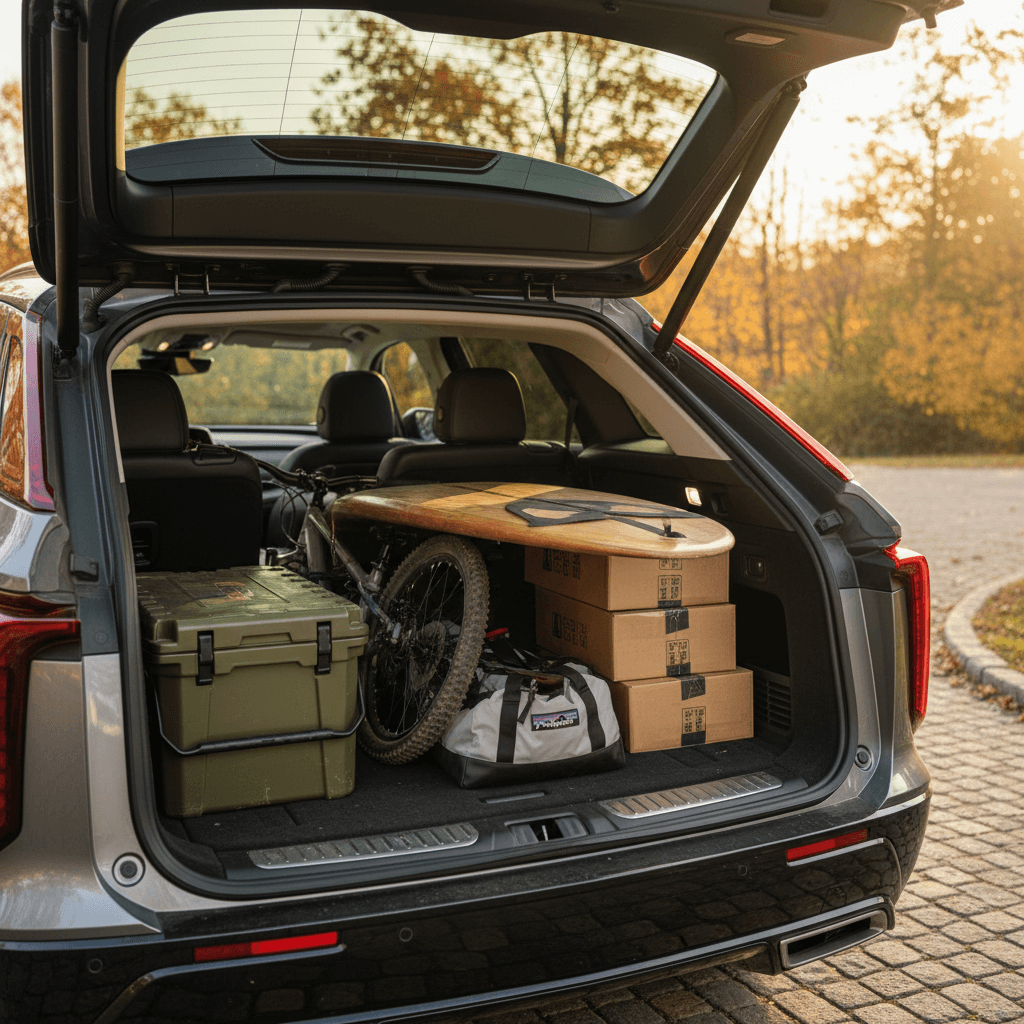
What actually fits in a Lyriq with the seats folded?
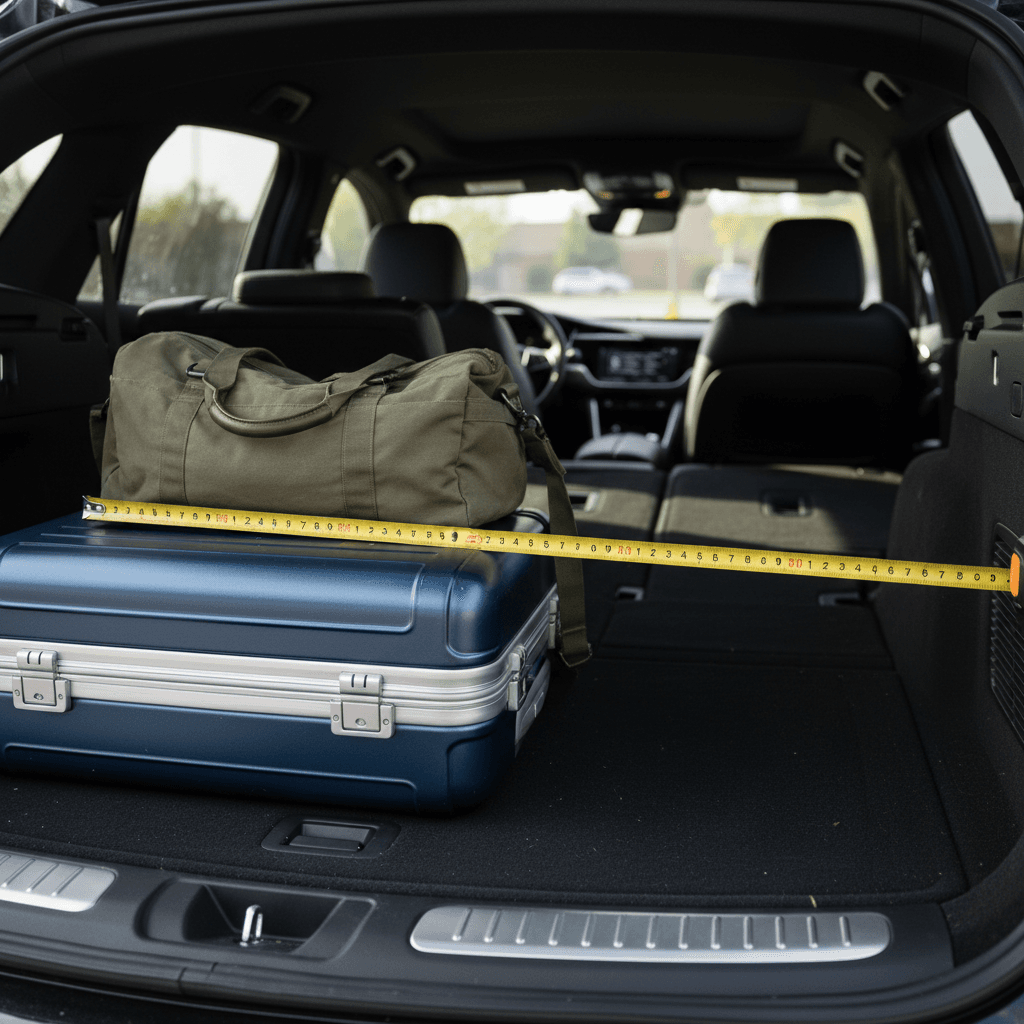
Numbers are helpful, but what you really care about is whether the Lyriq will swallow your actual stuff. With the rear seats folded flat, you’re working with a long, continuous cargo floor and a relatively low liftover height. Exact inch‑by‑inch dimensions vary slightly with trim and liner options, but real‑world owners and testers consistently report that the Lyriq handles typical midsize‑SUV tasks without drama.
- Road‑trip luggage for four: Four full‑size suitcases plus duffels and backpacks stack easily with the seats down, and you’ll typically still see over‑the‑shoulder visibility.
- Flat‑packed furniture: Think large Ikea boxes, small dressers, bookshelves, or TV stands. As long as you’re not trying to stuff in a full king‑size headboard, the Lyriq’s load floor length is generous enough for most pieces.
- Bikes: One or two adult bikes fit with the front wheels off in most setups; compact or kids’ bikes can often slot in more easily without as much disassembly.
- Home‑improvement runs: Multiple storage totes, bags of soil, or smaller dimensional lumber for weekend projects. For long 8‑foot boards, you’ll likely need to angle them or use a roof rack.
- Pet crates: Medium to large dog crates slide in easily with the seats down; some owners report big‑breed dogs riding comfortably in the rear on a protective cargo liner.
Why exact inches are hard to find
Lyriq cargo space vs other electric SUVs
Context matters. The Lyriq sits in a crowded field of EV crossovers, from the extremely space‑efficient Tesla Model Y to stylish but less practical options. With the seats down, the Lyriq is competitive but not class‑leading.
Cadillac Lyriq vs popular EV SUV cargo space
How the Lyriq’s cargo volume stacks up against common EV alternatives when you fold the rear seats.
| Model | Max cargo with rear seats folded | Behind rear seats (all seats up) | Cargo character |
|---|---|---|---|
| Cadillac Lyriq | ~60.8 cu ft | 28.0 cu ft | Prioritizes passenger comfort and design, still plenty of room for most families. |
| Tesla Model Y | ~71.4 cu ft | ~29.0 cu ft | The cargo king; boxier rear, extra under‑floor and front trunk storage. |
| Hyundai Ioniq 5 | ~58.5 cu ft | ~26.3 cu ft | Similar overall volume to Lyriq but packaged differently, with a shorter overall length. |
| Kia EV6 | ~50–55 cu ft (approx.) | ~24.0–27.0 cu ft (approx.) | Sportier profile sacrifices some max cargo volume compared with Lyriq. |
| VW ID.4 | ~64.2 cu ft | ~30.3 cu ft | Boxier shape yields strong numbers on paper, especially with seats down. |
Figures rounded; always verify final specs for the specific model year you’re considering.
Where the Lyriq fits in the pack
Lyriq cargo strengths
- Long, flat load floor when seats are down, great for bulky but not super‑tall items.
- Wide cabin makes it easier to fit wide objects like dog beds or large totes.
- Quieter, more refined cabin than many EV rivals, so carrying people and stuff is more relaxing.
Lyriq cargo trade‑offs
- No meaningful front trunk, so all big cargo lives in back.
- Sleek roofline can slightly limit vertical space for tall boxes near the hatch.
- Doesn’t match the absolute maximum volume of the most space‑efficient EVs like Model Y.
How to fold the seats and configure the cargo area
The Lyriq uses a split‑folding second row, so you can mix passengers and cargo as needed. The exact split can vary by market, but in most U.S. models you’ll see a typical 60/40 split‑fold rear bench. That lets you carry a long item and still keep one or two rear passengers buckled in.
Steps: maximizing Lyriq cargo space for a big haul
1. Clear the rear floor and under‑floor bin
Start by removing any loose items, grocery bags, or charging cables from the cargo floor and the small under‑floor storage compartment. You want the main floor completely flat before folding the seats.
2. Slide front seats as needed
If you’re loading long objects (like bikes or flat‑packs), slide the front seats slightly forward and more upright. This gives the folded rear seatbacks room to lie flatter and maximizes usable length.
3. Fold rear headrests if necessary
On many Lyriq configurations, folding or lowering the rear headrests first helps the seatbacks fold fully and avoids contact with the front seats.
4. Use the split‑fold wisely
Decide whether you need a 60/40 or 40/60 split based on who’s riding with you. For example, fold the larger section for big boxes while still leaving a rear passenger seat and buckle available on the other side.
5. Protect the surfaces
If you’re loading heavy or dirty items, drop in a cargo liner or moving blanket. The Lyriq’s interior skews premium, and protecting the seatbacks and trim will help your used EV hold value.
6. Load heavy items low and forward
Place the heaviest objects closest to the rear seatbacks and as low as possible. This keeps weight near the center of the car, improving stability, and reduces the chance of items shifting under hard braking.
Safety first when loading
Daily-life cargo scenarios: families, pets, and gear
For many shoppers, the question isn’t just cubic feet, it’s whether the Lyriq works for their specific lifestyle. Here’s how that 60.8 cu ft with seats down tends to play out in common scenarios.
How Lyriq cargo space works in the real world
Four common use cases and what to expect with the seats down.
Young family with stroller and gear
With a stroller, diaper bag, and groceries, you’ll usually be fine with the seats up. But for road trips, folding part or all of the rear row frees up space for a portable crib or extra luggage.
If you often carry multiple car seats and gear, test a full load at the dealer, or, with a used Lyriq, during your test drive from Recharged.
Medium or large dogs
With the seats down, the Lyriq’s long, flat surface and wide opening work well for a 40–80 lb dog, especially with a full‑coverage cargo liner. Many owners report large‑breed dogs riding comfortably in back.
For crate training, measure your crate’s height; the sloping rear hatch can limit very tall wire crates.
Camping and outdoor gear
Two adults can easily fit tents, sleeping bags, camp chairs, and a cooler with the seats folded. If you’re into biking or kayaking, consider a hitch rack or roof system so you aren’t relying solely on interior volume.
Carpooling and work trips
For work trips, you can carry three colleagues and fold part of the rear seat for long sample cases or equipment. The Lyriq’s upscale cabin makes those miles more pleasant than in a purely utilitarian crossover.
Resale value and a clean cargo area
Shopping used? How to evaluate Lyriq cargo for your needs
If you’re considering a used Cadillac Lyriq, the spec sheet only tells part of the story. Two buyers with the same 60.8 cu ft to work with may have very different experiences depending on how they actually use the space. Here’s how to stress‑test cargo practicality before you commit.
Used Lyriq cargo checklist
1. Bring your real gear
If you routinely haul a stroller, music equipment, or sports bags, bring them to the test drive. Load them with the seats up and down to see how they actually fit.
2. Check for wear and odors
Look for scuffs, stains, and odors in the cargo area. These can hint at how the vehicle was used, heavy construction gear vs. family errands, and whether it was regularly protected.
3. Test the seat‑fold operation
Fold the rear seats several times. They should move smoothly, latch securely, and lie relatively flat. Pay attention to any binding, squeaks, or damaged latches.
4. Evaluate visibility with cargo loaded
With a realistic load in back, sit in the driver’s seat and check rear visibility. A sleek SUV like the Lyriq can feel very different with the cargo area fully stacked.
5. Ask about towing and racks
If you plan to exceed interior cargo capacity, ask whether the vehicle has factory towing prep or aftermarket hitches or racks. This can be a smart way to expand utility without needing a bigger SUV.
6. Review the battery health and range
Cargo doesn’t change capacity, but heavy use can impact efficiency. On Recharged, every Lyriq comes with a <strong>Recharged Score battery health report</strong>, so you know how the pack has aged before you load it up for a road trip.
How Recharged helps
FAQ: Cadillac Lyriq cargo space with seats down
Common questions about Lyriq cargo space
Bottom line: Is the Lyriq’s cargo space enough?
With about 60.8 cubic feet of cargo space with the seats down and 28.0 cubic feet behind the rear seats, the Cadillac Lyriq lands solidly in the “more than enough for most people, most of the time” category. It won’t out‑haul a boxy three‑row SUV or a van, but for a luxury two‑row EV, it delivers a practical, usable cargo area wrapped in a refined, quiet cabin.
If your life is big‑item, all‑the‑time hauling, you may want to look at more utilitarian shapes or plan on a roof box or hitch rack. But if you want an EV that feels genuinely premium, has the flexibility to handle road trips, Costco runs, and dog‑park duty, and still looks sharp pulling up to a nice restaurant, the Lyriq’s cargo space is a strong fit.
Exploring a used Cadillac Lyriq? On Recharged, you’ll find detailed photos, transparent pricing, and a Recharged Score battery health report on every vehicle, plus EV‑specialist support to help you decide if the Lyriq, or another EV with more or less cargo room, is the right call for your driveway.