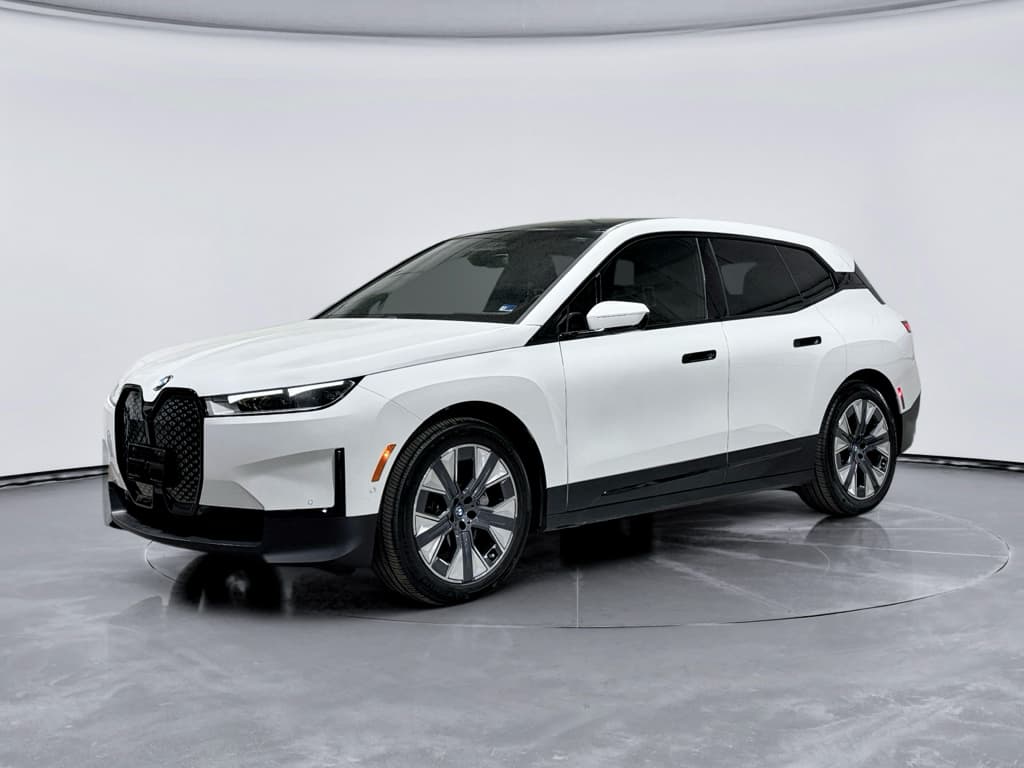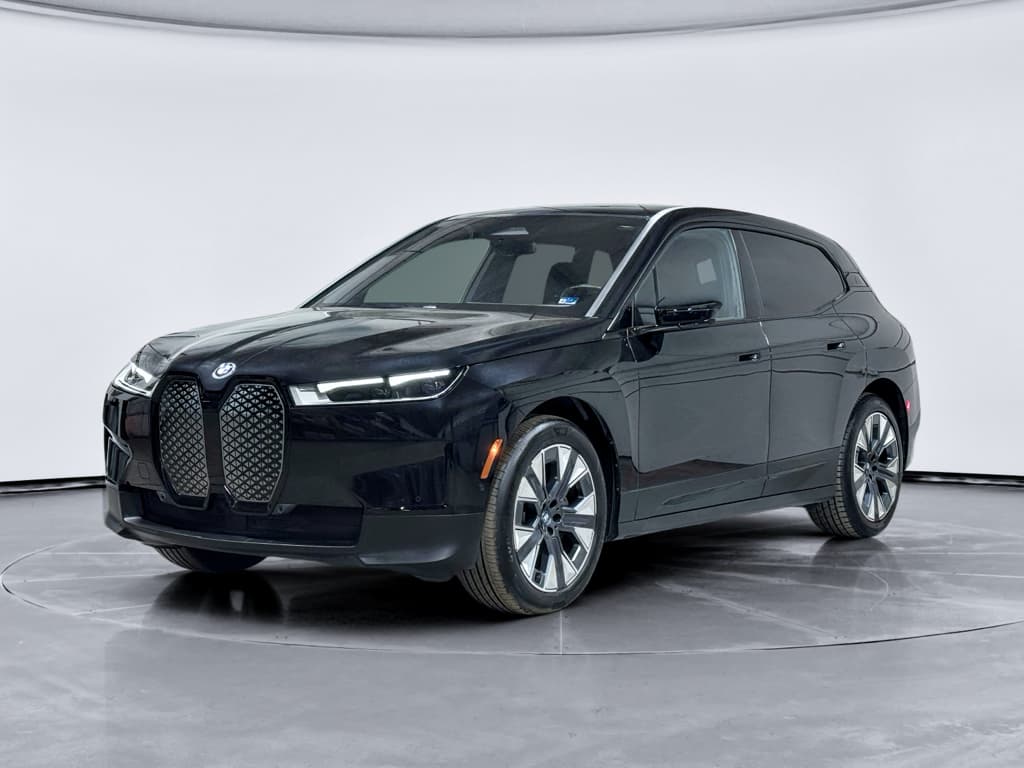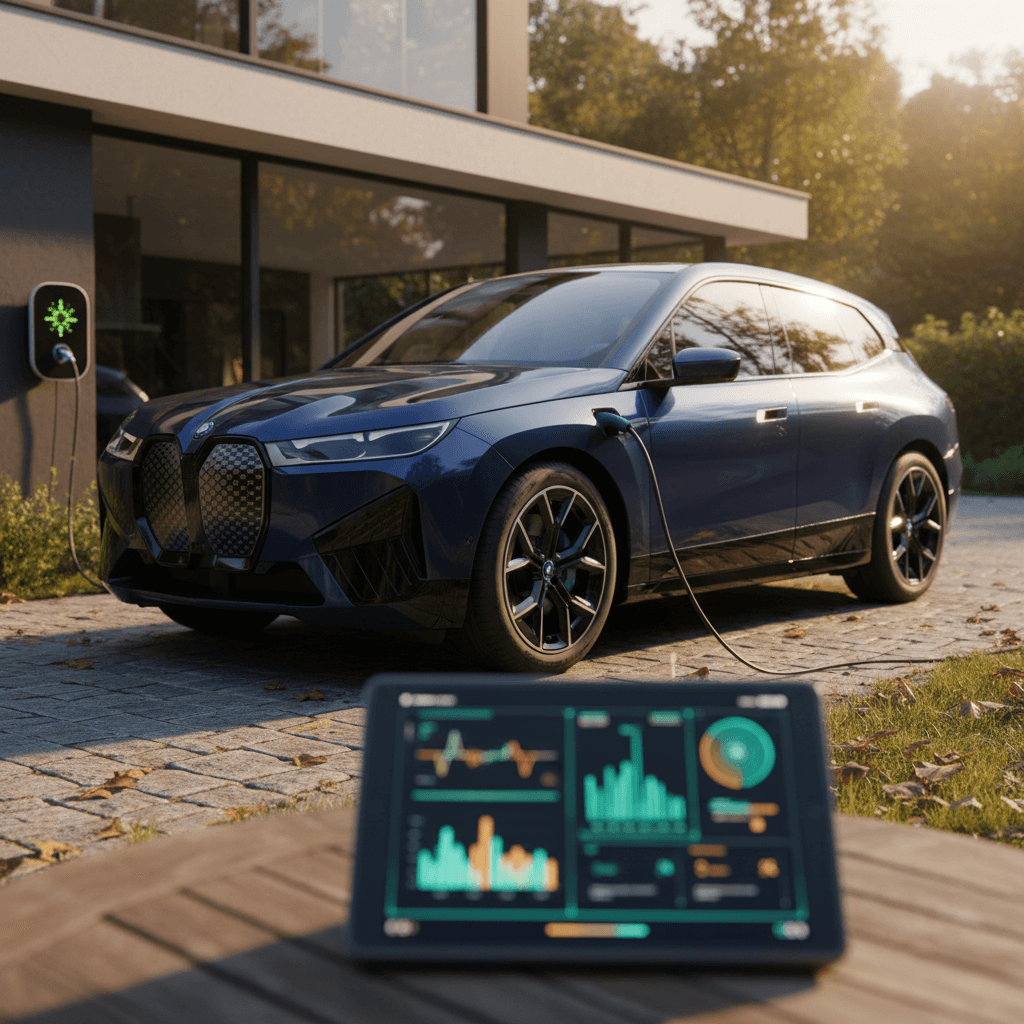
You don’t so much drive a BMW iX as experience it. It’s huge, silent, oddly sculpted, and trimmed like a boutique hotel. But by 2026 the honeymoon phase is over. Early iX builds have three to four winters under their belt, leases are ending, and the first serious wave is hitting the used market. This BMW iX long term review 2026 looks beyond launch hype to what the iX is actually like to live with, and whether you should buy one now.
What this review covers
BMW iX long-term in 2026: the big picture
BMW iX at a glance (2021–2025 builds)
The iX remains one of the most refined electric SUVs on sale. Years in, owners still rave about the ride quality, the quiet cabin and the sheer effortlessness of the powertrains. Its large battery and slippery body give it genuinely strong real‑world range, even compared with newer rivals. And unlike some first‑wave luxury EVs, there’s no systemic pattern of high‑voltage battery failures so far.
That said, the iX is not a minimalist, set‑and‑forget EV. It’s a rolling electronics expo. You’re buying complexity: air suspension on some trims, four‑wheel steering, a wall of screens, gesture control, advanced driver assistance, soft‑close doors, power everything. Where problems crop up, they tend to be software glitches and peripheral hardware rather than the battery or motors, but repairs at a BMW dealer are priced accordingly.
Who the iX still suits best
Real-world range and efficiency after a few years
BMW launched the iX with generous battery sizes and realistic published ranges. In the real world, owners of xDrive50 and M60 trims typically see around 250–280 miles of usable highway range at 70–75 mph in mild conditions when starting from 100% charge, often right in line with fresh‑from‑the‑EPA numbers. City and mixed driving can stretch that beyond 300 miles if you’re gentle.
- xDrive40 (smaller pack): typically the most efficient in the lineup but with noticeably less total range; think ~200–230 highway miles in realistic use.
- xDrive50: the sweet spot, strong efficiency from a big usable battery, with 250–280 highway miles common in owner reports.
- M60: huge power and heavier wheels/tires; expect slightly lower efficiency than the xDrive50 but still solid road‑trip range.
Don’t judge by short‑trip averages
The encouraging thing, several years on, is that most healthy iX packs still deliver near‑new range. Where you do see noticeable loss, it’s usually on vehicles that live on DC fast chargers or spend their lives at very high state‑of‑charge. That’s more about usage than any fundamental design flaw.
BMW iX battery health and degradation
So far, real‑world BMW iX owners are generally seeing roughly 3–7% capacity loss over the first 2–3 years, with many cars testing in the mid‑90s for state‑of‑health by 20,000–40,000 miles. That’s right where you’d want a modern luxury EV to land and broadly in line with peers from Mercedes and Audi when they’re treated well.
What shapes long-term BMW iX battery health
How the first owners drove and charged matters more than the calendar
Charging habits
iX packs age best when they live on Level 2 charging and spend most of their time between 20–80% charge. Constant DC fast charging and parking at 100% are the enemies of long‑term capacity.
Climate and storage
As with any EV, extreme heat is tougher on the pack than cold. Garage parking and avoiding long summer soaks at high state‑of‑charge help preserve range.
Driving style
Hammering an M60 from every stoplight won’t instantly kill the battery, but sustained high loads and top‑speed running generate more heat. Spirited use is fine; constant abuse is not.
Warranty safety net
Where you should be picky is with individual cars. Two identical‑looking 2023 iX xDrive50s can have very different battery stories depending on how they were used. That’s why every used EV on Recharged comes with a Recharged Score battery‑health report, so you’re not guessing about state‑of‑health based on seat‑of‑the‑pants range impressions.
Charging the BMW iX: home setup and road trips
Living with the iX at home
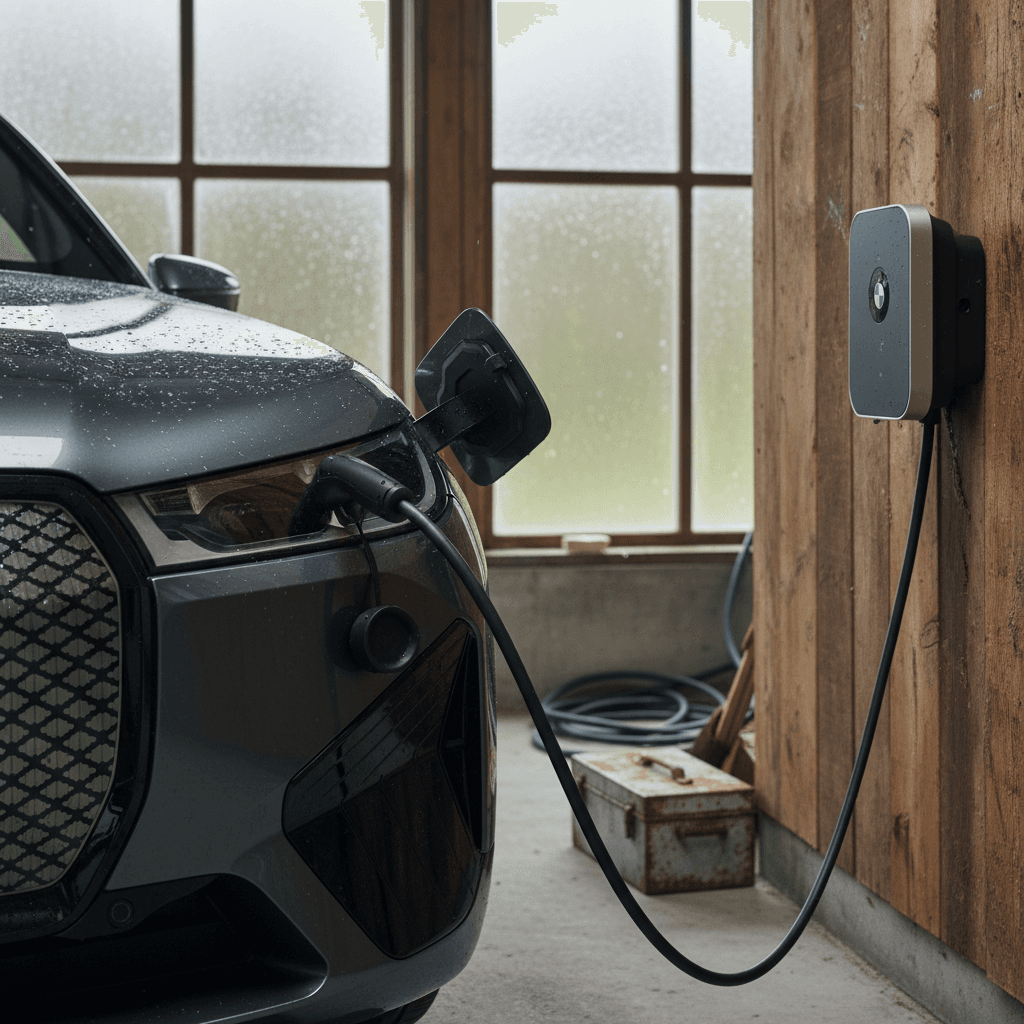
With a big pack and decent efficiency, the iX is happiest when you have a Level 2 home charger. On a 240‑volt circuit, most trims can add roughly 25–35 miles of range per hour of charging, easily refilling a day’s commute overnight.
- Plan on a 40–48 amp Level 2 charger for best performance.
- Use scheduled charging to take advantage of off‑peak electricity rates when your utility offers them.
- In colder climates, pre‑condition from the plug to save range and keep the cabin civilized.
Fast charging on the road
On a DC fast charger, the iX can accept up to roughly 195 kW in ideal conditions, making 10–80% top‑ups in the 30–40 minute ballpark when the battery is properly pre‑conditioned.
- The charging curve is well managed: strong power early, then a steady taper.
- Pre‑conditioning via navigation to a charger helps the pack reach its optimal temperature.
- At today’s public DC rates, you’ll pay more per mile than at home but still less than a thirsty V8 SUV.
Plan around realistic legs, not brochure numbers
In 2026 the one caveat for U.S. shoppers is connector chaos. Early iX models use the CCS standard; newer trims and BMW’s future models are pivoting to NACS (the Tesla connector) with adapters. If you’re cross‑shopping a 2022 iX and a 2025 example, pay attention to which plug you’ll actually use most often in your area and whether an adapter is in the cards.
Reliability: what actually goes wrong
The good news is that we haven’t seen a wave of iX high‑voltage battery or motor failures. Most long‑term gripes fall into three buckets: software/electronics gremlins, air‑suspension hardware on certain builds, and a scattering of traditional luxury‑car annoyances, think door handles, HVAC pieces, trim and creaks.
Common BMW iX long-term issues (so far)
Patterns seen in owner reports, forums and service histories as cars age.
| Issue | Typical symptoms | Annoyance vs. risk | Where it shows up |
|---|---|---|---|
| Software glitches | Frozen or rebooting center screen, CarPlay hiccups, camera quirks | Annoying, rarely dangerous | All trims, more frequent early software versions |
| Air suspension faults (where fitted) | Uneven ride height, warning messages, harsh ride | Can be serious, may require parts | Early xDrive50s with air suspension; M60s with adaptive setups |
| Charging hardware errors | Occasional failure to handshake with certain DC fast chargers | Inconvenient on road trips | Mostly CCS‑equipped cars with older firmware |
| Driver assistance quirks | Over‑protective lane keeping, beeps, or unexpected disengagements | Annoying but manageable | All trims; often improved with updates |
| Traditional wear items | Tires, brakes, suspension bushings, cabin rattles | Normal wear & tear | Heavier iX models driven hard or on poor roads |
Severity and cost can vary widely depending on warranty status and dealer labor rates.
Out‑of‑warranty repairs can sting
The long‑term reliability story, then, is nuanced. The underlying EV platform appears strong. The price you pay is complexity, more systems, more software, more opportunities for nuisance faults. If you’re moving from a simple gasoline crossover, budget both time and money for the occasional dealer visit, even if it’s just for software.
Comfort, tech and everyday livability
Here’s where the iX still earns its keep. The cabin feels airy and expensive in a way that even some newer EVs haven’t matched. The seats are all‑day comfortable, road and wind noise are impressively low, and the optional electrochromic glass roof remains a party trick that passengers remember. The driving experience is calm bordering on cocooned; it’s an EV that makes traffic slightly less awful.
Living with the BMW iX day to day
The good, the weird, and the occasionally frustrating
Ride & refinement
On the right wheels and tires, the iX is one of the most comfortable EV SUVs on sale. Even on big wheels, it shrugs off rough pavement better than many rivals.
iDrive 8 and screens
The curved display looks fantastic, and after a learning curve, most owners acclimate. But menus run deep; some basic functions are a tap or two too far away.
Space & practicality
Rear legroom and headroom are generous, cargo space is competitive with other midsize luxury SUVs, and the flat floor makes the back row feel genuinely adult‑friendly.
Mind the fragile‑feeling details
Running costs, depreciation and insurance
Against a similarly quick X5 or Range Rover, the iX is a bargain to feed. Household electricity is almost always cheaper per mile than premium gasoline, and you’ll skip oil changes entirely. Brake wear is light thanks to strong regeneration, and there’s no transmission to service. Over several years, many owners see four‑figure fuel savings compared with a V6 or V8 luxury SUV, even if they occasionally use pricey DC fast chargers on road trips.
Where you save
- Energy costs: Home charging can equate to the equivalent of 80–120 mpg in fuel spend, depending on local rates.
- Maintenance: No oil, spark plugs, or exhaust work. Brake jobs are further apart thanks to regen.
- Tax incentives: In some states, used EV purchases can still unlock rebates or reduced registration fees.
Where it can bite
- Depreciation: Like most six‑figure German SUVs, the iX sheds value quickly in its early years, great as a buyer in 2026, not as the original owner.
- Insurance: Luxury EVs with expensive bodywork and sensors often carry higher premiums than mainstream SUVs.
- Out‑of‑warranty fixes: Complex suspension and electronics make extended coverage worth considering if you’re risk‑averse.
The upside of fast depreciation
Is a used BMW iX a smart buy in 2026?
If you want a roomy luxury EV SUV with serious range and a truly premium cabin, a well‑chosen used iX in 2026 can be a very smart buy. The key phrase is “well‑chosen.” You’re looking for a car with clean software history, no unresolved warning lights, healthy battery state‑of‑health and, ideally, remaining factory warranty on both the general vehicle and high‑voltage system.
- xDrive40: Best if you value efficiency and lower entry price more than maximum range and power.
- xDrive50: The sweet spot for most buyers, strong performance, excellent range, and broadly available on the used market.
- M60: A bit of a cult item, astonishingly quick and loaded, but expect higher tire costs and slightly lower efficiency.
CPO vs. independent used
How to shop for a used BMW iX with confidence
Used BMW iX buyer checklist (2026)
1. Get a battery health report
Don’t guess. Ask for a <strong>third‑party battery‑health scan</strong> that shows state‑of‑health, DC fast‑charge history and any high‑voltage fault codes. Every iX on Recharged includes a Recharged Score report so you know exactly what you’re getting.
2. Verify charging hardware
Confirm which standard the car uses (CCS vs. newer NACS‑equipped trims) and that the charge port, onboard charger and fast‑charging behavior are normal. Test a fast‑charge session if possible.
3. Scan for software and warning lights
On the test drive, cycle through drive modes, cameras and driver‑assist features. Any persistent warnings for suspension, driver assistance, battery or charging should be investigated before you sign.
4. Inspect suspension and tires
Check for uneven ride height, clunks over bumps, or warning lights on cars with air suspension or rear‑steer. The iX is heavy; budget for quality tires if the current set is worn or unevenly scrubbed.
5. Test all the tech
Make sure the curved display, HUD, audio system, climate zones, seat adjustments, soft‑close doors and phone integration all work smoothly. A glitchy camera or dead speaker can foreshadow deeper electronic issues.
6. Review service history
Look for regular maintenance, completed recalls, and documentation of any major repairs. A car that’s lived at one diligent owner and dealer is usually safer than an orphan with gaps.
If you’d rather skip the detective work, Recharged is built to make this simpler. Every used EV we list, including the iX, comes with a Recharged Score battery‑health diagnostic, fair‑market pricing analysis, and EV‑specialist support that can help you compare trims, estimate your real‑world range and understand long‑term costs. You can handle financing, trade‑ins and paperwork entirely online, or visit our Experience Center in Richmond, VA if you’d rather kick the tires in person.
BMW iX long-term FAQ
BMW iX long-term ownership: frequently asked questions
The BMW iX was never meant to be subtle. It’s a statement piece, a rolling spa, a proof of concept that a family SUV can be both deeply comfortable and fully electric. Several years on, that concept largely holds. The battery tech has aged well, the range remains competitive, and the cabin still feels a class above most rivals. The trade‑offs are complexity, software fussiness and premium‑brand repair costs. If you walk in with eyes open, arm yourself with a proper battery‑health report and pick your example carefully, a used iX in 2026 can deliver a lot of EV for the money, and Recharged exists to help you find exactly that car, without the guesswork.