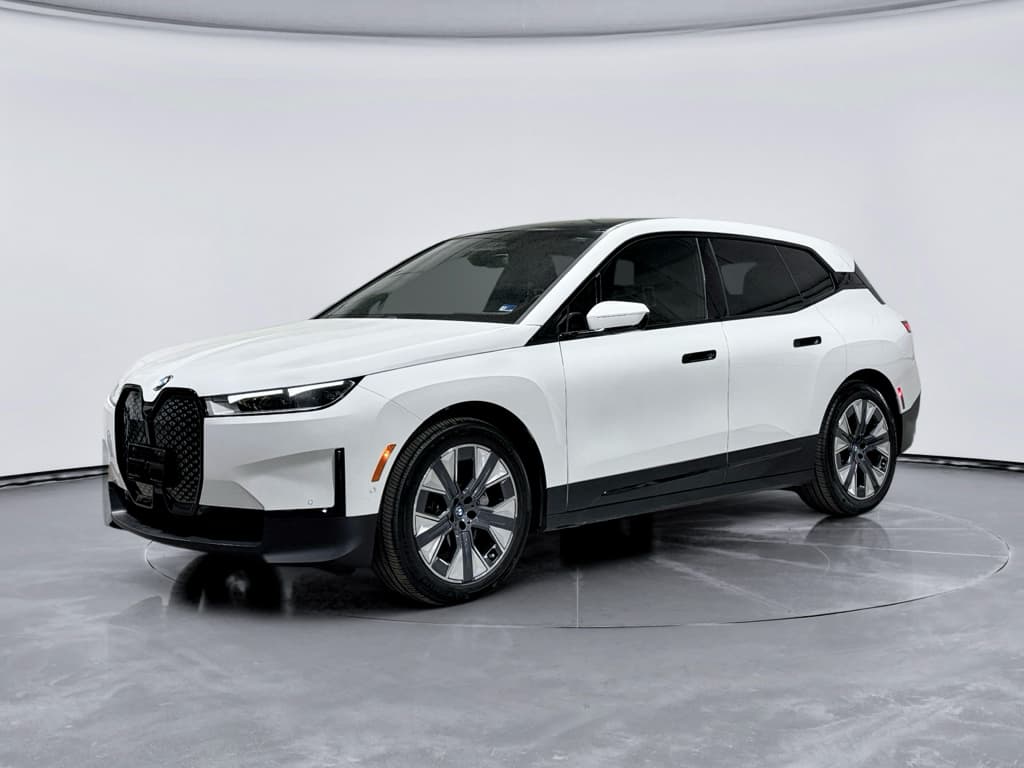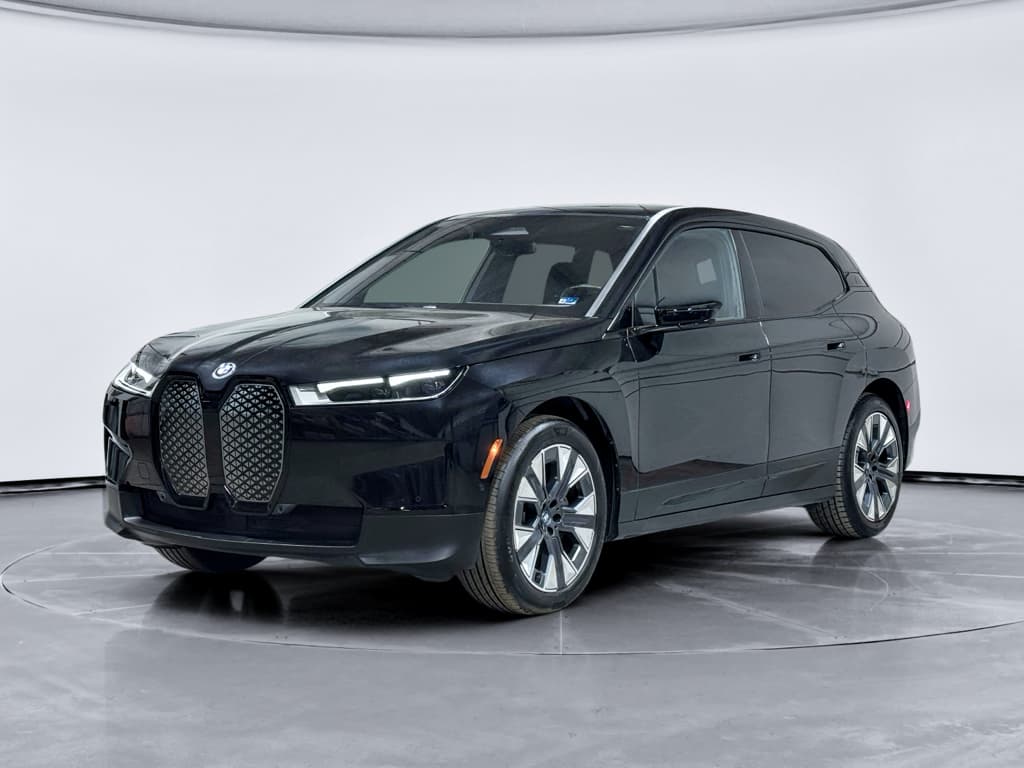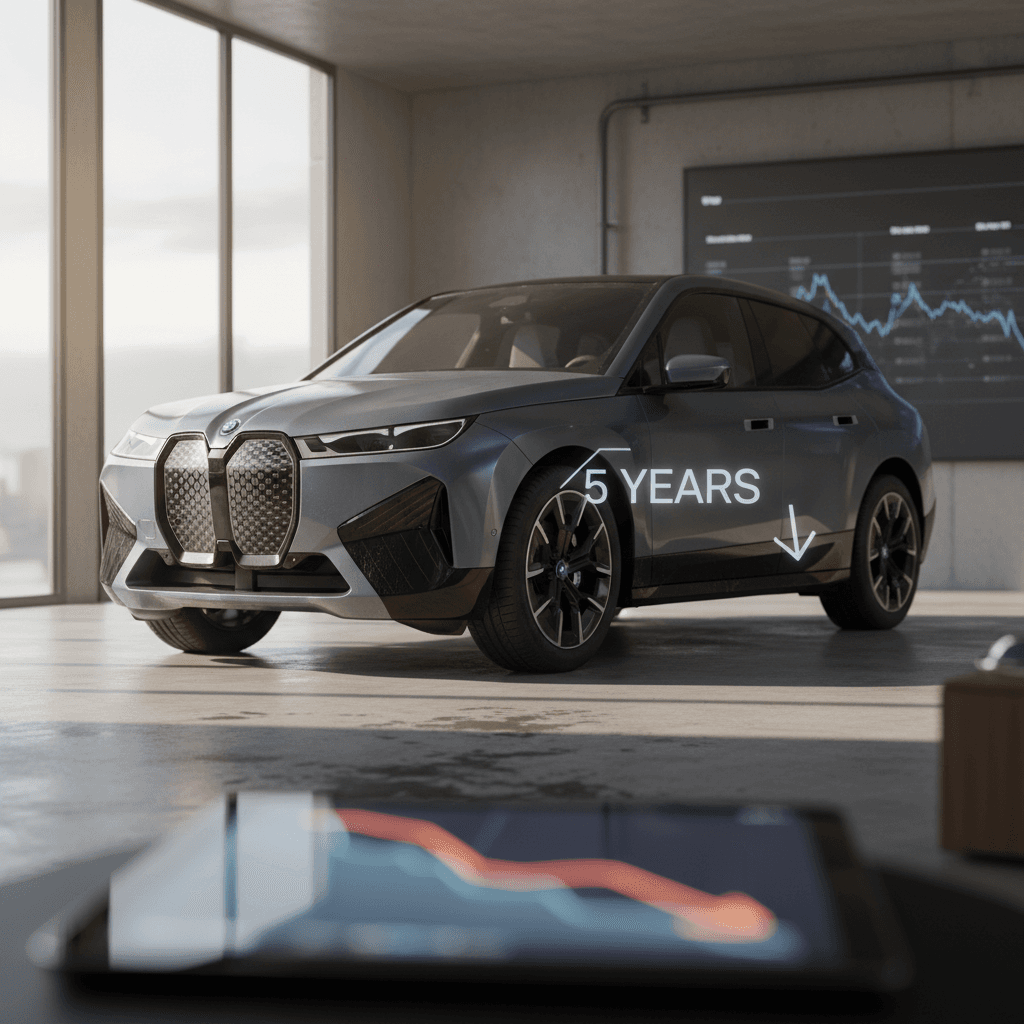
If you’re looking at a BMW iX depreciation curve over 5 years, you’re probably seeing some eye‑watering numbers. The iX is one of BMW’s most advanced EVs, and also one of its heaviest depreciators. The good news is that if you understand how that curve works, you can time your purchase or sale so the math works in your favor instead of against you.
Key takeaway
BMW iX 5‑Year Depreciation at a Glance
BMW iX Depreciation Snapshot (5 Years)
Different data providers use different assumptions, but they tell a consistent story: the BMW iX takes a steep hit in the first 3–5 years. Sites like iSeeCars and CarEdge estimate around 62–69% total depreciation over five years, while some resale reports quote figures as high as roughly 70.5% lost at year five. Interpret these as ranges, not exact predictions, but the shape of the curve is clear.
Depreciation isn’t one-size-fits-all
How Fast Does a BMW iX Depreciate?
To understand the BMW iX depreciation curve over 5 years, it helps to think in phases rather than just a single number. Early luxury EV depreciation is shaped by incentives, tech turnover, and a relatively small pool of buyers willing to pay six figures for an SUV.
Three Phases of BMW iX Depreciation
How value typically erodes from new to year five
Years 0–2: Incentive Shock
Heavy incentives and aggressive leases on new iX models push down used prices quickly.
- Steepest dollar losses
- Early tech revisions hurt older builds
- Leasing often makes more sense than buying new
Years 2–4: Value Reset
The market “discovers” what a used iX is really worth.
- Big spread between MSRP and used asking prices
- Certified pre‑owned (CPO) units stabilize the floor
- Curve starts to flatten, especially on mainstream trims
Years 4–5+: Plateau
Depreciation slows as the iX finds its long‑term value band.
- Losses measured in thousands, not tens of thousands
- Battery health and range matter more than options
- Well‑kept examples start to look like relative bargains
Why leasing new iX models is so popular
Year‑by‑Year BMW iX Depreciation Curve (0–5 Years)
Let’s translate the percentages into a simple, approximate 5‑year curve. To keep the math easy, we’ll assume a nicely equipped iX with a $100,000 original MSRP. Your actual numbers will vary by trim, options, and how hard you negotiate, but the pattern is what matters.
Illustrative BMW iX 5‑Year Depreciation Curve (Rounded)
Approximate retained value based on multiple 2024–2025 data sources and a $100,000 starting MSRP.
| Year in Service | Approx. % of MSRP Retained | Estimated Value | What’s Happening |
|---|---|---|---|
| New (0 years) | 100% | $100,000 | MSRP or close, minus any discounts and incentives. |
| End of Year 1 | ≈75–80% | $75,000–$80,000 | Big early hit as incentives and first used units reset expectations. |
| End of Year 2 | ≈60–65% | $60,000–$65,000 | More lease returns, more supply; buyers demand big discounts vs. new. |
| End of Year 3 | ≈48–52% | $48,000–$52,000 | Several analyses put the iX around a ~47–52% total drop by year three. |
| End of Year 4 | ≈35–40% | $35,000–$40,000 | The curve continues down but starts to flatten; bargains emerge. |
| End of Year 5 | ≈30–38% | $30,000–$38,000 | 5‑year estimates cluster around low‑ to mid‑30% retained, or roughly $40k on an original $100k example. |
Use these as directional guides, not guarantees. Real‑world results depend on spec, miles, condition, and regional demand.
Notice how much of the damage is done early. Whether you look at iSeeCars’ roughly 68–69% depreciation or CarEdge’s ≈62% after 5 years, the first three years are where first owners lose the most. By contrast, years 4 and 5 are where savvy used‑EV shoppers can step in and let someone else’s depreciation work in their favor.

Local Factors That Can Pull Your iX Above or Below the Curve
Mileage and usage profile
An iX that’s been a 6,000‑mile‑per‑year commuter will typically sell closer to the top of the value range than one that’s racked up 20,000 miles annually in highway duty.
Battery health & DC‑fast‑charge exposure
Frequent DC fast charging and high‑heat climates can age the pack faster. A strong battery‑health report, like the Recharged Score, can defend value when you sell, and uncover bargains when you buy.
Accident and service history
Structural damage, airbag deployment, or spotty service records can push a car well below the model‑wide depreciation curve, even if miles are low.
Trim, options, and color
High‑demand specs, xDrive50 in practical colors with popular option packs, age better than oddball builds with niche colors or deleted features.
Regional EV adoption and infrastructure
In EV‑mature metros with strong charging networks, demand for a used iX is higher than in markets where fast charging is still sparse and luxury EVs are niche.
Why the BMW iX Depreciates So Hard
The iX isn’t a bad vehicle, it’s one of BMW’s most sophisticated. But it sits at the intersection of several forces that punish resale value, especially in the U.S. Understanding those forces helps you see why the 5‑year depreciation curve looks the way it does.
1. High MSRP + narrow buyer pool
Most iX builds leave the factory with stickers in the high‑$80,000s to well over $100,000. That’s a small corner of the market, and many of those buyers lease anyway. When those leased iX models hit the used market, supply can temporarily overwhelm the number of people willing to spend $70,000–$80,000 on a used BMW SUV.
2. Fast‑moving EV tech and incentives
EVs age in tech years, not just model years. Range updates, charging upgrades, and driver‑assist improvements can make a three‑year‑old build feel dated quickly. Add in changing tax credits and manufacturer incentives on new cars, and used pricing has to fall harder to stay compelling.
3. Luxury EV risk perception
Many shoppers still think of first‑gen luxury EVs as experiments: "What if the battery fails? What if repair costs are crazy?" Until mass‑market confidence catches up, resale values for complex, high‑MSRP EVs like the iX will lag more conventional models.
4. BMW’s own lease economics
BMW regularly supports the iX with attractive leases and occasionally eye‑catching discounts. That’s great news if you’re leasing new, but it also sends a powerful signal about what the brand itself expects the car to be worth in 3–4 years, which anchors used prices lower.
How this compares within BMW’s lineup
BMW iX vs Other Luxury EVs: Depreciation Showdown
So is the BMW iX uniquely bad, or just playing in a tough neighborhood? Relative to legacy BMW SUVs, yes, the iX looks rough. But compared with peer luxury EVs, it’s more of a pattern than an outlier.
Approximate 5‑Year Depreciation vs. Key Rivals
High‑level comparison of 5‑year depreciation behavior among large luxury EVs.
| Model | Segment | 5‑Year Value Lost (Approx.) | Notes |
|---|---|---|---|
| BMW iX | Large luxury SUV EV | ≈62–70% | Aggressive early incentives and fast‑moving tech stack drive large early drops. |
| Tesla Model X | Large luxury SUV EV | ≈55–65% | Brand cachet and Supercharger access help, but high MSRP still punishes first owners. |
| Mercedes EQS SUV | Large luxury SUV EV | ≈60–70% | Steep discounts on new models pull used values down quickly. |
| Audi Q8 e‑tron | Midsize‑to‑large SUV EV | ≈60–68% | Niche demand and lease support fuel strong early depreciation. |
Rounded figures based on multiple 2024–2025 third‑party value guides and resale reports.
The silver lining for used‑EV shoppers
How to Use the 5‑Year Curve to Your Advantage
Once you accept that the BMW iX sheds a huge chunk of value in its first five years, the question becomes: How do you play that curve intelligently? Whether you’re buying or selling, you have more control than you might think.
Strategies for Buyers and Sellers Along the Curve
Buy at 3–4 years old, not new
If you’re paying cash or planning to own past year five, look for a 3–4‑year‑old iX. Someone else has already absorbed the brutal early depreciation, and you’re closer to the flatter part of the curve.
Prioritize battery and high‑voltage health
For EVs, depreciation is as much about the pack as the paint. A detailed battery‑health report, like the Recharged Score included with every Recharged vehicle, helps you separate solid long‑term keepers from cars that will be expensive science projects.
Let leases absorb the high‑risk years
If you must have a brand‑new iX with the latest software and options, a well‑structured lease lets BMW and its finance arm shoulder the residual‑value risk instead of your balance sheet.
Shop beyond your zip code
Regional swings in EV adoption and incentives mean a five‑year‑old iX in one state can be thousands cheaper than the same spec elsewhere. Marketplaces like Recharged with <strong>nationwide delivery</strong> allow you to arbitrage those differences.
Use data, not vibes, when pricing a sale
Instead of guessing a number, anchor your asking price in multiple guides (KBB, Edmunds, iSeeCars, etc.), then adjust for how your specific iX’s mileage, condition, and options compare to the norm.
Where Recharged fits in
Selling or Trading In Your BMW iX
If you already own an iX, the same 5‑year depreciation curve can feel a lot less theoretical. How you exit the car, trade‑in, instant offer, consignment, or private sale, matters just as much as which guide you look at.
Exit Options for an iX on the Back Side of the Curve
Match your strategy to your priorities: speed, simplicity, or maximum value.
Dealer trade‑in
Best for speed and simplicity.
- One‑stop transaction when buying your next car
- Often the lowest dollar number
- Convenient if you’re already at a BMW store
Instant offer or online buyer
Balance of convenience and transparency.
- Fast quotes based on VIN, miles, options
- Fair market offers if you shop a few sources
- Great if you’re not buying another car immediately
Consignment / marketplace sale
Maximize sale price with help.
- Professional photos, listings, and buyer screening
- Higher upside than a wholesale trade
- Requires a bit more patience but less DIY hassle
How Recharged can help you sell
BMW iX Depreciation FAQ
Bottom Line: Making the BMW iX Depreciation Curve Work for You
The 5‑year depreciation curve for the BMW iX is undeniably steep, closer to a ski jump than a gentle slope. But depreciation cuts both ways. If you buy new and sell early, you’re volunteering to subsidize the experiment. If you buy at years three to five with good data on battery health and market pricing, you’re harvesting the benefits of someone else’s sunk cost.
Tools like transparent market valuations, battery diagnostics, and curated used‑EV marketplaces are how you bend that curve to your advantage. That’s the philosophy behind Recharged: every iX we list comes with a Recharged Score battery‑health and pricing report, expert EV support, and nationwide delivery. Whether you’re stepping into an iX at the sweet spot of the curve or deciding it’s time to exit gracefully, the right information turns depreciation from a scary unknown into just another line item you can manage.