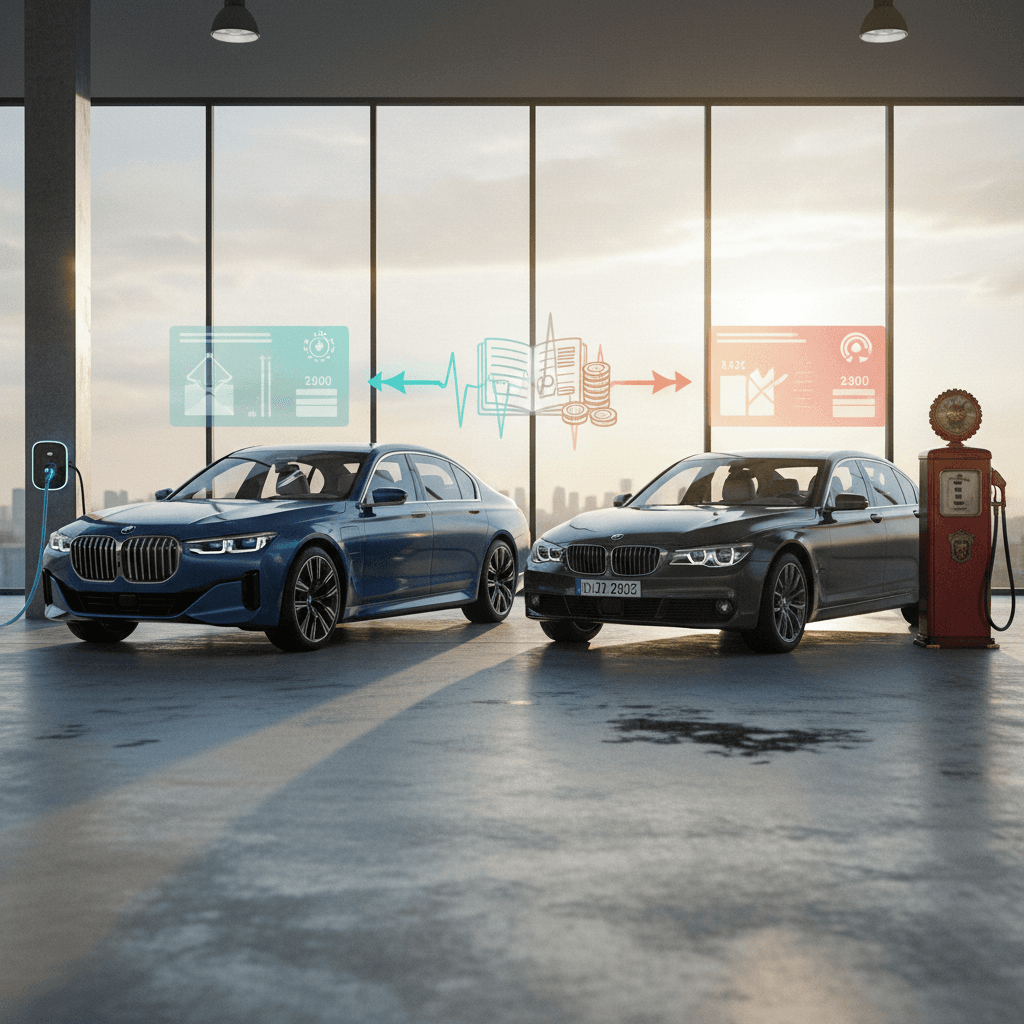
You’re looking at a BMW i7 and wondering how its total cost stacks up against a gas 7 Series. The sticker prices are eye-watering either way, so the real question is: over 5–10 years, is the electric BMW i7 actually cheaper to own than a comparable gas 7 Series like the 740i or 760i? This guide walks through a transparent, numbers‑based comparison so you can see where the i7 wins, where it doesn’t, and how a used i7 can tilt the math in your favor.
Key takeaway in 30 seconds
BMW i7 vs gas 7 Series: the ownership-cost overview
BMW i7 vs gas 7 Series: headline 5‑year numbers (typical U.S. scenario)
Those numbers are averages, not promises. Your actual total cost depends heavily on local electricity and gas prices, how much you drive, and whether you’re buying new or used. To make this useful, we’ll walk through the assumptions, show a simple 5‑year model, then explain when the BMW i7 total cost clearly beats its gas equivalent, and when you’re mostly paying for the driving experience and tech.
How we’re comparing BMW i7 vs gas total cost
- Time horizon: 5 years of ownership, 60,000 miles total (12,000 miles per year).
- Vehicles compared: a well‑equipped BMW i7 (eDrive50 or xDrive60) vs similarly optioned 740i/760i gasoline 7 Series.
- Location: U.S. national averages for energy prices, with callouts for high‑cost and low‑cost regions.
- Ownership profile: You keep the car beyond warranty, so real‑world maintenance and depreciation matter.
- Purchase channel: Both new and used, with a separate section on why a used i7 can look especially attractive.
About the numbers in this article
Purchase price, incentives and financing
On paper, the BMW i7 and gas 7 Series occupy the same ultra‑luxury space, but the i7 usually carries a higher MSRP when similarly optioned. At the new‑car level, that can be a $5,000–$15,000 gap, depending on trims and packages. On the used market, that gap often narrows as early i7s depreciate faster than traditional 7s, especially in the first 3 years.
New purchase snapshot (high level)
- BMW i7 eDrive50/xDrive60: Typically starts in the high $90,000s to low $100,000s when reasonably equipped.
- BMW 740i/760i: Often undercuts a comparable i7 by several thousand dollars at MSRP, depending on options and local deals.
- Financing: Payment difference on a $10,000 higher price at 5.5% over 72 months is roughly $160–$180/month.
Incentives and tax credits
- Some households can stack federal or state EV incentives when leasing a new i7, effectively lowering the real price.
- Utility and local rebates for home charging equipment can further reduce all‑in EV costs.
- Gas 7 Series models don’t qualify for EV‑specific incentives, though they may have standard rebates or finance offers.
Always check current EV incentive rules and your tax situation before counting on any credit.
Why used changes the math
Fuel vs electricity: what it really costs to drive
Energy is where the BMW i7 can claw back a surprising amount of its higher purchase price. Instead of gallons of premium gas, you’re buying kilowatt‑hours of electricity. Thanks to the i7’s efficiency and the relatively low cost of residential power in much of the U.S., the fuel‑vs‑electricity gap adds up over time.
Efficiency snapshot: BMW i7 vs gas 7 Series
Using EPA data and typical real‑world numbers
BMW i7
- EPA combined: around 90 MPGe depending on trim/wheels.
- Combined electricity use: roughly 42 kWh/100 miles (0.42 kWh/mi).
- No idling losses, strong regen in stop‑and‑go driving.
BMW 740i (6‑cyl)
- Typical combined economy: ~25 mpg in mixed driving.
- Requires premium fuel in most markets.
- Real‑world drops quickly with city driving and heavy options.
BMW 760i (V8)
- Typical combined economy: ~20–22 mpg.
- High fuel use in city or spirited driving.
- Best case is long‑distance highway cruising.
MPGe vs mpg, how to compare apples to apples
Example energy-cost calculation (typical U.S. prices)
Let’s assume you drive 12,000 miles per year, close to U.S. averages, and you do most of your charging at home. We’ll use a national average residential electricity price around $0.16/kWh and premium gasoline at $3.75/gal. Adjust the numbers up or down for your local reality.
Annual energy cost: BMW i7 vs gas 7 Series (12,000 miles/year)
Illustrative 12‑month comparison using national average energy prices.
| Model | Assumed efficiency | Energy price | Annual energy use | Estimated annual spend |
|---|---|---|---|---|
| BMW i7 | 0.42 kWh/mi | $0.16/kWh | 0.42 × 12,000 = 5,040 kWh | ≈ $806 |
| BMW 740i | 25 mpg | $3.75/gal | 12,000 ÷ 25 = 480 gal | ≈ $1,800 |
| BMW 760i | 21 mpg | $3.75/gal | 12,000 ÷ 21 ≈ 571 gal | ≈ $2,140 |
Actual costs will vary with driving style, climate and energy prices; this is a simple planning tool, not a quote.
5‑year energy savings at a glance
When electricity is expensive (California, Northeast)
If your home electricity is closer to $0.25–$0.30/kWh, the i7’s advantage shrinks, especially if you rarely use off‑peak rates. At $0.28/kWh, that same 12,000 miles costs roughly $1,410 per year in electricity, still typically cheaper than a 760i’s fuel bill, but no longer a slam dunk versus a very efficient 740i in a low‑gas‑price region.
Public DC fast charging can be pricey
Maintenance and repairs: electric simplicity vs V8 complexity
BMW’s flagship sedans are technologically dense, whether you choose gas or electric. But there’s a fundamental difference: the i7’s drivetrain has far fewer moving parts, no oil changes, and no exhaust system. Routine maintenance is still pricey because it’s a 7 Series, but the list of things that can wear out in the powertrain is shorter.
Typical maintenance needs: BMW i7 vs gas 7
Service intervals and risk items over 5 years
BMW i7 (EV)
- No engine oil, spark plugs, timing chains or exhaust components.
- Brake wear is often lower thanks to strong regenerative braking.
- Still needs tires, cabin filters, coolant service for battery/drive units, and occasional software updates.
- Out‑of‑warranty repairs tend to focus on electronics and suspension, not powertrain internals.
BMW 7 Series gas
- Regular oil changes and more complex scheduled services.
- More wear items: fuel system, turbochargers, exhaust after‑treatment, belts, etc.
- Higher risk of expensive out‑of‑warranty repairs as mileage climbs.
- Brake wear is higher without consistent regen to slow the car.
Rough 5‑year maintenance cost ranges
Depreciation and resale value for i7 vs gas 7
Total cost of ownership lives or dies by depreciation. A large luxury EV like the i7 is still a newer concept than a gas 7 Series, and used values reflect that. Historically, early years of new EV models often depreciate faster than long‑running gasoline flagships with established buyer bases and well‑understood running costs.
New i7 vs new gas 7: who falls faster?
- First 3 years: i7 values can drop quickly as incentives, tech changes and range improvements reshape the market.
- Gas 7 Series models tend to follow a more predictable curve, though they still lose a big chunk in the first 3 years.
- If you’re buying new and trading in quickly, the i7’s steeper early‑life depreciation can outweigh its fuel and maintenance savings.
Why a 3–5‑year‑old i7 looks attractive
- Once the initial hit is absorbed, a used i7’s price can be similar to (or even below) a comparable 740i/760i.
- You still benefit from lower energy and maintenance costs as a second or third owner.
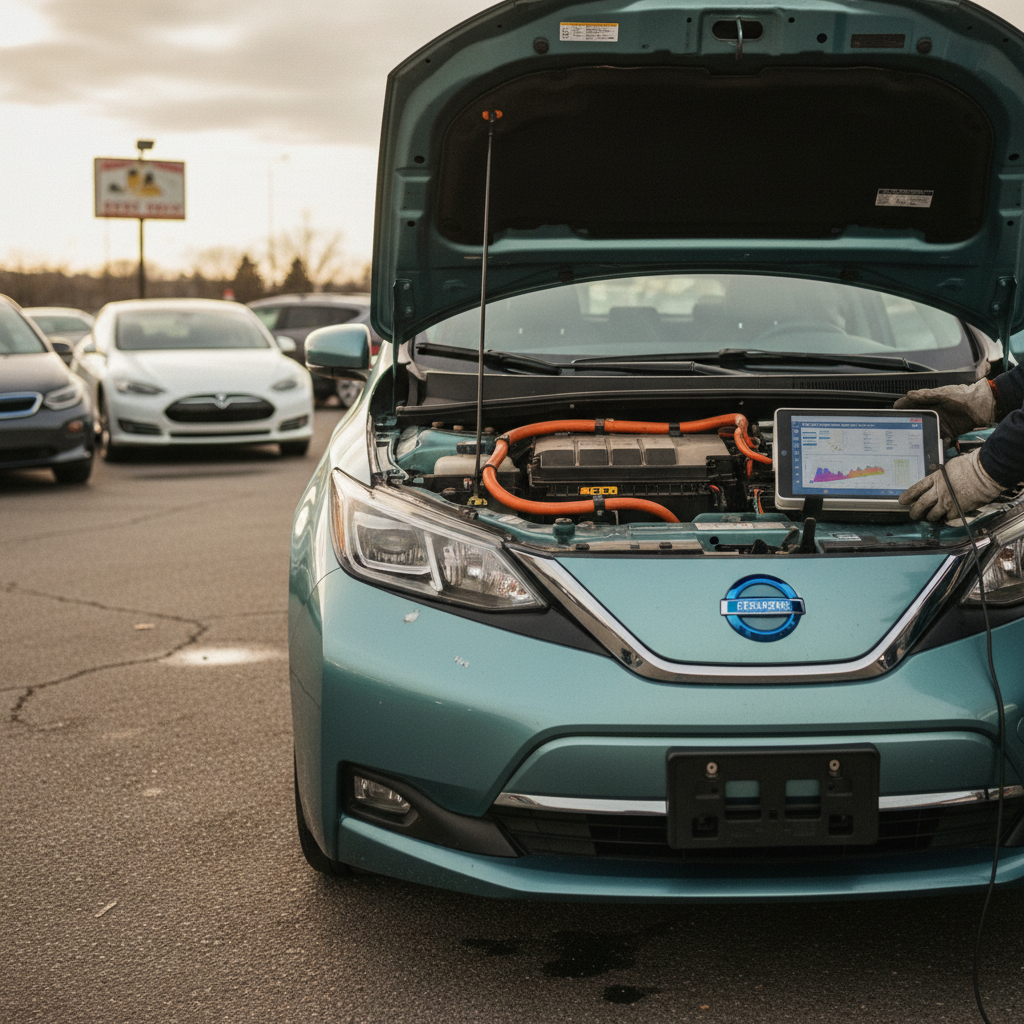
- Battery health becomes critical, this is where objective diagnostics matter more than odometer alone.
Don’t guess about battery health
5‑year BMW i7 vs gas 7 Series cost comparison
Here’s a simplified 5‑year comparison for a typical U.S. owner driving 12,000 miles per year. This assumes you buy lightly‑used, well‑equipped models so upfront prices are in the same ballpark. The point isn’t to be perfect to the dollar; it’s to show how the biggest cost buckets stack up.
Illustrative 5‑year total cost of ownership: used BMW i7 vs used gas 7
Assumes similar purchase price and mileage for a 3‑year‑old i7 and 3‑year‑old 7 Series kept for 5 more years.
| Cost component (5 years) | BMW i7 | BMW 740i | BMW 760i |
|---|---|---|---|
| Starting used purchase price | $70,000 | $67,000 | $72,000 |
| Depreciation (estimated resale value after 5 yrs) | −$30,000 (resale ≈ $40k) | −$28,000 (resale ≈ $39k) | −$35,000 (resale ≈ $37k) |
| Energy costs (60,000 mi) | ≈ $4,000 | ≈ $9,000 | ≈ $10,700 |
| Maintenance & repairs | ≈ $10,000 | ≈ $14,000 | ≈ $16,000 |
| Registration, insurance, taxes | ≈ $15,000 | ≈ $15,000 | ≈ $16,000 |
| Estimated 5‑yr total outlay | ≈ $99,000 | ≈ $107,000 | ≈ $114,000 |
All figures are estimates in today’s dollars and will vary by region and individual vehicle condition.
What this table is really saying
When the BMW i7 saves you money, and when it doesn’t
Scenarios where the i7 shines vs gas 7
And a few where it doesn’t
You charge mostly at home
Home Level 2 charging at average or off‑peak rates is the single biggest lever for making the i7 cheaper to run than a 7 Series. If 80–90% of your miles start from your driveway, the fuel savings add up quickly.
You drive 12k+ miles per year
The more you drive, the more the i7’s efficiency helps. At 15,000–18,000 miles a year, energy savings can easily reach $1,500+ annually compared with a thirsty 760i.
You buy used, not new
A 3‑ to 5‑year‑old i7 that’s already absorbed its sharpest depreciation can undercut the total cost of a similarly aged gas 7, especially if you lock in a fair market price and verify battery health.
When the i7 may not be cheaper
- You live where electricity is extremely expensive and gas is cheap.
- You rely heavily on public DC fast charging (apartment living, no workplace charging).
- You lease new and swap every 2–3 years, depreciation dominates the equation.
- You value lower upfront cost above long‑term savings and flexibility.
Non‑financial reasons still matter
Even if the i7 comes out roughly cost‑neutral, many owners choose it for:
- Instant torque and quiet, effortless acceleration.
- Ability to refuel at home and leave the house with a full "tank".
- Reduced local emissions and smoother city driving.
Why a used BMW i7 can be a sweet spot
From a dealership and remarketing standpoint, the most interesting story right now isn’t just new‑vs‑new. It’s how quickly early i7s are showing up in the used‑EV lanes, and what that means for your wallet. Because these cars were expensive new and are tech‑heavy, first owners often lease or trade early, which pushes down used prices faster than on traditional 7 Series sedans.
Buying a used BMW i7 smartly: what to check
1. Battery health and real range
Look beyond the dashboard range estimate. Ask for a <strong>verified battery health report</strong> that shows usable capacity and any signs of abnormal degradation. This is as important as a compression test on a V8.
2. Charging history and patterns
Frequent high‑power DC fast‑charging, especially in hot climates, can put more stress on the pack over time. A car that mostly charged at home on Level 2 may age more gracefully.
3. Software updates and recalls
Confirm that key software updates, campaigns and recalls have been performed. Modern BMWs rely heavily on electronics; staying current can avoid odd bugs and drivability issues.
4. Suspension, brakes and tires
An i7 is heavy and powerful. Inspect for worn air suspension components, control arms, and uneven tire wear. These are big‑ticket items on any luxury flagship, gas or electric.
5. Charging equipment and adapters
Make sure any included Level 2 home charger or portable equipment is in good condition. Replacing it adds to your setup cost and should be factored into your total‑cost math.
How Recharged approaches used i7s
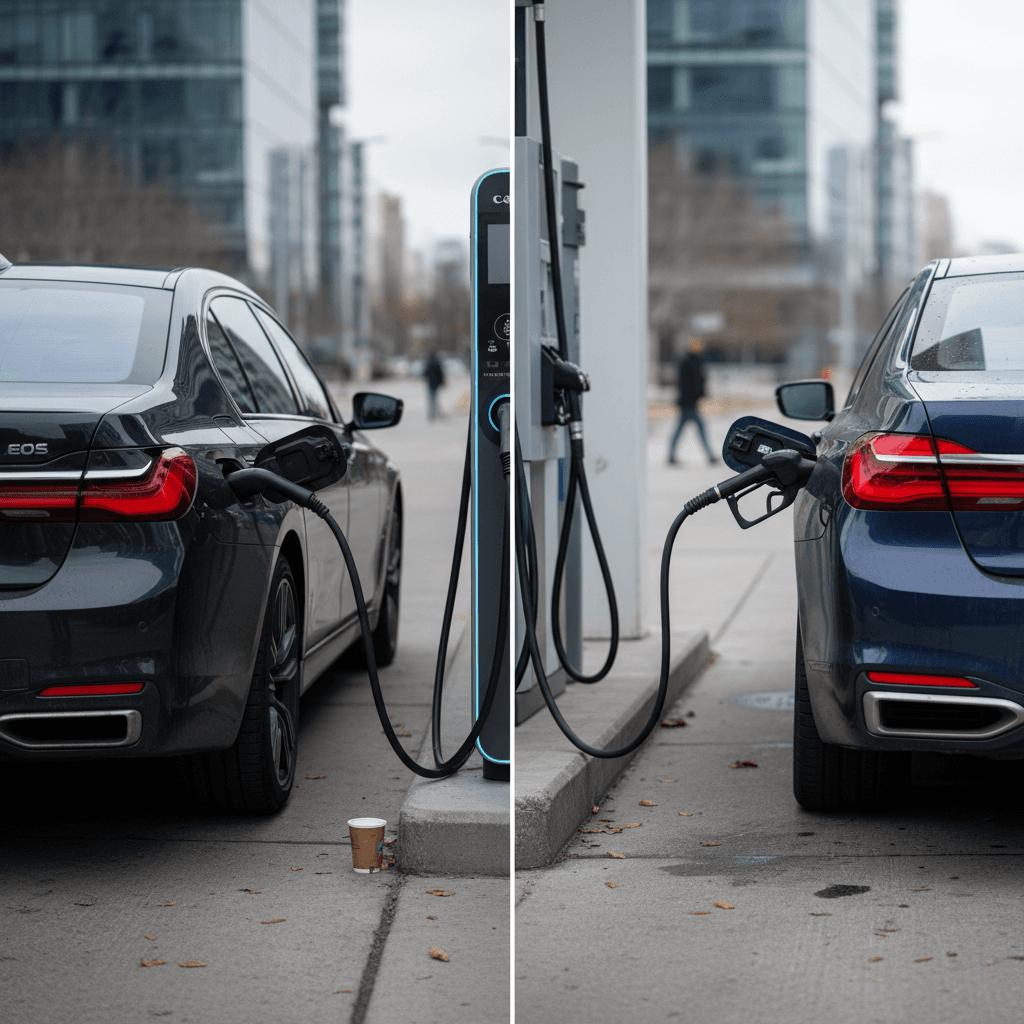
How Recharged helps you shop BMW i7 and other used EVs
If you’re seriously comparing a BMW i7 total cost vs a gas 7 Series, the used market is where the most interesting deals live. This is where Recharged focuses: helping you buy or sell used EVs with battery‑level transparency that traditional auctions and retail outlets usually can’t match.
What Recharged brings to the table for BMW i7 shoppers
Designed to de‑risk used EV ownership and simplify the process
Recharged Score battery diagnostics
Every EV, including a BMW i7, comes with a Recharged Score Report that measures real battery health, estimated remaining range, and how that compares with similar vehicles. It’s the kind of due diligence you want before writing a big check.
Flexible ways to buy or sell
You can finance, trade‑in, get an instant offer or use consignment to maximize value. Recharged supports a fully digital purchase flow plus an in‑person Experience Center in Richmond, VA for shoppers who like to see the car first.
Nationwide EV‑savvy support
From arranging nationwide delivery to walking you through home‑charging setup and real‑world range expectations, Recharged staff specialize in EVs, not just generic used cars.
Ready to find your next EV?
Browse VehiclesBMW i7 cost vs gas 7 Series: FAQ
Frequently asked questions about BMW i7 total cost vs gas equivalents
Bottom line: should you choose the i7 or a gas 7 Series?
If you take nothing else away, remember this: a BMW i7 isn’t automatically cheaper or more expensive than a gas 7 Series, it depends on how you buy and how you drive. Buy new and flip quickly, and depreciation dominates. Buy a well‑priced used i7, charge mostly at home, and drive a normal or above‑average number of miles each year, and the math often tilts in favor of the EV once you add up energy and maintenance savings.
Ultimately you’re choosing between two flavors of flagship BMW. The gas 7 Series delivers familiar refueling and a traditional powertrain, while the i7 offers instant torque, quiet cruising and the ability to start most days with a full “tank” in your garage. By looking at total cost of ownership instead of just the sticker, you can decide which one fits your budget, your lifestyle and your long‑term plans, and, if the i7 is on your shortlist, consider using a platform like Recharged to find a used example with verified battery health and transparent pricing.