If you’re eyeing a BMW i7, you already know it isn’t a bargain-bin sedan. But the real question is what it actually costs per mile to drive once you’ve got it in your driveway. Electricity is cheaper than premium gas, but fast charging, big wheels, and insurance all nudge the math. Let’s break down the real-world numbers so you can see what a BMW i7 costs per mile to drive, and how to keep that number as low as possible.
Key takeaway
BMW i7 cost per mile: the short answer
BMW i7 energy cost per mile (typical ranges)
The BMW i7 is a large, all‑electric luxury sedan that typically averages around 2.8–3.4 miles per kWh in everyday use, depending on model (eDrive50 vs M70), wheel size, climate, and how you drive. Combine that with U.S. average residential electricity prices, and you’re usually looking at roughly $0.14–$0.18 per mile for home charging. Public DC fast charging can push you into the $0.22–$0.30 per mile range.
Your results will vary
How we calculate BMW i7 cost per mile
Cost‑per‑mile math for any EV, including the BMW i7, comes down to three things: energy efficiency, energy price, and charging losses. Here’s the simple formula we’ll use throughout this guide:
- Start with your BMW i7’s efficiency in miles per kWh (for many owners, 2.8–3.4 mi/kWh is realistic).
- Divide your local electricity price per kWh by that miles‑per‑kWh figure to get energy cost per mile.
- Add a small cushion (about 10–15%) for charging losses and climate/drive style swings.
Shortcut formula
Electricity costs: home vs fast charging
Home charging: your best‑case cost per mile
If you can plug your BMW i7 in at home, you control most of your energy costs. Many U.S. households pay somewhere in the ballpark of $0.12–$0.20 per kWh, and some utilities offer cheaper off‑peak EV rates overnight.
Assuming a realistic i7 efficiency of around 3.0 mi/kWh in mixed driving and average electricity at $0.15/kWh:
- Raw energy per mile: $0.15 ÷ 3.0 ≈ $0.05/mile
- After charging losses, climate, and accessories: often closer to $0.14–$0.18/mile on your actual bill
DC fast charging: pay for speed and convenience
On road trips, or if you rely on public charging in the city, your BMW i7’s cost per mile jumps. Public DC fast chargers and some high‑power Level 2 stations often bill in the range of roughly $0.35–$0.50 per kWh or by the minute at equivalent rates.
Using that same 3.0 mi/kWh as a baseline:
- At $0.40/kWh: $0.40 ÷ 3.0 ≈ $0.13/mile in raw energy
- Once you factor in higher losses at fast charge speeds and less efficient highway driving, it’s easy to see $0.22–$0.30 per mile on long trips
Time‑of‑use rates matter
BMW i7 vs gas 7 Series: cost per mile
Luxury sedans like the BMW 740i or 760i don’t sip fuel, they enjoy it. When you compare a BMW i7’s electricity costs to a gas 7 Series running on premium fuel, the EV usually wins the cost‑per‑mile contest, especially if you charge at home.
BMW i7 vs gas BMW 7 Series: cost per mile snapshot
Illustrative comparison using common EPA style numbers and typical U.S. energy prices.
| Vehicle | Assumed efficiency | Energy price | Energy cost per mile |
|---|---|---|---|
| BMW i7 (home charging) | 3.0 mi/kWh | $0.15 per kWh | ≈ $0.15–$0.18 |
| BMW i7 (fast charging mix) | 2.8 mi/kWh | $0.40 per kWh | ≈ $0.22–$0.30 |
| BMW 740i (premium gas) | 25 mpg combined | $4.00 per gallon | ≈ $0.16 |
| BMW 760i xDrive (premium gas) | 20 mpg combined | $4.00 per gallon | ≈ $0.20 |
Actual figures will vary, but this table shows how quickly electricity savings can add up against premium gasoline.
Look at those last two rows: even in a friendly scenario for gasoline, the BMW i7 is competitive or cheaper per mile on energy alone when you mostly charge at home. Load up on DC fast charging, and you creep toward or past gas‑car territory, but you still get the silence, instant torque, and smoothness that made you consider an i7 in the first place.
Where EVs quietly win
Other running costs: tires, maintenance, insurance
Beyond electricity: what else affects your cost per mile?
Energy is the headline, but a flagship EV like the BMW i7 brings some big‑ticket extras.
Maintenance
No oil changes, but you still have brake fluid, cabin filters, and system checks. BMW’s service prices on a flagship EV are comparable to a similarly optioned 7 Series, sometimes slightly lower over time because there’s no engine or transmission to service.
Tires
Twenty‑inch (or larger) performance tires on a 5,800‑plus‑pound sedan do not live easy lives. Expect premium replacement tires to be expensive and to have a noticeable impact on your long‑term cost per mile, especially if you drive aggressively.
Insurance
The BMW i7 is packed with tech and costs a lot to repair, which can keep insurance premiums on the higher side. On the other hand, advanced safety and driver‑assist systems can offset this a bit with discounts from some insurers.
When shoppers ask about BMW i7 cost per mile to drive, they’re often thinking only about electricity. Smart move is to zoom out. Add realistic numbers for maintenance, tires, and insurance, then compare that to a gas 7 Series you’d otherwise buy. Often, the i7’s lower energy costs simply help offset the reality that any top‑shelf luxury sedan is an expensive machine to keep happy.
Don’t forget tire wear
Used BMW i7: battery health and cost per mile
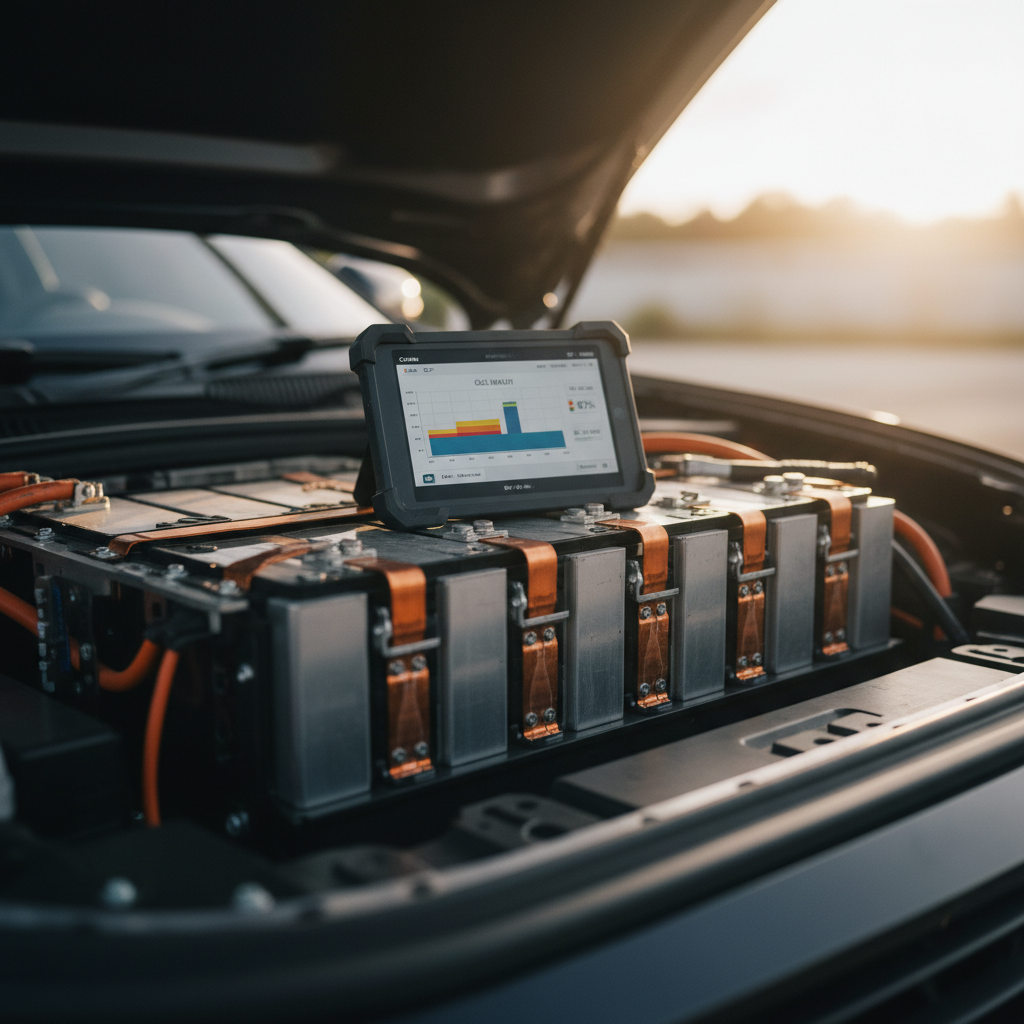
The BMW i7 is still a relatively new model, but the same used‑EV rules apply: battery health is everything. A healthy pack keeps your range up, your efficiency steady, and your DC fast‑charge times reasonable. A tired pack means more frequent charging, more time on public chargers, and a higher cost per mile, both in dollars and in patience.
Why battery health affects cost per mile
- Less usable capacity means more frequent charging stops and potentially higher use of pricier public chargers.
- Degraded cells can be less efficient, nudging energy use per mile upward.
- If you’re road‑tripping more to work around shorter range, you’re buying more fast charging, the most expensive way to feed an EV.
How Recharged helps on used i7s
When you’re shopping for a used EV, guessing at battery health is the last thing you should have to do. Every EV listed on Recharged comes with a Recharged Score Report that includes verified battery health data, pricing insights, and a clear view of how that specific car has been driven and charged.
That makes it much easier to estimate your real‑world cost per mile, instead of rolling the dice on a mystery pack.
Buying used? Ask these questions
7 ways to lower your BMW i7 cost per mile
Practical ways to cut your i7 cost per mile
1. Maximize home charging
The more of your driving you can support with overnight home charging, the closer you’ll stay to that $0.14–$0.18/mile energy band instead of paying DC fast‑charge prices.
2. Use off‑peak EV rates
Ask your utility about EV‑specific or time‑of‑use plans. Shifting charging to off‑peak hours can shave several cents per kilowatt‑hour, and meaningfully lower your cost per mile.
3. Right‑size your wheels and tires
Gorgeous 21‑inch wheels come with a range and tire‑cost penalty. Choosing a more modest wheel and an efficiency‑minded tire can add miles per kWh and save you money over the long haul.
4. Drive smoothly, not slowly
You don’t have to baby your BMW i7, but hammering the accelerator at every light is a fast way to burn electrons. Smooth, anticipatory driving keeps you closer to the high‑2s or low‑3s in miles per kWh.
5. Precondition while plugged in
Use the BMW app or in‑car scheduling so the cabin and battery are preconditioned while the car is still on shore power. You’ll use less energy on the road, especially in extreme heat or cold.
6. Keep tires inflated and aligned
Under‑inflated or out‑of‑alignment tires drag down efficiency and wear out faster. That’s a double hit: higher energy costs and more frequent tire replacement.
7. Plan efficient routes
Navigation systems and EV‑focused apps can help you avoid brutal traffic and unnecessary elevation changes, both sneaky enemies of efficiency in a big luxury sedan.
Is a BMW i7 worth it from a cost-per-mile view?
If your only goal in life is the absolute cheapest cost per mile, you probably aren’t shopping for a BMW i7 to begin with. But if you’re cross‑shopping a BMW i7 against a gas‑powered 7 Series, or other full‑size luxury sedans, the EV makes a strong case once you look beyond the sticker price and consider total cost per mile over several years.
- Home charging can put your energy cost per mile in the mid‑teens, often beating a gas 7 Series on fuel alone.
- Routine maintenance is generally simpler than in a twin‑turbo V8, and you’re never paying for engine repairs or transmission service.
- Resale values for well‑specced, well‑cared‑for EVs with healthy batteries are improving as more drivers embrace electric luxury.
Thinking long‑term? Consider used
Viewed strictly through a cost‑per‑mile lens, a BMW i7 driven mostly on home charging is at least competitive with a comparable gas 7 Series, and often cheaper on energy. Factor in the smoother driving experience and lower day‑to‑day hassle, no gas stations, less routine maintenance, and the i7 starts to look less like a splurge and more like a very modern way to spend your luxury‑car dollars.