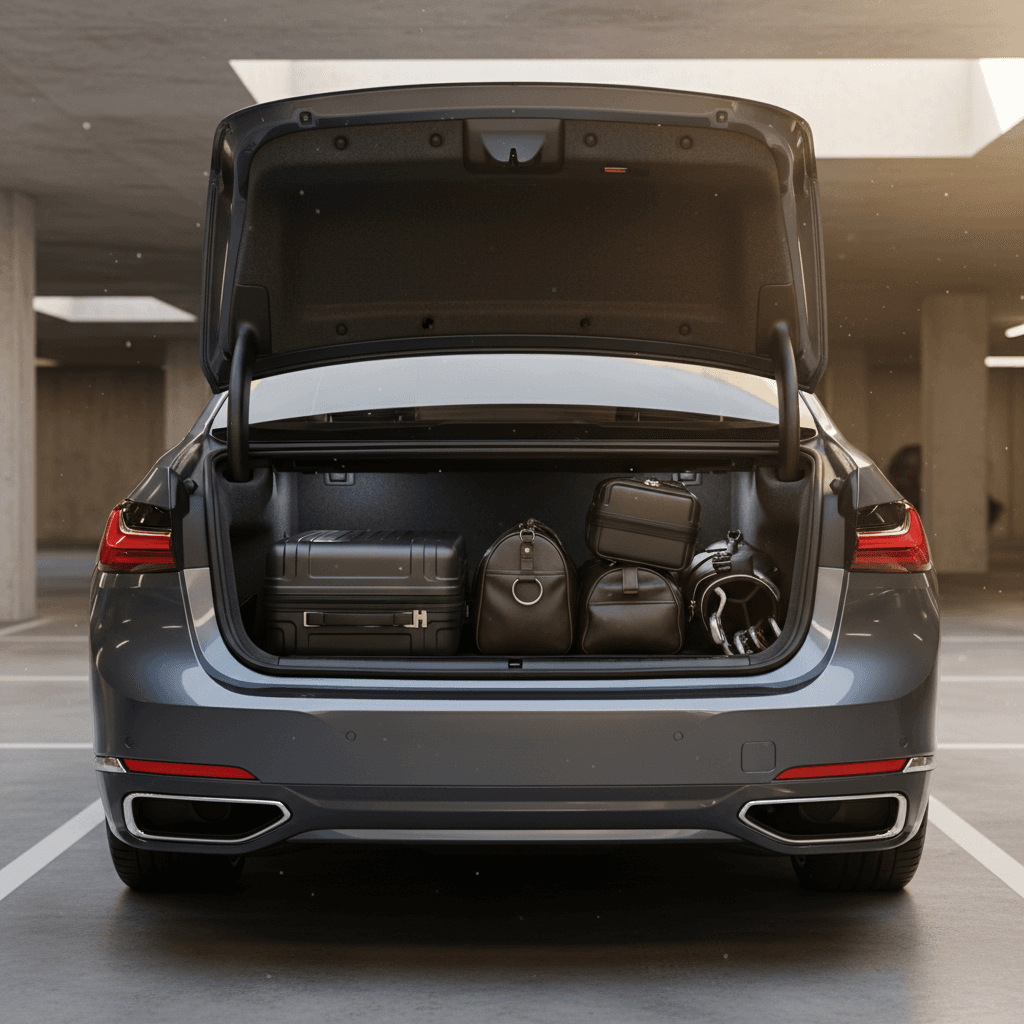
If you’re looking at a BMW i7, you’re probably expecting first-class comfort and cutting‑edge tech. But if this will be your daily driver or family road‑trip car, BMW i7 cargo space dimensions matter just as much as range and 0–60 times. How big is the trunk really, what can you fit back there, and how does it stack up against an EQS or Model S?
Quick cargo snapshot
BMW i7 cargo space overview
Unlike some ground‑up EVs, the BMW i7 shares its basic body shell with the 7 Series, so its cargo area looks and behaves more like a traditional full‑size luxury sedan than a hatchback EV. That has pros (quiet cabin, classic sedan profile) and cons (less flexible cargo space, no giant opening).
Key BMW i7 cargo numbers
Specs vary by source
BMW i7 cargo space dimensions, in detail
Let’s break down what “about 17–18 cubic feet” actually means for the BMW i7’s trunk. Even if you’re not obsessed with specs, it helps to translate those numbers into bags, strollers and boxes.
BMW i7 cargo space dimensions (approximate)
Key BMW i7 trunk measurements to help you visualize the space. These are typical interior dimensions measured in real‑world tests and spec sheets, not official BMW blueprints.
| Measurement | Imperial (approx.) | Metric (approx.) | What it means in practice |
|---|---|---|---|
| Trunk volume (rear only) | 17–18 cu ft | ~480–510 L | Roughly three large suitcases plus soft bags. |
| Usable floor width | ≈ 40–42 in | ≈ 102–107 cm | Enough for two golf bags laid diagonally or side‑by‑side with careful packing. |
| Max floor length (to seatbacks) | ≈ 44–46 in | ≈ 112–117 cm | Works for most medium suitcases, duffels, and folded strollers. |
| Loading opening width | ≈ 38–40 in | ≈ 97–102 cm | Wide enough for big luggage but more tapered than a hatchback. |
| Opening height at center | ≈ 19–21 in | ≈ 48–53 cm | You slide luggage in rather than dropping tall boxes straight down. |
| Under‑floor well depth | ≈ 4–6 in | ≈ 10–15 cm | Useful for charging cables and small bags, not big suitcases. |
Exact dimensions can vary slightly by trim, audio system and market equipment.
Why the numbers don’t always match
Trunk layout and real-world usability
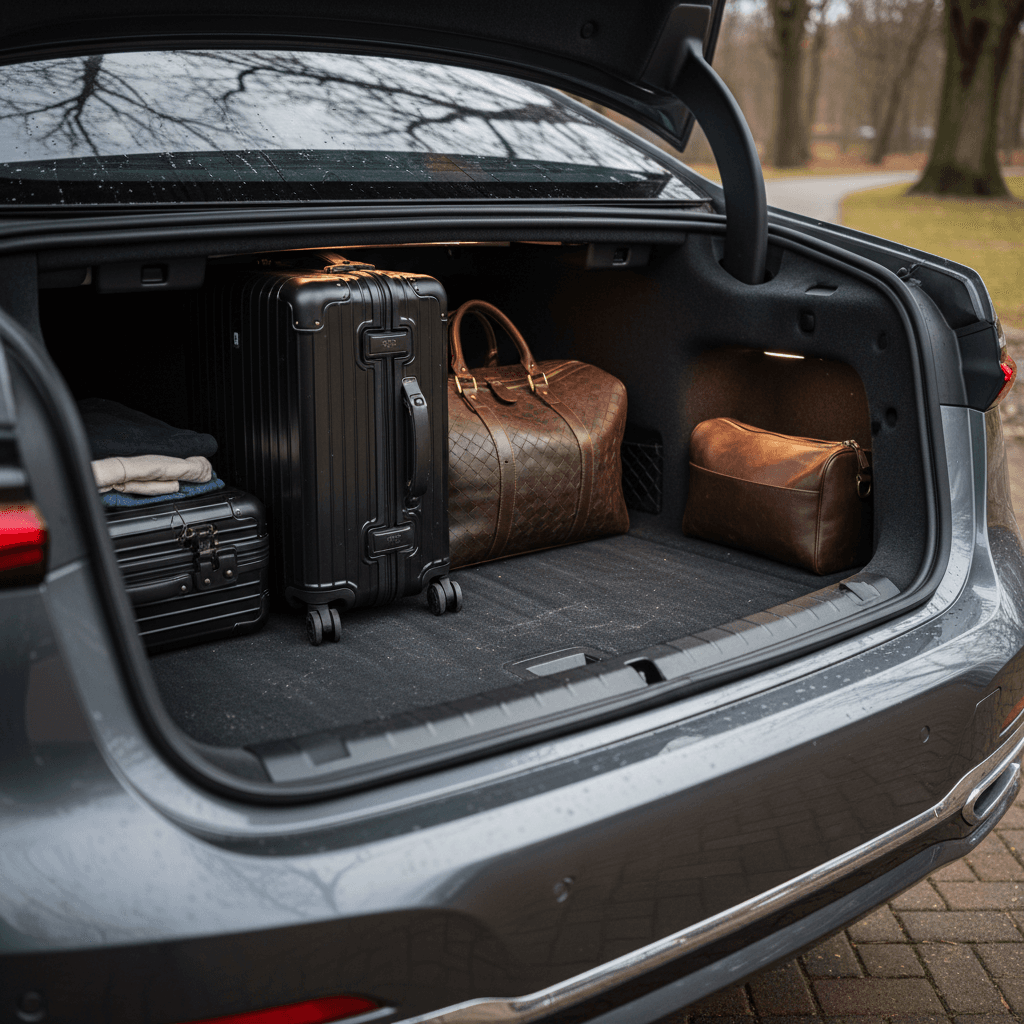
On paper, 17–18 cubic feet doesn’t sound bad, and day‑to‑day the BMW i7’s trunk is entirely workable. Where owners notice limitations is with bulky or tall items. The battery pack and rear motor sit under the floor, so the trunk is somewhat shallow vertically. You tend to pack items across the floor rather than stacking them high like you could in a liftback EV.
- The floor is long and fairly flat, which is great for roll‑aboard suitcases and duffels.
- The walls are squared‑off enough that you don’t lose much space to odd shapes.
- There’s a small under‑floor well that’s perfect for charging cables, detail kits, or a compact emergency kit.
- The trunk lid opens wide, but the sedan‑style cutout means the top of the opening is lower than in a hatchback.
Think “executive sedan,” not “travel wagon”
BMW i7 cargo space vs EQS, Model S, Lucid Air
Cargo space is one area where the i7 gives up ground to some direct rivals. Mercedes, Tesla, and Lucid lean more heavily into hatchback designs and dual‑compartment storage to maximize volume.
BMW i7 cargo space vs key luxury EV rivals
Approximate manufacturer and third‑party figures for trunk and total cargo capacity.
| Model | Rear trunk (seats up) | Front trunk (frunk) | Max cargo (all areas) | Practical takeaway |
|---|---|---|---|---|
| BMW i7 | ≈17–18 cu ft (≈500 L) | None | ≈17–18 cu ft | Comfort‑first sedan; fine for luggage but no extra hidden volume. |
| Mercedes‑Benz EQS Sedan | ≈22 cu ft | None | Up to ≈63 cu ft (seats folded) | Large hatch opening and fold‑flat seats make it far more flexible. |
| Tesla Model S | ≈26 cu ft | ≈3 cu ft | Low‑30s cu ft total | Hatchback design and frunk give more real‑world space. |
| Lucid Air | ≈16 cu ft rear | ≈10–11 cu ft front | Mid‑20s+ cu ft total | Massive frunk plus rear trunk; most storage in the class. |
| Porsche Taycan (sedan) | ≈14 cu ft rear | Small (~2 cu ft) | Mid‑teens total | Sportier focus, less cargo than i7 but similar in concept. |
Values are rounded and may vary by model year, wheel size and market.
Where the i7 still wins
Do BMW i7 rear seats fold? Ski hatch and long items
This is where it gets a little confusing, because not every i7 is configured the same way. Older 7 Series sedans often had fixed rear seatbacks with only a ski pass‑through. On the i7, equipment and market matter.
BMW i7 rear seat and pass‑through options
What to look for if you care about hauling long items.
Fixed rear seats with ski hatch
Some i7s (especially with executive rear packages) use a fixed rear seatback but include a narrow center pass‑through. That lets you slide skis or other long, thin items through while still seating two passengers in back.
It’s the most common setup for chauffeur‑style builds.
Split‑folding rear seats (40/20/40)
Other builds offer a 40/20/40 split‑folding rear seat. This greatly improves cargo flexibility: you can drop part or all of the backrest to load long boxes or sports gear.
If practicality matters, seek out used i7s with this option specifically.
Don’t assume the seats fold
Will your long items fit in a BMW i7? Quick checks
1. Measure your longest regular item
Know the rough length of your skis, stroller, folding bike, or fishing rods. The practical diagonal length from trunk corner to front seatback in the i7 is typically around 6 to 6.5 feet with a pass‑through and front seat moved up.
2. Confirm pass‑through or folding seats
Open the trunk and look at the rear bulkhead. Is there a latching door in the center? Do you see levers or buttons labeled for seat folding? If not, plan for roof racks or rear carriers instead.
3. Check trunk opening height
If you routinely haul tall boxes (like computer towers or moving cartons), make sure they can clear the trunk opening, not just fit inside the floor footprint.
4. Look under the floor
Lift the trunk floor panel. How deep is the well? On the i7 it’s modest, but still useful for charging cables, a tire inflator, or a compact roadside kit, keeping the main space free for luggage.
Practical cargo tips for BMW i7 owners
Once you understand the i7’s strengths and limits, you can pack around them. Owners who are happiest with the car treat the trunk as an executive sedan’s suitcase bay, not a work van.
Best use cases for BMW i7 cargo space
- Airport runs: 3–4 checked bags plus carry‑ons, especially if you use soft‑sided luggage.
- Golf weekends: Two golf bags plus overnight duffels fit comfortably.
- Client visits: Sample cases, briefcases and presentation gear stay neat and protected.
- Family errands: Groceries, strollers and sports bags work fine if you pack flat.
Situations where i7 cargo may feel tight
- Moving day: Bulky boxes, lamps, and small furniture quickly hit the trunk’s height limit.
- Bike transport inside: Wheels‑off bike inside the cabin is tricky without folding seats.
- Big dog crates: The low roofline and trunk opening make tall crates harder to load.
- Camping for five: Multiple large hard‑shell suitcases plus gear will test the limits.
Soft bags beat hard cases
Shopping for a used BMW i7: cargo questions to ask
If you’re considering a used BMW i7, cargo practicality should be part of your inspection checklist, right alongside battery health and range. This is where a transparent used‑EV retailer like Recharged can help you understand how the car will fit your life before you sign anything.
Used BMW i7 cargo & practicality checklist
Ask about rear seat configuration
Does this particular i7 have a 40/20/40 split‑folding rear seat or just a fixed backrest with ski hatch? That single option dramatically changes how family‑friendly the car is.
Confirm trunk volume and layout in person
Numbers online are helpful, but open the trunk, lift the floor panel, and picture your actual luggage. If you’re buying remotely, ask the seller for photos with standard suitcases in the trunk for scale.
Look for included accessories
Cargo nets, trunk mats, and dividers make the shallow space easier to manage. A good used retailer will document these in the listing so you know exactly what comes with the car.
Review battery health and payload expectations
If you often drive fully loaded with passengers and luggage, pay attention to payload capacity and battery health. At Recharged, every vehicle comes with a Recharged Score Report that includes verified battery diagnostics so you know the car can handle real‑world trips.
Plan for extra cargo options
If the trunk won’t cover your biggest trips, consider a hitch‑mounted cargo carrier or roof box (where approved). Ask the seller or retailer whether the car is already equipped with a hitch or roof‑rack prep.
How Recharged fits in
BMW i7 cargo space: FAQ
Frequently asked questions about BMW i7 cargo space
Bottom line: Is BMW i7 cargo space enough?
The BMW i7 cargo space is perfectly adequate for what the car is built to be: a full‑size, ultra‑comfortable electric sedan for executives, families and long‑distance cruisers. You get about 17–18 cubic feet of trunk room, smart under‑floor storage, and in some configurations, split‑folding seats or a ski pass‑through for longer items. What you don’t get is an SUV’s flexibility or a Lucid‑style mega‑frunk.
If your life is mostly airport runs, golf trips, school pickups and occasional road‑trips, the i7’s trunk will feel just fine, especially if you pack with soft luggage. If you often haul bikes, bulky boxes, or a full family’s camping gear, it’s worth cross‑shopping more cargo‑oriented EVs, or planning for a hitch rack or roof box. And if you’re exploring a used BMW i7, pairing this cargo knowledge with a transparent battery health report from a retailer like Recharged will help you choose a car that fits both your gear and your lifestyle.