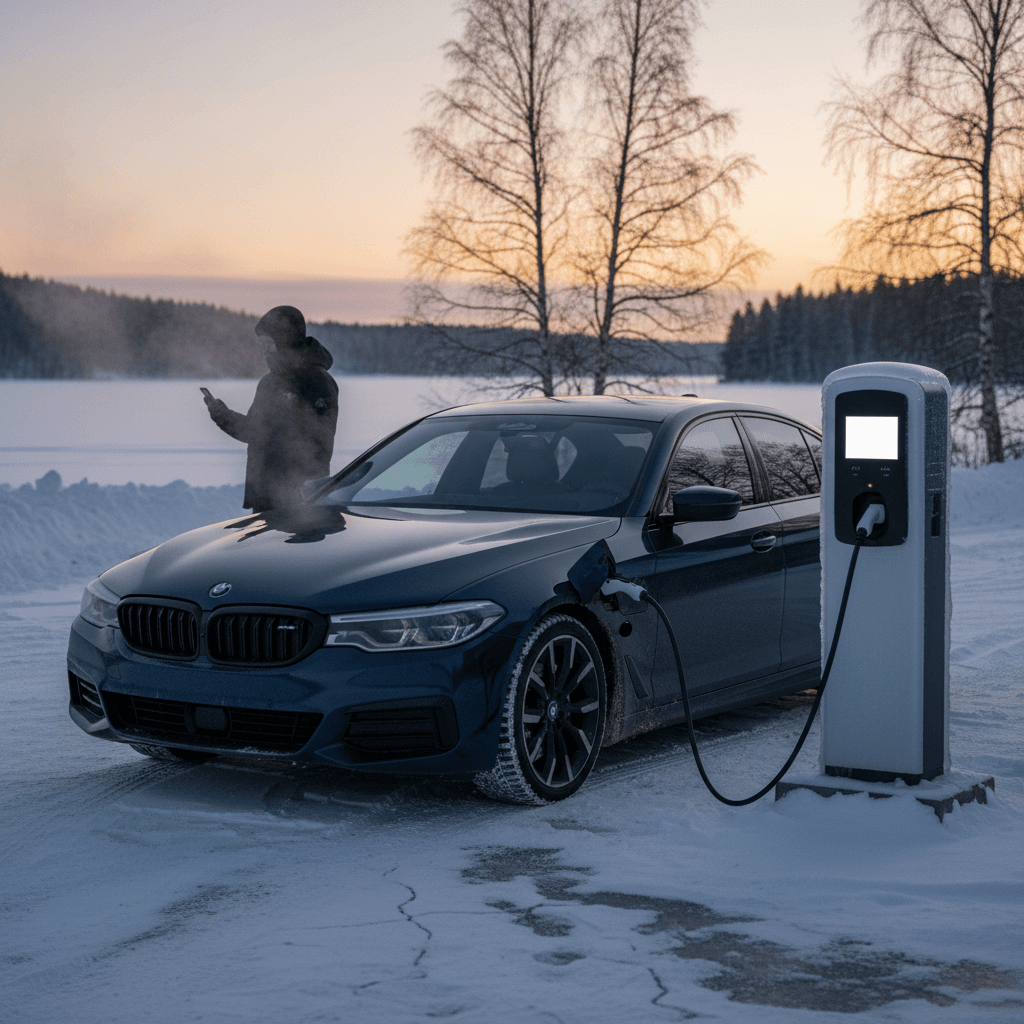
You don’t buy a BMW 5 Series to live in fear of the weather app. Yet the first winter with a BMW i5 can be sobering: that glossy EPA range number suddenly looks like it was printed on a beach in San Diego. If you’re wondering how much BMW i5 range in cold weather you’ll actually get, and whether something’s wrong with your car, you’re asking the right questions.
Key takeaway
BMW i5 range in cold weather: the short version
BMW i5 range: paper vs. winter pavement
Broadly, if your i5 is healthy and you’re not driving like you’re late to your own wedding, you can expect: - Light winter (around 32–45°F): roughly 15–25% less than EPA - Real winter (teens to 20s°F): 25–35% less than EPA - Deep cold (single digits and below): 35–45%+ less than EPA, especially at 70–80 mph
Don’t panic at the first cold snap
BMW i5 EPA range vs real-world winter range
On paper, the BMW i5 is a long‑legged car. Across 2024–2026 model years, U.S. EPA combined ratings cluster roughly in this neighborhood, depending on year, trim and wheels:
BMW i5 EPA ratings vs typical mild & cold-weather range
Approximate real‑world highway ranges assume a steady 70–75 mph cruise from ~100% down to ~10–15% state of charge.
| Model / wheels | EPA rated range (mi) | Mild weather highway (mi) | Cold weather highway (mi) |
|---|---|---|---|
| i5 eDrive40, small wheels | 290–310 | 230–260 | 170–210 |
| i5 eDrive40, larger wheels | 270–290 | 215–245 | 160–195 |
| i5 xDrive40 (AWD) | 265–285 | 210–240 | 155–190 |
| i5 M60 xDrive | 250–260 | 200–225 | 145–180 |
Numbers below are generalized, not lab‑certified, think of them as realistic planning tools, not guarantees.
Remember how EPA works
How much BMW i5 range loss to expect in cold weather
Let’s put usable numbers around that anxiety. Here’s what most i5 owners actually experience in North American winters when the car and battery are healthy.
Typical BMW i5 winter range loss by scenario
These aren’t worst‑case horror stories, this is the everyday, lived reality.
Short city trips, 25–35°F
Loss: 20–30% vs EPA
- Lots of stops and cabin reheating
- Battery never fully warms up
- Range gauge can look pessimistic
Mixed driving, 20–30°F
Loss: 25–35% vs EPA
- Some highway, some surface streets
- Cabin heat running most of the time
- Good representation of “real life”
Fast highway, 0–20°F
Loss: 35–45% vs EPA
- 70–80 mph with heat on
- High aero drag + cold pack = rough
- This is where winter feels brutal
Reality check for road‑trippers
Why cold weather hurts BMW i5 range
The battery is a chemical factory
The i5’s pack is roughly 81 kWh usable, a big slab of chemistry living under your floor. Cold slows the reactions inside lithium‑ion cells. The result:
- Higher internal resistance (it takes more energy to pull power out)
- Lower usable capacity until the pack warms up
- More waste heat every time you accelerate hard
BMW’s thermal management will gently warm the battery, but that energy has to come from somewhere: your state of charge.
Your cabin is a tiny electric house
In a gas 5 Series, cabin heat is essentially a byproduct of wasted engine heat. In a BMW i5, warmth is a line item on the battery’s expense report.
- Electric resistance heaters and heat pumps can draw several kW
- Short trips are the worst, pre‑heating the whole cabin for 10 minutes, then driving five
- Defrost + rear defogger + heated seats/steering wheel all stack up
The car is honest: every watt going to comfort is a watt not going to range.
- Aerodynamic drag goes up in denser cold air, so 75 mph in January costs more than 75 mph in May.
- Winter tires and cold rubber increase rolling resistance, shaving a few more miles off.
- Ancillaries, wiper heaters, mirror defrosters, battery conditioning for DC fast charging, are a steady background drain.
The range‑killer combo
Models, wheels and how they change winter range
Not every i5 is created equal in the snow. Same silhouette, same badge, different winter reality. Two big levers matter: drivetrain (RWD vs AWD) and wheel/tire package.
Which BMW i5 trims shrug off winter best?
Think of these as personalities, not just spec sheets.
i5 eDrive40 (RWD)
The efficiency king. With a single rear motor, the eDrive40 is the least thirsty version.
- Best winter range of the lineup
- Still plenty of power for everyday driving
- Ideal if you do lots of highway miles
i5 xDrive40 & M60 (AWD)
Dual‑motor grip, dual‑motor appetite. All‑wheel‑drive i5s draw more power, especially when you lean on acceleration.
- Expect ~5–10% less winter range than an equivalent eDrive40
- M60 trades more range for performance tuning
- Better traction, but you pay in miles
Wheel size: fashion vs physics
City vs highway: where the BMW i5 suffers most in winter
Owners are often surprised by this, but the i5’s worst‑case winter scenario is usually long, fast highway runs, not stop‑and‑go city driving.
City + suburbs in the cold
- Lower speeds mean much less aerodynamic drag
- Regen braking works frequently, recapturing energy
- But the cabin keeps reheating if you take lots of short trips
If you bunch errands together and pre‑heat while plugged in, winter city range can be surprisingly decent, sometimes only 15–25% below what you see in mild weather.
Highway in the cold
- Constant 65–80 mph magnifies aero drag and rolling resistance
- Little chance for regen; you’re pushing air, not recapturing it
- Heater runs continuously to fight cold air leaking around the cabin
This is where your i5 that posted 250+ miles in September now struggles to reliably give you 160–190 miles between fast charges in January.
Plan winter routes for speed, not hero pulls
10 ways to protect your BMW i5 range in winter
Practical BMW i5 winter range playbook
1. Pre‑condition while plugged in
Use the My BMW app or in‑car scheduling to warm the cabin and battery while the car is still charging. That front‑loads the biggest energy spike onto your wall or DC fast charger, not your on‑road range.
2. Use seat and wheel heaters first
On an EV, heated surfaces are dramatically more efficient than blasting hot air. Set the cabin a couple of degrees cooler than you would in a gas car and lean on the seat + steering wheel heat to stay comfortable.
3. Avoid lots of short, separate trips
Cold starts are expensive. If possible, chain errands so the pack and cabin stay warm. Five 4‑mile trips are much harsher on winter range than one 20‑mile loop.
4. Dial back highway speed
Above about 60 mph, aero drag becomes the villain. On a truly cold day, backing down by 5–10 mph can improve your i5’s effective range by **10–15%** without feeling like you’ve parked in the right lane.
5. Pick the right drive mode
Eco‑oriented modes soften throttle response and temper peak power draw, which helps the battery run more efficiently. You still have power when you need it, just without the constant temptation of full‑tilt launches on cold cells.
6. Be smart about DC fast charging
On a trip, it’s often faster in winter to charge more often in the **10–60%** band than to sit and nurse the car to 90–100%. Your i5 charges quickest when the battery is warm and not too full.
7. Keep tire pressures in check
Cold air drops tire pressure, raising rolling resistance. Check pressures monthly in winter and keep them at the door‑jamb spec. Under‑inflated winter tires are a silent range thief.
8. Use scheduled departure
Set a daily departure time so the car finishes charging and warming the cabin right before you leave. That means the pack is warm and full, and your first 10–20 miles aren’t spent dragging a cold battery up to temperature.
9. Clear snow and ice before driving
A roof full of snow or ice is aerodynamic sabotage. It increases drag and adds weight. Brush the car off fully, including the rear bumper and roofline, before you hit the highway.
10. Watch your accessories
Defrosters, rear window heat, and fog lights all nibble at range. Use them when you need them, but don’t leave them running out of habit on a clear, dry, sub‑freezing afternoon.
When winter range is normal vs. a battery problem
The hard part for any EV owner is separating “normal winter behavior” from “my battery is aging or unhealthy.” The BMW i5 is no exception. Here’s a simple framework.
Is your i5’s winter range normal?
Red‑flag patterns vs. normal cold‑weather quirks.
Probably normal
- Range drops 20–35% vs EPA in cold months, then rebounds in spring
- Your displayed range improves when weather warms and you drive gently
- DC fast charging speeds are lower when you arrive at the charger with a cold pack, but improve after 15–20 minutes of driving or a second session
- Short, heated trips show terrible mi/kWh, longer drives look healthier
Worth investigating
- Large winter‑like range loss (30–40%) persists into warm weather
- Range estimate never climbs even after several gentle, long drives
- Significant difference between what the gauge predicts and what you can actually achieve, in any season
- Car throws battery or charging‑system warnings, or refuses to fast charge at reasonable speeds even in mild temperatures
How Recharged separates winter loss from real battery issues
Ready to find your next EV?
Browse VehiclesShopping for a used BMW i5 in a cold-climate state
In places like Minnesota, upstate New York or Colorado, the EV question is rarely “Can it go far?” It’s “Can it go far in February?” The BMW i5 can, if you pick the right spec and go in with your eyes open.
Cold‑climate BMW i5 shopping priorities
What to look for if your winters are long, dark and full of potholes.
| Priority | What to favor | Why it helps in winter |
|---|---|---|
| Trim choice | eDrive40 over M60 | Higher efficiency and lighter powertrain means more winter headroom. |
| Wheels & tires | Smaller aero wheels + quality winter tires | Better efficiency and better snow traction is a rare win‑win. |
| Options | Heat pump, heated wheel & seats | More comfort per kWh than blasting cabin heat alone. |
| Charging access | Home Level 2 + reliable DC fast chargers on your routes | Lets you pre‑condition and plan winter trips without white‑knuckling SOC. |
| Battery health | Documented pack health, SoH tests, service history | Ensures that winter loss is seasonal, not baked‑in degradation. |
For many drivers in true winter states, a more efficient trim on smaller wheels beats the flashiest spec sheet.
Why battery reports matter more in cold states
FAQ: BMW i5 range in cold weather
Frequently asked BMW i5 winter range questions
Bottom line: Is the BMW i5 good in cold weather?
The BMW i5 doesn’t break the laws of physics, and it doesn’t get a special exemption from winter. In cold weather, you will see its range shrink, often by 20–35%, sometimes closer to 40–45% on fast, frigid interstate runs. That’s not the car failing you; that’s the car telling you the truth about energy, something gas sedans have hidden behind a big tank and a hot engine for a century.
If you choose the right trim, respect the impact of wheels and tires, and drive with a little mechanical sympathy, the i5 is a genuinely capable year‑round luxury sedan, even in real winter states. And if you’re looking at a used BMW i5, especially in a cold‑weather market, pairing this winter‑range understanding with a Recharged Score battery‑health report, fair market pricing, and expert EV guidance gives you something rare in the luxury world: a cold, clear picture of what you’re actually buying.