If you’re cross‑shopping the BMW i5 against an i4, a gas 5 Series, or even an SUV, you’re probably asking a simple question: **how much cargo space does the BMW i5 have with the seats down**, and is it enough for your life? The answer depends heavily on whether you’re looking at the **sedan** sold in the U.S. or the **i5 Touring wagon** available in Europe.
Sedan vs Touring at a glance
BMW i5 cargo space with seats down: quick overview
BMW i5 cargo space headline numbers
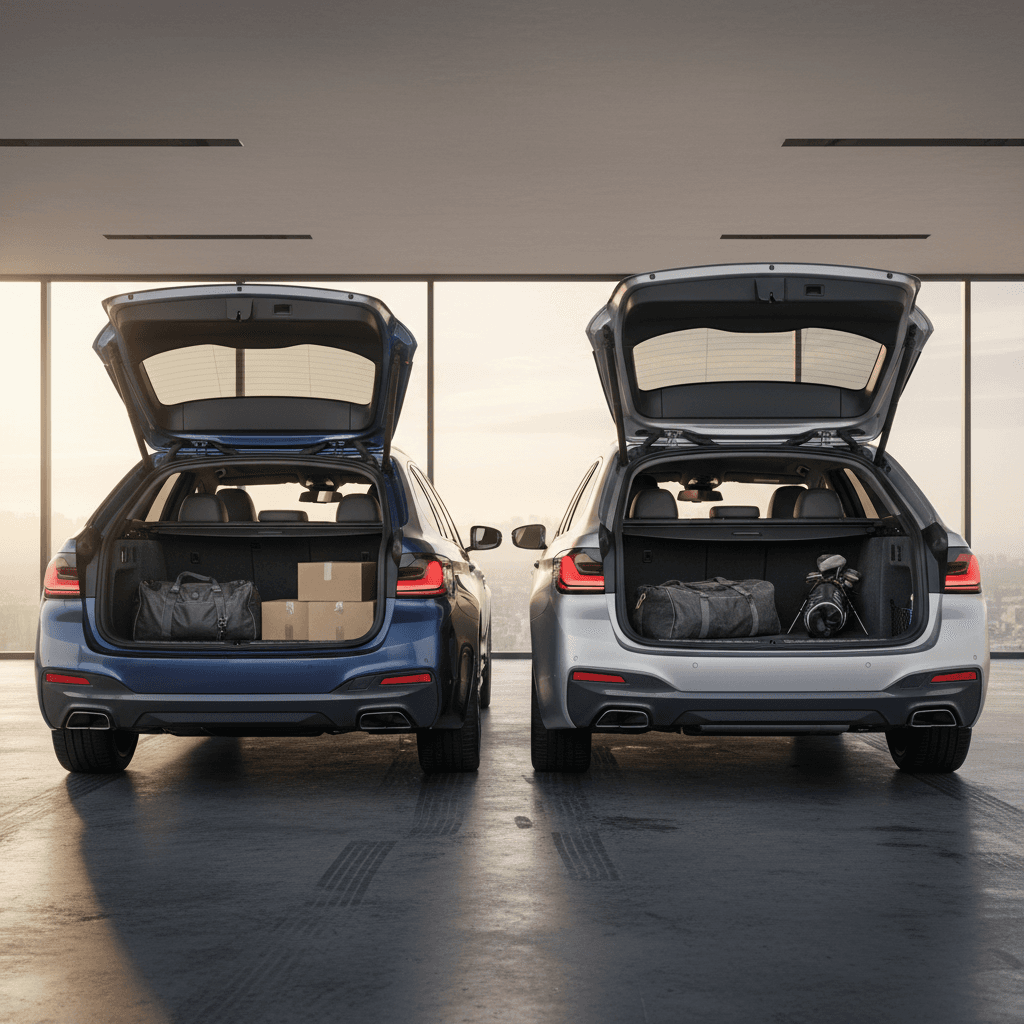
For the **BMW i5 Touring** (the wagon‑style 5 Series): - With the rear seats up, you get about 570 liters (20.1 cubic feet) of cargo space. - With the 40/20/40‑split rear seats folded flat, that jumps to about 1,700 liters (60.0 cubic feet) of maximum cargo volume. For the **BMW i5 sedan**, BMW publishes a trunk volume with the seats up (similar to other 5 Series sedans), but doesn’t quote an official “max cargo” number with the rear backrests folded. In practice, you should think of it as a **roomy midsize luxury sedan trunk with a long pass‑through**, not a wagon‑like load bay.
Be careful with online numbers
BMW i5 Touring cargo space with seats down
If you’re in a market that gets the **BMW i5 Touring (G61)**, this is where the cargo story gets impressive. The Touring shares its basic body with gas and plug‑in‑hybrid 5 Series wagons, so you don’t sacrifice practicality for going electric.
BMW i5 Touring cargo specs
Key cargo figures for the BMW i5 Touring wagon, including maximum space with seats down.
| Configuration | Volume (liters) | Volume (cubic feet) | Notes |
|---|---|---|---|
| Seats up | 570 L | 20.1 cu ft | Standard trunk area behind rear seats |
| Seats down (max) | 1,700 L | 60.0 cu ft | Rear backrests folded flat, loaded to roof |
| Rear seat split | 40/20/40 | , | Center section folds independently for skis or long items |
| Under‑floor storage | Small bin | , | Good for cables or charging adapters |
Exact figures can vary slightly by market and equipment (for example, premium audio systems may change under‑floor storage), but the basic volumes stay the same.
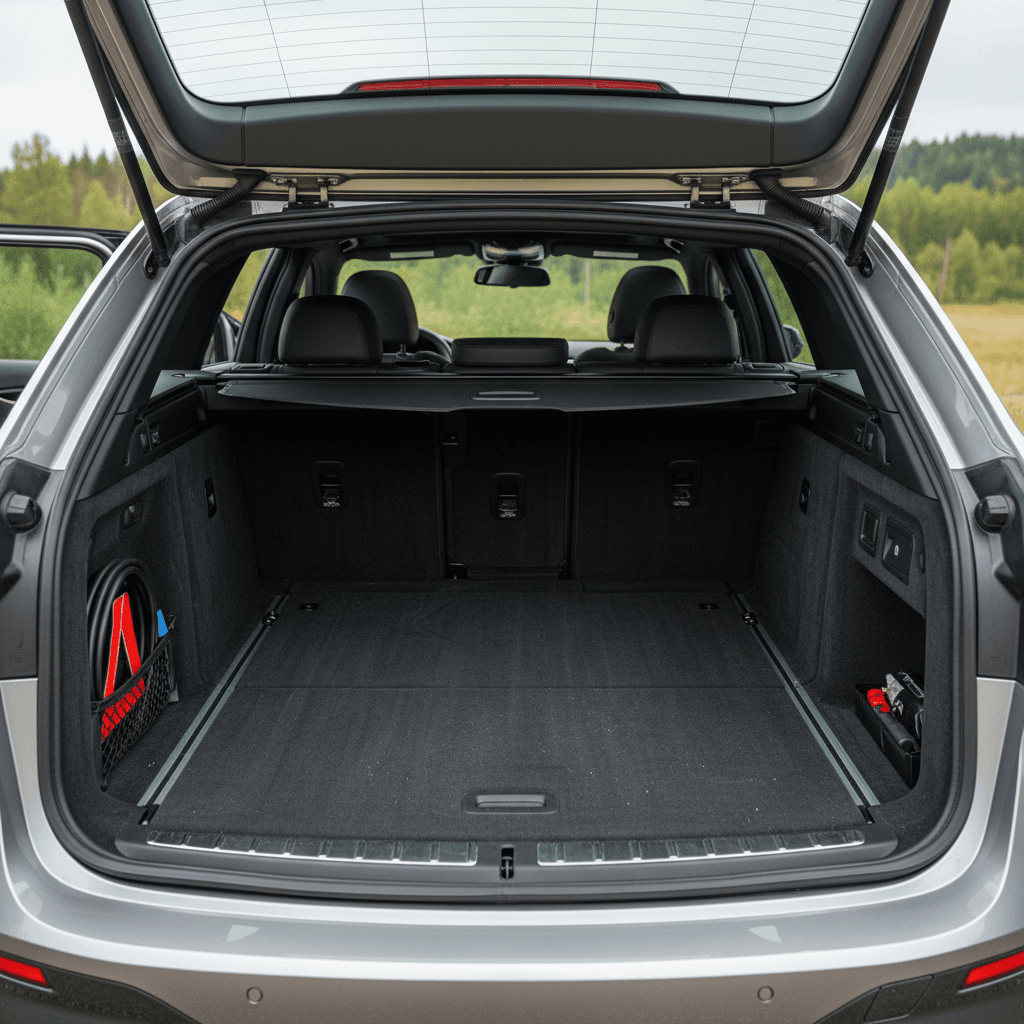
- Flat load floor: when you drop the rear backrests, they line up almost flush with the cargo floor for easy sliding of boxes or luggage.
- 40/20/40 split: you can carry two rear passengers and still fold the middle section for skis, a stroller frame, or long boxes.
- Electric tailgate: wide, square opening makes bulky items much easier to load than in any sedan.
- No loss vs gas models: the i5 Touring’s battery packaging doesn’t meaningfully reduce cargo volume compared with combustion 5 Series wagons.
How “60 cu ft” compares in the real world
What about BMW i5 sedan cargo space with seats down?
Most shoppers in the U.S. will only see the **BMW i5 sedan**, which has a traditional trunk rather than a hatch or wagon tailgate. BMW quotes a generous trunk volume with the rear seats up (in line with other 5 Series sedans), and you get **split‑folding rear backrests** to extend that space when you need it.
What you can expect from the i5 sedan
- Deep, wide trunk that easily swallows checked suitcases or a week’s worth of groceries.
- Folding rear seatbacks (typically 40/20/40 in higher trims) so you can load skis, snowboards, or flat‑packed furniture.
- Under‑floor storage for charging cables and smaller items instead of a frunk.
Limitations vs the i5 Touring
- The sedan’s trunk opening is smaller, so tall or boxy items may not fit even if there’s theoretical volume.
- With seats down you get a longer load area, but not the full, box‑like cargo bay of the wagon.
- For dog crates, bikes, or garage‑sale furniture, the Touring or an SUV is much more forgiving.
Why BMW doesn’t always quote a “seats‑down” number for sedans
Dimensions, openings, and real‑world usability
Cargo specs tell part of the story, but what matters day‑to‑day is how easy a car is to live with. Here’s how the **BMW i5 with seats down** behaves when you actually try to pack it.
BMW i5 cargo usability details
Key traits that matter when you’re loading up the car, not just reading a brochure.
Opening size
The i5 sedan has a wide but sedan‑style opening, so big boxes may need to be angled in. The i5 Touring has a tall, square tailgate that’s much friendlier for awkward items.
Floor height
Both versions keep the floor at a comfortable height for loading. The Touring’s tailgate lip is low, which makes lifting heavy items easier than in many SUVs.
Seat folding
Most trims offer a 40/20/40 rear seat split. You can fold just the center, one side, or the whole row, giving you flexibility between passenger and cargo space.
Good news for flat‑pack furniture fans
BMW i5 vs i4 vs an SUV for cargo duty
If you’re comparing **BMW’s electric lineup**, it’s worth zooming out. The i5 isn’t the only EV in the family, and the right choice depends on how often you max out the cargo area.
Cargo role of BMW i4, i5 sedan, and i5 Touring
How the main BMW EV body styles stack up when you fold the rear seats and start loading.
| Model | Body style | Cargo access | Best for |
|---|---|---|---|
| BMW i4 | Liftback hatch | Huge hatch opening, split folding rear seats | People who want sporty looks and surprisingly useful hatchback access |
| BMW i5 sedan | Conventional sedan | Large trunk, folding backrests, smaller opening than i4/i5 Touring | Drivers who prioritize luxury ride and cabin space, but still want a usable trunk and pass‑through |
| BMW i5 Touring | Wagon/estate | Tall tailgate, 60 cu ft with seats down | Families or road‑trippers who’d normally buy an SUV for space but prefer a car‑like drive |
Figures are simplified to highlight cargo role: the i5 Touring is the true wagon alternative, while the i4 and i5 sedan sit between sedan and SUV practicality.
Reality check: do you actually need an SUV?
Packing tips to make the most of an i5
How to maximize BMW i5 cargo space with seats down
1. Use the 40/20/40 split strategically
Fold only the sections you need. In both sedan and Touring, you can drop the middle section for skis or boards while keeping two rear passengers comfortable.
2. Load heaviest items low and forward
Place heavy boxes or luggage against the seatbacks (now part of the floor) to keep weight close to the axle and prevent items from sliding under braking.
3. Think in layers, not stacks
Instead of tall, tippy towers of gear, spread items out in flatter layers. The Touring’s 60 cu ft bay especially rewards low, dense loading that doesn’t block your rear view.
4. Use soft bags instead of hard cases
Duffel bags, soft‑sided coolers, and reusable grocery bags flex into the available space better than hard suitcases, especially in the sedan where the opening is the limiting factor.
5. Don’t forget under‑floor storage
Stash charging cables, tire inflators, and cleaning supplies under the cargo floor so they don’t steal space from luggage. That space is easy to overlook but adds up.
6. Secure loose items
Use the built‑in tie‑downs, nets, or a simple ratchet strap to keep heavier items from sliding. This is as much a safety issue as it is about protecting trim pieces.
Road‑trip hack
Shopping used? How to evaluate i5 cargo space in person
Specs are helpful, but if you’re considering a **used BMW i5**, especially through a digital retailer like Recharged, you’ll want to translate the numbers into “will this work for my stuff?” Here’s how to do that efficiently.
Used BMW i5 cargo checklist
Questions and tests to run before you commit.
Measure your real cargo needs
Grab a tape measure and note the size of your biggest recurring items: stroller, dog crate, musical instruments, sample cases, etc. When you’re looking at an i5 listing, compare those dimensions to the trunk depth and seat‑down length.
Study photos and 360° views
On a marketplace like Recharged, use the interior and cargo photos to see how flat the floor is with the seats down, how tall the opening is, and where the wheel arches intrude. That can matter more than raw liters.
How Recharged helps here
- If possible, fold the seats yourself during a test drive and see whether the resulting space fits your actual gear list.
- Bring a sample item, like a stroller chassis or instrument case, and confirm it fits through the opening, not just in the raw cubic‑feet number.
- If you’re cross‑shopping an SUV, ask yourself whether you’re really using height, or just length and floor area. If it’s mostly length, an i5 may be plenty.
- For Touring models in particular, check whether options like premium audio have eaten into under‑floor or side storage where you’d want to stash small items.
BMW i5 cargo space with seats down: FAQ
Frequently asked questions about BMW i5 cargo space
Bottom line: which BMW i5 is right for your cargo needs?
If your priority is **maximum cargo space with the seats down**, the verdict is simple: the BMW i5 Touring is the heavy hitter, with about 60 cubic feet of space and a wagon tailgate that rivals many SUVs. It’s the BMW EV that lets you do IKEA runs, family road trips, and dog‑plus‑bike adventures without feeling like you compromised for style.
The **BMW i5 sedan**, which is the default choice in the U.S., offers a more traditional luxury experience: quiet ride, generous rear legroom, and a deep trunk with folding backrests. You don’t get the big, boxy opening of the Touring, but for most buyers it’s more than sufficient for daily life and occasional big loads, especially if you pack intelligently.
If you’re still deciding between an i4 hatch, an i5 sedan, an imported i5 Touring, or an SUV, it’s worth stepping back from the spec sheets and focusing on your actual use cases. On Recharged, every used EV comes with a Recharged Score battery‑health report, transparent pricing, and EV‑savvy specialists who can help you choose the body style that fits both your cargo reality and your budget.