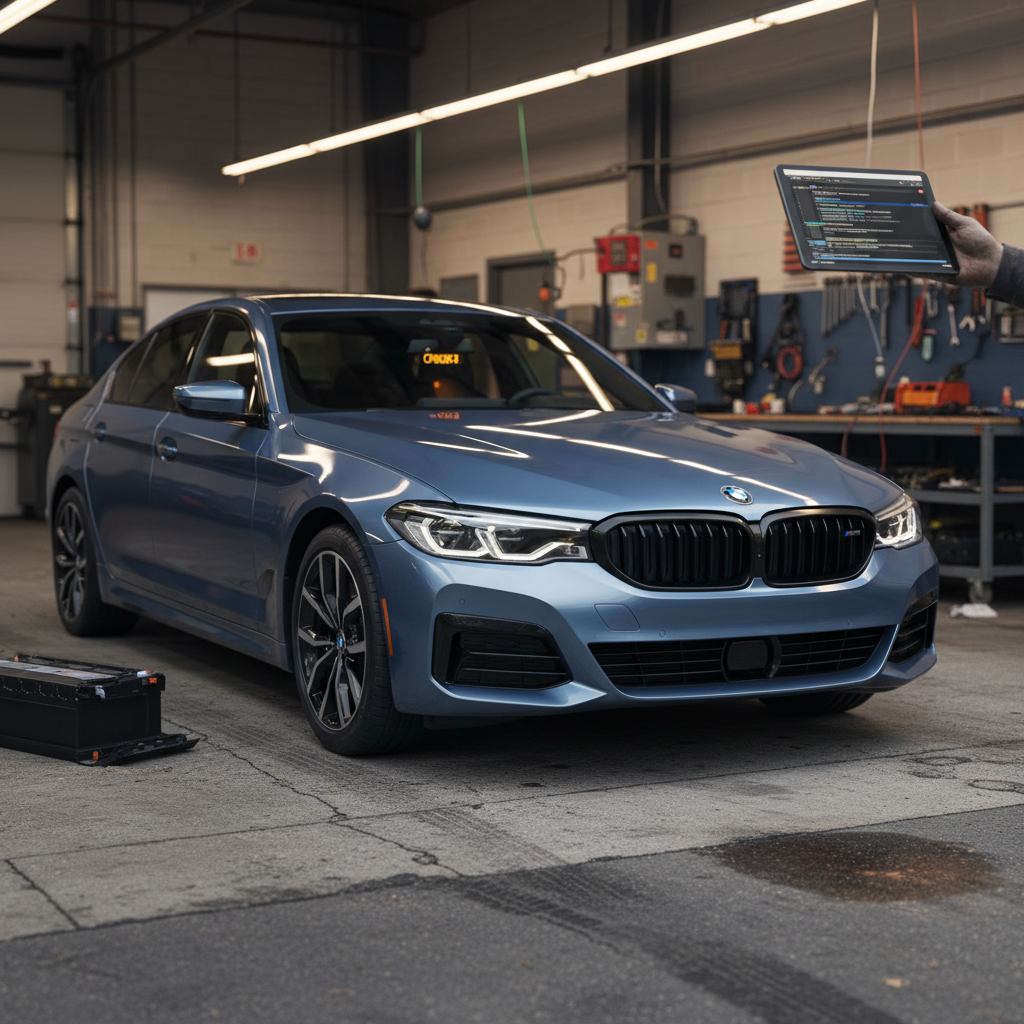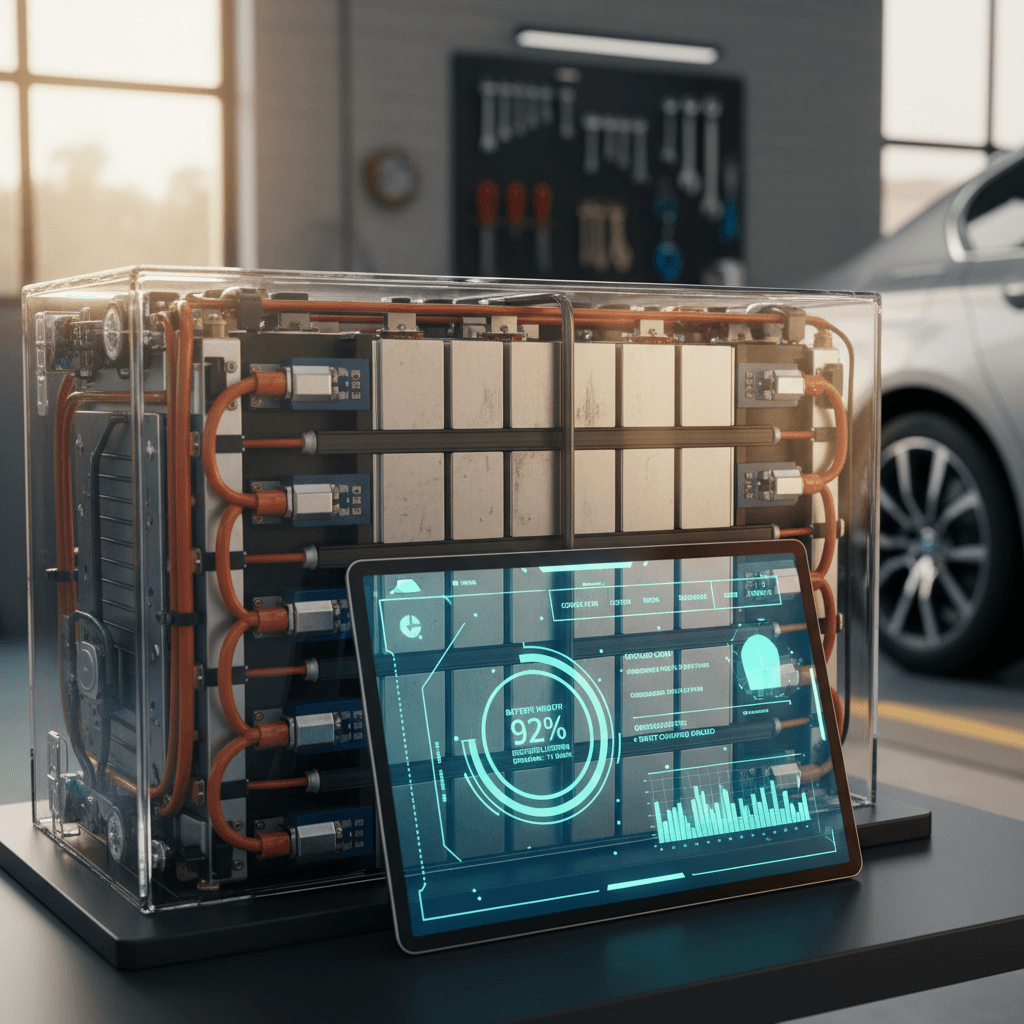
If you’re considering a BMW i5, or eyeing a used one, the big question is simple: how long does the BMW i5 battery actually last? Battery lifespan drives everything from range and performance to resale value, so it pays to understand what’s happening under the floor before you sign anything.
Short answer
BMW i5 battery lifespan overview
The BMW i5 is built on BMW’s latest-generation battery technology, and while the nameplate is relatively new, we’re not starting from zero. BMW has been selling full EVs and plug‑in hybrids for over a decade, and the pattern is consistent: modern liquid‑cooled packs degrade slowly when they’re treated reasonably well.
BMW i5 battery lifespan at a glance
Those numbers don’t guarantee what your specific car will do, but they tell you what BMW engineered for and is willing to legally support. The rest comes down to how you charge, how you drive, and the climate you live in, all things you can influence.
How long does a BMW i5 battery last in the real world?
Because the i5 is still a relatively new model, we don’t have 15‑year case studies yet. What we do have is a decade of data from earlier BMW EVs and other luxury electric sedans. Those real‑world results point to a reasonable expectation: 10–15 years of useful life for the BMW i5’s battery, often longer, before range becomes the limiting factor for most owners.
- In the first 2–4 years, many EVs lose roughly 5–10% of usable capacity.
- From years 5–10, the curve tends to flatten, maybe another 5–10% if the car is driven and charged sensibly.
- Beyond 10 years, the picture depends heavily on mileage, temperature extremes, and how aggressively it’s been fast‑charged.
Think in terms of range, not years
BMW i5 battery warranty explained
BMW, like most major automakers, backs the i5’s high‑voltage battery with a separate, long‑term warranty. Exact details can vary by market and trim, but the general pattern is:
Typical BMW i5 high-voltage battery warranty coverage
Always confirm exact terms for the model year and region you’re buying, but this is the general structure you can expect.
| Coverage type | Duration (years) | Mileage cap | What it usually covers |
|---|---|---|---|
| High-voltage battery | 8 | 100,000+ | Defects in materials/workmanship and excessive capacity loss (often below ~70% of original). |
| EV drivetrain components | 8 | 100,000+ | Electric motor, inverter, and associated high‑voltage components. |
| Corrosion/perforation | Up to 12 | Unlimited/High | Protection against rust‑through on body structure. |
| Basic vehicle warranty | 4 | 50,000 | Non‑battery defects and most standard components. |
Battery warranty gives you a safety net during the years when most degradation happens.
Check the fine print
Battery degradation: what BMW i5 owners actually see
We don’t have a decade of BMW i5‑only data yet, but we can look closely at BMW i4, iX, and other modern EVs that use similar chemistry and thermal management. Owners who mostly charge at home on Level 2, avoid sitting at 100% or 0% for long periods, and don’t live in extreme heat tend to see:
Typical degradation patterns for modern BMW EVs
These expectations map closely to what you can expect from a well‑cared‑for BMW i5.
Year 0–3: Break‑in phase
It’s normal to see an initial drop in range as the battery “settles.”
- ~5–8% range loss is common.
- You’ll barely notice day to day.
Year 4–8: Slow and steady
After the early loss, degradation usually slows.
- Maybe another 5–7% loss.
- Still well within warranty window.
Year 9+ : Use‑case dependent
High‑mileage or harsh‑use cars may slide toward the 70% mark.
- Garage‑kept, gently charged cars often do much better.
Don’t chase 0% degradation
Factors that shorten or extend BMW i5 battery life
Things that shorten lifespan
- Constant DC fast charging on road‑trip speeds when you don’t need it.
- Frequently charging to 100% and letting the car sit full for days.
- Letting the pack sit near 0% for long stretches, especially in the cold.
- Unrelenting heat – baking in the sun in hot climates without shade or a garage.
- High annual mileage with lots of deep cycles.
Things that extend lifespan
- Mostly Level 2 home charging with a reasonable daily limit (70–80%).
- Preconditioning the cabin while plugged in instead of on battery.
- Parking in a garage or shade to reduce temperature swings.
- Gentle driving (smooth acceleration, using regen instead of constant hard braking).
- Regular software updates that optimize battery management.
Fast charging is a tool, not a lifestyle
Daily charging habits that maximize BMW i5 battery lifespan
The biggest knob you can turn as an owner is how, and when, you charge. The BMW i5 gives you plenty of control over charging limits and schedules; using them wisely can easily add years of comfortable range to the car’s life.
Daily charging habits for a long‑lived BMW i5 battery
1. Set a sensible daily charge limit
For regular commuting, aim for <strong>70–80% charge</strong> as your daily target. Save 100% for road trips where you’ll hit the highway soon after unplugging.
2. Plug in at home instead of deep cycling
Short, regular top‑ups on Level 2 are easier on the battery than repeatedly running from very low to very high states of charge.
3. Avoid sitting full or empty
Try not to leave the i5 parked at 100% or close to 0% for days at a time. If you charge to full for a long drive, time it to finish just before you depart.
4. Be choosy with DC fast charging
Use fast charging when you truly need it, and if possible, <strong>unplug around 80–90%</strong> instead of forcing the last few slower percent to 100%.
5. Use scheduled charging
Let the car charge during cooler overnight hours and finish near your morning departure. This reduces heat and avoids long periods at a full charge.
6. Keep the car updated
Allow software updates; BMW often refines how the battery is managed and cooled, and those small changes add up over years.
BMW i5 range loss: signs, symptoms, and when to worry
Every EV owner eventually notices, “I used to see a bit more range on this route.” The trick is separating normal aging from signs that something isn’t right. With a BMW i5, you’re watching for patterns, not one weird day in a snowstorm.
- Slightly lower estimated range at 100% than when new (within 5–15%) is usually normal aging.
- Seasonal swings, less range in winter, more in mild weather, are largely due to temperature, not permanent loss.
- A sudden, large drop in displayed range or state‑of‑charge jumps under acceleration/braking can point to a module or sensor issue.
- If you’re consistently seeing range well below what similar i5s report for the same use, it’s worth a deeper check.
Red flags to investigate quickly
Buying a used BMW i5? Battery health checklist
If you’re shopping used, battery health moves from “nice to know” to “critical.” The BMW i5 is a sophisticated, expensive machine; guessing about the pack’s condition is like buying a gas car without knowing whether the engine has oil.
Used BMW i5 battery health checklist
1. Start with the basics: age and mileage
Note the model year and odometer reading. A 3‑year‑old i5 with 60,000 miles will likely show more degradation than a 3‑year‑old car with 18,000 miles, even with the same warranty in place.
2. Ask how the car was charged
Look for cars that lived on <strong>home Level 2 charging</strong> rather than public fast charging every day. High fast‑charge use on a short‑range commuter can be a yellow flag.
3. Compare displayed range to original
With the car at or near 100%, compare its estimated range to what that trim was rated for when new. Some difference is normal; double‑digit gaps (20%+) deserve a closer look.
4. Look for battery or charging warnings
Scan service records and ask directly about any <strong>high‑voltage battery</strong> or charging fault messages, reduced‑power modes, or repeated dealer visits for electrical issues.
5. Request a professional battery health report
A proper battery health scan looks beyond dash estimates and reads actual capacity, imbalance between modules, and fast‑charge history. This is where a <strong>Recharged Score</strong>‑style report becomes invaluable.
6. Confirm remaining battery warranty
Check the in‑service date (when the car was first sold) and calculate how much of that 8‑year high‑voltage warranty is left. A car with several years of coverage remaining is a very different risk profile than one near the end of its term.
How Recharged evaluates BMW i5 battery health
When you buy a used BMW i5 through Recharged, you’re not guessing where the battery sits on its life curve. Every vehicle comes with a Recharged Score Report that pulls the pack out from under the marketing brochure and into the light.
What goes into a Recharged battery health view for a BMW i5
Beyond a simple range estimate, we dig into how the pack has actually lived.
Verified capacity & degradation
We use professional‑grade diagnostics to estimate the battery’s usable capacity versus when it was new.
- Highlights early‑life abuse or high‑mileage wear.
- Gives you a concrete sense of remaining range headroom.
Charge behavior history
Patterns tell the story.
- Frequency of DC fast charging.
- Typical charge windows (e.g., 20–80% vs. 0–100%).
Risk & warranty context
We translate the data into plain language.
- How the pack compares to similar i5s.
- How much factory warranty is left and what it really covers.
Ready to find your next EV?
Browse VehiclesThat transparency matters. It turns a BMW i5 from a gorgeous unknown into a predictable long‑term partner, and it helps you negotiate price with real numbers, not hunches. If you already own an i5 and are thinking about selling, the same type of data can justify your asking price or help you decide whether to sell now or hold.
BMW i5 battery lifespan FAQ
Frequently asked questions about BMW i5 battery life
Key takeaways on BMW i5 battery longevity
The BMW i5’s battery is built to go the distance. For most owners, you’re looking at a decade or more of comfortable, usable range, and the first 8 years are backed by a robust high‑voltage warranty. How you charge, where you park, and how the car has been used will bend that curve up or down, but you’re not stepping into an experiment; you’re stepping into a mature generation of EV tech.
If you’re buying new, build good charging habits from day one and the pack will likely outlast your loan. If you’re shopping used, don’t settle for vibes and a guess at the dash: demand real battery data. At Recharged, every used EV we sell, BMW i5 included, comes with a Recharged Score Report that spells out battery health, pricing fairness, and what to expect long‑term, so you can fall in love with the car without worrying about what’s hidden in the floor.