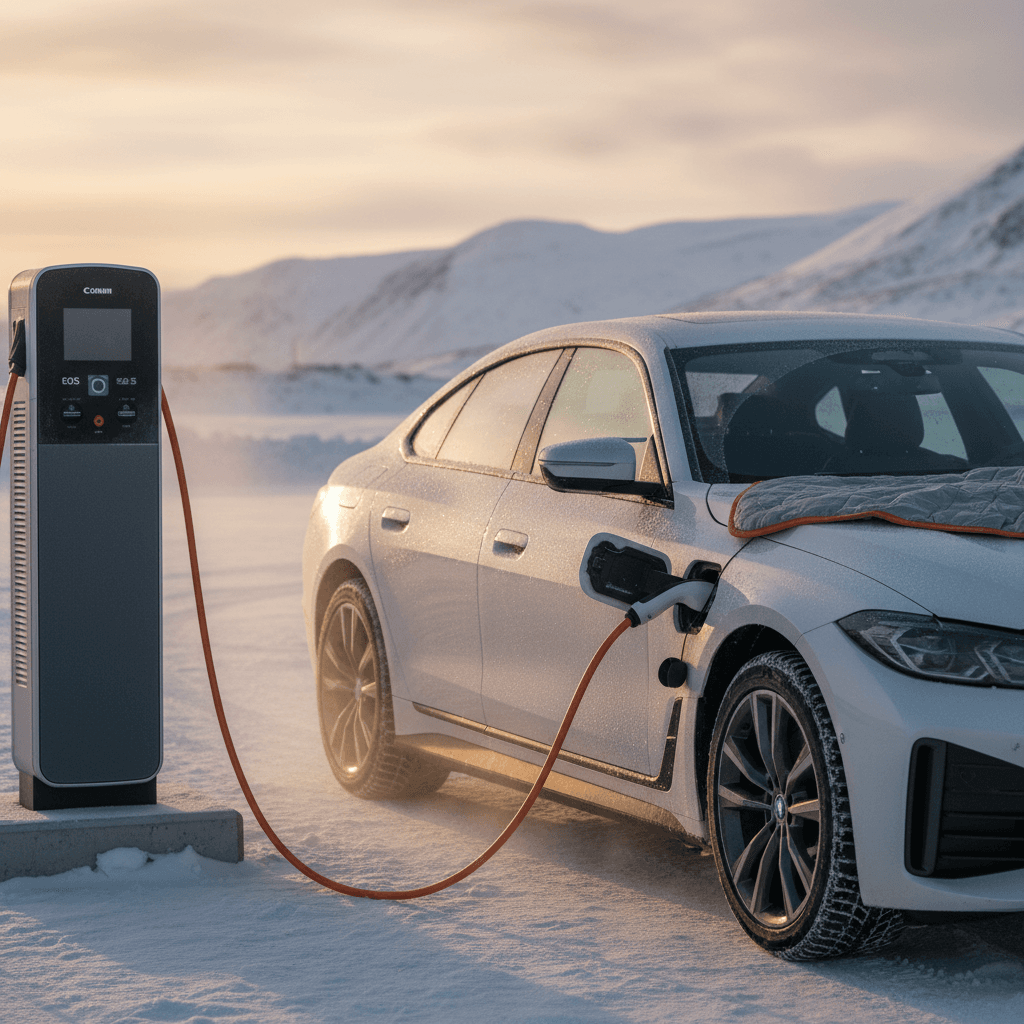
If you own a BMW i4 or you’re shopping for one, you’ve probably heard that **EVs lose range in cold weather**. The natural question is: what BMW i4 winter range loss percentage should you actually expect, and is your real‑world range “normal” or a red flag? This guide pulls together recent data, real‑world reports, and BMW‑specific insights so you can plan winter driving with confidence.
Key takeaway
BMW i4 winter range loss at a glance
Typical BMW i4 winter range impact
Across the broader EV market, recent large‑sample studies show that many electric vehicles retain about **80% of their rated range in freezing conditions**, a ~20% loss on average. Within that context, the BMW i4 has emerged as one of the **more winter‑resilient** EVs on sale, with some independent testing and data analyses putting its loss closer to the **high‑teens to mid‑20% range** in controlled cold‑weather scenarios.
Good news for i4 owners
How much range does the BMW i4 lose in winter?
Let’s put some numbers to the phrase “BMW i4 winter range loss percentage.” Exact figures depend on temperature, speed, wind, tires, and how you use climate control, but a few clear patterns emerge from recent testing and owner data:
- Across thousands of EVs tested in winters 2024–2025, **average winter loss ~20%** of rated range in freezing conditions is typical, not catastrophic.
- BMW‑specific cold‑weather tests and real‑world logs suggest the **i4 often beats that average slightly**, with **~18–25% loss** in moderate winter highway driving when driven efficiently.
- In harsher conditions (10–20°F, snow, winter tires, headwinds), an i4 can easily show **25–30%+ loss**, especially at higher interstate speeds and with a warm cabin.
- On repeated **short trips** where the car must re‑heat the pack and cabin over and over, owners sometimes report winter losses **north of 30%**, which is more about usage pattern than the car itself.
Don’t judge winter performance by the dash estimate alone
Why the BMW i4 loses range in cold weather
Cold weather doesn’t just affect BMW i4 range, it affects every EV. But understanding **where the energy goes** helps you decide what’s worth changing and what’s simply physics.
Four main reasons your i4 uses more energy in winter
Three are physics, one is driving habits
1. Cold batteries are less efficient
Lithium‑ion cells don’t like the cold. At low temperatures, **internal resistance rises**, so the pack can’t deliver or accept energy as efficiently. The i4’s thermal management works to warm the battery, but that process itself uses energy.
2. Cabin and seat heating load
In an EV, there’s no waste engine heat; your BMW i4 has to **generate all cabin warmth electrically**. Running the HVAC at 70–72°F in a 15°F environment can easily consume several kW, especially over short trips.
3. Heavier, stickier winter tires
Winter tires and cold, dense air increase **rolling resistance and aerodynamic drag**. Great for grip, not great for efficiency. You might see a few percentage points of range loss from tires alone.
4. More time spent at lower efficiency
Winter often means **longer warm‑up, idling in traffic, and slower speeds on messy roads**. You spend more time in energy‑hungry stop‑and‑go, with less efficient use of every kWh.
Think “energy budget,” not just miles
City vs. highway winter range in your i4
Steady highway driving
On a long, steady highway run, say 65–75 mph for several hours, your BMW i4’s winter range loss typically settles into the **low‑20% range** if temperatures are around 20–30°F and winds are reasonable.
- Battery and cabin heat up once, then stay relatively stable.
- Energy use per mile becomes predictable after the first 10–20 minutes.
- If you precondition before departure, you can trim the worst of the early inefficiency.
Short city errands
The **worst‑case winter range percentages** almost always show up for drivers who do lots of short hops, 3–8 miles at a time, with the car fully cooling off between trips.
- The car re‑heats the pack and cabin again and again.
- Heating energy dominates over traction energy, so range per charge looks poor.
- Dash estimates can suggest **30–40%+ loss**, even when nothing is wrong with the battery.
Don’t diagnose battery health from one cold week
How driving style and trips affect winter range
Two BMW i4s on the same road, at the same temperature, can show very different winter range loss percentages depending on how they’re used. A few patterns show up again and again in owner data:
- **Speed is king.** Pushing 80+ mph on a cold, dry interstate can eat another **5–10 percentage points** of range compared with cruising at 65–70 mph.
- **Aggressive acceleration** burns through energy that regen braking can’t fully recapture, especially when the battery is cold and limits regen at first.
- **Preconditioning while plugged in** shifts some of the heating burden to the grid instead of the battery, reducing the energy hit once you leave.
- Parking outside in single‑digit temps means your i4 starts every drive with a colder pack than a car kept in a **garage**, which can easily show up as a **noticeable difference in early‑trip range.**
Quick behavior tweaks that improve winter range
Set a realistic cruise speed
On longer winter drives, aim for **65–70 mph instead of 75–80+**. That small change can save you ~10–15% energy use at highway speeds.
Use Eco Pro or Efficient settings
BMW’s Eco driving modes dial back throttle response and **optimize climate control**, trimming unnecessary energy use without making the car feel sluggish.
Lean on seat and wheel heaters
Heated seats and steering wheel use **far less power** than blasting the cabin fan. You can often drop the cabin setpoint 2–4°F and feel just as comfortable.
Precondition before you unplug
Use your departure timer or app to **pre‑heat while plugged in**. That means fewer kilowatt‑hours spent warming the car once you’re on the road.
Realistic winter range by BMW i4 variant
Official EPA range ratings give you a starting point, but they’re based on mixed‑cycle testing in controlled conditions, not mid‑January in Minnesota. To translate that into real‑world winter expectations, it’s helpful to look at **approximate winter ranges if you lose 20%, 25%, or 30%** of that rating.
BMW i4 approximate winter range by variant
Illustrative estimates based on common U.S. EPA ratings and winter loss scenarios. Your exact results will vary with temperature, terrain, tires, and driving style.
| BMW i4 variant (EPA rating) | Mild winter loss ~20% | Moderate loss ~25% | Harsh loss ~30% |
|---|---|---|---|
| eDrive35 (≈256 miles) | ≈205 miles | ≈190 miles | ≈180 miles |
| eDrive40 (≈301 miles) | ≈240 miles | ≈225 miles | ≈210 miles |
| xDrive40 (similar to eDrive40, region‑dependent) | ≈235–245 miles | ≈220–230 miles | ≈205–215 miles |
| M50 (≈245 miles, 19" wheels) | ≈195 miles | ≈185 miles | ≈170 miles |
Use this as a planning tool, not a promise, conditions matter.
How to use this table
How to reduce BMW i4 winter range loss
You can’t change physics, but you can change how hard winter hits your range. Here are practical steps, specific to the BMW i4, that meaningfully cut your winter range loss percentage without turning every drive into a science project.
BMW i4 winter range checklist
1. Always depart with a warm, plugged‑in car
Schedule departure in the BMW app or iDrive so the car **pre‑heats the cabin and battery from grid power**, not from the pack. That alone can save several percent of usable range on each cold start.
2. Program your first charger into navigation
If you’ll be DC fast‑charging, set that station as the destination in iDrive. The i4 will **precondition the battery for fast charging**, cutting charge times and reducing winter charging frustration.
3. Moderate your cabin temperature
Try **68–70°F plus seat and wheel heaters** instead of 72–74°F and a high fan speed. Over a 2–3 hour drive, that can be worth dozens of miles of additional range.
4. Watch your speed in deep winter
Above about **70 mph**, aerodynamic drag in cold, dense air climbs quickly. If you’re tight on range, driving 5 mph slower may get you to your destination with a bigger buffer than you expect.
5. Use Eco Pro for bad weather days
Eco Pro optimizes drivetrain response and climate behavior for efficiency. On messy winter days, that mode can quietly reduce your **winter range loss percentage** without much sacrifice.
6. Keep tires properly inflated
Tire pressure drops roughly 1 psi for every 10°F temperature drop. Under‑inflated winter tires add drag; keeping them at spec helps claw back a few miles of range.
When in doubt, plan a quick top‑up
Charging your BMW i4 in winter
Range loss doesn’t just show up while you’re driving. In real‑world data, some drivers report **noticeable overnight state‑of‑charge drops** when parking outside in sub‑freezing temps, plus **slower fast‑charging** unless the battery has been warmed beforehand.
- Expect **slower DC fast‑charging** if you arrive at a station with a cold battery and no preconditioning, even on a 150+ kW charger.
- If you park outside in very cold weather at a low state of charge (say **below 20%**), the car may limit power and regen until the battery warms up again.
- Using a **Level 2 home charger** (7–11 kW) overnight effectively doubles as gentle battery conditioning; the pack stays warmer and winter range loss is less dramatic on your morning commute.
How Recharged fits in
Used BMW i4 winter range: what buyers should know
Cold‑weather behavior is a **huge question mark** for many used‑EV shoppers. The good news is that BMW’s liquid‑cooled packs have generally shown **modest degradation** when cared for properly, and winter losses are mostly about **temperature and usage pattern**, not an aging battery suddenly “falling off a cliff.”
Winter questions to ask when buying a used BMW i4
These help you separate normal winter behavior from real issues
How was the car charged?
Ask whether the prior owner mostly charged on Level 2 at home or fast‑charged daily. Occasional DC fast charging is fine; heavy DC use in extreme heat or cold can accelerate wear.
Where did it live?
An i4 that spent its life in **mild climates or a garage** will generally show more predictable winter behavior than one that lived outdoors in extreme cold year‑round.
Can I see a battery report?
A structured battery‑health check, like the Recharged Score, helps you distinguish between normal winter range loss and a pack that’s genuinely lost capacity over time.
At Recharged, used BMW i4s go through **battery diagnostics and range modeling** that factor in weather and driving profiles. That means when we say an i4 can comfortably handle your 70‑mile freezing‑weather commute, we’re not just reading the EPA label, we’re accounting for what winter actually does to the car.
FAQ: BMW i4 winter range loss percentage
Frequently asked questions about BMW i4 winter range
Bottom line: is your BMW i4 good enough for winter?
When you cut through the noise, the story is straightforward: a healthy BMW i4 typically loses **about one‑fifth to one‑third of its rated range** in real‑world winter driving, putting it on the **stronger side of the EV pack** for cold‑weather performance. If your experience lands roughly in that band, and especially if your worst numbers come from short, heater‑heavy errands, your car is almost certainly behaving as expected.
Where drivers get in trouble is planning winter trips as if it’s 70°F and sunny. Build your plans around a realistic BMW i4 winter range loss percentage, learn to use preconditioning and efficient cabin settings, and your i4 becomes a **confident, year‑round daily driver** instead of a fair‑weather toy. And if you’re still shopping, platforms like Recharged can help you find a used BMW i4 with **verified battery health, transparent range expectations, and EV‑specialist advice** so winter never has to be a guessing game.