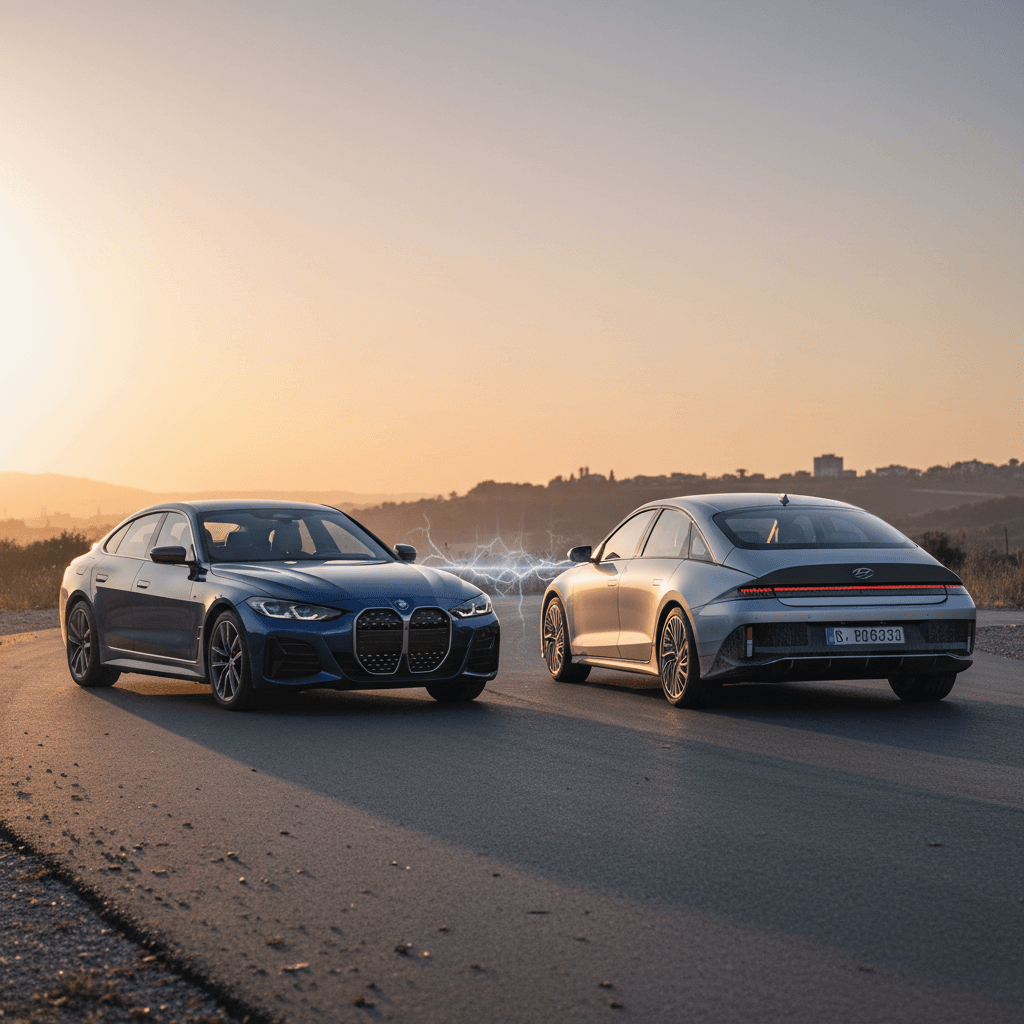
Wondering whether the BMW i4 or Hyundai Ioniq 6 is better for your next electric sedan? On paper they’re close: similar size, similar range, both quick, both handsome. In reality, they deliver very different personalities and ownership stories, especially once you start shopping the used market.
Short answer
BMW i4 vs Ioniq 6 in one glance
Key specs: BMW i4 vs Hyundai Ioniq 6 (U.S. models)
High-level comparison of the most common trims U.S. shoppers cross‑shop.
| BMW i4 eDrive40 / xDrive40 | BMW i4 M50 | Hyundai Ioniq 6 SE Long Range RWD | Hyundai Ioniq 6 AWD (SEL/Limited) | |
|---|---|---|---|---|
| Horsepower | 335–396 hp (single/dual motor) | 536 hp (dual motor) | 225 hp (single motor) | 320 hp (dual motor) |
| 0–60 mph (approx.) | 5.2–4.9 sec | 3.7–3.8 sec | ~7.0 sec | ~5.0 sec |
| EPA range | up to ~307 mi (RWD) | low 270s mi | 361 mi | 270–316 mi (trim‑dependent) |
| Battery size | ~80 kWh gross (larger pack trims) | ~80 kWh gross | 77.4 kWh | 77.4 kWh |
| DC fast‑charge peak | up to 200 kW | up to 200 kW | 350 kW capable | 350 kW capable |
| Drive layout | RWD or AWD | AWD only | RWD | RWD or AWD |
| Body style | 5‑door hatchback | 5‑door hatchback | 4‑door sedan | 4‑door sedan |
Figures below are typical EPA estimates and factory specs as of 2024–2025; always double‑check the specific car you’re considering.
Choosing trims smartly
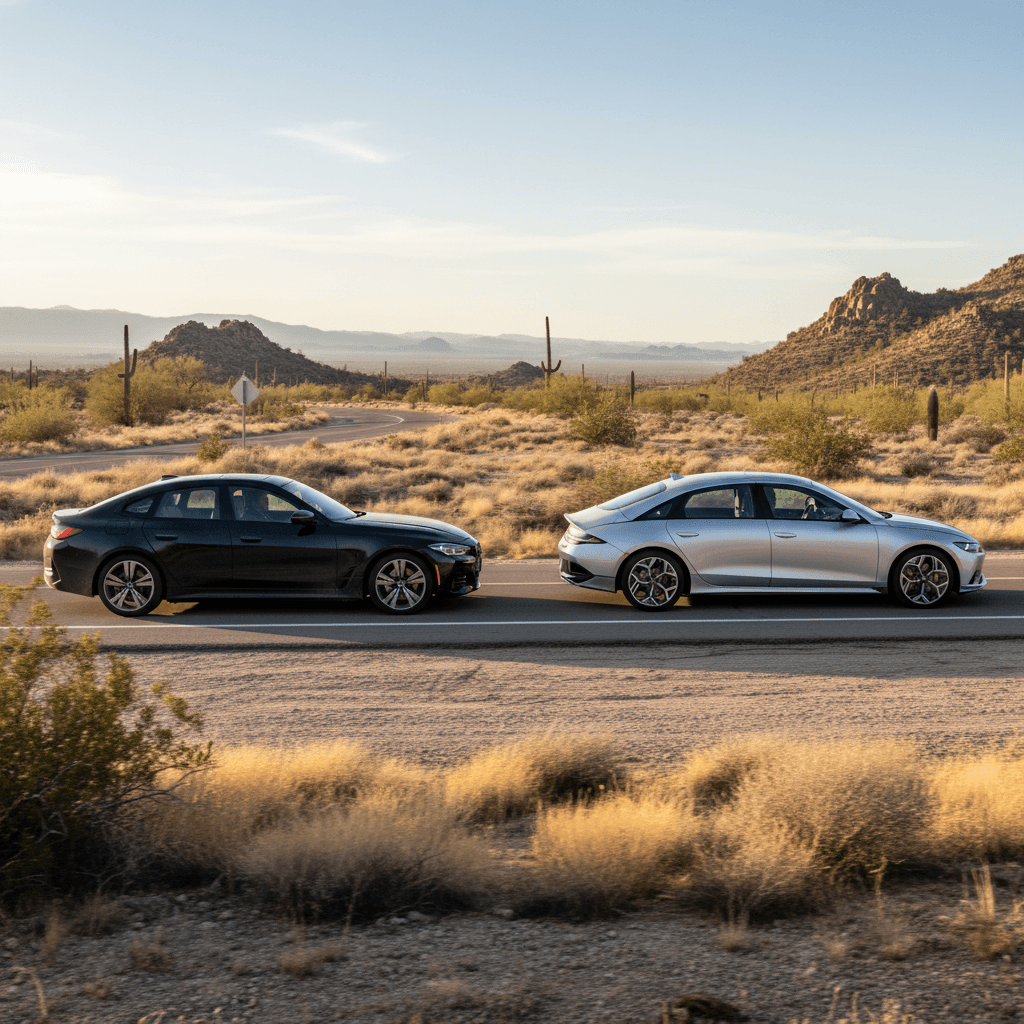
Driving feel & performance: sport sedan vs aero cruiser
BMW i4: classic BMW, just electric
If you grew up reading about BMW 3‑Series heroes, the i4 will feel familiar. Steering is precise, the chassis is buttoned‑down, and even the base eDrive40 has serious punch. Dual‑motor variants like the xDrive40 and M50 step into M3‑lite acceleration.
- eDrive40: brisk, rear‑drive balance, relaxed highway passing
- xDrive40: more grip and thrust, great all‑weather daily driver
- M50: genuinely fast, 0–60 mph in the mid‑3‑second range when tested by enthusiast outlets
Hyundai Ioniq 6: smooth, quiet, unhurried
The Ioniq 6 is less sports sedan, more long‑legged GT. Steering is light, the ride is supple, and Hyundai clearly tuned it for efficiency and calm rather than lap times.
- SE Long Range RWD: adequate power, tuned for efficiency
- AWD models: strong, but not BMW‑level, straight‑line pace
- Very quiet cabin and relaxed highway manners
Who wins on performance?
Range & efficiency: which goes farther on a charge?
Headline range numbers
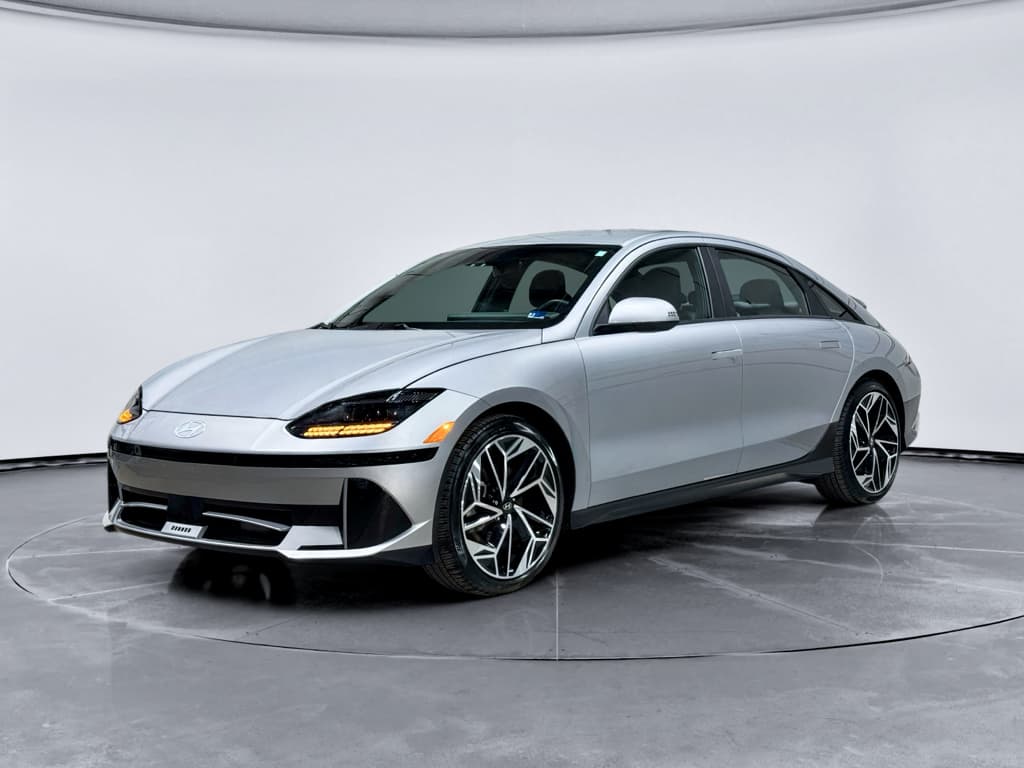
Hyundai designed the Ioniq 6 in a wind tunnel, and it shows. In SE Long Range RWD form it offers an EPA‑rated 361 miles of range, one of the best numbers of any non‑Tesla sedan today. Even AWD trims with the same 77.4 kWh pack still land in the 270–316‑mile zone, depending on wheels and equipment.
The BMW i4’s range depends heavily on trim and wheels. Larger‑battery versions cluster around the high‑200s to low‑300s miles on the EPA cycle. In the real world, owners often see somewhat lower numbers at highway speeds, but that’s true of the Hyundai as well. The small‑battery i4 eDrive35 exists, but if range anxiety is even a passing concern, you’ll want to focus on the eDrive40, xDrive40 or M50 instead.
Watch your wheel choices
Charging: speed, networks and road-trip ease
On paper, the Hyundai Ioniq 6 is the charging monster. Its 800‑volt architecture lets it accept up to 350 kW on compatible DC fast chargers, going from about 10–80% in roughly 18 minutes under ideal conditions. The BMW i4 caps out around 200 kW, typically taking a bit longer to add the same energy, think on the order of 30–35 minutes for a big 10–80% push when everything goes right.
Everyday charging: what living with each car feels like
Home charging parity, road‑trip nuance.
Home Level 2
Roughly a full charge overnight on a 240V Level 2 home charger for both cars.
The i4’s onboard charger tops out around 11 kW; the Ioniq 6’s is similar, so daily living at home feels nearly identical.
Public DC fast charging
The Ioniq 6’s 800‑V system lets it spike to very high charge rates on 350 kW stations, shaving minutes per stop.
The i4 charges a bit slower at peak, but not disastrously so, especially if you plan food or bathroom breaks around stops.
Network access
Both cars use CCS in current U.S. models, which means access to major non‑Tesla networks.
As NACS (Tesla’s plug) rolls out, expect adapters or native ports on newer examples; check the specific car’s build year and included hardware.
Real-world charging reality
Interior, comfort & tech: minimalist lounge vs classic BMW
BMW i4: familiar BMW cockpit
Inside, the i4 is essentially a contemporary 3‑/4‑Series cabin with an EV powertrain. Think driver‑oriented layout, well‑weighted controls, and a blend of physical buttons with a wide curved display.
- Material quality and fit/finish feel properly premium
- Seats skew firm and supportive, great for long drives
- iDrive infotainment is powerful but can feel menu‑deep
If you like traditional German luxury with a modern twist, this is your home turf.
Hyundai Ioniq 6: airy, minimalist lounge
The Ioniq 6 cabin feels like a clean Scandinavian living room built by a tech company. There’s lots of light, a flat floor, and clever ambient lighting.
- Softer, more relaxed seats; excellent ride comfort
- Simple, intuitive infotainment with physical buttons where you want them
- Some plastics remind you this started life as a mainstream Hyundai, not a German luxury badge
If you love the clean, screen‑forward aesthetic of modern EVs, the Hyundai will charm you.
Noise, comfort and daily fatigue
Practicality & space: hatchback utility vs sleek sedan
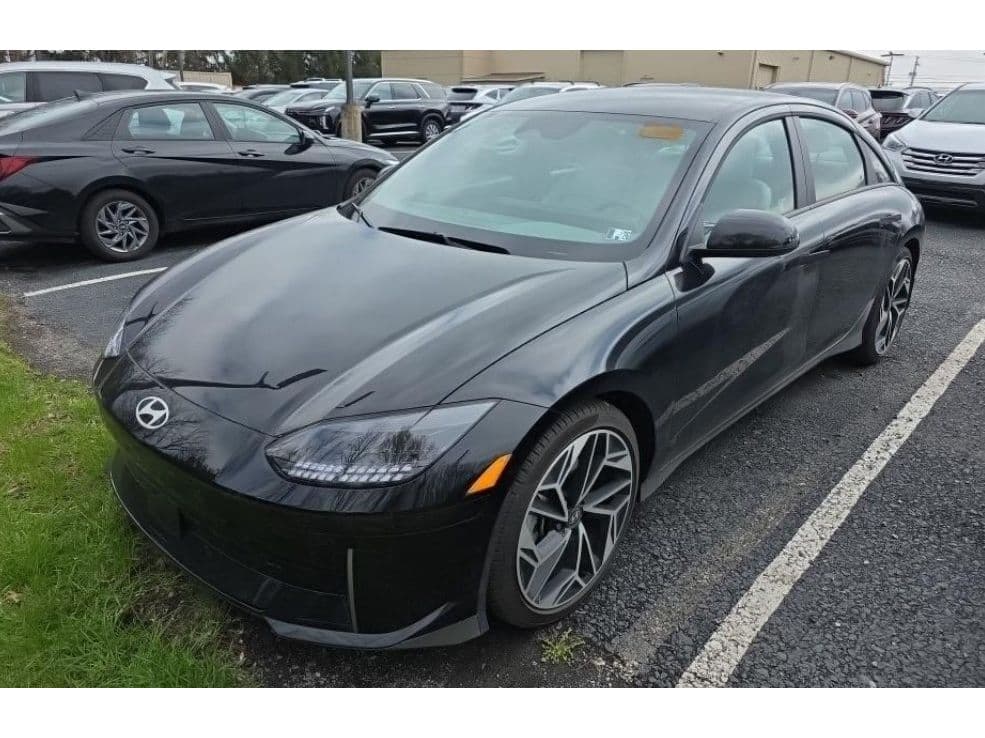
On pure styling, the Hyundai Ioniq 6 looks like an art‑deco teardrop that escaped from a design museum. The BMW i4, meanwhile, is your classic long‑hood sportback. The shape matters for more than curb appeal, it changes how you use the car.
How they carry people and stuff
Not all mid‑size EVs are equally practical.
Ingress & egress
The i4’s roofline is lower than many crossovers, but the hatch opening is large and practical.
The Ioniq 6 has a sedan trunk and a swoopy roof; tall rear passengers may feel the pinch on headroom.
Cargo flexibility
BMW i4 wins if you routinely haul bikes, strollers or IKEA runs.
Its hatchback and fold‑flat rear seats create a long, useful load space. The Ioniq 6’s sedan trunk is decent but less adaptable.
Family duty
For two adults and occasional rear passengers, either works fine.
If you’re regularly loading kids and gear, the i4’s hatch and more upright rear seating position make life easier, despite its sportier vibe.
Ownership costs & value, especially used
Sticker price new typically favors Hyundai. A well‑equipped Ioniq 6 SE or SEL Long Range undercuts an equivalently powerful BMW i4 by a healthy margin. Hyundai also tends to load in more standard tech and driver‑assist features at each trim level.
On the used market, things get more interesting. Luxury badges like BMW usually depreciate faster from MSRP, which can make a lightly used i4 surprisingly attainable compared with new. The Ioniq 6 starts cheaper but tends to hold value well thanks to its range and Hyundai’s battery warranty.
Cost factors to weigh before you pick a winner
1. Insurance and repair costs
The BMW badge and more complex hardware can mean higher insurance and out‑of‑warranty repair bills than the Hyundai. Get quotes for both before you decide.
2. Incentives and tax credits
Depending on model year, assembly location and your tax situation, one or both cars may qualify for federal or state EV incentives. Always run the VIN through current eligibility tools.
3. Battery warranty coverage
Hyundai’s high‑voltage battery warranty is generous, often 8 years/100,000 miles. BMW’s EVs also have long battery coverage, but details vary by year. On a used car, check how many years and miles remain.
4. Depreciation curve
A used BMW i4 may offer more hardware (power, luxury features) for similar money to a newer Ioniq 6. If you’re payment‑sensitive rather than brand‑sensitive, this can tilt the scales.
5. Service ecosystem
BMW dealers have deep experience with premium customers and loaner fleets; Hyundai dealers vary more. On the flip side, Hyundai service pricing is often gentler.
Don’t ignore battery health on either car
BMW i4 vs Hyundai Ioniq 6: which is better for you?
Best choice by driver type
You love driving, and it shows
You enjoy back roads, on‑ramps and feeling what the chassis is doing.
Badge appeal and interior quality matter as much as range numbers.
You’re fine trading a little efficiency for a lot of character.
➡️ <strong>Pick the BMW i4</strong>, ideally an eDrive40 or xDrive40. The M50 is your EV hot‑rod if budget allows.
You’re a commuter and road‑trip planner
You mostly drive highway miles and want to minimize charging stops.
You care more about efficiency and low operating costs than lap times.
You like quiet, calm cabins and simple tech interfaces.
➡️ <strong>Pick the Hyundai Ioniq 6 SE Long Range RWD</strong> if you can find one; AWD if you live with winter but still want strong range.
You’re buying a family’s only car
You’ll haul people, pets and cargo regularly.
Flexibility (fold‑flat space, big hatch) matters more than ultimate style points.
You might occasionally tow small items like bikes or a cargo tray.
➡️ <strong>Leaning BMW i4</strong> for hatchback practicality, unless you pair the Ioniq 6 with a second, more spacious vehicle in the household.
You’re budget‑conscious and shopping used
You want maximum EV for the money in the used market.
You’re OK with either badge if the numbers and condition work.
You care about verified battery health and fair pricing more than being first owner.
➡️ Shop <strong>both</strong>. Let condition, range, battery health and total cost dictate the winner rather than brand loyalty.
How Recharged helps you shop BMW i4 and Ioniq 6 used
Both of these cars are excellent; the real question is finding the right example. That’s where buying used through Recharged can simplify your life. Every BMW i4 and Hyundai Ioniq 6 we list comes with a Recharged Score Report that breaks down verified battery health, pricing vs. the used‑EV market, and any meaningful history details we can uncover, so you’re not playing guess‑the‑battery at a dealer lot.
You can browse cars entirely online, get EV‑savvy help from our specialists, and handle financing, trade‑in and paperwork digitally. If you’re near our Experience Center in Richmond, VA, you can also see select vehicles in person before you commit, or we can arrange nationwide delivery if you’re elsewhere.
Make the comparison on your terms
Ready to find your next EV?
Browse VehiclesFAQ: BMW i4 vs Hyundai Ioniq 6
Frequently asked questions
The BMW i4 and Hyundai Ioniq 6 are two answers to the same question: what should an electric sedan be? One leans into heritage sport‑sedan feel, the other into aero‑obsessed efficiency. Neither is wrong. The best one is the car that best matches your roads, your driving style and your budget, backed by clear data on battery health and value. That’s the lens Recharged is built around, whether you end up in a BMW roundel or a stylized H.