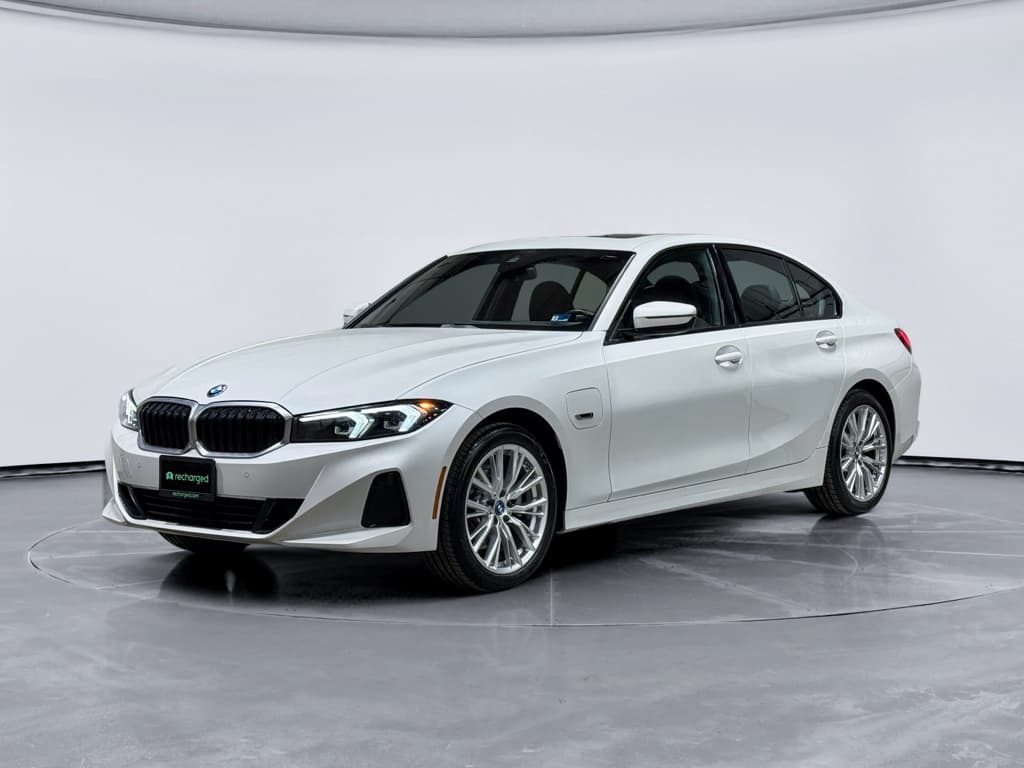
If you’re eyeing a BMW i4, you’re not just buying a sleek electric gran coupe; you’re also placing a bet on how the market will feel about that car in three, five, or seven years. The BMW i4 resale value forecast matters whether you’re hunting for a used one today or trying to decide if a new build will be a money pit down the road.
Quick take
BMW i4 resale value at a glance
BMW i4 value snapshot (US, early 2026)
Price trackers are already building a decent statistical picture of the i4. Market data shows an average used BMW i4 price around the low $40Ks, with 2022–2024 models clustering roughly from the low $30Ks to high $40Ks depending on trim and miles. Recent model years still sit well above the broader used‑car average, which signals decent demand for a relatively young EV nameplate.
How the BMW i4 is pricing on the used market today
Let’s ground this in real money. As of early 2026, pricing data from large used‑car marketplaces suggests the average used BMW i4 is selling for about $41,900, with recent model years often above $50,000 and early 2022 cars down closer to $31,000–$34,000 depending on mileage and trim. That’s a roughly 20% slide from original MSRP across the nameplate, with more drop for older, lower‑range trims and less for fresh, highly optioned cars.
Current BMW i4 used price bands (rough market ranges)
Approximate transaction ranges seen in early 2026 for typical-mileage, clean‑title cars.
| Model year | Typical price range* | Notes |
|---|---|---|
| 2022 i4 | $31,000 – $36,000 | First model year; more supply, early adopters trading out |
| 2023 i4 | $33,000 – $40,000 | Core of the used market; wide spread by trim |
| 2024 i4 | $39,000 – $50,000 | Most still low‑miles; many CPO and lease returns just starting |
| 2025 i4 | $50,000 – $57,000 | Effectively nearly new; light discounts vs MSRP |
These are broad bands, not offers. Actual value depends heavily on mileage, condition, options, and local demand.
Asterisk time
Depreciation curves: what the data says
Now to the unfun word: depreciation. Independent EV‑specific depreciation tracking for the BMW i4 eDrive40 paints a familiar curve for a premium EV. New examples start around the high $50Ks. By year one, typical cars are worth about 91% of MSRP; by year two, roughly 67%; by year three, around 61%. That’s a total three‑year depreciation of about 39% for a mainstream i4 spec, painful, but not catastrophic by luxury‑EV standards.
- Year 0 → 1: modest hit, around 8–10% off sticker for clean, low‑mile cars
- Year 1 → 2: the big drop, often another 20–25 percentage points off MSRP
- Year 2 → 3: curve flattens, with only single‑digit percentage‑point losses each year thereafter, barring market shocks
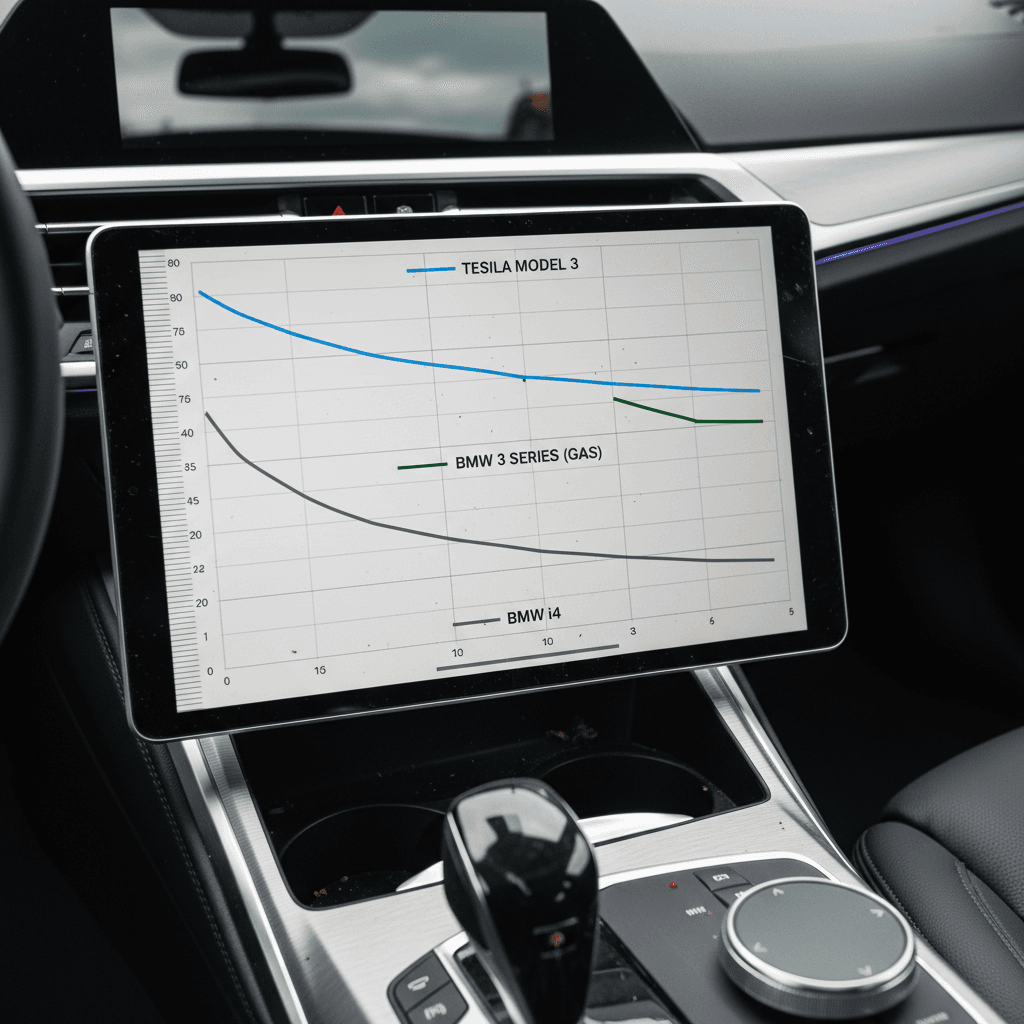
Where the i4 sits among EVs
5‑year resale value forecast for the BMW i4
Forecasting resale is half economics, half weather report, but the shape of the curve is fairly consistent. Using current market data, known MSRP history, and typical premium‑EV behavior, here’s a reasonable, conservative 5‑year forecast for a well‑spec’d i4 eDrive40 bought new around $58,000:
Illustrative 5‑year depreciation forecast – BMW i4 eDrive40
Assumes ~12,000 miles/year, clean history, and a balanced spec. Numbers are directional, not promises.
| Age | Approx. value retention | Illustrative value from $58,000 MSRP |
|---|---|---|
| 1 year | ~90–92% | $52,000 – $53,000 |
| 2 years | ~67–70% | $39,000 – $41,000 |
| 3 years | ~60–63% | $35,000 – $37,000 |
| 4 years | ~52–55% | $30,000 – $32,000 |
| 5 years | ~45–48% | $26,000 – $28,000 |
Dollar figures are rounded estimates from today’s conditions, not guaranteed future trade‑in values.
In plain language: if you buy a new i4 today, expect to lose a chunk of value in the first 24 months, then watch depreciation slow into a more comfortable glide. For used‑car shoppers, this is good news: 2–4 year‑old cars may represent the sweet spot where someone else has paid the steepest part of the bill.
Sweet‑spot shopping
What actually drives BMW i4 resale value
Key resale drivers for the BMW i4
Beyond the badge, these are the levers that move real‑world prices.
Battery health & range
EV buyers are range hawks. A car with a healthy pack and a higher original EPA range is easier to sell and commands more money.
Trim & performance
M‑branded performance sells, but only if the range hit isn’t severe. Mid‑range trims often balance power and practicality best.
Miles & history
Just like gas cars, low miles, clean Carfax, and consistent service records add real dollars to resale value.
Market & region
Coastal EV‑dense markets generally value the i4 more than regions where charging is still sparse.
Charging ecosystem
As access to DC fast charging and NACS compatibility improves, range anxiety fades and used EV values generally firm up.
Warranty coverage
Remaining high‑voltage battery warranty is a major confidence booster for second and third owners.
Trim‑by‑trim resale outlook: eDrive35, eDrive40, M50/M60
eDrive35: the value play with a caveat
The entry‑level eDrive35 undercuts the others on price but also on range. Historically, lower‑range EVs see faster depreciation, because buyers flock to whichever trim best quells range anxiety in a given price band.
Forecast: slightly weaker resale versus other i4 trims, especially beyond year three, unless priced aggressively.
eDrive40: likely resale sweet spot
The eDrive40 combines healthy range with adequate performance and a more accessible price than the M models. Depreciation data already suggests this is the configuration that holds value most consistently across the lineup.
Forecast: best balance of price and retention; strong candidate if you care about total cost of ownership.
M50 (and future M60): fast now, then polarizing
The performance trims pull well‑heeled early adopters, then settle into a narrower audience: enthusiasts. That can mean bigger initial discounts new, but stronger appeal used.
Forecast: sharper first‑year drop than the eDrive40, then similar or slightly better retention as the car ages, especially if performance EVs stay in vogue.
Options that matter for resale
- Driver‑assist & tech packages – always in demand, especially on premium German cars.
- Wheel choice – larger wheels look great, but if they nuke range, they can hurt later value.
- Interior color & trim – conservative combos (black, gray, tasteful wood/metal) sell fastest.
BMW i4 vs competitors: resale comparison
How the BMW i4 stacks up on 3‑year value retention
High‑level comparison against a few obvious rivals. Percentages are based on current market behavior and typical MSRPs.
| Model | Type | Approx. 3‑yr value retention | Resale notes |
|---|---|---|---|
| BMW i4 eDrive40 | Premium EV | ~60–63% | Steep early drop, then stabilizes; strong brand pull |
| Tesla Model 3 Long Range | Mainstream EV | ~62–68% | Tesla halo + charging network support values |
| Mercedes‑Benz EQE sedan | Premium EV | ~55–60% | Heavier depreciation amid mixed reviews and incentives |
| BMW 330i (gas) | Premium ICE | ~65–70% | Historically stronger retention, but faces shrinking ICE demand over time |
The i4 is in the thick of the pack: not the absolute resale champ, but far from a flop.
EV vs ICE reality check
How battery health affects what your i4 is worth
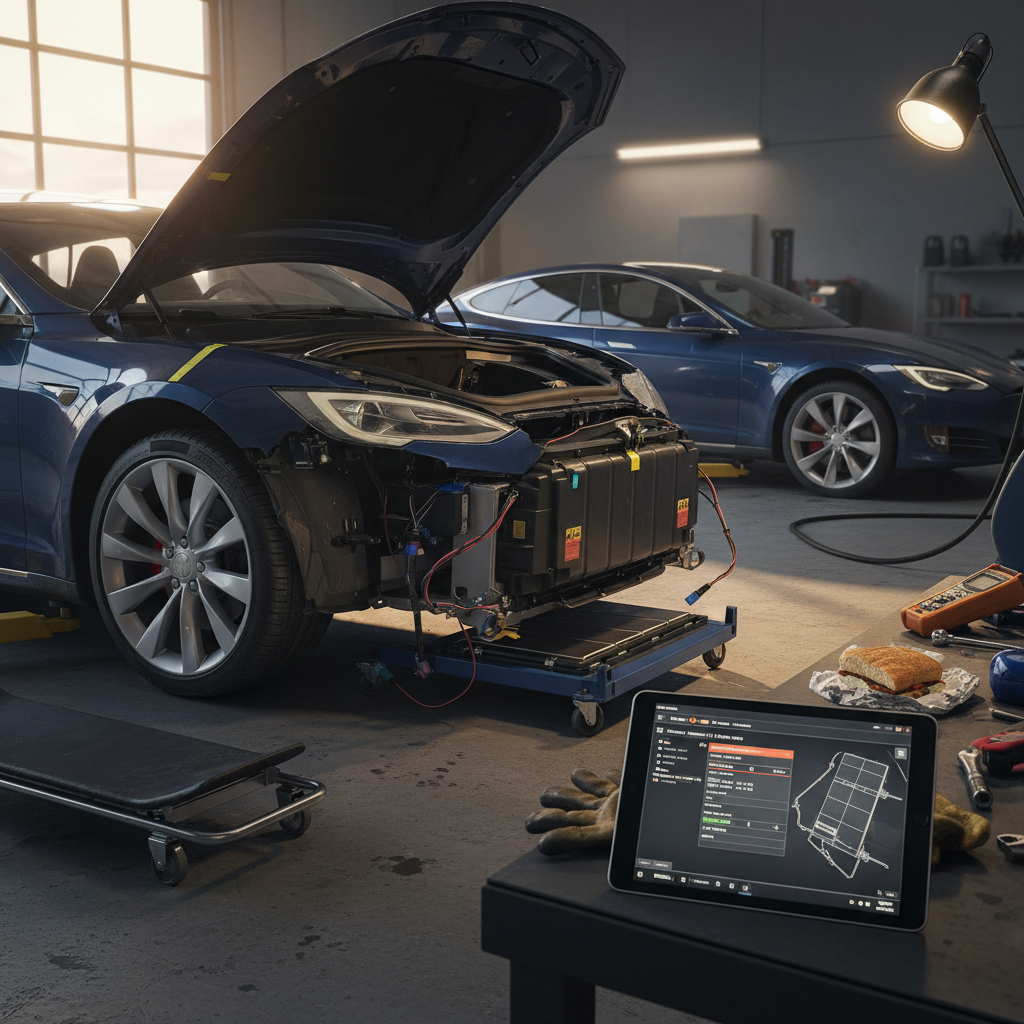
With any used EV, the silent protagonist of every price negotiation is battery health. A BMW i4 with a pack that still delivers nearly its original range is a very different financial animal than one that’s lost 15–20% due to hard use, frequent DC fast charging, or neglect.
Battery‑related factors buyers (and algorithms) care about
1. Verified state of health (SoH)
Buyers increasingly expect a <strong>quantified view of battery health</strong>, not just a hunch based on the dash gauge. Third‑party diagnostics or a structured report can add confidence and resale value.
2. Charging pattern history
Cars that lived mostly on Level 2 home charging tend to age more gracefully than ones hammered with DC fast charging every week.
3. Climate & storage
Extreme heat is harder on packs than mild climates, especially for cars parked outside all day. A southern‑sun commuter car will age differently than a garage‑kept one in Seattle.
4. Software & recalls
Up‑to‑date software, completed recalls, and documented service show the car has been looked after, which supports stronger offers.
Where Recharged comes in on battery health
Ready to find your next EV?
Browse VehiclesHow to protect your BMW i4’s resale value
Resale value isn’t fate; it’s a series of small, boring decisions that stack up. Here’s what actually moves the needle on a BMW i4 you already own or are about to buy.
Practical moves that support i4 resale
Think of these as low‑drama ways to keep future buyers on your side.
Be kind to the battery
Avoid living at 100% or 0% charge, don’t fast‑charge every single day, and use scheduled charging to keep the pack in its comfort zone.
Document everything
Keep service receipts, software update notes, tire rotations, all of it. A thick folder or digital log can be worth hundreds or thousands later.
Keep it cosmetically honest
Fix curb‑rashed wheels, repair obvious dings, and correct interior wear. Buyers expect some patina, but visible neglect kills offers.
Watch the miles
You don’t have to baby it, but a 60,000‑mile i4 will simply be worth less than a 30,000‑mile one. Plan big road‑trip duty accordingly.
Avoid mods that scare people
A tasteful tint is fine. Wild wraps, suspension tweaks, or non‑OEM wheel fitments narrow your buyer pool and can ding value.
Know your timing
Selling right before a big model refresh or incentive wave can protect your price; waiting until dealers are blowing out inventory won’t.
Leasing vs buying: which makes more sense for resale?
With a relatively young EV like the i4, where technology is still on the escalator, leasing can be a very rational hedge. Most BMW leases bake in a residual value, essentially BMW’s own resale forecast, in the low‑to‑mid‑50% range after three years for many trims. That pushes some of the depreciation risk back onto the lender.
When leasing a BMW i4 makes sense
- You want the latest tech and don’t plan to keep the car beyond 3–4 years.
- You’re worried about future EV price swings or policy changes.
- A strong residual translates into a competitive lease payment.
When buying (new or used) is the smarter play
- You plan to keep the car at least 5–7 years.
- You’re buying a 2–3 year‑old i4 that’s already through the steepest depreciation.
- You value equity and flexibility more than always having the newest thing.
Lease‑end surprise to watch for
Where a service like Recharged fits in
If you’re trying to thread the resale‑value needle on a BMW i4, the way you buy and sell matters almost as much as the car you choose. That’s the gap Recharged is built for.
How Recharged can help you win on resale
1. Start with a battery‑verified car
Every EV on Recharged comes with a <strong>Recharged Score Report</strong> so you can see battery health, pricing fairness, and history before you commit, and use that same report as proof when it’s your turn to sell.
2. Price with real market data
Because Recharged operates a marketplace focused on used EVs, our pricing reflects what similar i4s with similar battery health and mileage are actually trading for, not just book values.
3. Make the transaction simple
With financing, trade‑in, instant offer or consignment options, and nationwide delivery, you can swap into or out of an i4 without the usual haggling circus, and with experts who actually understand EV value drivers.
4. Use expert guidance, not guesswork
EV‑specialist support means you can ask, “Which i4 trim gives me the best resale odds?” and get an answer grounded in data, not just a sales pitch.
BMW i4 resale value FAQ
Frequently asked questions about BMW i4 resale value
Bottom line: is the BMW i4 a good bet on resale?
Viewed coldly, the BMW i4 is neither a depreciation disaster nor a secret gold bar. It behaves like what it is: a well‑built German premium EV living through a fast‑moving technological moment. You should expect a firm hit in the first few years, especially if you buy new, but if you choose the right trim, mind the battery, and buy intelligently, the i4’s resale story is perfectly defensible.
If you’d rather let someone else fund the steep part of the curve, a 2–4 year‑old, battery‑verified i4 bought through a specialist marketplace like Recharged is where the value proposition starts to shine. That’s the difference between speculating on the future and buying a car whose story, and battery, you already understand.