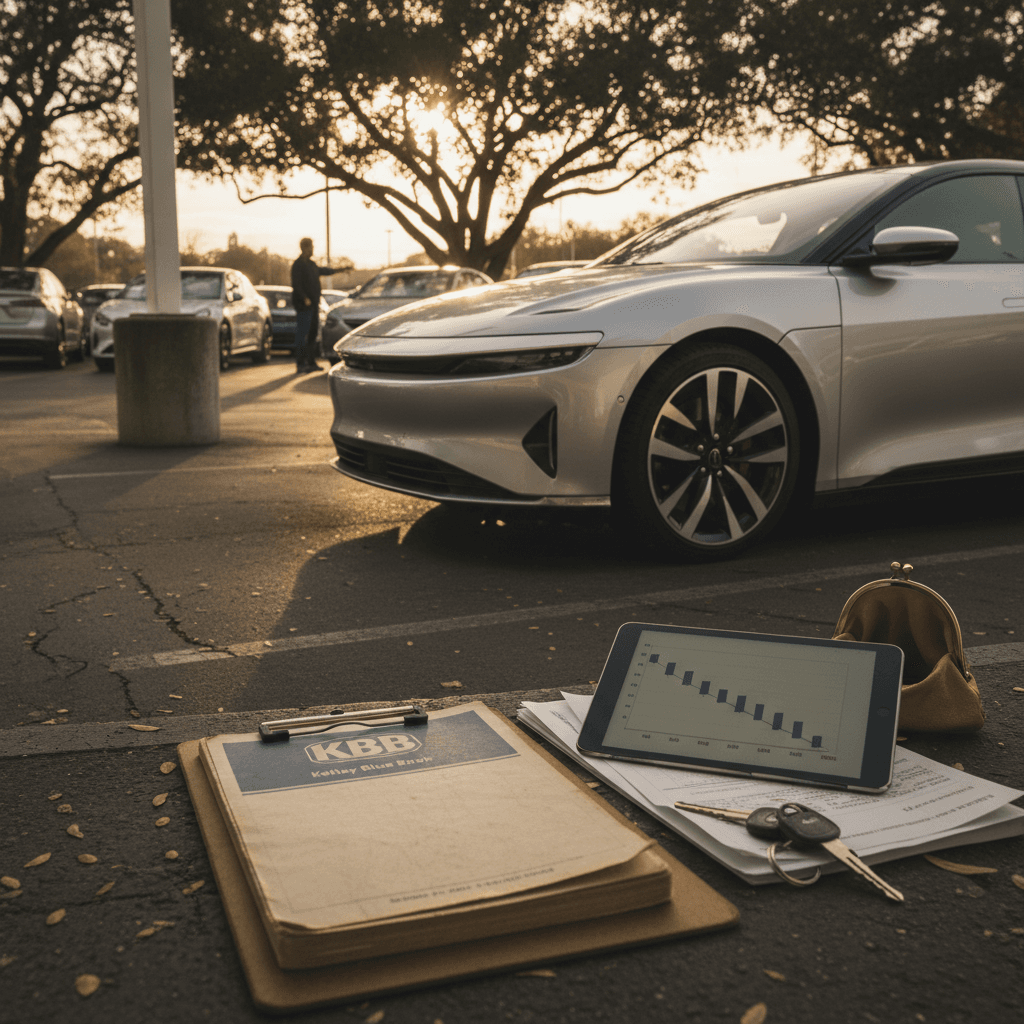
If you’re shopping for a used BMW i4 or thinking about selling yours, you’ve probably plugged it into Kelley Blue Book to see the BMW i4 KBB value. That’s a smart starting point, but it’s only part of the story. For modern EVs like the i4, real-world prices, battery health, and fast-changing incentives can push the true value thousands of dollars above or below what any guide says.
What “KBB value” actually is
Why BMW i4 KBB value matters now
The BMW i4 is one of the most in‑demand luxury EVs, but like most electric cars it depreciates faster than comparable gas models. Data from several valuation tools shows the i4 can lose roughly half its original MSRP within the first 3–5 years of ownership. That’s painful if you bought new, but a big opportunity if you’re shopping used.
BMW i4 value at a glance (recent data)
Why guides disagree
Quick look: BMW i4 KBB values by trim
KBB publishes detailed values by year, trim, and condition. You’ll need to enter your ZIP, mileage, and options for an exact number, but here’s a simplified snapshot of how 2024 BMW i4 KBB fair purchase prices generally stack up by trim in early 2026:
Illustrative 2024 BMW i4 KBB fair purchase values
Rounded national‑average figures based on recent Kelley Blue Book data. Your actual values will vary by mileage, options, region, and condition.
| Trim (2024) | Original MSRP (approx.) | Recent KBB Fair Purchase Price (dealer) | Typical Trade‑In Range* |
|---|---|---|---|
| eDrive35 | $53,000 | ≈ $31,000 | High‑$20Ks to low‑$30Ks |
| eDrive40 | $58,000 | ≈ $36,000 | Low‑$30Ks |
| xDrive40 | $63,000 | ≈ $37,000 | Low‑ to mid‑$30Ks |
| M50 | $71,000 | ≈ $43,000 | Mid‑$30Ks to low‑$40Ks |
Use these numbers as directional benchmarks, not quotes. Always rerun KBB for your specific VIN and ZIP.
About those numbers
How KBB comes up with BMW i4 values
Kelley Blue Book’s BMW i4 values come from a mix of real‑world transaction records, auction results, asking prices, and historical trends. For EVs, they also factor in how quickly the segment is moving, changes in demand, incentives, and new model launches can all shift values.
- Transaction data: What dealers and private sellers actually received for recent BMW i4 sales.
- Auction results: Wholesale prices when i4s run through major auctions, adjusted for recon and profit.
- Asking prices: What dealers and private sellers are listing comparable cars for right now.
- Time and mileage: Age, odometer, and options vs. similar vehicles historically.
- Regional adjustments: Hot EV markets (like coastal metros) often see stronger values than rural areas.
Always line KBB up with today’s listings
KBB value vs real BMW i4 market prices
On a fast‑moving EV like the i4, guide values sometimes lag what’s happening on dealership lots and online marketplaces. Recent used‑car data shows average BMW i4 asking prices clustering around the low‑$40Ks, with 2022 models commonly advertised in the low‑$30Ks and higher‑spec 2024 M50s pushing toward the high‑$40Ks and beyond.
When KBB is higher than the market
Sometimes KBB still reflects last quarter’s stronger EV pricing while live listings have slipped. If most comparable BMW i4s are listed for less than your KBB Fair Purchase Price:
- Use active listings as your real ceiling when buying.
- Expect pushback from dealers if you insist on KBB for trade‑in.
- Consider waiting if prices are clearly still drifting down.
When KBB is lower than the market
In tight inventory pockets, especially for desirable trims like the i4 M50, actual transaction prices can sit above KBB. In that case:
- Don’t be shocked if clean, low‑mile cars sell above book.
- Use KBB as your floor for trade‑in negotiations, not your ceiling.
- Lean on vehicle history and battery health to justify a premium.
Depreciation: How fast the BMW i4 loses value
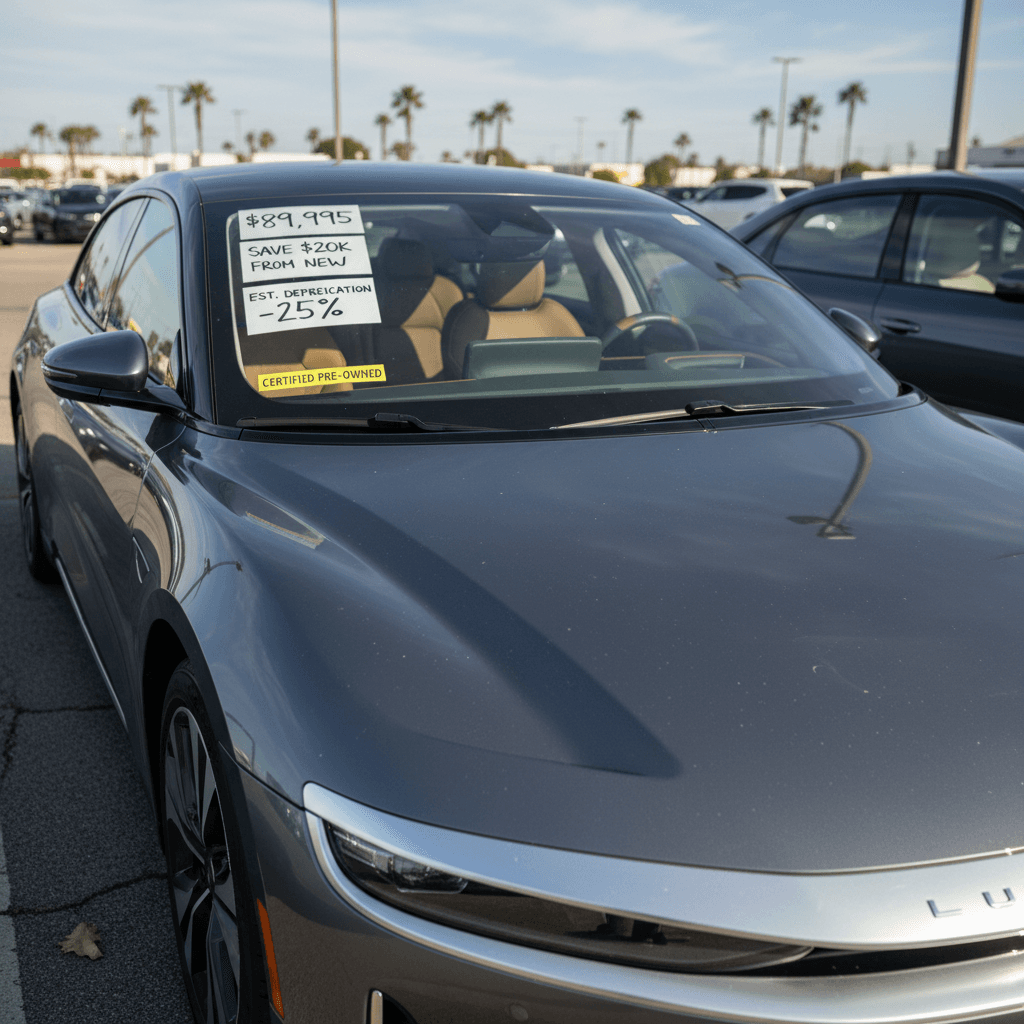
Multiple independent data sets agree on one big point: the BMW i4 depreciates faster than most gas‑powered BMW 4 Series sedans. That’s common across luxury EVs, driven by rapid tech changes, shifting incentives, and lingering range and battery‑life worries among some shoppers.
BMW i4 depreciation benchmarks
Approximate value loss from new, based on aggregated third‑party data.
After 3 years
Analyses show the average BMW i4 can lose around 45–50% of its original MSRP in the first three years.
That’s steeper than most comparable gas luxury sedans.
After 5 years
Some studies put the 5‑year depreciation near 65–70%, leaving roughly one‑third of the original price.
Great news if you’re buying in at year three to five.
Long‑term outlook
By years 7–10, residual values can fall into the low‑teens as a percentage of MSRP, putting older i4s within reach of mainstream buyers, assuming the battery still checks out.
Why this favors used buyers
7 big factors that move your BMW i4’s value up or down
KBB starts with averages, but your specific BMW i4 can sit well above or below those numbers. Here are the levers that matter most when you’re pricing, or evaluating, a car.
Key BMW i4 value drivers
1. Model year & trim
Newer model years and performance trims like the <strong>M50</strong> typically command higher KBB and market values than earlier eDrive35/40 cars, but they also started with a higher MSRP.
2. Mileage and usage pattern
An i4 driven 10,000 miles per year and mostly on highways usually holds value better than one that’s been fast‑charged heavily and used as a rideshare vehicle.
3. Battery health and real‑world range
Unlike gas cars, perceived battery condition can swing an EV’s value by thousands. A healthy pack with strong range performance is a major selling point; a tired pack is a red flag.
4. Options and packages
M Sport, premium audio, driver‑assist packages, and larger wheels can all influence demand. KBB lets you select options, don’t skip this, because it meaningfully changes the number.
5. Cosmetic and accident history
A clean Carfax/AutoCheck and original paint help keep your value near the top of the range. Previous structural damage or poorly repaired accidents drag it down quickly.
6. Local demand and incentives
Incentives on new luxury EVs or heavy leasing can flood some markets with off‑lease i4s, softening used prices. In EV‑friendly cities with tight supply, clean cars can sell over book.
7. Software and service history
Consistent BMW software updates, documented maintenance, and any remaining warranty coverage build confidence. Gaps in service records usually mean a discount.
Watch fast‑charge history
How to use KBB value when you’re buying a used BMW i4
When you’re the buyer, BMW i4 KBB values are a sanity check, not a marching order. Here’s a simple way to put them to work without over‑relying on any single number.
Smart steps for BMW i4 buyers
1. Pull a fresh KBB report
Enter the exact year, trim (eDrive35, eDrive40, xDrive40, or M50), mileage, options, and your ZIP. Note the <strong>Fair Purchase Price</strong> and the Private Party Value.
2. Scan real‑world listings
Check national marketplaces for similar i4s and build a spreadsheet of asking prices, specs, and mileage. If the market is consistently below KBB, adjust your target downward.
3. Ask for documentation
Request the BMW service history, charging habits (home vs fast charging), and any battery‑health reports or range tests. Documentation is a major value lever on EVs.
4. Get independent battery health data
Whenever possible, have the car evaluated with an <strong>EV‑specific battery test</strong> or buy from a seller who provides a third‑party battery report. This can be more important than leather color or wheel design.
5. Use KBB as leverage, not gospel
If a seller is priced well above KBB and comparable listings, show your research and be prepared to walk. If they’re at or below KBB but the battery is strong, recognize the value and move quickly.
Where Recharged fits in for buyers
How to use KBB value when selling or trading your BMW i4
On the sell side, KBB helps you set expectations before you ever step into a showroom or list your car online. The trick is choosing the right value type for your plan and being realistic about condition.
If you’re trading to a dealer
- Look up the Trade‑In Value for your exact configuration.
- Be honest about condition, most cars are "clean" or "average," not "outstanding."
- Get offers from multiple dealers or online buyers to see who beats KBB.
- Negotiate your trade and the new‑car price separately so numbers don’t get blurred.
If you’re selling privately
- Use the Private Party Value as your starting range.
- Price slightly above your bottom line to leave room for negotiation.
- Highlight battery health, range, and any EV‑specific perks in your ad.
- Have maintenance records, charging history, and a clean title ready to show serious buyers.
Using Recharged to sell your BMW i4
Ready to find your next EV?
Browse VehiclesBattery health, KBB value, and the Recharged Score
Most pricing guides, including KBB, don’t directly factor measured battery state of health into their calculations yet. They assume a typical wear pattern for an average EV. That’s a problem when real‑world packs can diverge significantly depending on climate, storage, and fast‑charging habits.
- Two BMW i4s with the same year, mileage, and options can have **very different remaining range**.
- A car with excellent battery health can be worth more than its KBB value suggests, especially in EV‑savvy markets.
- An i4 showing unusually high degradation should often be discounted below book value or avoided entirely.
What the Recharged Score adds
BMW i4 KBB value: common questions
Frequently asked questions about BMW i4 KBB value
Key takeaways for BMW i4 shoppers
Kelley Blue Book gives you a useful anchor for understanding BMW i4 values, but it doesn’t tell the whole story, especially for an EV where battery health and fast‑evolving tech drive so much of what buyers are willing to pay. Treat KBB as a starting line, not the finish line: line it up against live listings, local demand, and independent battery data before you make a move.
If you’d rather not juggle six browser tabs and guess at depreciation curves, consider shopping or selling through Recharged. Every BMW i4 we list comes with a Recharged Score Report, including verified battery health, fair market pricing, and EV‑specialist support, from financing and trade‑ins to nationwide delivery. That way, you can stop worrying about whether a number on a screen is accurate, and focus on whether the car itself is right for you.