The BMW i4 has quickly become one of the most popular premium electric sedans, offering classic BMW dynamics with a fully electric drivetrain. Like any first-generation EV platform, though, there are some common BMW i4 problems and fixes that owners should understand, especially if you’re cross‑shopping other EVs or considering a used i4.
Overall reliability picture
BMW i4 overview and reliability snapshot
Launched for the 2022 model year, the BMW i4 shares its basic architecture with the 4 Series Gran Coupe but swaps in a battery pack and electric drive units. In the U.S., you’ll commonly see the i4 eDrive35, eDrive40, and M50, each with different power and battery configurations. Early production hiccups are normal for any new EV, but the pattern with the i4 has been manageable: lots of small annoyances, relatively few major failures.
BMW i4 ownership snapshot (what most drivers experience)
EV reliability vs. familiarity
Most common BMW i4 problems at a glance
Top BMW i4 issues owners report
These patterns show up most often across forums, surveys, and service records.
Charging problems
Slow DC fast charging, sessions that fail to start, or public chargers refusing to talk to the car. Often due to communication issues or station faults, not the i4 itself, but it feels like the car is the problem.
Software & infotainment
Laggy iDrive screens, random reboots, driver‑assist warnings, and occasional app connectivity problems. Usually improved with over‑the‑air or dealer software updates.
Range & battery behavior
Noticeable range drops in cold weather, slower fast‑charge speeds when the pack is cold, and range estimates that jump around. Mostly normal EV behavior, but worth understanding.
Tires, brakes & suspension
Fast tire wear on high‑torque trims like the M50, occasional brake noise from light use, and a few reports of premature suspension bushing wear.
Wind & cabin noise
Some owners report wind noise from mirrors or the hatch area at highway speeds and intermittent creaks in cold temperatures.
Recalls & safety items
Like most new EVs, the i4 has had software and safety campaigns, for example, battery‑management or restraint‑system updates, typically addressed free under warranty.
BMW i4 common problems by severity
Use this as a rough guide to what’s annoying versus what’s truly critical. Always consult a qualified technician for safety‑related concerns.
| Issue area | How common? | DIY‑friendly? | Urgency |
|---|---|---|---|
| Charging glitches | Medium–high | Sometimes | Medium |
| Infotainment/software bugs | Medium | No (software is dealer/OTA) | Low–medium |
| Tire wear & alignment | High on M50 | Yes, with a good tire shop | Medium |
| Brake noise/feel | Medium | Sometimes | Low–medium |
| Battery degradation | Low (early years) | No | High if rapid loss |
| Wind noise/creaks | Medium | Sometimes | Low |
Severity is a general guide only; individual cases can be better or worse.
Charging problems: slow sessions, failed starts, and cables
Charging complaints are among the most visible BMW i4 issues, especially on road trips. Owners describe DC fast chargers that won’t start, sessions that stop abruptly, or speeds that fall far short of the advertised peak. The key is to sort out what’s normal EV behavior, what’s a flaky public charger, and what may be an i4 fault.
- DC fast charger won’t start or errors out
- Charge speed much slower than expected
- Home Level 2 charger tripping breakers or stopping
- BMW app shows incorrect charge status or won’t start charging remotely
Most likely causes
- Public charger issues: A large share of failed sessions come from station hardware or software, not from the i4 itself.
- Cold battery: If you start DC fast charging with a cold pack, the car will limit power to protect the cells.
- Weak or mis‑wired home circuit: Undersized breakers, loose connections, or mis‑configured wallboxes can cause trips or limit charge speed.
- Cable/plug wear: Damaged connectors can cause intermittent connections or heat build‑up.
Practical fixes
- Precondition before DC fast charging: Use BMW’s navigation to a fast charger so the car warms the battery en route (on models that support preconditioning).
- Try another stall or network: If one DC charger fails, move to another stall or station before assuming your i4 is at fault.
- Verify home electrical work: Have a licensed electrician confirm the breaker size, wiring, and outlet or wallbox installation.
- Inspect charge ports and cables: Look for corrosion, debris, or bent pins. Clean gently and replace any damaged cables.
When to see a BMW dealer for charging issues
Software and infotainment glitches
The i4’s iDrive system is powerful but complex. Early‑build cars in particular have seen their share of bugs: laggy screens, random blackouts, false driver‑assist warnings, and BMW ConnectedDrive app hiccups. Most of these are annoyances more than safety issues, but they can undermine confidence in the car if they stack up.
- Touchscreen or digital cluster freezes and then reboots
- Wireless Apple CarPlay or Android Auto disconnects
- Parking sensors or driver‑assist features throw sporadic warnings
- Keyless entry or app‑based locking/unlocking fails occasionally
Simple steps that fix many BMW i4 software issues
1. Check for over‑the‑air updates
In the iDrive menu, look for software‑update options and in the BMW app check for pending updates. Many infotainment bugs are resolved with newer firmware.
2. Perform a controlled reset
Use BMW’s documented procedure to reboot the infotainment system (for example, holding the volume button). Avoid constantly disconnecting the 12V battery without guidance.
3. Clean up paired devices
Delete and re‑add phones that frequently drop CarPlay/Android Auto. Sometimes a fresh pairing resolves repeated disconnects.
4. Verify app permissions
On your smartphone, confirm that the BMW app has location, Bluetooth, and background refresh permissions enabled; missing permissions can cause connection failures.
5. Document repeatable bugs
If you can reproduce an error, note the steps and time. Dealers and BMW engineers are far more effective when they have clear, repeatable scenarios to diagnose.
Why software matters for used i4 shoppers
Battery health, range loss, and cold-weather behavior
Battery health is the heart of any EV ownership story. For the BMW i4, long‑term data is still building, but early signs are encouraging: most owners report only modest capacity loss in the first few years. What throws people off is how dramatically range can swing with temperature, speed, and driving style, even when the battery itself is healthy.
BMW i4 range behavior: what’s normal vs. concerning
Use this table as a high‑level guide, not a substitute for a professional battery health check.
| Symptom | Likely cause | Normal? | What to do |
|---|---|---|---|
| 20–30% range drop in winter | Cold temps, cabin heating, winter tires | Yes | Precondition the cabin, use seat/steering heat, and allow extra buffer. |
| Fast‑charge speeds limited in cold | Battery protecting itself | Yes | Precondition before DC charging; avoid fast‑charging from very low state of charge in extreme cold. |
| Gradual 5–10% loss over several years | Normal aging | Yes | Monitor but don’t panic; this is typical EV behavior. |
| Sudden 20%+ loss over months | Potential pack or BMS fault | No | Schedule a dealer evaluation; may qualify for warranty remedy. |
| Range estimate jumps up and down | Energy‑use learning, driving pattern changes | Usually | Reset trip data, drive several mixed cycles, and see if the estimate stabilizes. |
Actual range depends on model, wheels, weather, speed, and driving style.
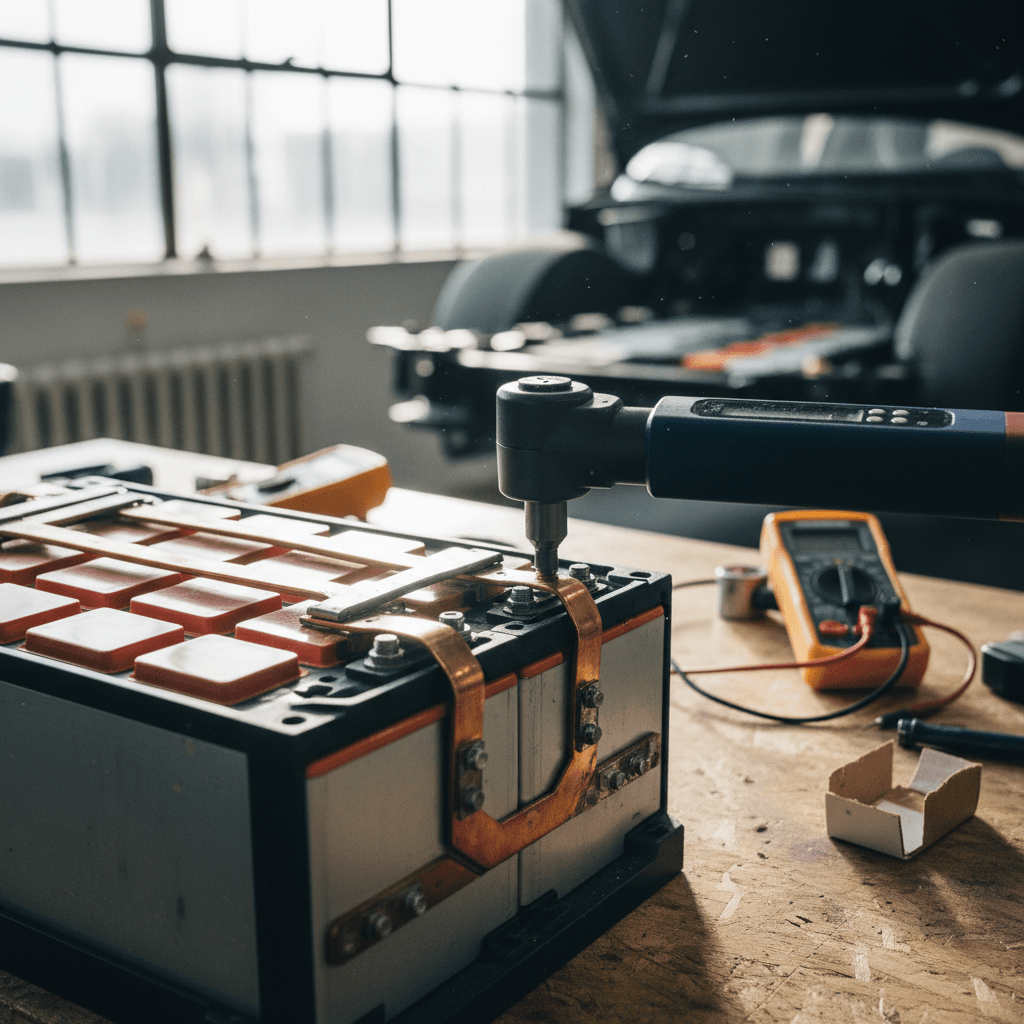
How Recharged checks BMW i4 battery health
Tires, brakes, and suspension wear
The BMW i4 is heavy, quick, and often equipped with large, sticky tires, especially in M50 form. That combination delivers impressive performance but can also chew through rubber and stress suspension components faster than many owners expect. Regenerative braking also changes how pads and rotors age.
Common wear‑and‑tear complaints on the BMW i4
These aren’t defects so much as the natural consequences of weight, torque, and driving style.
Fast tire wear
High‑torque launches and heavy curb weight mean rear tires on performance trims can wear quickly, sometimes under 20,000 miles if driven hard.
Alignment sensitivity
Low‑profile tires and heavy curb weight make the i4 sensitive to alignment. Minor misalignment can cause uneven shoulder wear and tramlining.
Brake noise and feel
Because regeneration handles much of the slowing, pads may glaze or rust on the edges, creating squeaks or a gritty pedal if the car spends too much time in light city duty.
How to keep BMW i4 tires, brakes, and suspension happy
Rotate tires on schedule
Stick to a 5,000–7,500‑mile rotation interval, especially on staggered‑fitment cars. This evens out wear and can add thousands of miles of life.
Budget for quality EV‑rated tires
When replacement time comes, choose tires rated for EV load and torque. They’re often quieter and more efficient, which helps restore comfort and range.
Request EV‑aware alignment
Ask your alignment shop to aim for tight tolerances and confirm settings against BMW’s EV specs, not just generic 4‑Series numbers.
Use friction brakes periodically
Once in a while, apply firmer brake pressure to clean rust off the rotors, especially if you mostly drive in gentle traffic with strong regen.
Listen for clunks or steering play
Any persistent front‑end noise, looseness, or pulling under braking warrants a suspension inspection, especially on higher‑mileage or rough‑road cars.
Wind noise, creaks, and other NVH complaints
EVs are quiet by nature, which makes small noises stand out. On the i4, owners most often point to wind noise around mirrors and the hatch, plus occasional creaks from interior trim in cold weather. None of this is unique to BMW, but there are a few i4‑specific spots worth checking.
- Wind rushing sound around A‑pillars and mirrors at highway speeds
- Whistling or buffeting from the rear hatch area
- Creaks from door seals or the dashboard when the body flexes over bumps
- Buzzing from loose interior trim pieces or the cargo area
Quick checks you can do at home
- Inspect door and hatch seals: Look for flattened, torn, or mis‑seated weatherstripping. A light coating of silicone lubricant can reduce creaks.
- Remove loose items: Eliminate rattles by taking everything out of the cargo area and door pockets, then test‑drive.
- Test window positions: Slightly crack a window at speed. If the pitch of the noise changes dramatically, it’s probably aero‑related rather than a failing component.
When to involve the dealer
- Persistent wind noise at legal speeds: Ask the service department to compare your car against a similar i4. If it’s significantly louder, they can check seal alignment and glass fit.
- Creaks that worsen over time: Progressive creaks or pops, especially around the roof or pillars, deserve attention to rule out structural or suspension issues.
Warranty coverage, recalls, and when to visit the dealer
BMW backs the i4 with a multi‑year new‑vehicle warranty plus separate coverage for the high‑voltage battery. On top of that, there have been software‑driven recalls and service campaigns, common for modern EVs where many fixes are code, not hardware.
- Basic new‑vehicle warranty (bumper‑to‑bumper) for most components
- Powertrain and high‑voltage battery warranty, often 8 years with a mileage cap
- Corrosion and roadside‑assistance coverage, depending on model year and market
- Software‑driven recalls for items like battery‑management logic, airbags, or stability‑control behavior
Don’t ignore safety‑related warnings
Before a long trip, or before you buy a used i4, run the VIN through official recall tools in your region and confirm that all campaigns have been completed. A car that’s behind on updates may feel rough around the edges even if it’s fundamentally sound.
Buying a used BMW i4: what to check first
The i4 is shaping up to be an attractive used‑EV buy: premium cabin, strong performance, and no huge pattern of catastrophic failures so far. But as with any EV, you need to go beyond a traditional test drive. Battery health, software history, and charge behavior matter just as much as cosmetic condition.
Used BMW i4 inspection checklist
Confirm software and recall history
Ask for service records showing completed recalls and major software updates. A dealer can print a summary; Recharged includes this history in our listing details when available.
Evaluate battery health objectively
Don’t rely only on the dash range estimate. Look for a recent battery‑health report or have one generated. Recharged’s <strong>Score Report</strong> provides pack diagnostics on every EV we sell.
Test AC and DC charging
Charge the car on a Level 2 station and, if possible, a DC fast charger. Watch for error messages, unusually low charge speeds, or cables getting excessively hot.
Inspect tires, brakes, and alignment
Check for uneven wear, vibration, or pulling under braking. An i4 with worn tires and poor alignment may have led a hard life, or just needs immediate maintenance dollars.
Listen for noise and feel for vibration
On a highway test drive, pay attention to wind noise, whines from the drivetrain, or any shudder under acceleration. Minor noise is normal; sudden or loud new sounds are not.
Ask about charging habits
Frequent DC fast charging from very low state‑of‑charge can stress the pack over time. Occasional use is fine; constant 0–100% fast‑charge cycles are not ideal.
How Recharged simplifies used i4 shopping
Ready to find your next EV?
Browse VehiclesBMW i4 problems and fixes: FAQ
Frequently asked questions about BMW i4 problems
Key takeaways for current and future BMW i4 owners
The BMW i4 isn’t a trouble‑free unicorn, but it also isn’t a problem child. Most BMW i4 common problems and fixes fall into a few buckets: learning the realities of public charging, staying ahead of software updates, managing tires and brakes on a heavy, quick car, and paying attention to battery health over time. If you understand those patterns, and you’re willing to address minor issues before they snowball, the i4 can be a very livable, rewarding EV.
If you’re already an owner, use this guide as a checklist for what to watch and when to call in a professional. If you’re shopping for a used BMW i4, look beyond the paint and the spec sheet. Ask for battery‑health data, confirm recall and software status, and test both AC and DC charging. And if you’d rather not navigate that alone, Recharged pairs every EV with a Recharged Score Report, transparent pricing, EV‑savvy support, and digital‑first buying tools so you can focus on the car, not on guessing what might be wrong with it.