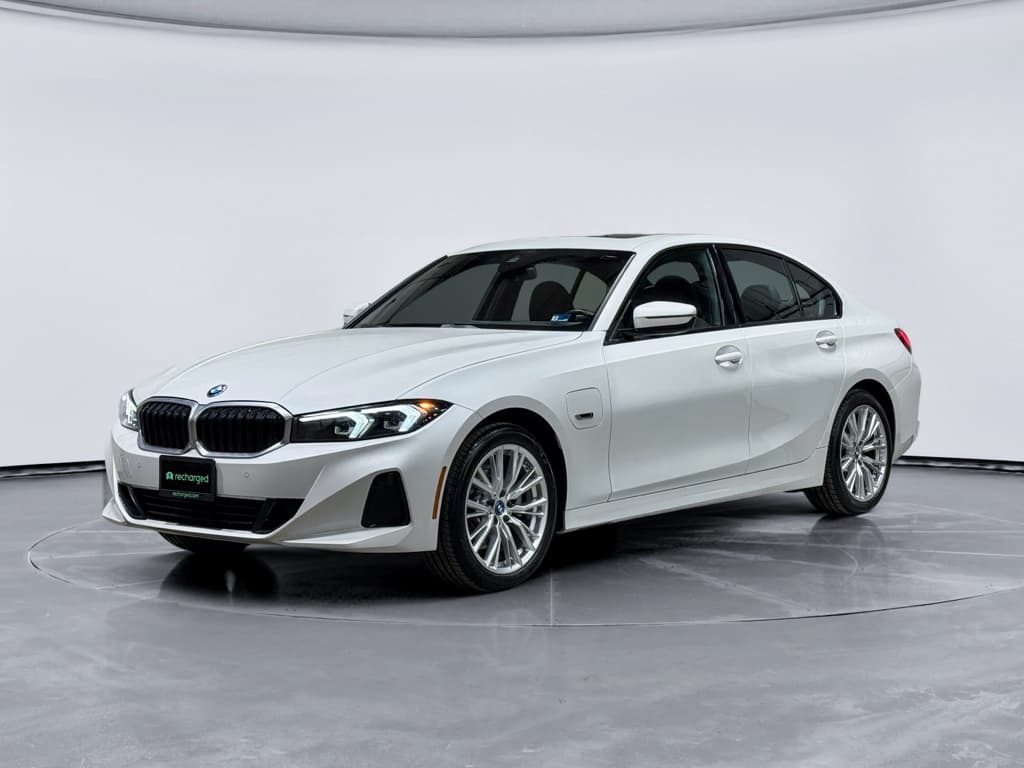
If you’re looking at a BMW i4, or eyeing a used one, the big question isn’t just range. You also want to know how it performs in a **BMW i4 charging speed test**: How long does 10–80% really take on a DC fast charger, and what can you expect at home on Level 2? In this guide, we pull together independent test data, manufacturer specs, and owner experiences to show you what the i4 actually does in the wild.
Key takeaway
Overview: How Fast Does the BMW i4 Really Charge?
BMW’s official line is straightforward: the i4 can DC fast charge from 10–80% in about 31 minutes on a powerful CCS fast charger, with a claimed peak of around 200–205 kW depending on model. Independent tests of the eDrive40 show peaks just above 200 kW and average power around 90–130 kW for that 10–80% window. That puts the i4 squarely in the middle of today’s EV pack, quicker than many legacy models, but not in the ultra‑fast league of 800‑volt cars such as the Hyundai Ioniq 5/6 or Kia EV6.
In practical terms, that means you can add roughly 230–290 miles of highway range during a half‑hour stop if conditions are right. On Level 2 (11 kW), expect about 35 miles of range per hour of charging, enough to replenish a mostly depleted battery overnight.
BMW i4 Charging & Range Snapshot
BMW i4 Charging Specs at a Glance
BMW i4 Charging Specs by Trim (U.S. focus)
Key charging specs for popular BMW i4 variants. Exact numbers vary slightly by model year and wheel/tire choice, but the charging hardware is broadly similar across trims.
| Trim | Usable Battery (kWh) | Max AC Charging | Max DC Charging | Official 10–80% DC Time | EPA Range (approx.) |
|---|---|---|---|---|---|
| eDrive35 | ~66 | 11 kW (Level 2) | up to 180 kW | ~32 min | 256 miles |
| eDrive40 | ~80 | 11 kW (Level 2) | up to 200 kW | ~31 min | 295–301 miles |
| xDrive40 | ~80 | 11 kW (Level 2) | up to 200 kW | ~31 min | 268–287 miles |
| M50 | ~80 | 11 kW (Level 2) | up to 200–205 kW | ~31 min | 227–270 miles |
Charging specs apply to most 2022–2025 BMW i4 models sold in the U.S.
Trim choice & charging speed
Our BMW i4 Charging Speed Test Setup
To make sense of BMW’s claims, you need to look at charging in context. A useful BMW i4 charging speed test tries to mimic what you’d actually see on a road trip, not just a perfectly controlled lab run. Here’s a realistic way to structure a test, and what independent testers have generally found.
How to Run a Meaningful BMW i4 Charging Test
1. Start with a warm battery
Charging is fastest when the pack is in its ideal temperature window. Use a preconditioning route to a fast charger (via the built‑in navigation) or drive at highway speeds for at least 20–30 minutes beforehand.
2. Begin around 10–20% state of charge
Below 10%, the car may limit power to protect the pack. Above ~20%, you’re firmly into the flat part of the charging curve where the i4 can pull its highest power.
3. Use a 150 kW+ DC fast charger
The i4 can accept up to roughly 200 kW, so a 50 kW DC charger will *not* show what the car can really do. Look for 150–350 kW CCS stations from networks like Electrify America.
4. Log power, SOC, and time
Note timestamps at 10%, 20%, 50%, and 80% SOC along with charger power readout (kW). Some apps and chargers will graph this for you automatically.
5. Track miles added, not just percent
Percent can be misleading across vehicles with different battery sizes. Logging miles added during the test tells you how useful each minute of charging really is on the road.
When testers follow a process like this, the i4 tends to line up reasonably well with BMW’s claim of roughly 30–31 minutes from 10–80%, with real‑world sessions landing in the low‑30s when conditions are favorable and stretching into the mid‑30s when they’re not.
DC Fast Charging Results: 10–80% in the Real World
Let’s translate the specs into what you’re likely to see at a high‑power charger. Using data from independent testers, owner reports, and BMW’s own numbers, we can map out a realistic range of outcomes for a 10–80% fast‑charge session in an i4 eDrive40 or M50.
BMW i4 DC Fast Charging: What You Can Expect
Real‑world 10–80% results under different conditions
Best‑case session
Time: ~29–31 minutes
Peak power: ~200–208 kW
Average power: ~120–130 kW
Highway miles added: roughly 260–290
Warm battery, 150–350 kW charger, no power throttling, mild temperatures.
Typical session
Time: ~32–36 minutes
Peak power: 170–200 kW
Average power: ~90–110 kW
Highway miles added: roughly 220–260
Battery moderately warm, decent DC station, some tapering and site‑level limitations.
Worst‑case session
Time: ~40–50 minutes
Peak power: often under 150 kW
Average power: 60–80 kW
Highway miles added: roughly 180–220
Cold battery, no preconditioning, crowded or derated charger, winter temps.
One prominent road test logged about 34 minutes to go from roughly 20–80% in a 2025 i4 when the driver forgot to precondition the battery, pretty representative of what happens when you just “show up” at a fast charger without any prep.
Don’t skip preconditioning
Understanding the BMW i4 Charging Curve
Charging “speed” isn’t just about the highest kW number you see once. What really matters is the shape of the charging curve, how long the i4 can hold high power before tapering down. That’s where this car quietly performs better than some spec sheets suggest.
Independent charging‑curve analysis of the i4 eDrive40 shows a peak just above 200 kW between roughly 10–20% SOC, then a relatively strong plateau at 120–150 kW before gradually tapering as you approach 70–80%. Average power over a 10–80% session lands around 90–110 kW, depending on temperature and charger quality.
Why the flat mid‑range matters
Some EVs boast huge peak power figures but only hit them for a few minutes. The i4’s strength is a relatively flat mid‑range charging curve from about 20–60% SOC. That’s where you’re adding miles quickly without wasting time on a high state of charge.
On a road trip, that means it can be more efficient to charge from 10–60% twice rather than push a single session all the way to 90–100%.
What happens after 80%
Like most EVs, the i4 sharply tapers power after about 80% to protect battery health. You’ll often see power fall below 50 kW, then below 30 kW as you move closer to 100%.
That’s why most public‑charging strategies recommend targeting 10–80% for DC fast charging and reserving 80–100% top‑ups for slower Level 2 at home or overnight hotel stays.
Good news for used‑i4 shoppers
Level 2 Home and Public Charging Times
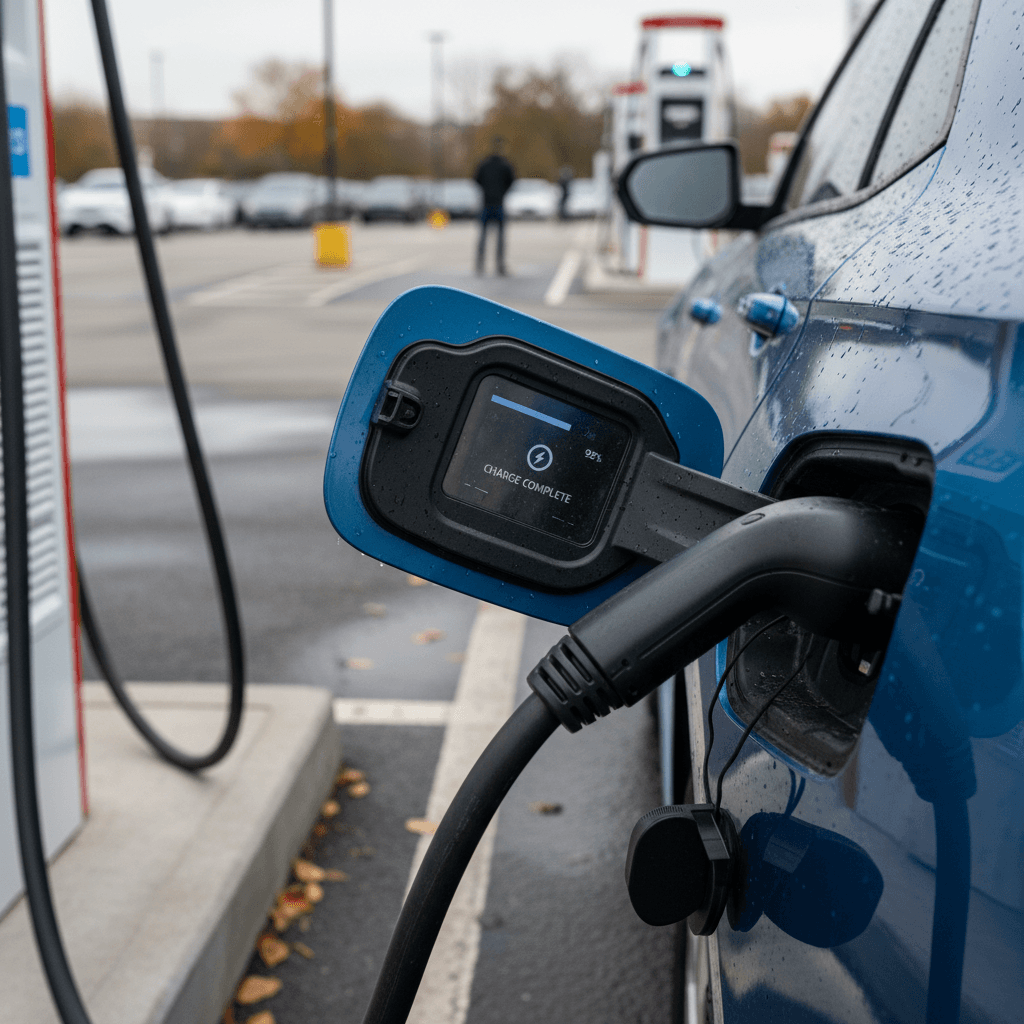
Most of your charging will likely happen at home or at slower public Level 2 stations. Here the BMW i4 is straightforward: it supports up to 11 kW AC charging (when connected to a 240‑volt, 48‑amp circuit with the right equipment), which is on the high side for today’s EVs.
BMW i4 Level 2 Charging: Approximate Times
Assumes 240 V Level 2 charging and a typical U.S. efficiency profile. Real times vary with temperature, battery age, and exact charger output.
| Scenario | Charger / Circuit | SOC Change | Approx. Time | Miles Added (EPA‑style) |
|---|---|---|---|---|
| Overnight home charge | 11 kW (48 A, 240 V) | 10–100% | ~8–8.5 hours | 250–300+ miles |
| Daily top‑up | 11 kW | 30–80% | ~3–3.5 hours | 130–170 miles |
| Workplace charge | 7.2 kW (32 A, 240 V) | 20–80% | ~5–6 hours | 150–200 miles |
| Standard outlet emergency | Level 1, 120 V | 20–80% | Well over 24 hours | Roughly 3–4 miles per hour |
Times are rounded estimates for planning purposes, not lab‑grade numbers.
Home charging sweet spot
7 Factors That Slow Your BMW i4 Charging
- Cold battery: Starting a DC session after an overnight cold soak without driving or preconditioning can cut your peak power dramatically.
- Hot battery: Hard driving followed immediately by fast charging in hot weather can cause thermal limits and reduced power.
- Weak charger: A “150 kW” station that’s shared between stalls, derated, or limited by the site’s grid connection may never deliver full power.
- High state of charge: Starting a session above ~50–60% SOC means you’ll spend more time in the tapered portion of the curve.
- Software limits and updates: BMW may adjust charging behavior via software to protect longevity, changing peak or average power slightly over the years.
- Battery degradation: A high‑mileage i4 with a worn pack can behave differently at the margins, though most real‑world degradation has been modest so far.
- Background loads: Climate control, heated seats, and other accessories consume energy while charging and slightly skew your net miles‑per‑minute.
Don’t rely on DC fast charging for daily use
BMW i4 vs. Rivals: Charging Speed Comparison
On paper, the i4’s 200 kW peak looks solid but not flashy, and that’s exactly how it plays out in comparison tests. It’s competitive with cars like the Tesla Model 3 and Polestar 2, but it can’t match the brutal speed of 800‑volt Korean competitors.
BMW i4 vs. Key Rivals: Fast‑Charge Snapshot
Approximate manufacturer and independent‑test figures for popular midsize EVs on high‑power DC chargers.
| Model | Battery (usable, kWh) | Peak DC Power | 10–80% Time | Highway Miles Added (10–80%) |
|---|---|---|---|---|
| BMW i4 eDrive40 | ~80 | ~200 kW | ~30–32 min | ~250–280 |
| BMW i4 M50 | ~80 | ~200–205 kW | ~30–32 min | ~230–260 |
| Tesla Model 3 Long Range | ~75 | ~250 kW (V3) | ~25–27 min | ~260–290 |
| Polestar 2 Long Range | ~78 | ~155 kW | ~30–35 min | ~220–250 |
| Hyundai Ioniq 6 (77 kWh) | ~77 | ~235 kW | ~18–20 min | ~240–270 |
All figures assume optimal conditions on a strong DC fast charger.
Where the i4 holds its own
- Consistent mid‑range power means you aren’t stuck in long tapers as soon as you cross 40–50% SOC.
- 11 kW Level 2 onboard charging is better than some rivals that max out at 7.2 kW.
- Real‑world DC sessions often fall within a few minutes of Tesla and Polestar under similar conditions.
Where rivals are faster
- 800‑volt cars like the Ioniq 6 can nearly halve 10–80% time in ideal conditions.
- Tesla’s Supercharger network often delivers more consistent hardware performance and easier route‑based preconditioning.
- Some dedicated EV platforms manage better packaging and lower weight, which helps both efficiency and charging efficiency.
Charging Tips for BMW i4 Owners (and Used Buyers)
Practical BMW i4 Charging Tips
Use navigation to precondition before DC fast charging
Set the charger as your destination in the i4’s native navigation so the battery preheats or precools itself on the way. This alone can shave several minutes off a 10–80% stop.
Aim for 10–60% “hops” on long trips
For the fastest overall travel time, it’s often better to stop more frequently and charge between roughly 10–60% SOC than to sit through slow tapering above 80%.
Keep daily charging between 20–80%
If you don’t need full range every day, set a charge limit around 80% at home. It’s easier on the battery and you’ll still have plenty of real‑world mileage.
Size your home charger to match the car
An 11 kW‑capable wall unit on a 40–48 amp circuit lets the i4 take full advantage of its onboard charger. If you’re renting, a 32 amp portable unit can still work well.
Check battery health on used i4s
When you shop used, ask for a recent battery health report or use a service like Recharged’s <strong>Score Report</strong>, which includes verified pack health and fast‑charging performance metrics.
Use public fast charging strategically
Take advantage of 150–350 kW stations on major corridors and rely on slower but cheaper Level 2 in cities, at workplaces, and overnight stays.
How Recharged can help
FAQ: BMW i4 Charging Speed & Battery Health
BMW i4 Charging Speed Test: Frequently Asked Questions
Is the BMW i4 Fast Enough for Road Trips?
Put simply: yes, the BMW i4 is plenty fast enough to road‑trip, even if it doesn’t top the charging‑speed charts. A well‑planned 10–80% stop lands around the half‑hour mark, adding 230–280 miles of usable range, more than enough time for a restroom break and coffee. Where the car really shines is its combination of respectable charging performance, strong Level 2 capability, and a refined, familiar BMW driving experience.
If you’re considering a used BMW i4, understanding its real‑world charging behavior is critical. That’s why Recharged bakes charging and battery‑health diagnostics into every Recharged Score Report, so you know whether the i4 you’re buying will still deliver those 30‑minute fast‑charge stops and overnight home charges years down the road.