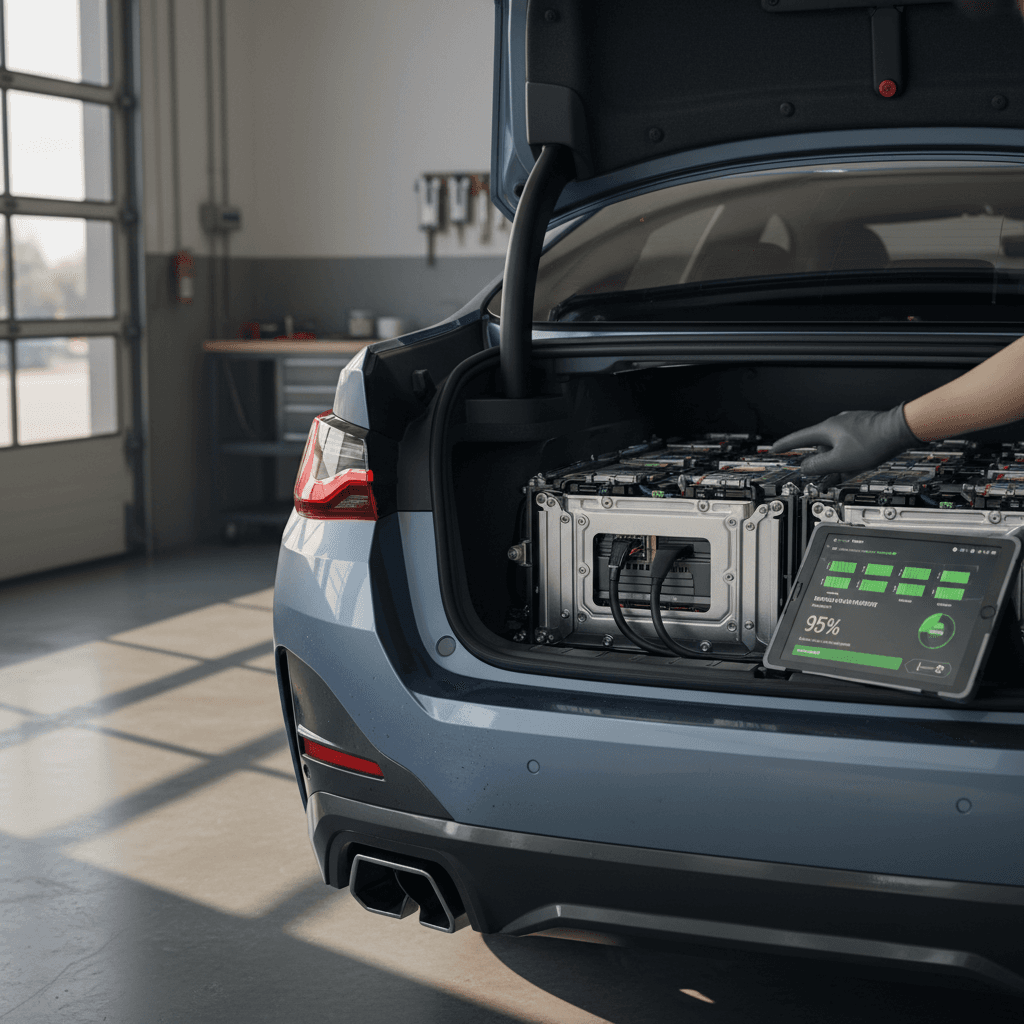
If you’re shopping for a BMW i4, or already own one, the big question is usually, “What does the BMW i4 battery warranty actually cover?” You’re looking at a high‑voltage pack that would be eye‑wateringly expensive to replace out of pocket, so understanding the 8‑year coverage, the capacity guarantee, and all the little exclusions is the difference between peace of mind and guessing.
Short answer
BMW i4 battery warranty overview
BMW wraps the i4’s pack in two overlapping pieces of protection: a high‑voltage battery defect warranty and a capacity guarantee. Together, they’re designed so you’re not left holding the bill if the battery has a genuine defect or loses an abnormal amount of capacity early in its life.
BMW i4 high-voltage battery warranty at a glance (U.S.)
Not a contract
How long does the BMW i4 battery warranty last?
For U.S.‑market BMW i4 models, the high‑voltage battery warranty usually runs for 8 years or 100,000 miles, whichever comes first, starting from the original in‑service date, when the car was first sold or leased new. That’s in addition to BMW’s 4‑year/50,000‑mile new‑vehicle limited warranty that covers most other components.
- The clock starts on the original in‑service date, not when you buy the car used.
- Mileage is counted from the odometer, so a 3‑year‑old i4 with 30,000 miles typically has about 5 years and 70,000 miles of battery coverage left.
- Once you hit either 8 years or 100,000 miles (for most U.S. cars), high‑voltage battery warranty coverage normally ends, even if the other number is lower.
What about other countries?
What the BMW i4 battery warranty actually covers
Broadly, the BMW i4 battery warranty does two things: it protects you against defects in the high‑voltage battery and, within limits, against abnormal capacity loss. Here’s what that looks like in the real world.
Typical BMW i4 high-voltage battery warranty coverage (U.S.)
Use this as a guide to what’s usually covered. Always refer to the actual warranty booklet for your car.
| Item | What’s covered | What it means for you |
|---|---|---|
| High‑voltage battery pack (defects) | Defects in materials or workmanship for 8 years/100,000 miles | If the pack or its internal modules fail prematurely due to a defect, BMW will repair or replace the battery under warranty. |
| Capacity guarantee | Usable capacity generally guaranteed to around 70% during the warranty period | If BMW’s official testing shows the pack has dropped below the stated floor within the time/mileage window, they may repair or replace it. |
| Related HV components | Some associated high‑voltage parts (e.g., certain contactors, internal sensors) | Failures in parts integral to the battery pack may be covered under the same high‑voltage warranty. |
| Non‑battery HV parts | Often covered as emissions‑related components (e.g., DC‑DC converter, inverter) | Depending on model year and state, some non‑battery high‑voltage hardware can also have extended coverage. |
| Transferability | Warranty usually follows the car, not just the first owner | If you buy a used i4 that’s still within 8 years/100,000 miles, you typically inherit the remaining battery warranty. |
Battery coverage is generous, but focused on defects and abnormal degradation, not every dip in range.
Think in years and percentage, not just miles
What isn’t covered: exclusions and fine print
Every battery warranty comes with asterisks, and the BMW i4 is no exception. The warranty is there to protect you from manufacturing defects and truly abnormal degradation, not from abuse, accidents, or ignoring warnings on the dash.
Common BMW i4 battery warranty exclusions
These are typical examples of what will not be covered as a warranty claim.
Accident or impact damage
Water or flood damage
Unauthorized repairs or modifications
Improper charging hardware
Ignoring warnings or fault messages
Normal gradual degradation
Easy way to lose coverage
CARB-state and regional warranty differences
Some BMW EVs sold in states that follow California’s emissions rules (often called CARB states) qualify for longer emissions‑related coverage on certain high‑voltage components. In a few cases that’s meant up to 10 years of coverage on the battery for specific models.
- Exactly how CARB rules apply can change by model year, and not every BMW EV is treated the same way.
- Your BMW i4’s warranty booklet will spell out whether high‑voltage battery coverage is extended in your state.
- If you bought the car in a non‑CARB state and later moved, coverage typically follows the car’s original sale location and configuration, not your new address.
How to check your specific coverage
New vs. used BMW i4: how the battery warranty works
The good news for used‑EV shoppers is that BMW’s high‑voltage battery warranty usually follows the car, not the first owner. But the way coverage stacks with other warranties depends on whether the i4 is new, used, or BMW Certified Pre‑Owned (CPO).
Buying a new BMW i4
- 4 yrs / 50k miles New Vehicle Limited Warranty (bumper‑to‑bumper type coverage).
- 8 yrs / 100k miles high‑voltage battery defect warranty plus the capacity guarantee.
- Roadside assistance and corrosion perforation coverage layered on top, depending on year.
If you lease, the lease term is usually shorter than the battery warranty, so you’re fully inside coverage the whole time.
Buying used or BMW Certified
- Any remaining balance of the original 8‑year/100k‑mile battery warranty usually transfers automatically.
- BMW Certified Pre‑Owned (CPO) adds an extra year of limited warranty after the 4‑year/50k‑mile new‑vehicle warranty expires, but the high‑voltage battery remains under its own 8‑year/100k‑mile schedule.
- Some CPO electric BMWs also advertise a separate capacity State of Health (SoH) warranty, often up to 8 years/100k miles with a slightly higher capacity floor, check the CPO fine print for your exact model year.
For a used i4, this factory battery coverage can be a major part of its value.
How Recharged uses battery warranty info
Ready to find your next EV?
Browse VehiclesHow BMW evaluates battery capacity warranty claims
Many i4 owners hear about the 70% capacity guarantee and assume that any noticeable range drop equals a free new battery. That’s not how it works. BMW uses its own tools and procedures to decide whether your car has actually fallen below the warranty threshold.
Typical steps in a BMW i4 capacity-warranty evaluation
1. Verify you’re inside the warranty window
The dealer confirms your i4 is still within the battery warranty’s time and mileage limits based on the original in‑service date and current odometer.
2. Check software, tires, and basic conditions
Incorrect tire sizes, low tire pressures, extreme cold, or outdated software can all affect range estimates. BMW will usually rule these out first.
3. Run official diagnostic tests
Technicians connect factory tools to read <strong>State of Health (SoH)</strong>, error codes, temperature history, and charging behavior from the battery management system.
4. Perform capacity measurement
BMW may run standardized charge/discharge tests or controlled driving cycles to calculate usable capacity rather than relying on your observed range alone.
5. Compare to warranty threshold
If the measured capacity is below the stated floor (typically around 70%) and there’s no sign of abuse, BMW may authorize repair or replacement under warranty.
6. Document and repair if approved
If coverage is approved, the dealer documents the case and either replaces individual modules or, in some cases, the entire pack, according to BMW guidelines.
Range vs. capacity: don’t confuse them
How to protect your BMW i4 battery and its warranty coverage
The best way to “use” your BMW i4 battery warranty is to never need it. Routine care can keep degradation slow and predictable, and following BMW’s rules helps ensure coverage is there if you ever do have a defect.
Everyday habits that support battery health, and your warranty
You don’t have to baby your i4, but a few smart habits go a long way.
Charge reasonably
Watch temperature extremes
Use sensible charge limits
Follow service guidance
Keep records
Use the app & updates
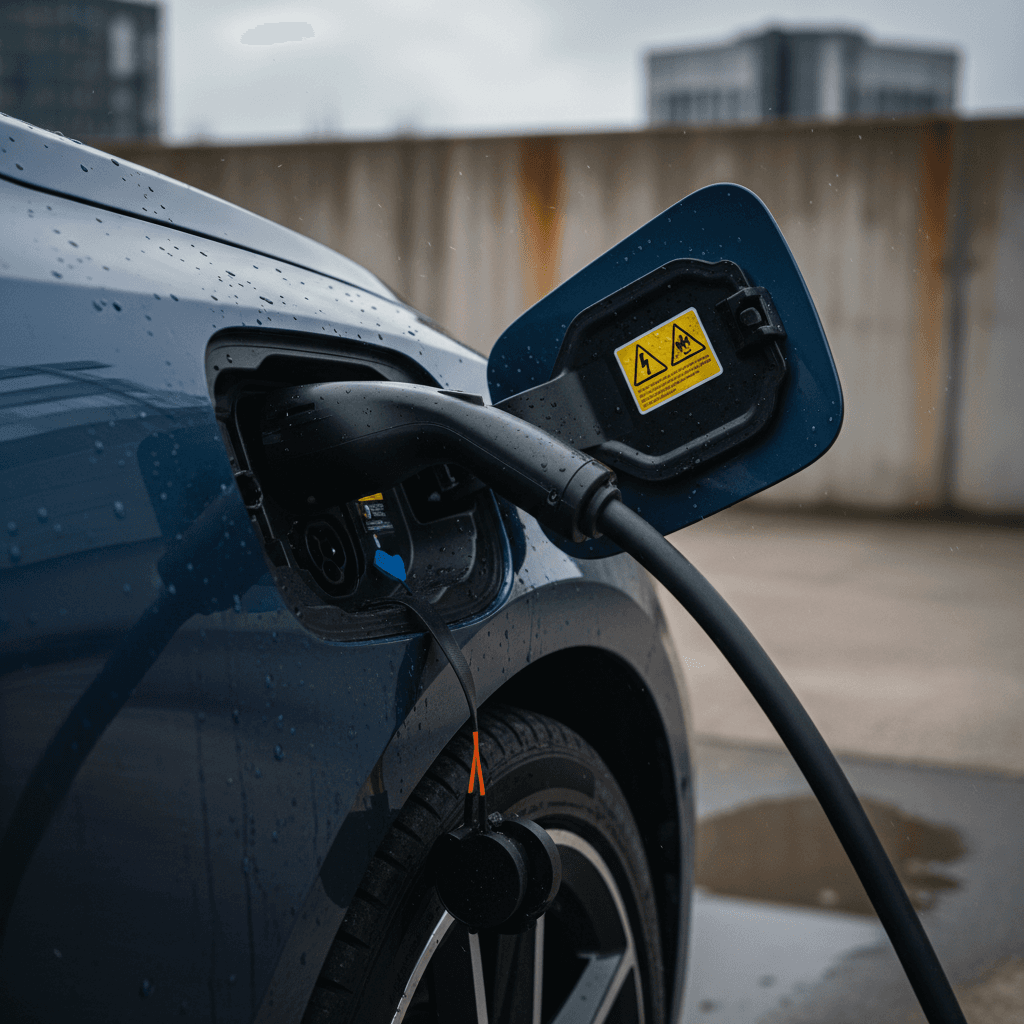
When the warranty won’t help, and what a pack can cost
Even with the i4’s generous coverage, there are situations where the battery warranty simply isn’t triggered. You might feel like you’ve lost a lot of range, but BMW’s tests still show capacity above the threshold, or the root cause is outside the warranty’s boundaries.
- Gradual capacity loss that leaves you above the threshold (for example, 75% SoH after 7 years) is typically considered normal aging.
- Damage from collisions, flooding, or off‑road impacts will nearly always be an insurance matter, not a warranty one.
- If you’re outside the 8‑year/100,000‑mile window, even a genuine defect in the pack is normally on your dime unless covered by an extended service contract.
Why the warranty matters for used i4 buyers
At Recharged, we pair the remaining factory warranty information with our Recharged Score battery diagnostics, so you see both the paper coverage and the actual condition of the pack before you buy. It’s the closest thing you can get to x‑raying the most expensive component in the car.
FAQ: BMW i4 battery warranty
Frequently asked questions about the BMW i4 battery warranty
Key takeaways for BMW i4 shoppers
The BMW i4’s battery warranty is one of the biggest reasons the car makes sense as a long‑term daily driver or a confident used‑EV buy. In most U.S. cases, you’re looking at 8 years or 100,000 miles of coverage on the high‑voltage pack with a capacity guarantee around 70%, plus the peace of mind that comes from BMW, not you, owning the risk of a genuine battery defect in those early years.
The fine print does matter: accident damage, mods, and normal gradual degradation aren’t covered, and CARB‑state nuances mean two seemingly identical cars can have slightly different protection. But if you understand what’s covered, keep your paperwork, and treat the pack reasonably, the odds are high you’ll age out of the warranty with plenty of usable range left.
If you’re considering a used BMW i4, let Recharged do some of the worrying for you. Our listings pair battery‑health diagnostics, transparent pricing, and clear warranty information, so you can focus on finding the right spec, and enjoy the car, instead of lying awake wondering what’s happening inside the battery pack.