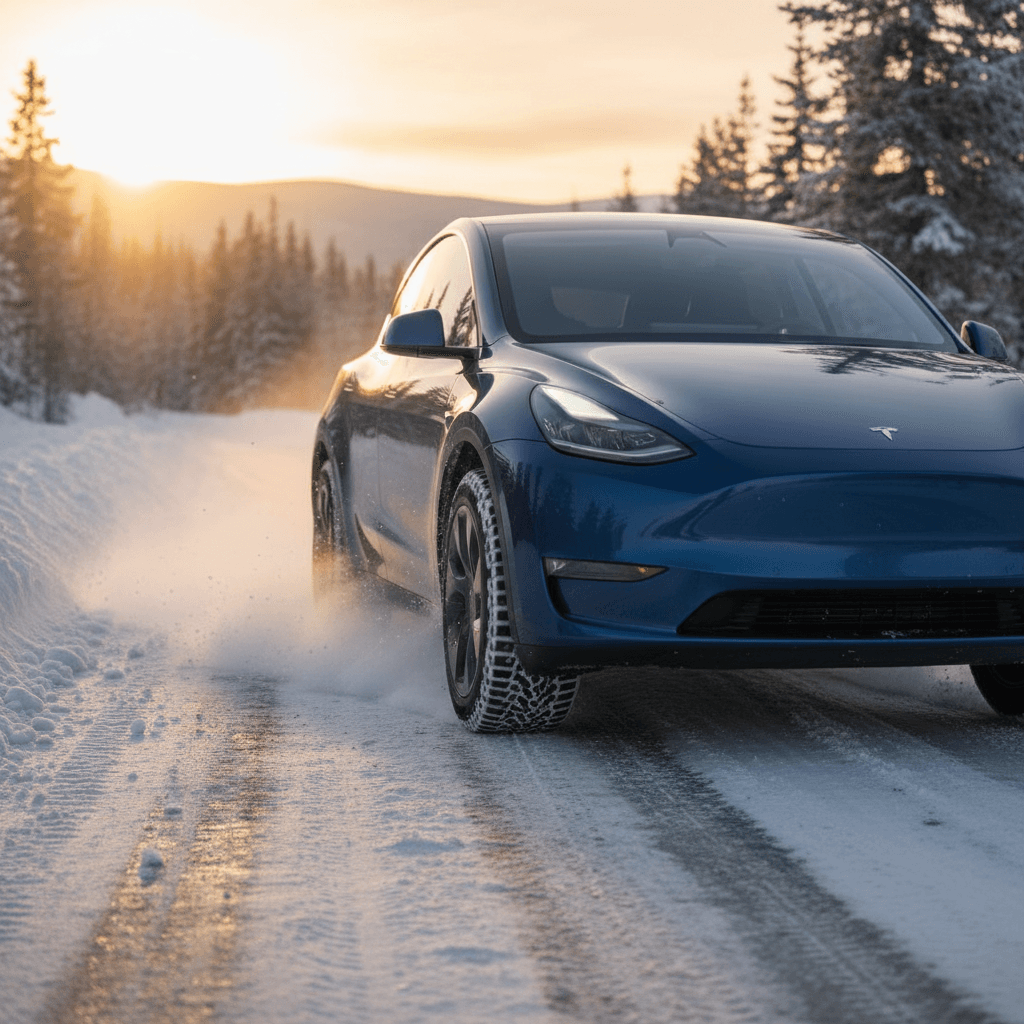
If you drive a Tesla Model Y anywhere that regularly drops below freezing, a good set of winter tires will do more for your safety than any software update or driving mode. This guide breaks down the best winter tires for the Tesla Model Y in 2026, how to pick the right size for your wheels, and how to balance grip, range, and comfort through the cold months.
Quick take
Why winter tires matter on a Tesla Model Y
EVs put more stress on tires
- Weight: A Model Y Long Range weighs over 4,400 lb, hundreds more than a comparable gas crossover.
- Instant torque: Even in Chill mode, the power delivery can easily overwhelm marginal all-season tires on ice.
- Regen braking: Strong regenerative braking means your rear tires especially need predictable grip when you lift off the pedal.
All-seasons aren’t enough in real winter
- Rubber in all-season tires hardens below about 45°F, reducing grip even on dry pavement.
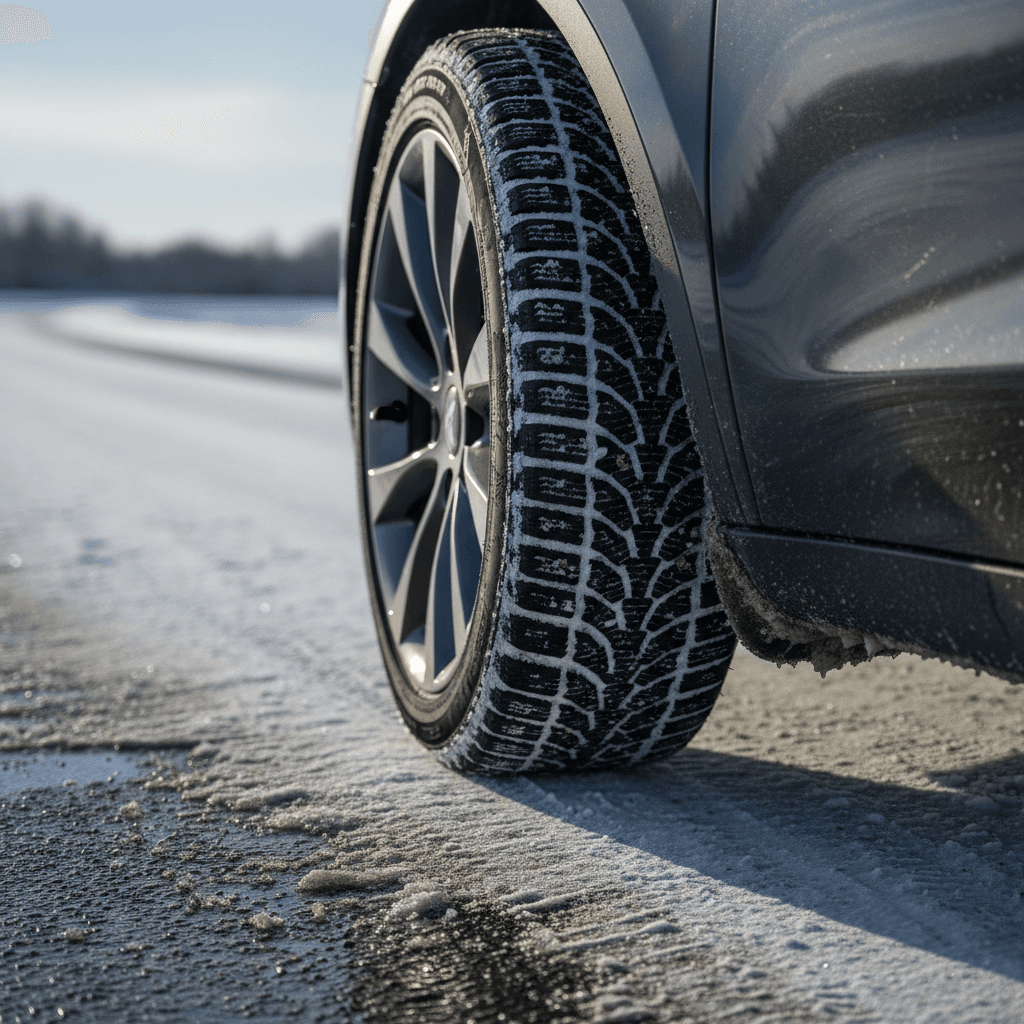
- Winter tires use softer compounds and dense siping to stay pliable and bite into snow and ice.
- The result is shorter stopping distances, better lane-keeping and more predictable traction when you actually need it.
Snow mode isn’t a substitute
What winter tires change for a Model Y
Tesla Model Y winter tire sizes and wheel options
Before you pick a tire model, you need to know your wheel size and stock tire dimensions. Tesla lists the following factory sizes for the Model Y in North America:
Factory Tesla Model Y wheel and tire sizes
Use this table to match winter tire sizes to your existing wheels or a downsized winter setup.
| Wheel diameter | Trim / axle | Factory tire size | Notes |
|---|---|---|---|
| 18" | Front & rear | 235/55R18 | Less common in North America, often aftermarket winter downsizing |
| 19" | Front & rear | 255/45R19 | Gemini wheels on most Long Range cars |
| 20" | Front & rear | 255/40R20 | Induction wheels |
| 21" | Front | 255/35R21 | Performance front axle |
| 21" | Rear | 275/35R21 | Performance rear axle |
Always confirm the size printed on your tire sidewall before ordering.
How to read your tire size
Top winter tires for Tesla Model Y in 2026
There’s no single “best” winter tire for every Model Y driver. Instead, there’s a short list of proven, modern designs that balance deep‑winter traction with EV‑friendly rolling resistance and noise. Here’s how the standouts shake out.
Headline winter tire picks for Tesla Model Y
Start with these and then narrow by climate and priorities.
Nokian Hakkapeliitta R5 EV / R5 SUV
Best overall grip & EV tuning for harsh winter climates and frequent snow/ice driving.
Non-studded, ultra-high-sipe design, very low rolling resistance, EV-specific noise and compound tuning.
Michelin X-Ice Snow & X-Ice Snow SUV
Balanced choice for mixed highway and city driving with strong ice performance and long tread life.
Popular with Model Y owners downsizing to 18" or 19" wheels.
Pirelli Winter Sottozero 3 & Bridgestone Blizzak
Confident and predictable winter performance with a sportier feel.
Especially appealing if you value steering response or come from performance all‑seasons.
Nokian Hakkapeliitta R5 EV / R5 SUV: deep-winter specialist
If you live somewhere that plows are always a little behind, Colorado mountain passes, the upper Midwest, northern New England, the Nokian Hakkapeliitta R5 EV (for cars) and R5 SUV are about as serious as studless winter tires get. They’re designed explicitly around electric vehicles’ weight and torque, with Nokian’s “Arctic Grip” compound and dense siping tuned for ice braking and slushy ruts.
- Exceptional packed-snow and ice grip, with ice‑braking certification on the SUV version in some sizes.
- Low rolling resistance for a true winter tire, which helps protect range compared with older, more aggressive designs.
- Aramid‑reinforced sidewalls on the SUV variant for pothole and curb impact resistance, very relevant on heavy EVs.
- Ride quality is soft and quiet; steering feel is a bit muted compared with sportier winter options.
Who they’re for
Michelin X-Ice Snow / X-Ice Snow SUV: long-wear all-rounder
The Michelin X‑Ice Snow and X‑Ice Snow SUV are the default recommendation for a lot of EV owners because they balance winter performance with tread life, refinement and efficiency. Real‑world Model Y drivers running X‑Ice Snows on 18" or 19" wheels consistently report strong bad-weather traction with manageable range loss and low noise.
What they do well
- Very good ice and snow traction for a mainstream tire, including deep‑sipe tread blocks that keep working as the tire wears.
- One of the few winter lines that often comes with a treadwear warranty, reflecting Michelin’s focus on longevity.
- More efficient and quieter than many aggressive winter tires, which matters when your cabin is silent and your battery is your fuel tank.
What to watch for
- In absolute worst‑case ice, some niche Nordic designs (including Nokian) can still out‑brake them.
- As with any tire, owner experiences vary; if you drive steep, untreated hills daily, lean toward the more aggressive end of the spectrum.
Pirelli Winter Sottozero 3: OEM-friendly and Tesla-approved package tire
Pirelli’s Winter Sottozero 3 sits closer to the “performance winter” end of the spectrum: still a true winter tire, but with a stiffer carcass and crisper steering than some Nordic‑style options. Tesla has used Sottozero 3 in its own Model Y winter wheel and tire packages, which means you’ll often find factory‑matched sets with 19" Gemini wheels and these tires bundled together.
- Solid snow and slush traction, with an emphasis on high‑speed stability and predictable handling.
- A good fit if you’re coming from 20" or 21" wheels and want to preserve some of the Model Y’s sharpness in winter.
- Not quite as ice‑optimized as hardcore Nordic offerings, but more reassuring at highway speeds and in milder climates.
Bridgestone Blizzak DM-V2 and IcePeak: familiar name, new technology
Bridgestone Blizzak has been the default answer to “what winter tire should I buy?” for decades, and for good reason. On the Model Y, the Blizzak DM‑V2 SUV pattern remains widely available in 19–20" sizes, with extremely confidence‑inspiring ice and packed‑snow grip.
If you’re planning ahead, Bridgestone’s new Blizzak IcePeak line is rolling out with both the traditional Three‑Peak Mountain Snowflake (3PMSF) rating and a newer “ice grip” certification, plus improvements in acceleration and longevity over the DM‑V2 it’s replacing. As more Tesla‑friendly sizes arrive, it will be one of the most interesting EV winter options on the market.
Blizzak vs others on a Model Y
Best winter tires by climate and driving style
Pick a winter tire based on how you actually drive
Match your tire to temperature, snowfall and road type rather than chasing a single "best" choice.
Mostly city & suburban, plowed quickly
- Priorities: Low noise, predictable handling, long tread life.
- Good fits: Michelin X‑Ice Snow / SUV; Pirelli Winter Sottozero 3.
- Consider 19" or 18" downsized setup if you hit potholes regularly.
Mountain towns & rural backroads
- Priorities: Maximum ice/snow grip on unplowed or compacted snow.
- Good fits: Nokian Hakkapeliitta R5 EV / R5 SUV; Bridgestone Blizzak DM‑V2 or IcePeak when available in your size.
- Strongly consider narrower tires on smaller wheels where clearance allows.
Long highway commutes in cold rain & slush
- Priorities: High‑speed stability, slush evacuation, wet‑road confidence.
- Good fits: Michelin X‑Ice Snow, Pirelli Winter Sottozero 3.
- Focus on directional stability reviews and hydroplaning resistance.
Performance‑minded drivers
- Priorities: Steering feel, stability, predictable breakaway.
- Good fits: Pirelli Winter Sottozero 3, select “performance winter” lines that match your 20"–21" size.
- Accept that no winter tire will feel like a summer UHP, and that’s the point.
Range, noise, and comfort: EV-specific tradeoffs
On a Tesla Model Y, you don’t have an engine masking road noise or burning off minor efficiency losses as waste heat. Winter tires change how the car feels more than they would on a gas crossover, so it’s worth being deliberate about the tradeoffs.
Range impact
- Winter tires increase rolling resistance; expect roughly a 5–10% hit from tires alone.
- Cold weather can stack another 20–30% on top, largely independent of tire choice.
- Look for winter tires marketed with low rolling resistance or EV‑specific tuning if range is critical.
Noise and comfort
- Soft winter compounds can actually reduce harshness over broken pavement.
- Blocky tread patterns and aggressive siping often raise road roar, especially on coarse asphalt.
- Nokian’s R5 EV and some Michelin sizes include additional sound‑absorbing foam or tread tuning for quiet EV cabins.
Handling feel
- Every winter tire will feel less sharp than your OEM all‑seasons or summers.
- Performance winter lines (like Sottozero 3) trade a bit of ultimate snow grip for better steering precision.
- For most drivers, the “softer” feel is a small price for dramatically better cold‑weather grip.
Use software to your advantage
When to switch and how long winter tires last
Your seasonal winter tire game plan
1. Watch the 45°F rule
Once daily highs are consistently around 45°F (7°C) or below, it’s time to swap to winter tires, even if there’s no snow on the ground yet.
2. Aim for a clean swap window
Book mounting when the forecast shows a clear stretch. You don’t want to be stuck waiting for a service slot after the first surprise storm.
3. Rotate mid‑season
On AWD Model Ys, rotate winter tires every 5,000–7,500 miles to keep wear even and maintain consistent grip at both axles.
4. Track tread depth
Winter tires start to lose much of their snow performance below about 5/32" of tread depth. Use a gauge rather than guessing.
5. Expect 3–5 winters
Driven seasonally, most quality winter tires will cover 3–5 seasons, depending on your mileage and how hard your climate is on rubber.
6. Swap back promptly in spring
Running winters into warm weather accelerates wear and hurts efficiency. Once nights stay well above freezing, move back to your all‑seasons or summers.
Should you downsize wheels for winter?
Many Model Y owners use winter as an opportunity to downsize from 20" or 21" wheels to 19" or even 18". That’s not just about cost; done correctly, it can actually improve winter performance and durability.
Why downsizing often makes sense
- More sidewall: A taller sidewall (higher aspect ratio) absorbs winter potholes and sharp impacts better, protecting wheels and suspension.
- Narrower tread: Slightly narrower winter tires can cut down through snow rather than floating on top, improving traction.
- Lower replacement cost: 18" and 19" winter tires are usually cheaper than equivalent 20"–21" sizes.
What to be careful about
- Overall rolling diameter must stay close to stock to keep speedometer and stability systems happy.
- Clearance around suspension and brakes must be verified; not all 18" wheels clear all Model Y brake packages.
- Stick with hub‑centric, EV‑rated wheels that can handle the Model Y’s weight.
Tesla’s own winter packages
DIY vs shop mounting, plus storage tips
You’ve basically got two strategies: one set of wheels that you re‑mount tires on twice a year, or a dedicated wheel‑and‑tire package that you bolt on and off as a set. For a heavy EV like the Model Y, the second option is usually the smarter long‑term play.
Two ways to manage winter tires on a Model Y
Up-front cost versus long-term convenience.
1. Single wheel set, remount twice a year
- Cheaper up front, only one set of wheels.
- Pay mounting and balancing every spring and fall.
- Higher risk of cosmetic damage from repeated mounting, and more time in the shop.
2. Dedicated winter wheel-and-tire package
- Higher up‑front cost, but lower ongoing hassle.
- Wheel nuts and BLE TPMS stay with each set, just swap assemblies.
- You preserve the finish of your summer wheels from salt and winter abuse.
Winter tire storage best practices
Clean before storing
Rinse off road salt and brake dust, then let wheels and tires dry fully before putting them away. Corrosive grime is your enemy.
Store cool and dark
Keep tires in a cool, dry, shaded space, ideally in bags or totes. Avoid direct sunlight and electric motors that generate ozone.
Stack or hang correctly
If they’re on wheels, you can stack them flat. Bare tires should be stored upright and rotated occasionally to avoid flat-spotting.
Label positions
Mark each assembly (LF, RF, LR, RR) so your next swap includes a proper rotation pattern.
How winter tires affect used Tesla value
If you’re thinking ahead to resale or trade‑in, winter tires are less about recouping every dollar and more about signaling careful ownership. On a used Tesla Model Y, a recent‑date winter set in good condition is exactly the kind of thing a savvy buyer looks for.
Why a winter set helps your story
- Shows you understood cold‑weather wear and safety, instead of running marginal all‑seasons year‑round.
- Buyers in snow states see real value in a plug‑and‑play winter setup, especially with TPMS pre‑configured.
- Photos of deep tread depth and even wear patterns reassure buyers about alignment and driving style.
How Recharged looks at winter tires
- Every vehicle on Recharged includes a Recharged Score battery and condition report; a clean winter wheel‑and‑tire package is a positive signal during inspection.
- If you’re selling or trading a Model Y, including recent winter tires (with tread depth measurements) can help your listing stand out to cold‑climate shoppers.
- On the buy side, our EV specialists can help you budget for a winter set if you’re shopping a car from a warmer region.
Tesla Model Y winter tire FAQ
Frequently asked questions about Model Y winter tires
The Tesla Model Y is more than capable in winter, but only if you give it the right tools. Matching a high‑quality winter tire, Nokian Hakkapeliitta, Michelin X‑Ice, Pirelli Sottozero, Bridgestone Blizzak, to your climate, wheel size and driving style will do more for your confidence than any driving mode. Whether you’re buying your first Model Y or upgrading the one in your driveway, factoring winter tires into the plan from day one is one of the smartest decisions you can make. And if you’re shopping used, a Recharged specialist can help you evaluate tread depth, wheel fitment, and total cost of ownership so your next EV feels just as secure in February as it does in July.