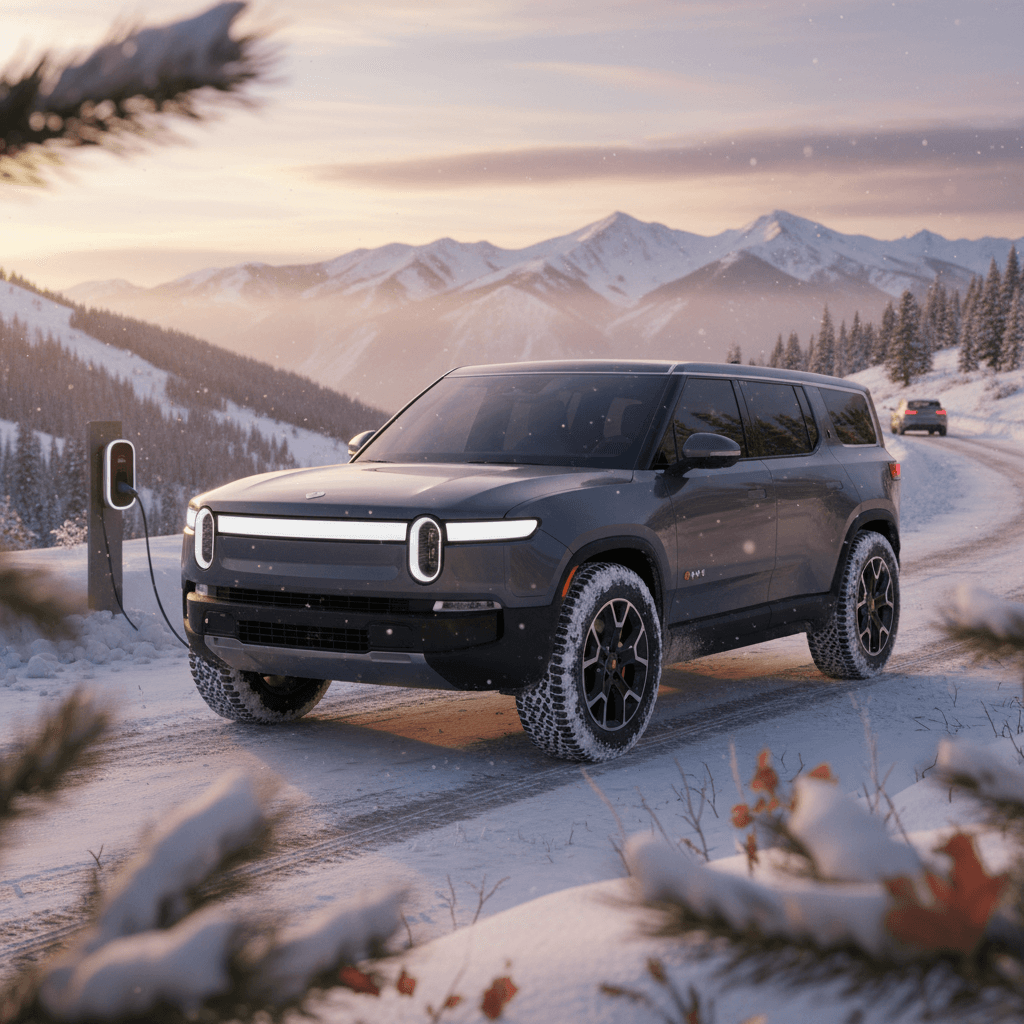
If you drive through real winters, think freezing temps, slush, packed snow or ice, the best winter tires for electric cars aren’t just a nice-to-have. They’re the difference between confident cold‑weather driving and white‑knuckle trips with shorter range and longer braking distances.
Quick takeaway
Why winter tires matter more on EVs
All cars lose grip in winter on the wrong tires, but EVs amplify the problem. Batteries are heavy, instant torque can spin the wheels more easily, and cold weather already cuts range by roughly 20–30% in typical winter conditions. That means any extra drag or slip you introduce through tires shows up immediately in your energy use and your stopping distances.
- EVs weigh more than comparable gas cars because of the battery pack, loading the tires harder in corners and under braking.
- Instant electric torque can overwhelm low‑grip all‑season or summer tires on cold pavement, especially when pulling away from a stop or turning onto a slick road.
- Cold temperatures stiffen rubber compounds, reducing grip and increasing stopping distances if the tire isn’t designed for low‑temperature flexibility.
- Range is already reduced in winter due to battery chemistry and cabin heating, so inefficient or poorly chosen winter tires can make range anxiety worse.
Summer tires are a hard no
What makes a good winter tire for electric cars?
Key features to look for in EV winter tires
Safety first, but don’t ignore range and noise
Cold‑weather grip
Look for the three‑peak mountain snowflake (3PMSF) symbol. It certifies the tire meets a minimum snow‑traction standard, unlike basic M+S markings.
Low rolling resistance
An EV‑friendly winter tire uses special compounds and tread design to reduce energy losses, helping preserve range compared with older snow‑tire designs.
Quiet operation
EV cabins are quiet, so tire roar stands out. Many EV‑oriented winter tires add noise‑damping structures or foam inserts to keep the cabin calm.
EV‑specific needs vs regular winter tires
Why you can’t just grab any snow tire off the rack
Higher load ratings
Because EVs weigh more, your winter tires should match or exceed the factory load index. Some lines carry EV‑specific or XL versions for this reason.
Torque handling
Winter tires for EVs often have reinforced tread blocks and sidewalls to cope with instant torque without squirming or wearing out prematurely.
Efficiency balance
The best EV winter tires balance grip and efficiency so you’re safe in snow without sacrificing more range than necessary.
Best winter tires for EVs in 2025: Shortlist
Top EV winter tire picks by role (2025)
How to use this list
A closer look at top EV winter tires
Comparison: leading winter tires for electric cars (2025)
Flagship winter tires that play nicely with EV weight, torque and range.
| Tire | Type | Best for | Strengths for EVs | Trade‑offs |
|---|---|---|---|---|
| Michelin X‑Ice Snow | Studless | Most EV drivers, mixed winter conditions | Low rolling resistance, quiet ride, long tread life, strong snow/ice grip | Not the absolute strongest on glare ice vs aggressive Nordic designs |
| Nokian Hakkapeliitta 10 EV | Studded (many sizes) | Frequent ice, rural or northern climates | Exceptional ice braking and traction, EV‑tuned construction, robust at low temps | Stud noise, may be overkill in milder climates; studded use restricted in some areas |
| Pirelli Winter Sottozero 3 Elect | Performance winter | Sporty EVs, highway use | Precise steering, strong wet/slush traction, EV‑focused Elect versions | Less suited to unplowed deep snow than Nordic‑style tires |
| Bridgestone Blizzak WS90 / LM005 | Studless performance | Snow‑belt commuters | Confident snow/ice traction, predictable handling, solid wet‑road braking | Some variants wear faster and can be noisier as they age |
| Continental VikingContact 7 / 8 | Studless | Efficiency‑minded drivers in cold climates | Good mix of grip and low rolling resistance, refined ride | Ultimate ice grip trails the most aggressive Nordic or studded options |
Always confirm exact size, load index and speed rating for your specific vehicle before buying.
You’ll see the same names pop up across independent tests and tire‑retailer recommendations. What matters most is matching the model to your climate and driving style. A Tesla Model 3 in Boston has very different needs than a Rivian R1T in northern Minnesota.
Brand “EV” labels explained
How winter tires affect EV range and noise
Range hit: what’s normal?
Cold weather alone can shave 20–30% off your range before you even factor in winter tires. Snowy roads, cabin heat and defrost use all contribute.
A modern, low‑rolling‑resistance winter tire might add just a few percentage points of additional loss compared with an efficient all‑season. An older, very aggressive snow tire with deep, blocky tread can hurt range more noticeably.
The key is to choose tires marketed as low rolling resistance or EV‑ready, keep them properly inflated, and use preconditioning so your battery and cabin are already warm when you unplug.
Noise in a quiet EV cabin
Because there’s no engine sound to mask it, tire noise is front and center in an EV. Winter patterns tend to be louder than summer or all‑season designs, and studded tires louder still.
EV‑oriented winter tires use noise‑optimized tread blocks and sometimes foam inserts to cut resonance. If you’re sensitive to noise, prioritize models with quiet‑ride claims, Michelin X‑Ice Snow and Continental VikingContact lines are good examples, and consider downsizing wheel diameter for a bit more sidewall cushion.
Three quick range‑saving moves
Choosing the right winter tires for your EV
EV winter tire buying checklist
1. Confirm your factory size and load index
Check the sticker in your driver’s door jamb or the owner’s manual for tire size, load index and speed rating. Your winter set should match or exceed those numbers.
2. Decide on studded vs studless
In northern, icy climates, studded options like Nokian Hakkapeliitta 10 EV can be worth the noise and legal limitations. In most US cities and suburbs, studless models provide plenty of grip without studs.
3. Consider downsizing for winter
Many EVs can run a smaller‑diameter wheel with a taller sidewall in winter (for example, 18" instead of 20"). That often improves ride comfort, snow traction and replacement cost, just stay within your vehicle’s approved sizes.
4. Prioritize EV‑friendly models
When possible, pick tires advertised as low‑rolling‑resistance or EV‑ready. They’re engineered to cope with extra weight and torque while keeping energy losses in check.
5. Think about your actual winter
Highway commuters need wet‑road stability and hydroplaning resistance. Rural drivers on unplowed roads need deeper snow traction. Match the tread design to what you actually see most days.
6. Plan for storage and wheel sets
If you can swing it, buy a second set of winter wheels. Swapping the whole package seasonally is quicker and avoids repeated mounting/dismounting that can stress tire beads.
Winter vs all‑weather vs all‑season on EVs
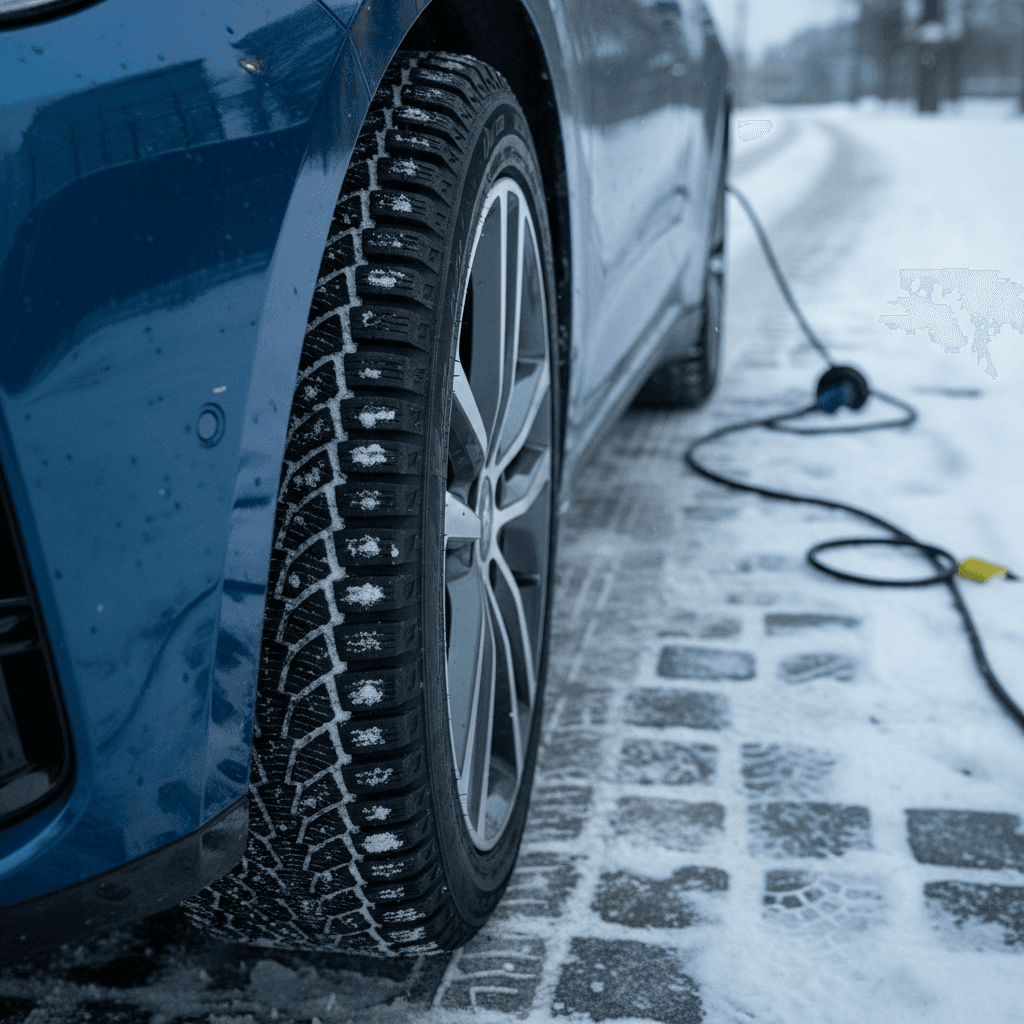
Winter (snow) tires
- Marked with the 3PMSF symbol
- Soft compounds stay flexible in deep cold
- Best braking and acceleration on snow and ice
- Should be swapped off in warmer months to avoid rapid wear
All‑weather tires
- Carry 3PMSF but tuned for year‑round use
- Good compromise for mild‑to‑moderate winter areas
- On EVs, a quality all‑weather can work if you rarely see deep snow or ice
- Still a step up from basic all‑season in cold grip
All‑season tires
- No 3PMSF on many models; M+S only
- Acceptable in shoulder seasons and light snow
- Significantly worse braking and traction in real winter conditions
- For most EV owners in the snow belt, they’re not enough for December–February
Don’t mix and match
Installation, running costs and maintenance
What to budget for an EV winter tire setup
Ballpark numbers for many mainstream EVs
Upfront costs
- Tires only: Many popular EV‑suitable winter tires fall roughly in the $120–$250 per‑tire range depending on size.
- Wheels + tires: Adding a dedicated winter wheel set can add $400–$800+ but makes seasonal changeovers easier.
- Mount/balance: Expect $100–$200 per season if you’re remounting on the same wheels.
Care and maintenance
- Rotate winter tires every 5,000–7,500 miles to balance wear, important on torque‑rich EVs.
- Check pressures monthly; cold snaps can drop PSI quickly.
- Store off‑season tires in a cool, dry place or use a local tire hotel service if you’re tight on space.
Good news on cost
Winter tires and buying a used EV
If you’re shopping the used‑EV market, winter readiness is one of those details that separates a good deal from a great one. The right tires won’t fix a weak battery, but they’ll make a solid car much more livable from November through March.
- Ask the seller whether a separate winter wheel‑and‑tire package is included, and check date codes and tread depth if it is.
- Inspect the current tires for 3PMSF markings if you’re test‑driving in winter; this tells you whether you’re already on true winter or all‑weather rubber.
- If you’re buying digitally through a platform like Recharged, use the inspection photos and listing details to see tire brand, model and condition, and factor the cost of a winter set into your total budget if needed.
- Pairing a used EV that has a strong Recharged Score for battery health with a fresh set of winter tires is a smart way to get new‑car winter confidence for a used‑car price.
EV winter tire FAQ
Frequently asked questions about winter tires for electric cars
Winter is where electric cars either shine, or frustrate. The right winter tires let your EV’s traction control and torque work for you instead of against you, shortening stopping distances and keeping the cabin calm without punishing your range. Start by being honest about your climate, match one of today’s EV‑ready winter tire lines to your driving, and treat a quality winter setup as part of the cost of safe, low‑stress electric ownership. If you’re browsing used EVs through a platform like Recharged, build winter tires into your total budget the same way you would home charging. It’s one of the smartest upgrades you can make before the first real storm hits.