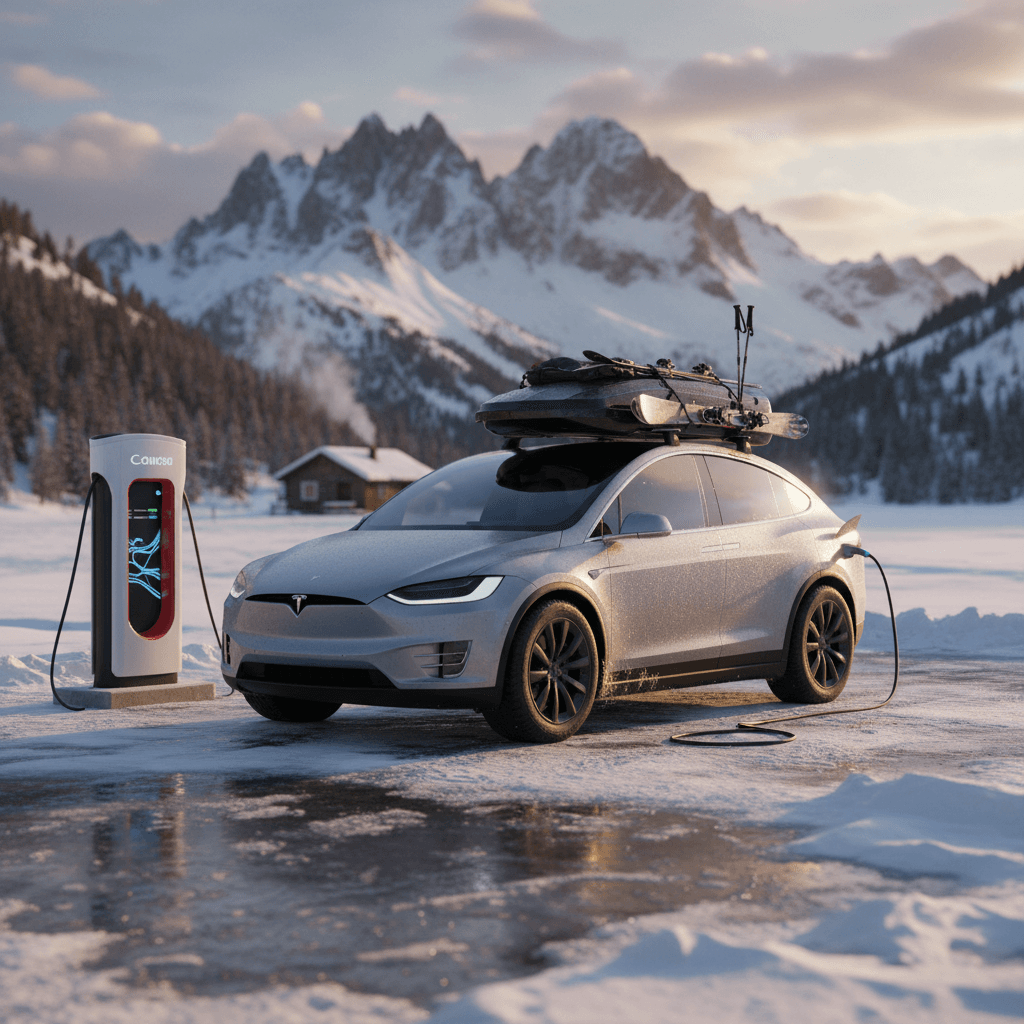
Snow, switchbacks, and silence. An electric vehicle on a crisp mountain morning can feel like the perfect ski-trip companion, instant torque for climbs, one-pedal control in traffic, and a warm cabin you can preheat from your phone. But to make that dream work in real life, you need an EV ski trip preparation guide that’s honest about winter range, mountain charging, and what to pack so you’re never stranded with a cold battery and colder toes.
EVs and winter: the short version
Why EVs Make Surprisingly Good Ski Cars
Four reasons EVs shine on ski trips
Beyond the charger anxiety, there’s a lot they get right in winter.
Instant torque for climbs
Electric motors deliver maximum torque from zero RPM, which means confident passes on two-lane mountain roads and easy launches uphill, even when you’re fully loaded with friends and skis.
Regenerative braking on descents
Instead of roasting your brakes all the way down the pass, regenerative braking recovers energy and gives you beautiful one-pedal control on long descents.
Cabin heat without idling
You can preheat the car while plugged in, and keep it warm in the parking lot without burning fuel or idling an engine, huge for early mornings and post-ski thawing.
Modern traction and safety tech
Most newer EVs pack sophisticated traction control, ABS and stability systems that react very quickly thanks to precise motor control, ideal for patchy snow, ice, and slush.
The tradeoff is energy. Cold air, snow-packed roads, roof boxes, and blasting the heater all add drag or load on the battery. That doesn’t mean you shouldn’t take your EV to the slopes, it just means you should plan the way experienced backcountry skiers plan their lines: with margin, not optimism.
How Cold Impacts EV Range on Ski Trips
Let’s be blunt: your EV will lose range in winter. Several large real-world studies in 2024–2025 show that in normal cold-weather use, most EVs keep around 80% of their rated range in freezing conditions, with losses of roughly 15–25% on average. In harsher conditions, think sustained temps near 0°F with lots of heater use, range can drop closer to 30–40%.
What winter does to EV range
Don’t plan to zero
Elevation is a mixed bag. Climbing to the resort at 7,000–10,000 feet drains range faster; descending later can return a surprising amount of energy. The net cost of a round trip is often less than you fear, but the *timing* of when you need that energy matters. You can’t rely on tomorrow’s downhill regen to save today’s under‑planned uphill leg.
Route Planning and Charging Strategy for Ski Trips
For an EV ski trip, the map app built into your car is only the starting point. You’ll get better results by combining an EV‑aware planner with conservative winter assumptions and a clear Plan B if a charger is full or offline.
Step-by-step winter route planning
1. Start with an EV-specific planner
Use tools like A Better Routeplanner or PlugShare, or your car’s built‑in trip planner. Turn on settings for "cold weather" or add a custom consumption penalty of ~20–30% to simulate winter conditions.
2. Cap your legs around 50–60% of rated range
If your EV is rated for 300 miles, plan winter legs in the 140–180 mile range when heading into mountains. That gives space for headwinds, detours, and traffic jams.
3. Bias stops to DC fast chargers near highways
On long legs, especially with family and gear, prioritize reliable DC fast charging along the main corridor. Smaller Level 2 chargers are great backups but slow in deep cold.
4. Use SoC buffers, not razor-thin margins
Aim to arrive at each fast charger with at least <strong>15–20% state of charge</strong>, and depart with a realistic target for the next leg. It’s much less stressful than gambling on single‑digit arrival percentages in a snowstorm.
5. Check recent station check-ins
Apps with user check-ins can clue you in to broken hardware, long waits, or tricky access in snow. Spend two minutes reading comments before you commit to a remote charger.
6. Build a Plan B for each critical leg
For every long stretch, identify an alternate charger you could fall back to if conditions go sideways. Save it in your nav or EV app so you can reroute quickly.
Charging At or Near Ski Resorts
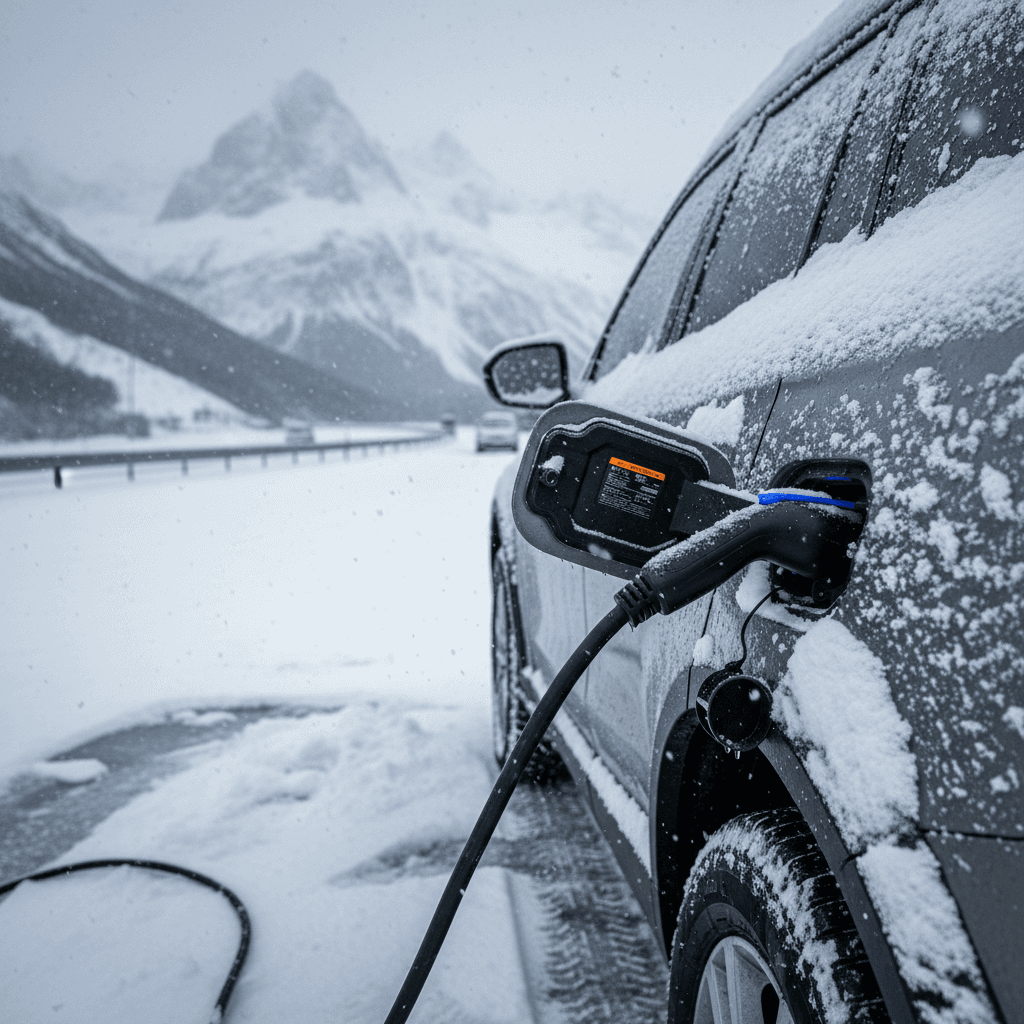
Not all ski areas are created equal when it comes to charging. Some big U.S. resorts now have rows of Level 2 chargers in the parking lot or DC fast chargers nearby. Others offer a single J1772 pedestal half-buried in a snowbank. The key is to know, before you arrive, whether you can realistically "destination charge" while you ski or whether you should aim to arrive already topped up.
Common ski-area charging scenarios
How to adapt your plan based on what’s available at or near the mountain.
| Scenario | What it looks like | Best strategy | Watch out for |
|---|---|---|---|
| Full-featured resort | Multiple Level 2s in main lot, DC fast chargers within 5–15 minutes | Arrive 20–40% SoC, plug in for the day, top off at DC if needed on departure | Crowded weekends, ICEing (spots blocked by gas cars) |
| Basic destination charging | A few J1772 or Tesla Destination units at the lodge or hotel | Arrive with enough charge for next day’s return plus buffer; don’t rely on 100% access | Slow charging in deep cold; cords frozen into snowbanks |
| No on-site charging, DC nearby | No plugs at the resort, but DC fast on the access road or in town | Fast charge on the way in or out; avoid arriving nearly empty at the resort | Station queues on Sunday afternoons when everyone leaves |
| Truly remote hill | No public charging within 30–50 miles | Treat it as an out-and-back from your nearest reliable fast charger. Arrive with plenty of charge and leave with extra buffer. | Road closures, higher consumption on unplowed or rutted roads |
Always confirm charger details shortly before you travel, installations and pricing change quickly.
Pro move: charge while you ski
Pre-Trip EV Checklist for Ski Season
Think of this as your EV’s version of waxing skis and checking avalanche gear. A little prep before you leave makes the whole trip calmer and cheaper.
EV ski trip prep checklist
Update software and maps
Install any pending software updates a week before departure so you’re not debugging new behavior on the road. Updated maps and routing often improve cold‑weather and charging logic.
Test all charging gear
Verify your home charger, portable Level 2 unit, and any adapters (CCS–NACS, J1772, etc.) are working. A quick test session in the driveway is worth far more than discovering a dead cable in a blizzard.
Inspect tires and consider winters
Snow-rated all‑seasons may be fine for light conditions, but if you’re routinely heading into true winter, a proper set of winter tires is a bigger safety upgrade than any driver aid.
Check wipers, fluid, and defrosters
Top up low‑temperature washer fluid, replace streaky wiper blades, and confirm front and rear defrosters work. Good visibility lets you use less heat and drive more efficiently.
Dial in charging limits
For trips, many drivers raise their daily charge limit to 90–100% for the departure morning. Just remember that in deep cold your car may need extra time to balance the pack.
Save key charging locations
Before you leave, save your main and backup chargers as favorites in your nav and in whatever public charging apps you use. That way, if cell service drops, your route doesn’t.
Don’t ignore the 12V
Packing Smart for an EV Ski Trip
Weight and aerodynamics matter more than most people think. Roof boxes, hitch racks, and a car full of friends all nibble at your range. You don’t need to travel like a monk, but it’s worth packing like someone who pays per kilowatt-hour, which you do.
What to pack (and where to put it)
Balance safety gear, comfort, and efficiency.
Winter emergency kit
- Blankets or sleeping bags
- Gloves, hats, spare socks
- Snacks and water
- Small shovel and ice scraper
- Portable phone battery pack
Charging essentials
- Portable Level 2 EVSE if your car supports it
- All relevant adapters (NACS, CCS, J1772)
- Extension cord only if rated and approved by your EVSE manufacturer
- Headlamp or small flashlight
Range-conscious cargo
- Use a rear hitch rack before a tall box
- Pack heavy items low and central
- Brush snow off the car and roof box for less drag
- Avoid unnecessary junk in the trunk
Ski rack vs. roof box
Driving Technique: Winter Roads and Regeneration
EVs reward smooth, anticipatory driving, exactly what you want on snowy roads. The same habits that protect traction also protect range.
- Use Eco or Snow modes where available; they usually soften throttle response and limit wheelspin.
- In heavy snow or ice, consider dialing down regen from "max" to a medium setting so lifting off the accelerator doesn’t upset traction mid‑corner.
- On long descents, let regen do as much work as conditions safely allow, but don’t be afraid to supplement with friction brakes, they’re sized for it.
- Keep speeds modest. Aerodynamic drag skyrockets with speed; in cold, dense air at 75 mph your consumption can look shockingly bad compared with 60–65 mph.
- Precondition the cabin while plugged in before morning departures so the battery and cabin are already warm when you start driving.
Plan your DC fast charge for the valley, not the summit
Choosing the Right EV If You Ski Regularly
If you live in Denver, Salt Lake City, Tahoe, Vermont, or anywhere skiing is a weekly ritual, the car you choose matters as much as how you use it. The good news is that many modern EVs, including used models, are now viable all‑season mountain machines.
Features that make an EV a great ski partner
Especially important if you’re shopping the used EV market.
Healthy, winter-ready battery
Cold exaggerates weak batteries. A car with a strong, well‑managed pack will feel more predictable in winter. A battery health report like the Recharged Score can show estimated remaining capacity so you know what you’re really working with on that 240‑mile "rated" car.
Battery preconditioning
Look for models that can automatically warm the pack before fast charging or hard use in the cold. It shortens DC charging stops and protects long‑term health.
All-wheel drive and traction modes
AWD isn’t mandatory, but if you’re regularly on steep, unplowed roads, dual‑motor setups plus proper winter tires are worth their weight in chairlift tickets.
Good nav and charging integration
Native routing with charger integration, live station status, and realistic range estimates in cold weather all reduce mental overhead on every mountain run.
If you’re considering a used EV specifically for winter and mountain duty, buying from a specialist helps. Recharged includes a Recharged Score battery health report with every vehicle, so you can see verified battery condition, real‑world range expectations, and fair pricing before you commit. That context matters a lot more when you’re planning 6 a.m. drives up I‑70 than when you’re just commuting downtown.
FAQ: EV Ski Trip Preparation
Frequently asked questions about EV ski trips
Key Takeaways and How Recharged Can Help
An EV ski trip isn’t a stunt anymore, it’s just a trip that rewards a bit of preparation. Respect winter range loss, plan conservative legs between reliable chargers, and treat resort parking lots like slow-motion fuel stops whenever you can. Pack smart, drive smoothly, and your car will feel as composed as you do carving first tracks on a quiet weekday morning.
If you’re shopping for an EV that can handle winter duty, buying used doesn’t have to mean guessing about range in the cold. Every vehicle at Recharged comes with a Recharged Score battery health report, transparent pricing, and EV‑specialist support to help you understand how that car will behave on your favorite mountain pass. You can browse, finance, trade in, and arrange nationwide delivery fully online, or visit our Experience Center in Richmond, VA, so the hardest part of your next ski trip is choosing between powder day and bluebird groomers, not whether your car will make it home.