If you live on a gravel road, drive long distances to town, or tow a trailer, it’s fair to wonder what the **best used electric car for rural drivers** really looks like. The answer isn’t one single model, it’s matching the right used EV to your roads, climate, and charging options.
Rural EV reality check
Why rural drivers ask if an EV can work
Rural drivers face a different set of tradeoffs than city commuters. You may drive longer distances to work, school, or the nearest grocery store. Your local roads might be gravel, rutted, or prone to snow and mud. And if you live in the vast parts of the country that still have relatively few public chargers, running out of range isn’t just inconvenient, it can be stranded-on-the-side-of-a-two-lane-highway serious.
- Long round trips to town (60–150 miles in a day)
- Gravel, dirt, or poorly maintained county roads
- Winter snow, ice, or spring mud season
- Occasional towing or hauling feed, gear, or equipment
- Limited or no fast charging within a reasonable detour
Instead of asking "Are EVs good for rural drivers?" a better question is: Which used EVs fit rural life, and under what conditions? That’s the question this guide answers.
What rural drivers actually need from a used EV
Core requirements for rural-friendly used EVs
Focus on capability and confidence, not just the badge
Real-world range
You want at least 180–220 miles of honest range for most rural use, and more if winter temps or highway speeds are common.
Home-first charging
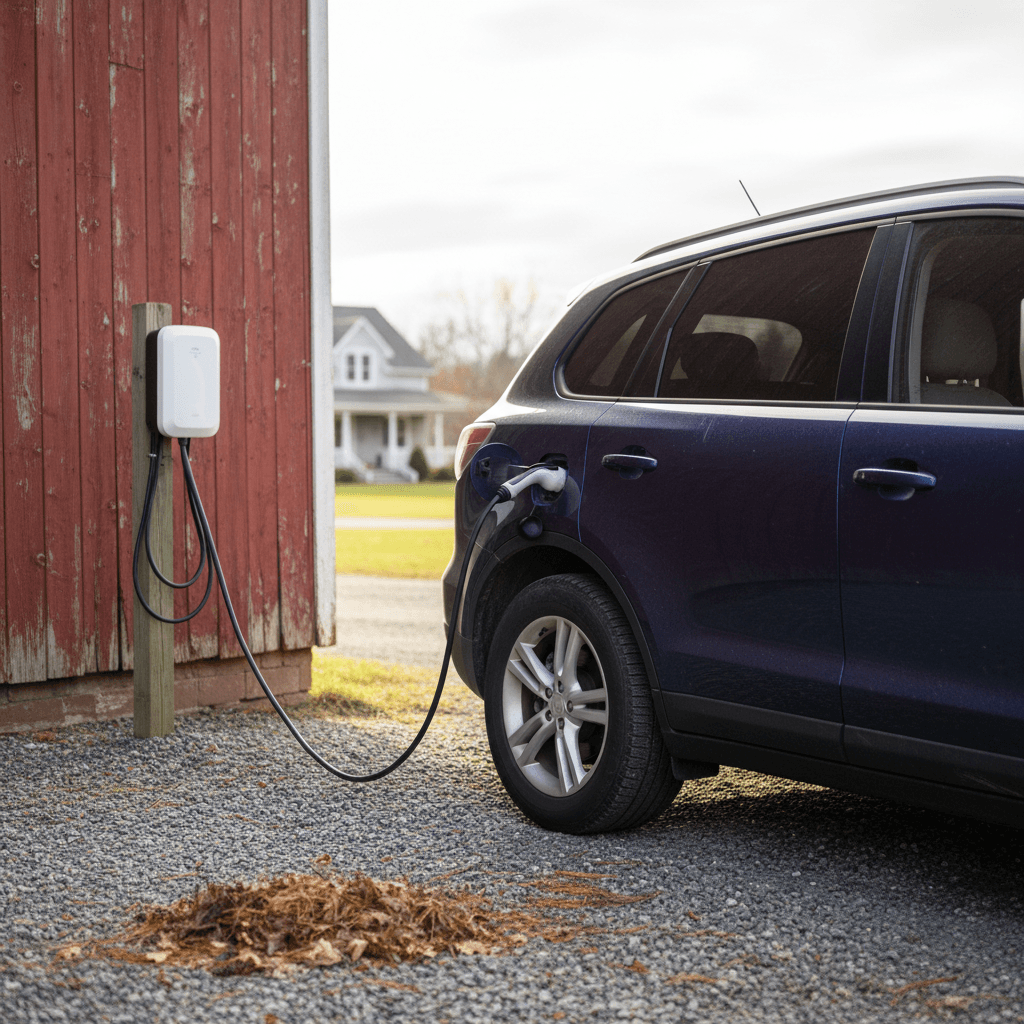
In rural areas, most charging will happen at home. A Level 2 (240V) setup turns your driveway or barn into your primary "station."
Road & weather capability
Extra ground clearance, all-wheel drive and good tires matter more on washboard gravel and snowy hills than 0–60 times.
Think “mission first,” not “trend first”
Best used electric cars for rural drivers by use case
Below are used EVs that tend to work well for rural buyers in the U.S. We’ve grouped them by how you use your vehicle, not by marketing segment. Availability will vary by region, and pricing changes quickly, this is about fit and capabilities more than exact dollars.
Used EV picks for rural drivers (by use case)
Representative models that balance range, rough-road ability and value for rural households.
| Use case | Model (used) | Why it works | Key watch-outs |
|---|---|---|---|
| Affordable daily driver on country roads | Chevrolet Bolt EUV (2022–2024) | Compact, efficient, decent 200+ mile range, good value used | Low ground clearance; not ideal for deep ruts or frequent snow; FWD only |
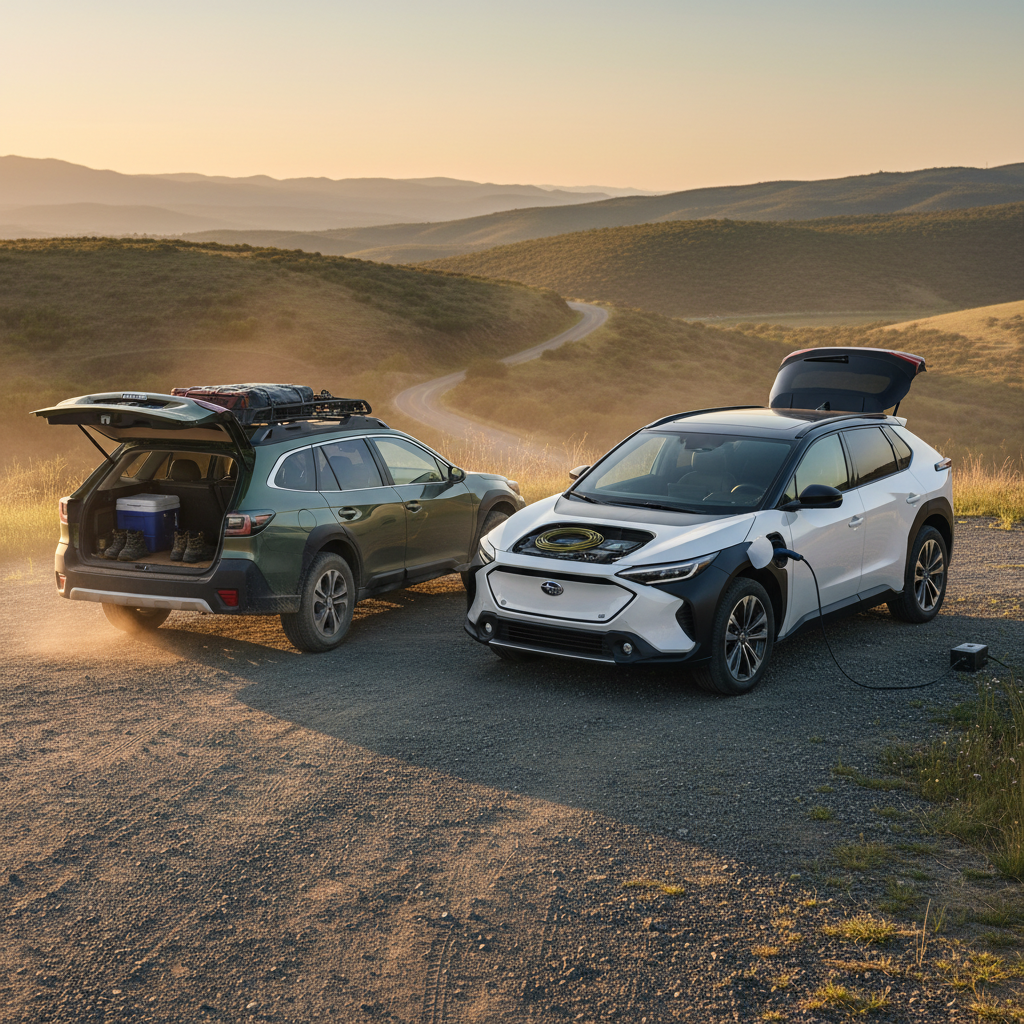
| Snowy back roads, mixed weather | Subaru Solterra / Toyota bZ4X AWD (2023–2024) | Standard AWD, ~8+ inches of ground clearance, tuned for bad weather | Early software updates, charging curve; real-world range lower at highway speeds in cold |
| Family SUV in farm country | Hyundai Ioniq 5 or Kia EV6 (AWD) | Comfortable on long drives, strong DC fast charging when available, hatchback utility | Not rock crawlers; watch for curb rash on aero wheels and tire wear |
| Serious off-pavement & forest service roads | Rivian R1S or R1T (2022–2024) | Very high adjustable ground clearance, sophisticated AWD, strong towing capability | Higher purchase price; big battery means heavy vehicle and higher tire costs |
| Three-row family hauler on rural highways | Kia EV9 (2024+ once used) | Room for family and gear, available AWD, good highway manners | Early used supply will be limited; check charging history and software updates |
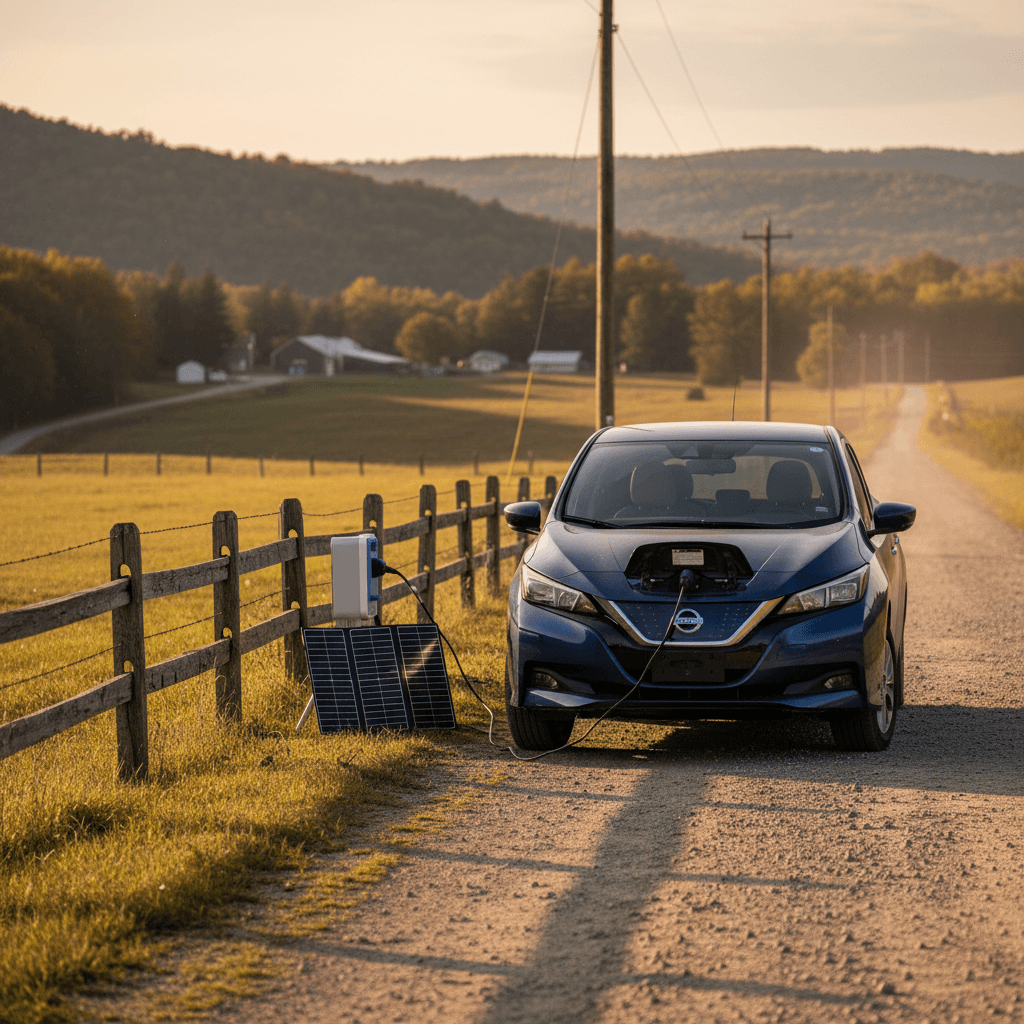
| Budget second car for in-town runs | Older Nissan Leaf (40 kWh+) | Low purchase prices, fine for short trips to town and back with home charging | Limited range and no active battery cooling on many years, best as a short-trip car |
Always confirm exact specs (range, ground clearance, tow rating) for the specific model year and trim you’re considering.
About model years and availability
If you mostly drive to town and back
If your main pattern is a **20–60 mile trip to town and back** a few times a week, you have the most flexibility. You can prioritize price and efficiency over ultimate off-road skills.
- Chevrolet Bolt EUV: Better rear seat space and slightly higher stance than the standard Bolt, with strong efficiency and solid used values.
- Hyundai Kona Electric: Compact, relatively affordable, and a bit more ground clearance than a typical sedan.
- VW ID.4 RWD: Comfortable, roomy, and better suited to rough roads than a compact car, though true off-road capability is limited.
If you deal with snow, mud, and unplowed roads
In snowbelt or mountain regions, what matters is not just getting moving, it’s stopping and steering predictably on unplowed or rutted roads. Here, all-wheel drive and ground clearance start to matter more than pure range.
- Subaru Solterra / Toyota bZ4X AWD: Built with bad weather in mind, with useful ground clearance and traction modes for snow and dirt.
- Hyundai Ioniq 5 / Kia EV6 AWD: Not trail rigs, but AWD and good stability control make them competent on winter roads with proper tires.
- Tesla Model Y Long Range (if budget allows): Strong efficiency in cold weather with a heat pump, available AWD, and a mature Supercharger network for longer trips.
If you tow or haul on rough roads
If you regularly tow a livestock trailer, car hauler, or large camper, a used EV probably won’t replace your main three-quarter-ton truck anytime soon. But it can still handle **mid-size trailers, utility trailers or small campers**, especially if you’re realistic about range loss while towing.
- Rivian R1T (pickup) or R1S (SUV): Excellent off-road ability, adjustable air suspension with serious ground clearance, and stout tow ratings, best for those who can afford a higher up-front price.
- Ford F‑150 Lightning: Strong towing capability and the familiarity of a full‑size pickup; best if you’re towing moderate distances and can charge at home and sometimes DC fast charge along your route.
- Chevy Silverado EV / GMC Hummer EV (as they filter into used market): Overkill for many, but capable where full-size off-road trucks make sense. Expect higher running costs for tires and maintenance than a smaller EV.
Towing with an EV cuts range sharply
Ground clearance, AWD and rough-road capability
For rural drivers, **ground clearance and traction** can matter as much as battery size. Deep ruts, washboard gravel, and snow-choked driveways are where low-slung city EVs struggle first.
How much clearance and traction do you really need?
Why clearance matters
On rutted farm lanes or forest roads, the first thing to scrape is the battery pack’s protective tray or the underbody aero panels. An EV with 8 inches or more of ground clearance gives you more margin before you’re dragging over frozen ruts or high crowns in the middle of a gravel road.
If you mostly drive on well-graded gravel and paved two-lanes, you can live with less, but if your mail truck sometimes gets stuck, you’ll want an EV that sits taller.
When AWD is worth it
All-wheel drive doesn’t change your stopping distance, but it does help you get going and maintain control on hills and loose surfaces. Rural drivers in snowy or muddy regions will appreciate dual-motor or AWD EVs, especially paired with quality winter or all‑terrain tires.
If you live in a dry climate with mostly paved roads, you may be better off saving money and energy with a front- or rear-drive model instead.
Tires matter more than badges
Range and charging realities in rural areas
Public charging has expanded rapidly in the U.S., but it still clusters around urban and suburban areas. Rural drivers are less likely to have a fast charger nearby, and more likely to rely on **home charging**. That changes how much range you need and how you plan trips.
Charging strategies that make a used EV work in the country
Design around home charging, then layer in public options
Level 2 at home
For most rural owners, a 240V Level 2 charger in the garage, carport, or on the side of a barn is non‑negotiable. It turns your EV into a "full tank every morning" vehicle.
Plan key routes
Map your regular long trips, like the monthly warehouse run or regional medical visits, and check where high-speed chargers are (or aren’t). Your EV choice should account for the longest gap.
Charge when you can, not when you must
In sparse-charger regions, don’t wait until you’re nearly empty. Top up when you’re in the county seat, at a Walmart with chargers, or passing the one DC fast site on your route.
Beware optimistic EPA range in rural use
Battery health and used EV value for country drivers
Rural buyers lean hard on reliability. You may be 50 miles from the nearest dealer, and downtime is more than an inconvenience. That makes **battery health** especially important when you’re buying used, your real-world range and long-term costs both depend on it.
Battery questions rural buyers should ask
Key things to learn before you commit to a used EV in a rural area.
| Topic | What to ask | Why it matters in rural areas |
|---|---|---|
| Current usable range | “At 100% charge, how many miles does this car realistically show, and how does that compare to new?” | Helps you understand how much range you’ve lost and what your daily usable radius looks like. |
| Fast charging history | “Has this car been DC fast charged heavily, lightly, or mostly home charged?” | Heavy fast charging isn’t a deal-breaker, but in hot climates it can accelerate wear. |
| Climate & storage | “Has this vehicle lived mostly in hot or very cold regions?” | Extreme heat in particular can age batteries faster, especially in older designs. |
| Warranty status | “How many years or miles of battery warranty remain?” | If you’re far from service, remaining warranty is valuable insurance. |
| Independent battery health report | “Can I see a third-party or in-house battery health scan?” | Objective data beats guesses. Tools like the Recharged Score give you a clearer picture. |
A good dealer or marketplace should be transparent about all of these factors and provide documentation, not just verbal assurances.
How Recharged helps on the battery front
How the costs compare with a gas truck or SUV
Rural households often own **more than one vehicle**, maybe a heavy-duty truck for serious work and a second car for commuting, errands and lighter towing. A used EV usually pencils out best as that second vehicle, where it can drastically cut fuel and maintenance costs.
Operating costs: where EVs shine
- Electricity vs. gasoline: Even at average U.S. residential rates, driving on electricity is typically like paying around $1–$1.50 per "gallon" equivalent, sometimes less with off-peak rates.
- Maintenance: No oil changes, fewer fluids, and less brake wear thanks to regenerative braking. Over 5–10 years, that can add up.
- Predictable daily costs: If you charge at home most of the time, your "fuel" bill is bound to your utility, not the nearest rural gas station’s price sign.
Where gas still has the edge
- Extreme towing and payload: If you routinely tow heavy livestock or equipment long distances, a diesel or gas HD truck is still logistically easier.
- Refueling speed in remote areas: A jerrycan of gas is easier to source than a fast charger in some regions, important for true backcountry work.
- Upfront price for big EVs: Larger electric trucks and SUVs can be expensive even used, which can offset some of the fuel savings for lower-mileage drivers.
Sweet spot for rural savings
Used EV checklist for rural buyers
Practical checklist before you buy a used EV in the country
1. Map your real driving patterns
List your longest regular trips, how often you drive them, and what the roads look like. Be honest about towing, hills, and winter conditions.
2. Confirm home charging options
Check your electrical panel capacity and distance to where you’ll park. Plan for a 240V Level 2 circuit and a weather-appropriate charger location (garage, carport, barn wall).
3. Set a minimum usable range
Decide how much range you need with a 20–30% buffer. For most rural drivers, that’s at least 180–220 real‑world miles, more if you face cold winters or heavy loads.
4. Prioritize clearance and tires
Measure how high your current vehicle sits and compare. If you already scrape your oil pan, don’t replace that with a low-slung EV without a plan for better tires or a different route.
5. Review battery health data
Ask for a recent battery health report or scan, plus details on prior use and charging habits. Avoid cars with unexplained, heavily reduced range unless they’re priced accordingly.
6. Test-drive on your worst road
If possible, drive a similar EV on the same type of road you face daily, steep gravel hills, washboard, or muddy approaches, to see how it feels in the real world.
7. Plan the ownership experience
Know where the nearest service center and mobile service options are. With Recharged, you can get expert EV support remotely and nationwide delivery without multiple dealer trips.
FAQ: Best used electric car for rural drivers
Frequently asked questions from rural EV shoppers
Bottom line: Should rural drivers buy a used EV?
A used EV can be a smart, money-saving move for rural drivers, but only when it’s matched carefully to your roads, weather, and charging reality. If you mostly use it as a second vehicle for runs to town, school, and nearby jobs, the **best used electric car for rural drivers** is usually a reasonably priced electric hatchback or SUV with enough range, decent clearance, and a solid battery. If your life revolves around heavy towing and remote pastures, an EV probably complements your main truck rather than replaces it.
The key is to treat a used EV like any other work tool: define the job first, then pick the tool that actually fits. With home charging, honest range expectations, and transparent battery data, like the Recharged Score Report includes, you can enjoy quiet, low-cost miles on country roads without giving up the capability you rely on.