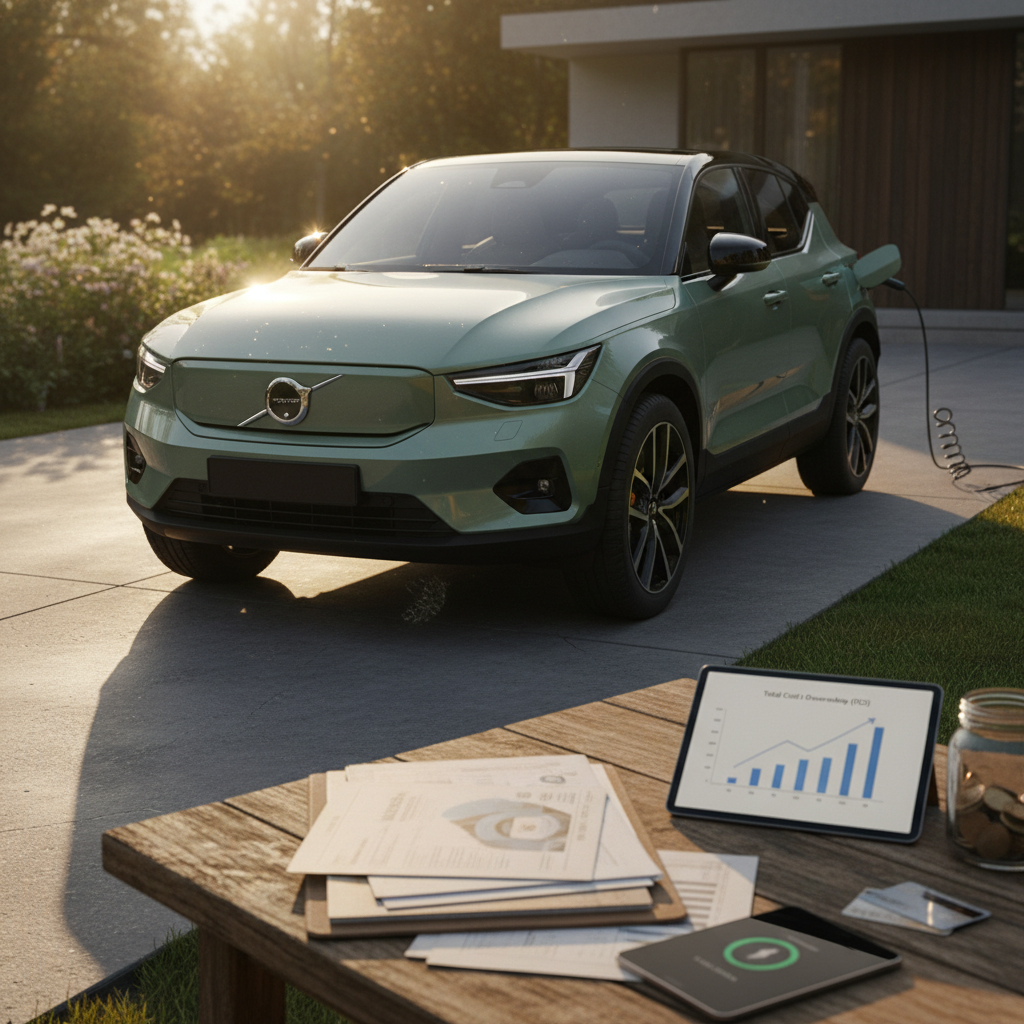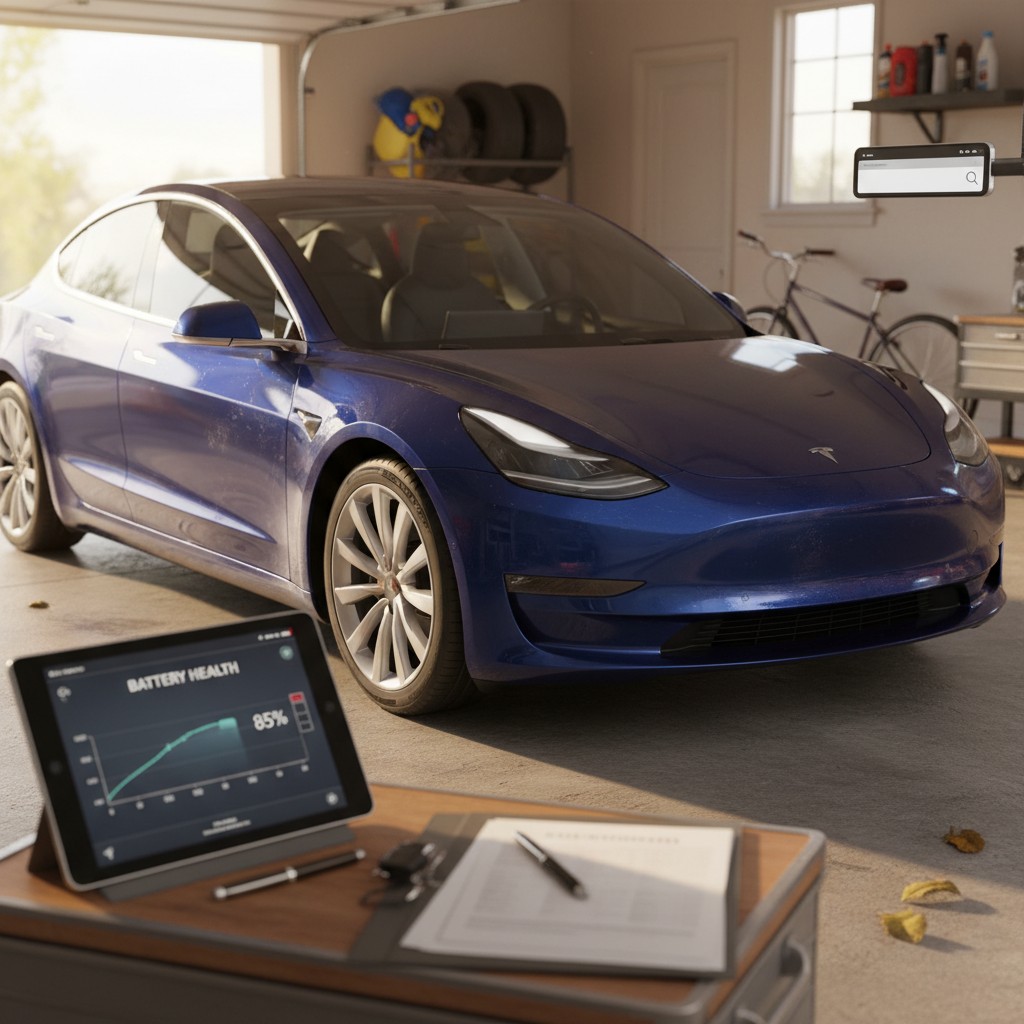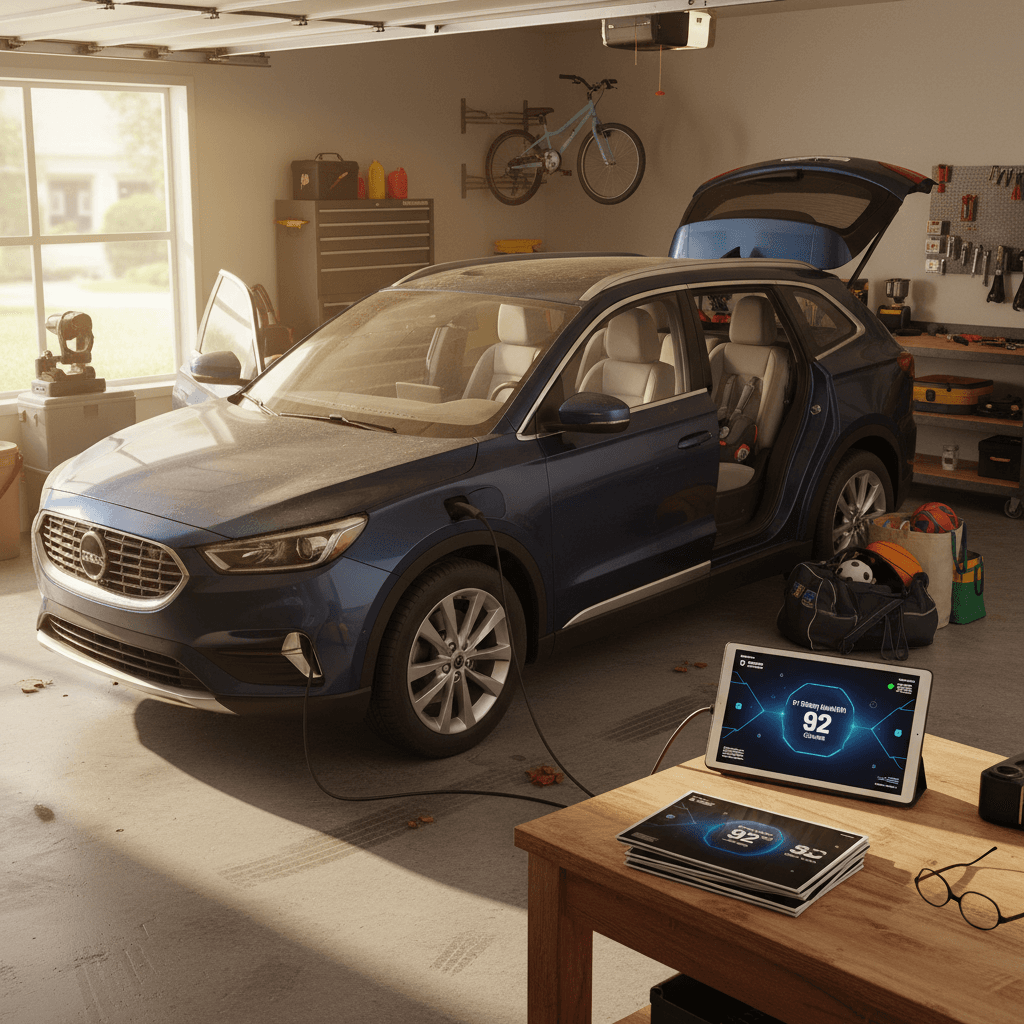
Choosing the best used electric car for your family is like picking a house on wheels: safety, space, and sanity all have to line up. The good news is that the current crop of used EVs includes genuinely excellent family haulers, from compact crossovers that swallow strollers to 3‑row SUVs ready for travel‑base car seats and grandparents.
Why this guide is different
Why a used electric car can be a smart family move
Why families are flocking to used EVs
Because EVs depreciate faster than gas cars over the first five years, you’re often looking at 40–60% off original MSRP on a used example that still has excellent safety tech, a modern cabin, and plenty of range. That’s especially attractive when you’re staring down the barrel of daycare costs and grocery bills that look like a mortgage payment.
But don’t ignore battery health
Start here: match the EV to your family, not the other way around
Key questions to ask yourself
- How many kids, and what ages? Two in rear‑facing seats is a totally different problem than one tween and a teenager.
- Do you do frequent road trips? If you’re regularly driving 200+ miles in a day, range and DC fast‑charging speed matter a lot more.
- Garage, driveway or street parking? Home charging access is the difference between “EV bliss” and constantly hunting for public chargers.
- Strollers, sports gear, pets? Think in terms of cargo volume with all seats up, not just maximum with everything folded.
Rough family EV categories
- Small families (1–2 kids): Compact crossovers and hatchbacks with big trunks often work beautifully.
- Growing families (2–3 kids): Roomy 2‑row SUVs with generous back seats and wide‑opening doors.
- Big or multigenerational families: True 3‑row EV SUVs with usable third rows and plenty of charging speed.
- Urban families: Shorter‑range EVs with smaller footprints but easy parking and low running costs.
Once you know which camp you’re in, you can narrow to a handful of models instead of trying to evaluate the entire EV universe.
Mini checklist: define your family EV needs
1. Count car seats and boosters
Write down exactly how many car seats or boosters you’ll need over the next 3–5 years, not just today. That future third kid or carpool buddy needs space too.
2. Measure your parking and garage
A huge 3‑row SUV may be miserable to live with in a tight city garage. Check length, width, and door swing so you can load kids without door‑ding theater.
3. Map your real weekly driving
Look at your actual miles driven in a typical week. Many families discover they rarely exceed 40–50 miles a day, which opens up more used EV options.
4. Decide how often you travel far
If you do two big road trips a year, you might accept slower charging to save money. If you’re doing 300‑mile weekends twice a month, prioritize range and DC fast‑charging speed.
Best used electric cars for small families (1–2 kids)
If you’ve got one or two kids and don’t need three rows, you can focus on EVs that drive beautifully, park easily, and still swallow a stroller and Costco run. These are the sweet‑spot used EVs that behave like family crossovers, not science projects.
Top used EV picks for small families
Safe, practical, and relatively affordable
Hyundai Ioniq 5 (2022–2025)
Why families love it: A small SUV on paper, but in practice it’s a lounge on wheels. The back seat is spacious enough for rear‑facing seats without crushing front legroom, and the sliding second row lets you prioritize knees or cargo.
- IIHS Top Safety Pick+ in recent years
- Real‑world range commonly 230–280 miles depending on battery and wheel size
- Ultra‑fast DC charging makes road‑trip stops shorter
On the used market, Ioniq 5s often undercut comparable Teslas while still feeling premium inside.
Tesla Model Y (2021–2024)
Why families love it: The default family EV in America for a reason. Huge hatch, deep trunk well, and enough rear legroom for two big car seats.
- Access to Tesla’s massive Supercharger network
- Simple, kid‑proof interior (almost nothing to break)
- Plenty of range; many trims started around 300 miles when new
Watch for build quality inconsistencies and inspect panel gaps, seals and interior trim carefully on any used example.
Nissan Leaf Plus (62 kWh, 2019–2024)
Best for budget‑conscious urban families. Not glamorous, not huge range, but simple, proven, and often very affordable on the used market.
- Roomy enough for one or two kids and a stroller
- Excellent city car: compact footprint, smooth and quiet
- Ideal if you mostly charge at home and rarely road‑trip
Focus on later 62 kWh "Plus" models for more range; check battery health carefully, as early Leafs were more prone to degradation.
Tip for new parents
Best used electric SUVs for growing families (2–3 kids)
Once you’re running a full bench of kids, and maybe a dog, back‑seat space and doors that open wide matter far more than 0–60 times. These 2‑row SUVs give you serious family practicality without jumping to the size and cost of a full 3‑row.
Top used 2‑row family EV SUVs
For families that need space but not a third row, yet
Hyundai Ioniq 5 (again, for good reason)
Yes, it’s on this list twice. For many 2–3 kid households, the Ioniq 5 is the most balanced used EV on sale: safety, space, range and charging speed all land in the green zone.
- Flat floor makes middle‑seat foot space better for bigger kids
- Rear doors open wide for buckling car seats
- Strong safety ratings and modern driver‑assist tech
Kia EV6 (2022–2024)
For families who still enjoy driving. The EV6 shares a platform with the Ioniq 5 but has a sportier stance and feel.
- Good rear space for two car seats or a car seat + booster
- Fast DC charging for road trips
- Hatchback practicality with a low load floor
Rear window is small; check rear visibility with your own mirrors and driving position.
Chevrolet Equinox EV (early used, 2024–2025)
As the Equinox EV trickles into the used market, it’s shaping up to be a mainstream family workhorse: lots of space between rows, decent cargo, and a relatively approachable price when new.
- Roomy second row for rear‑facing seats
- Competitive range for daily family duty
- Feels familiar to anyone used to compact gas SUVs
Mind the center seat
Best used 3‑row electric SUVs for big families
Three‑row electric SUVs are still rare, and expensive, when new. That’s exactly why the used market is so interesting: you can sometimes step into a genuinely luxurious, safe 3‑row EV for the price of a new mid‑trim gas crossover.
Top used 3‑row electric SUVs for families
For four kids, grandparents, or serious carpool duty
Kia EV9 (2024–2025)
The new gold standard for 3‑row electric family SUVs. A big, boxy shape that’s unapologetically minivan‑adjacent, with safety ratings to match.
- Available captain’s chairs or 3‑across second row
- Usable third row for real humans, not just toddlers
- Strong IIHS safety performance and loads of standard driver aids
Rivian R1S (2022–2025)
Adventure family special. If your weekends look like mountain bikes, camping gear, and unpaved roads, the R1S is a unicorn: off‑road capable, luxury quiet, and very safe.
- Three rows plus remarkable cargo flexibility
- Excellent crash‑test performance
- High towing capacity for pop‑up campers or small boats
Pricing remains premium even used, but it can replace both a family SUV and an adventure truck.
Tesla Model Y (7‑seat option)
The optional 3rd row in the Model Y is not a full‑size SUV experience, it’s best for kids and short trips, but for some families it’s a clever way to get occasional 3‑row flexibility without stepping up to a giant vehicle.
- Great for small kids and occasional extra passengers
- Still parks like a compact SUV
- Huge cargo well when the third row is folded
Safety note on 3rd rows
Quick comparison: family-friendly used EVs at a glance
Use this as a starting point, not gospel, exact specs vary by trim, year and wheels. “Range when new” is the approximate EPA rating or typical estimate for common trims.
| Model | Family size sweet spot | Seats | Range when new (mi) | Notable strengths | Common watch‑outs |
|---|---|---|---|---|---|
| Hyundai Ioniq 5 | 1–3 kids | 5 | 240–303 | Top safety scores, huge back seat, ultra‑fast charging | Some early build quirks; check for software updates |
| Tesla Model Y | 1–3 kids (5‑seat) / 3–4 kids (7‑seat) | 5 or 7 | 244–330 | Supercharger access, big cargo area, simple interior | Variable build quality, premium tire wear cost |
| Kia EV6 | 1–3 kids | 5 | 232–310 | Sporty drive, fast charging, good safety tech | Lower roofline can make rear‑seat loading slightly tighter |
| Nissan Leaf Plus (62 kWh) | 1–2 kids | 5 | up to ~215 | Affordable used prices, easy city manners | Slower DC charging, limited long‑trip comfort |
| Kia EV9 | 3–5 kids | 6 or 7 | 230–304 | True 3‑row space, strong safety, family‑first packaging | Still relatively new, so used prices remain high |
| Rivian R1S | 3–5 kids | 7 | 270–390+ | Adventure‑ready, luxury interior, high safety focus | Insurance and tire costs can be steep; parking size |
| Chevrolet Equinox EV | 2–3 kids | 5 | 250–300+ (varies by trim) | Family‑friendly packaging, familiar SUV feel | Early production teething issues, check service history |
Approximate specs for popular family EVs that show up regularly on the U.S. used market.
Battery health & range: what actually matters with kids on board
For a solo commuter, a tired battery is an annoyance. For a family with nap schedules and after‑school activities, it can be the difference between “no problem” and “sorry, we can’t make it to the game.” When you’re buying used, thinking clearly about real‑world range and battery health is non‑negotiable.
- Aim for a used family EV that still comfortably does your longest regular day, school, work, errands, practice, with 25–30% charge left when you get home.
- Remember that cold weather, highway speeds, roof boxes and a full load of people will all chip away at rated range.
- Bigger battery packs don’t just mean more miles; they also mean less day‑to‑day stress as the pack ages.
- Fast‑charging capability really matters if you plan more than two or three long road trips a year.
How Recharged handles battery health
Family features to prioritize in a used EV
Must‑have and nice‑to‑have family features
Beyond range and price, these make or break day‑to‑day life
Car‑seat friendly rear seats
- Wide‑opening rear doors
- Enough legroom so front passengers aren’t hugging the dashboard
- At least two easy‑to‑access LATCH positions
- Flat or nearly flat rear bench for better three‑across installs
Real cargo space with seats up
- Room for a stroller and groceries behind the second row
- Low liftover height so you’re not deadlifting a double stroller
- Hidden well under the floor for soccer balls, diapers, emergency snacks
Climate control that keeps everyone happy
- Rear vents so kids aren’t baking or freezing
- Remote pre‑conditioning from a phone app
- Heated seats and steering wheel to save energy vs blasting cabin heat
Modern safety tech
- Automatic emergency braking with pedestrian detection
- Blind‑spot monitoring and rear cross‑traffic alert
- Lane‑keeping assist that isn’t overly intrusive
Charging convenience
- At least 7 kW AC charging for overnight top‑ups
- Solid DC fast‑charging curve if you road‑trip
- Compatibility with networks you actually have nearby
Kid‑sanity helpers
- Plenty of USB ports front and back
- Physical volume controls so kids can’t blast Peppa Pig to 11
- Good smartphone integration (CarPlay / Android Auto) where available
Don’t obsess over the wrong spec
How to shop for a used family EV with confidence
Step‑by‑step: evaluating a used family EV
1. Start with safety ratings
Look up IIHS and NHTSA scores for the exact model and year you’re considering. Prioritize vehicles that are Top Safety Pick / Top Safety Pick+ and have strong crash‑avoidance tech.
2. Get real battery diagnostics
Don’t accept “range seems fine” as an answer. Ask for a battery health report or buy from a seller who provides <strong>independent battery testing</strong> and a clear explanation of remaining usable capacity.
3. Do a full family test fit
Bring kids, car seats, and strollers. Install seats in the positions you’ll actually use. Fold and unfold everything. Try loading the trunk in the rain, mentally, because you will someday.
4. Evaluate charging for your actual life
Check whether your home can support Level 2 charging and what public fast‑charging looks like along your usual routes. An amazing EV plus terrible charging access is still a bad experience.
5. Review warranty and recall history
See what’s left of the battery and drivetrain warranties, and check for completed recalls or service campaigns. EVs have fewer moving parts, but software and charging components still matter.
6. Compare true cost of ownership
Factor in insurance, tire replacement, and any home charging upgrades. A more efficient EV with cheaper tires can be a better family value than a thirstier or heavier one with pricey rubber.
Shortcut: let specialists do the homework
Ready to find your next EV?
Browse Vehicles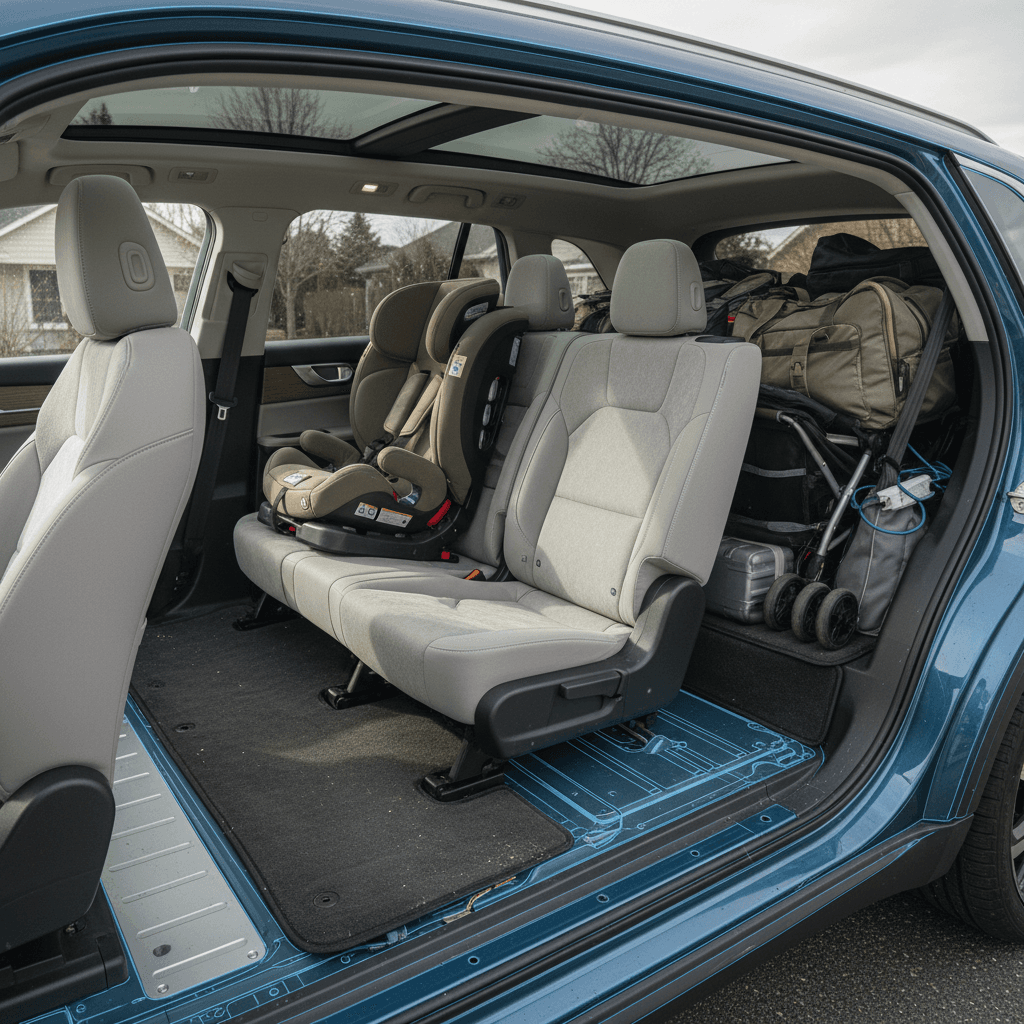
How Recharged simplifies buying a used family EV
Buying a used EV from a traditional dealer can feel like speed‑dating in the dark: no one really wants to talk about battery health, charging speeds, or how that third row works with two giant boosters. Recharged was built specifically to solve those problems.
- Recharged Score Report on every vehicle, including verified battery diagnostics and an easy‑to‑read score for overall health and value.
- Fair market pricing that reflects current EV depreciation realities, not wishful thinking from six months ago.
- EV‑specialist support from real humans who understand car seats, charging curves, and whether that SUV will fit in a Boston parking garage.
- Options for financing, trade‑in, instant offer or consignment, plus nationwide delivery for families who’d rather spend weekends at the park than in showrooms.
- A fully digital retail experience, with the option to visit the Recharged Experience Center in Richmond, VA if you want to see and touch before you buy.
Turn your old car into range
FAQ: Best used electric cars for families
Frequently asked questions about family‑friendly used EVs
Bottom line: which used electric car is best for your family?
If you want the short answer, here it is: for most American families, the best used electric car is a compact or midsize SUV with a spacious back seat, solid safety ratings, and honest range. In practice, that often means short‑listing the Hyundai Ioniq 5, Tesla Model Y, Kia EV6, and, if you need three rows, the Kia EV9 or Rivian R1S.
The longer answer is that the “best” used electric car for families is the one that fits your kids, your parking space, your road‑trip habits, and your budget without asking you to contort your life around it. Start with your real needs, then let the specs, safety data, and battery health reports narrow the field. And if you’d like a partner in that process, Recharged was built precisely to help families like yours move into EVs with eyes wide open and as little drama as possible.