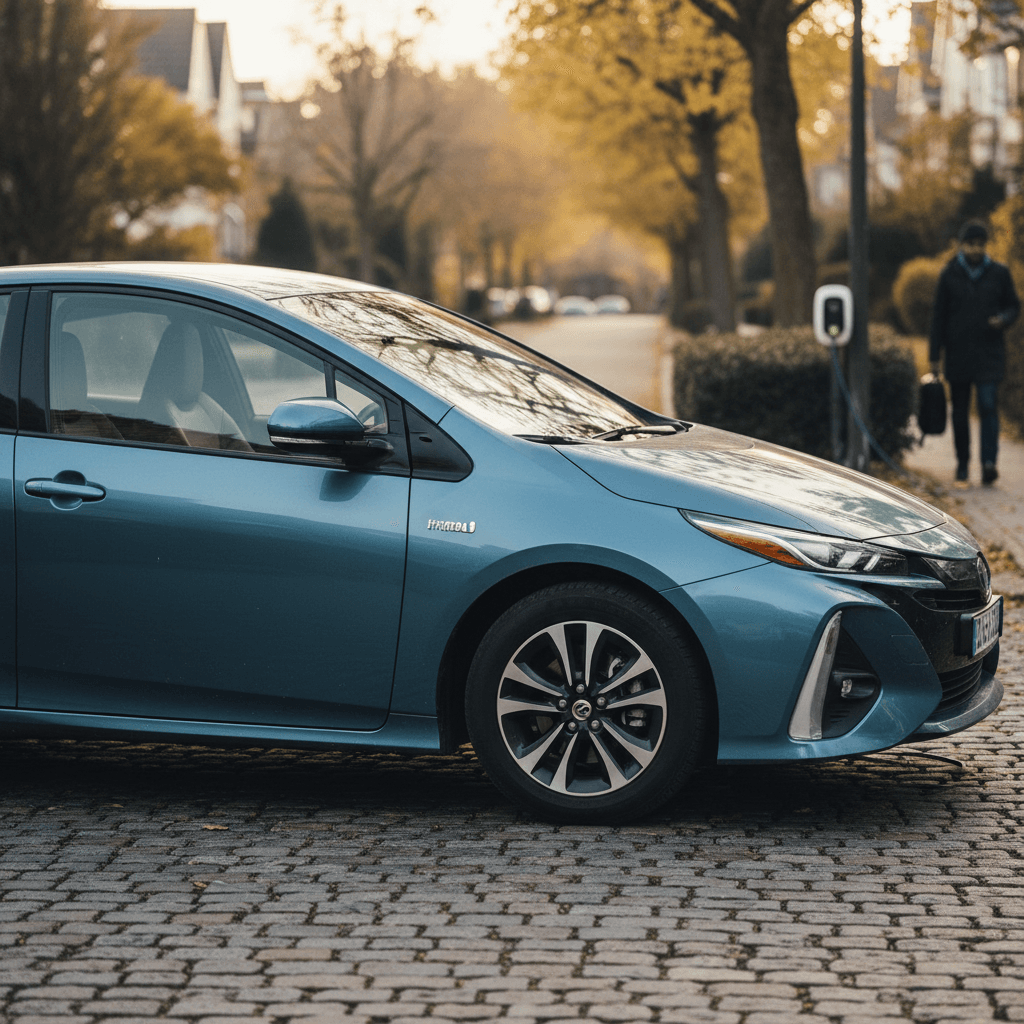
If you spend an hour a day in traffic, your commuter car isn’t just transportation, it’s your second office, your coffee shop, your decompression chamber. Choosing the best used commuter car can save you thousands a year in fuel and maintenance while making those miles genuinely bearable, even enjoyable.
The modern American commute
What makes a great used commuter car?
The four pillars of a great commuter car
If a car misses any of these, it’s the wrong tool for the job.
Low running costs
Fuel or electricity, insurance, maintenance, tires, your commuter should be cheap to keep on the road. Think high MPG or low kWh/mi, long service intervals, and affordable parts.
Real comfort
Supportive seats, quiet cabin, effective climate control, and a smooth ride matter more at 7:45 a.m. than 0–60 times. Fatigue is a hidden cost of a bad commute.
Safety & tech
Modern driver-assist tech, adaptive cruise, lane-keep assist, automatic emergency braking, turns awful traffic into something tolerable and helps avoid fender‑benders.
Easy to live with
Compact enough to park, big enough for your life. Simple controls, good visibility, remote start or pre‑conditioning if possible. Daily usability beats bragging rights.
- Combined fuel economy of at least 30 mpg for gas cars, 45+ mpg for hybrids, or efficient EVs with competitive electricity costs.
- Comfortable, height‑adjustable driver’s seat and tilt/telescoping wheel so you can dial in a proper driving position.
- Strong safety scores (look for IIHS Top Safety Pick where possible) and standard driver-assist features.
- Good predicted reliability and affordable maintenance, especially important if you’re stacking on miles.
- Apple CarPlay/Android Auto or at least Bluetooth audio; your podcasts and navigation are half the commute.
- For EVs: enough real‑world range to handle your round trip plus errands with margin, and convenient home or workplace charging.
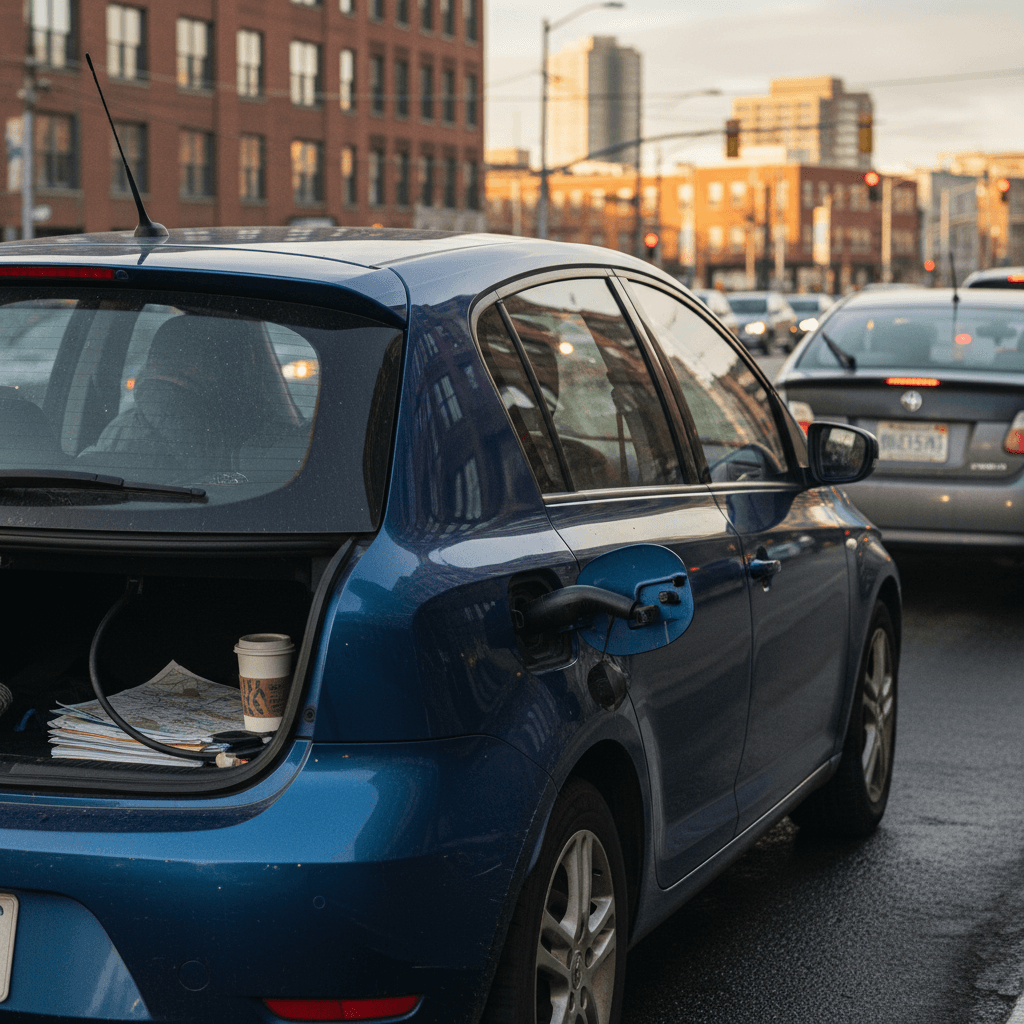
Gas vs hybrid vs EV: what’s best for your commute?
Gasoline: lowest entry price
If your budget is tight or you drive under about 20–25 miles each way, a small gas sedan or hatchback can be the sweet spot. You’ll find plenty of 2015–2020 compacts with 30–36 mpg combined at very reasonable prices.
- Cheapest to buy
- Every mechanic can work on it
- Good for inconsistent schedules or long trips
Hybrid: efficiency without homework
Hybrids like the Prius or Corolla Hybrid deliver 45–55 mpg without you thinking about charging. For mixed city/highway commutes, they’re often the most sensible option, especially if you can’t install a home charger.
- Huge fuel savings vs gas
- No charging required
- Usually very reliable
EV: best for predictable commutes
If you can charge at home or work and your round trip is in the 20–60‑mile range, a used EV can turn commuting into a quiet, one‑pedal glide and slash fuel and maintenance costs.
- Lowest running costs
- Quiet, smooth, instant torque
- Great if you own, not rent, your parking spot
A quick rule of thumb
Best used gas commuter cars
If you just want inexpensive, dead‑reliable transportation that doesn’t drink like a frat boy at homecoming, these used gas cars are excellent commuter companions.
Top used gas commuter cars
Approximate U.S. model years and combined fuel economy for strong commuter picks.
| Model | Best Years to Target | Approx. Combined MPG | Why It Works for Commuters |
|---|---|---|---|
| Honda Civic | 2016–2021 | 32–36 mpg | Refined, efficient, roomy compact with Honda Sensing safety tech on many trims. |
| Toyota Corolla | 2017–2022 | 32–35 mpg | Quiet, appliance‑reliable sedan or hatchback with standard safety features. |
| Toyota Camry (4‑cyl) | 2018–2021 | 29–32 mpg | Comfortable midsize with plenty of space and a reputation for longevity. |
| Mazda 3 | 2014–2018 | 30–32 mpg | More fun than it needs to be, with a surprisingly upscale interior for the class. |
| Volkswagen Jetta | 2019–2022 | 32–34 mpg | Smooth, quiet, efficient commuter with a big trunk and simple tech. |
Always confirm exact equipment, engine, and MPG for the specific car you’re considering.
Watch the engine & trim, not just the badge
Best used hybrid commuter cars
For most Americans driving a typical 20–30 minute commute each way, a used hybrid is the no‑drama, quietly brilliant answer: gasoline familiarity with diesel‑like efficiency.
Standout used hybrid commuter cars
These models routinely deliver 45+ mpg and have solid reliability records.
Toyota Prius (2016–2021)
The cliché for a reason. Fourth‑generation Prius models deliver up to 52–56 mpg combined, are famously reliable, and have more cargo room than most small crossovers. Perfect if you value running costs over image.
Toyota Corolla Hybrid (2020–2022)
All the virtues of a Corolla, simple, comfortable, durable, with ~47–50 mpg and a more conventional look than a Prius. Ideal if you want efficiency without broadcasting it.
Hyundai Ioniq Hybrid (2017–2022)
One of the most frugal cars sold in the U.S., with many trims achieving 55+ mpg. Under‑the‑radar and often great value on the used market.
Hybrids age differently than you think
Best used EVs for commuters
If your life and parking situation support it, a used EV can be the best used commuter car you’ll ever own: quiet, nearly maintenance‑free, and shockingly quick off the line for merging battles.
Why used EVs make such strong commuter cars
Top used EVs for commuting
Popular used EVs that balance range, comfort, and price for daily driving.
| Model | Typical Used Years | EPA Range (when new) | Best For |
|---|---|---|---|
| Chevrolet Bolt EV | 2017–2023 | Up to ~259 mi | Longer commutes on a budget; compact outside, roomy inside. |
| Tesla Model 3 RWD | 2018–2022 | ~220–272 mi | Highway commuters who want Autopilot and Supercharger access. |
| Hyundai Kona Electric | 2019–2022 | ~258 mi | Suburban commuters who like crossover ride height in a small footprint. |
| Nissan Leaf (40–62 kWh) | 2018–2024 | ~149–226 mi | Shorter urban commutes with frequent Level 2 charging. |
| Kia Niro EV | 2019–2022 | ~239 mi | Drivers wanting a practical, tall‑ish hatchback with great efficiency. |
Always confirm battery health and charging history, this is where Recharged’s battery diagnostics really matter.
Don’t ignore battery health
Cost of ownership: do the commuter math
Sticker price is only the first page of the story. For a commuter car, total cost per mile, purchase price, fuel or electricity, insurance, and maintenance over 3–5 years, is what really matters.
Example 1: Used gas sedan
Imagine a 2018 Honda Civic with a purchase price around $16,000.
- Fuel: 34 mpg combined, 12,000 miles/year at $3.50/gal ≈ $1,235 per year.
- Maintenance: Oil changes, filters, fluids, minor repairs ≈ $600–800/year.
- Total running cost: Roughly $1,800–2,100/year before insurance.
Still affordable, but fuel becomes a noticeable monthly line item.
Example 2: Used EV commuter
Now take a used Chevy Bolt EV at $18,000, charged mostly at home.
- Energy: ~3.5 mi/kWh, 12,000 miles/year. At $0.14/kWh, that’s ≈ $480/year.
- Maintenance: Tire rotations, cabin filter, brake fluid every few years ≈ $300–400/year.
- Total running cost: Roughly $800–900/year before insurance.
You paid more up front but may save $900–1,200 per year in operating costs. Over five years, those savings can outweigh the higher purchase price.
Quick commuter decision test
How to choose the right used commuter car
7‑step checklist for picking your commuter
1. Map your real commute
Track your actual one‑way distance, typical traffic, and worst‑case days (detours, kids’ activities). For EVs, add at least 30% buffer to your daily round trip.
2. Decide on gas, hybrid, or EV
If you can’t charge at home or work, lean gas or hybrid. If you can plug in reliably and your commute is predictable, a used EV might offer the lowest lifetime cost.
3. Set a total monthly budget
Don’t just think purchase price. Add payment (or cash set‑aside), insurance, fuel/electricity, and parking. That’s your real commuter cost.
4. Prioritize comfort and seating position
Spend at least 20 minutes in the driver’s seat before you fall in love with the spec sheet. Adjust the wheel and seat, check visibility, and see how your body feels.
5. Insist on modern safety tech
Seek out cars with automatic emergency braking and lane‑keep assist. For longer highway slogs, adaptive cruise control is a game‑changer for fatigue.
6. Check history and health
Run a history report, look for consistent maintenance, and get a pre‑purchase inspection. For EVs, ask for <strong>battery health data</strong>, something Recharged provides as part of the Recharged Score.
7. Test your actual use case
On the test drive, simulate your commute: highway speeds, stop‑and‑go, rough patches. Pair your phone, test the audio and Bluetooth, try a tight parking maneuver.
Beware of ‘weekend test drive’ traps
Why buy your commuter car used, especially an EV
A commuter car’s job is to be invisible: start, go, stop, repeat. That’s precisely why buying used is so powerful, you let someone else take the new‑car depreciation hit while you harvest the remaining useful life.
Used vs new for commuters
Why a gently used car (or EV) is often the smarter play.
You dodge the steepest depreciation
Many new cars lose 20–30% of their value in the first two years. A 3–5‑year‑old car can deliver the same commute for thousands less.
The tech is ‘good enough’
Most 2018+ models already have CarPlay/Android Auto and modern safety suites. For commuting, last year’s tech is more than sufficient.
Used EVs in particular
First owners paid for the new‑car smell and the big tax credit; you get lower prices with plenty of battery life left, especially if you have a verified health report.
“For a commuter, the only thing better than a great new car is a great used one that someone else has already paid off half of.”
How Recharged helps EV commuters shop smarter
If your idea of the best used commuter car leans electric, the anxiety usually isn’t about range, it’s about the unknowns. Has the battery been fast‑charged to death? Is the price fair? Will this thing still get me to work in five winters?
Why EV commuters like shopping with Recharged
We’re built to make used EV ownership simple and transparent.
Recharged Score battery report
Every vehicle comes with a Recharged Score Report that includes verified battery health and diagnostics, so you know how much real‑world range to expect before you buy.
Fair pricing & financing
We benchmark each EV against the market for fair, transparent pricing, offer financing and trade‑ins, and can even give you an instant offer or consign your current car.
Digital‑first, human‑backed
Browse and buy online, lean on EV specialists for questions, and get nationwide delivery. If you’re near Richmond, VA, you can also visit our Experience Center.
Ready to find your next EV?
Browse VehiclesTurn your commute into the easy part of your day
Best used commuter car: FAQ
Frequently asked questions about used commuter cars
The best used commuter car is the one that makes every slog to work feel smaller, cheaper, calmer, and less likely to surprise you with a dash light or big repair bill. Whether that’s a bulletproof hybrid, a modest gas sedan, or a quiet used EV, start with your actual commute, then choose the tool that fits. And if an electric commuter is on your radar, Recharged can give you the battery data, pricing transparency, and expert support to turn rush hour into just another quiet part of your day.