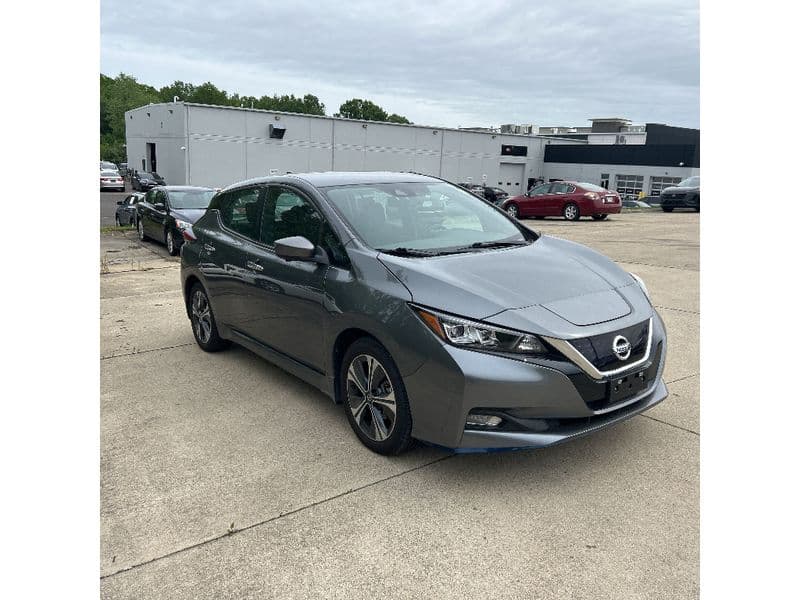
If you own a Nissan Leaf, the **best time to sell** is the moment when three things line up: solid battery health, reasonable mileage, and strong seasonal or local demand. Because the Leaf depreciates faster than many gas cars and some newer EVs, timing your sale can easily mean a difference of **thousands of dollars** either way.
Short answer
Why timing matters for your Nissan Leaf sale
The Leaf is one of the most affordable EVs on the used market, but it’s also one of the **fastest depreciating**. Five-year-old Leafs keep only about **one‑third of their original value**, compared with closer to half for many rival EVs and gas cars. That means if you hold your Leaf too long, you’re riding the steep part of the depreciation curve instead of the flat part.
How the Nissan Leaf holds its value
Because of this, **when you sell** matters just as much as **how you sell**. The goal is to exit the car while: - Buyers still see it as a **modern EV** (range and tech aren’t badly outdated) - The **battery health** is high enough to clear most shoppers’ cutoffs - You can still compete against newer, longer‑range EVs on price and value
Why waiting too long hurts
How Nissan Leaf depreciation really works
The Leaf follows an exaggerated version of the classic depreciation curve: steep loss early, then flattening out. Recent analyses of U.S. pricing show the Leaf losing **40–50% of its value in the first three years**, and about **65% by year five**. After that, depreciation slows as the market “prices in” shorter range and aging batteries.
Typical Nissan Leaf depreciation timeline
Approximate U.S. market patterns; exact numbers vary by trim, mileage, battery size, and condition.
| Leaf age | Typical retained value | What this usually means for sellers |
|---|---|---|
| 1–2 years | ~50–60% | Still feels new; good time to sell if you want out early. |
| 3–4 years | ~35–45% | Depreciation is steep but slowing; strong sweet spot to exit. |
| 5–6 years | ~25–35% | Battery and range questions loom larger; pricing becomes very condition‑dependent. |
| 7–10 years | ~10–20% | Value is mostly about battery health and basic transportation needs. |
| 10+ years | Under ~10% | Buyer pool shrinks; car is often worth more as a cheap city commuter. |
Use this as a directional guide, not a quote for your specific car.
The implication: **you generally don’t want to sell in the first 12–18 months**, when you’ve taken the biggest hit but haven’t gotten much use, and you also don’t want to wait until the car is so old the value has nearly bottomed out. That’s why many Leaf owners aim to sell around **years 3–6**, depending on battery condition and miles.
Macro timing: What changed after the 2025 EV tax credits ended
For U.S. drivers, 2026 is a very different market than a couple of years ago. The federal **new and used EV tax credits ended for purchases after September 30, 2025**, removing up to $7,500 off new EVs and $4,000 off qualifying used EVs. That has shifted more cost‑conscious shoppers toward **lower‑priced used EVs**, exactly where the Leaf lives.
What the end of tax credits means for you
- Used EVs got relatively more attractive versus new, because the price gap narrowed.
- Shoppers who missed the credit window are more price‑sensitive and hunt for value EVs like the Leaf.
- Dealers can’t rely on incentives to move new inventory, so used trade‑ins matter more.
How this affects the best time to sell
- There’s solid demand for sub‑$20k EVs with decent range.
- Well‑priced Leafs with **documented battery health** stand out.
- Timing your sale early in the year lets you ride current demand before more off‑lease EVs hit the market later in 2026.
Think in seasons, not just years
Best time of year to sell a Nissan Leaf
EV demand isn’t flat across the calendar. Weather, tax refunds, and shopping patterns all affect what buyers will pay for a used Nissan Leaf.
How seasons affect Nissan Leaf resale value
Use this calendar to pick your ideal sale window.
Late winter–spring (Feb–May)
Often the best time to sell.
- Buyers shop with tax refunds and fresh budgets.
- Mild weather makes test drives and EV range more appealing.
- Dealers stock up for spring and early‑summer demand.
Good time to list: February–April, especially for colder‑climate owners.
Summer (Jun–Aug)
Still strong, but more competition.
- Road‑trip season boosts EV curiosity.
- Many off‑lease cars hit the market, increasing supply.
- Battery performance looks best in warm temps, which helps range perception.
Good time to list: early summer before holiday slowdowns.
Fall (Sep–Nov)
Mixed for EVs.
- Back‑to‑school and household costs can crowd out car shopping.
- Colder‑climate buyers start worrying about winter range loss.
- Can still work if you price aggressively and highlight battery health.
Winter (Dec–Jan)
Trickiest time, especially in cold regions.
- EV range is at its worst, which makes shoppers nervous.
- Holiday spending competes with car budgets.
- Dealers discount to clear inventory, which can drag used prices down.
Exception: Sunbelt markets with mild winters often see steady demand.
Putting it together: in most of the U.S., **February through June** is your ideal window to sell a Nissan Leaf, especially if you can pair it with **strong battery documentation** and a clean, well‑detailed car.
Mileage & age: When to sell each Nissan Leaf generation
Calendar timing is only half the story. The other half is **where your Leaf sits in its life cycle**, age, miles, and which battery pack you have. Different generations behave very differently in the used market.
Smart sell-by windows for different Nissan Leaf generations
1. Early Leafs (2011–2015, 24 kWh packs)
These cars already sit in the low‑value zone, and many buyers are wary of battery degradation. If you still own one and the battery is reasonably healthy, the best time to sell is **as soon as practical**, ideally before further range loss or a looming battery replacement. Waiting rarely increases what you’ll net.
2. 30 kWh era (2016–2017)
These are transitional cars: better range than the originals, but still behind modern EVs. Many owners aim to sell **before 90,000 miles or obvious winter range loss**. If your SOH is under ~80%, buyers will heavily discount, so an earlier sale, while you can still document acceptable health, usually pays.
3. 40 kWh second‑gen (2018–2022 S/SV/SL)
These are the workhorses of the used Leaf market. A common strategy is to sell around **4–6 years old and 45,000–75,000 miles**, as long as SOH is still roughly in the 80s. That’s when you’ve enjoyed plenty of use but are ahead of major perception issues about an “old EV.”
4. 62 kWh Leaf Plus (2019–2024)
Leaf Plus models age better thanks to longer range. You can usually stretch ownership a bit further, **up to ~90,000 miles**, if the battery stays strong. But once newer 250–300+‑mile EVs drop below your asking price, buyers will compare range, so be prepared to price accordingly or sell a little earlier.
5. Late‑model (2023–2024, still under warranty)
If you bought late and are now rethinking ownership, selling at **2–4 years old** can work well. You’ll take a depreciation hit, but keeping miles low and transferring remaining battery and EV‑system warranty can keep prices respectable.
Mileage “speed bumps” buyers notice
Battery health: The #1 factor buyers care about
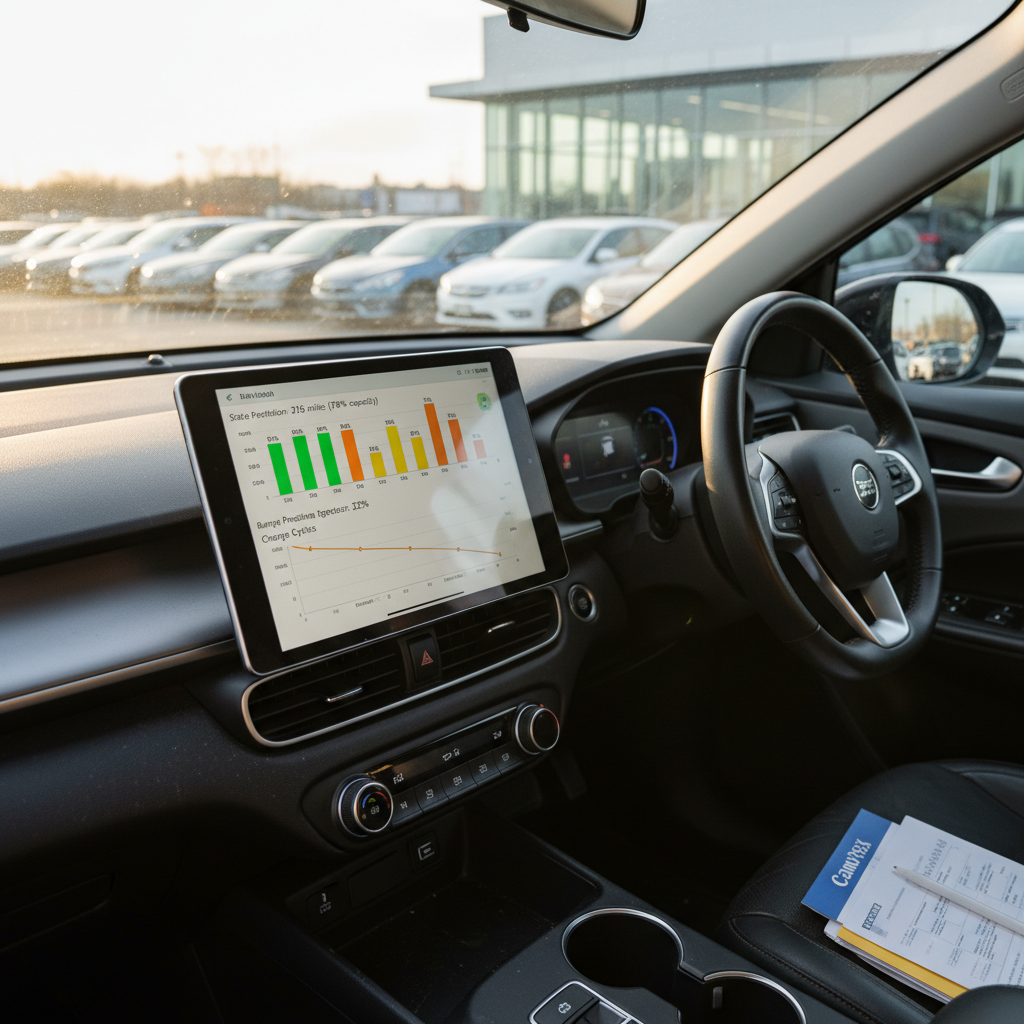
For used EVs in 2026, **battery state of health (SOH)** is the new odometer. Industry benchmarks show that most buyers see **80%+ SOH as “healthy,” 85–90%+ as excellent, and under 75% as a red flag**. Because the Leaf lacks active liquid cooling, its batteries can degrade faster in hot climates, so informed buyers pay very close attention.

- If your Leaf’s battery **still tests at 85–90%+ SOH**, you’re in a premium window, this is often the **best time to sell**.
- In the **80–85% SOH** band, pricing is still solid, but buyers will compare range with newer EVs more closely.
- Below **~80% SOH**, the car is still usable, but most shoppers will expect a noticeable discount or will view the car as a short‑range commuter only.
How Recharged helps here
Ready to find your next EV?
Browse VehiclesIf you’re deciding when to sell and you discover your Leaf still has **strong SOH**, that’s an argument to **list sooner rather than later**. You’re essentially capturing a disappearing asset, battery health, before more time and cycles chip away at it.
Local demand: When your region matters more than the calendar
Seasonal guidance is helpful, but **your ZIP code can override the calendar**. A 2019 Leaf in coastal California behaves very differently from the same car in rural Minnesota.
Regional timing signals for Nissan Leaf sellers
How to read your local market before you list.
EV‑friendly metros
Think Pacific Northwest, California, parts of the Northeast, Denver, Austin, etc.
- More public charging, more educated buyers.
- Used Leaf demand is **steady year‑round**.
- You can push price a bit if battery health is documented.
Suburbs & Sunbelt
Wide‑spread, car‑centric areas with growing EV adoption (TX, FL, GA, AZ).
- Range is less of a winter concern.
- Buyers often cross‑shop hybrids and compact gas cars.
- Price sensitivity is high; clean history + low miles help a lot.
Cold‑weather & rural
Upper Midwest, interior Northeast, rural regions.
- Range loss in winter makes older Leafs a tougher sell.
- Best window: late spring to early fall.
- Consider selling through a nationwide marketplace to reach warmer‑climate buyers.
Leverage national, not just local, demand
Pricing strategy: How to price your Leaf to move
Once you’ve picked your timing, you need a **pricing plan**. The goal is to list high enough to capture value, but not so high the car sits stale and forces bigger cuts later.
Typical pricing bands for used Nissan Leafs (2026 environment)
High‑level bands for private‑party pricing in the U.S. Assume clean title and no major damage; values vary by trim and region.
| Leaf profile | Relative pricing power | Strategy |
|---|---|---|
| Late‑model Leaf Plus, low miles, SOH 90%+ | Strong | Price near the top of local comps and emphasize battery report, driver‑assist features, and range. |
| 2018–2021 40 kWh, 40–80k miles, SOH 80–88% | Solid | Price in the middle of comps; be the best‑presented car (photos, records, Recharged Score). |
| Older 24/30 kWh Leafs with moderate wear | Limited | Compete on price; highlight cheap running costs and short‑range commuter value. |
| High‑mileage or low‑SOH Leafs | Niche | Aim for quick sale; price aggressively below market and target budget commuters or fleet buyers. |
Use these as directional ranges, then fine‑tune using recent local comps and a professional valuation tool.
Don’t chase a falling market
Selling options: Trade-in, private sale, or EV marketplace
Choosing **where to sell** can matter almost as much as when you sell. Each channel has different trade‑offs for a Nissan Leaf specifically.
1. Dealer trade‑in
- Fastest and simplest, especially if you’re buying another car.
- Many traditional dealers still undervalue EVs, especially Leafs, because they’re nervous about batteries and demand.
- You’re trading convenience for money; expect a lower number than private‑party value.
2. Private sale
- Usually yields the highest price if you’re patient.
- Requires time for photos, listings, test drives, and paperwork.
- Many buyers will ask detailed questions about SOH, charging, and winter range.
3. EV‑focused marketplace (like Recharged)
- Combines nationwide reach with EV‑specific buyers.
- Recharged can give you an instant offer or help you sell on consignment.
- Every Leaf gets a Recharged Score battery health report, transparent pricing, and optional financing and delivery for buyers.
How Recharged can simplify your timing decision
Step-by-step timeline to sell your Nissan Leaf
Once you’ve picked your season, follow this practical playbook over a few weeks to put your Leaf on the market at the right moment and the right price.
4‑week plan for timing and listing your Leaf
Weeks 4–3 before listing
Pull your **battery health data** (dealer diagnostic, third‑party report, or a Recharged Score if you’re using Recharged).
Check your **odometer**: if you’re near a big milestone (60k, 75k, 100k), decide whether to list before you cross it.
Review local comps on used‑car sites to understand pricing bands for Leafs like yours.
Weeks 2–1 before listing
Schedule a **detail and basic reconditioning**, clean interior, fix cheap cosmetic issues, top off tires and washer fluid.
Gather **service records, charging equipment, and both keys**.
Decide where you’ll sell: dealer trade‑in, private sale, or an EV marketplace such as Recharged.
Listing week
Take clear, daylight photos of exterior, interior, and **dash showing range and mileage**.
Write an honest description that highlights battery health, typical real‑world range, and charging options (Level 1/2, CHAdeMO).
Set an asking price that’s **slightly above** your walk‑away number to allow room for negotiation.
First 2 weeks live
Respond quickly to inquiries and be ready to explain how EVs and public charging work if buyers are new to EVs.
If you’re not getting serious interest after ~10–14 days, adjust the price in **small steps**.
If the process feels overwhelming, get a quote from Recharged and compare it to what you’re seeing privately.
FAQ: Best time to sell a Nissan Leaf
Frequently asked questions about selling a Nissan Leaf
Key takeaways
- The **best time to sell a Nissan Leaf** in the U.S. is usually **late winter through late spring (February–May)**, with early summer still solid in many markets.
- Aim to sell when your Leaf is roughly **3–6 years old** with **battery SOH at or above ~80–85%**, and before crossing big mileage thresholds like **60k or 75k** miles.
- Local climate and EV adoption can override the calendar, cold‑weather owners often do best selling **after winter but before next winter hits**.
- A **documented battery‑health report** is your biggest asset; it can separate your Leaf from cheaper, riskier listings and support stronger offers.
- If you want a simple, EV‑savvy sale, Recharged can provide an **instant offer**, trade‑in support, or **consignment** with a Recharged Score battery report, transparent pricing, and **nationwide delivery** for your buyer.
You don’t control the Leaf’s depreciation curve, but you **do** control when you step off it. By lining up seasonality, mileage, battery health, and the right selling channel, you can exit your Nissan Leaf at a smart time instead of leaving money on the table. If you’re ready to explore numbers, you can start with a **no‑obligation valuation or instant offer** from Recharged and see whether now is your best moment to sell.