If you own a Mercedes EQS, you’re driving one of the most advanced luxury EVs on the road, and one of the fastest depreciating. Timing your exit is critical. Understanding the best time to sell a Mercedes EQS can easily mean a five‑figure swing in what you walk away with.
Why timing matters more for the EQS
How the Mercedes EQS Depreciates vs Other EVs
Before you decide when to sell, you need to understand how the EQS actually loses value. Luxury EVs, especially early‑generation models, have taken some of the hardest hits in the market over the last few years. The EQS has been near the top of those lists.
Mercedes EQS Depreciation Snapshot (Real‑World Data)
Put simply, the EQS behaves like many early luxury EVs: brutal in the first 2–3 years, then it starts to level off. That’s good news if you missed the initial cliff, but it also means you should be careful about holding it too long into a second big price reset.
Beware stacking price cuts
Best Time to Sell EQS by Age and Mileage
The calendar on your wall matters less than how old your EQS is, how many miles it has, and where it sits on the depreciation curve. Here’s a practical way to think about it in 2026.
Optimal Sell Window for a Mercedes EQS
General timing windows for EQS sedans and SUVs in average condition with typical annual mileage.
| EQS age | Typical mileage | What’s happening to value | Best move in 2026 |
|---|---|---|---|
| 0–12 months | 0–12,000 miles | Very steep drop (up to ~50% in year one). | Only sell if you must exit early; you’re crystallizing the worst depreciation. |
| 12–24 months | 12,000–24,000 miles | Depreciation still steep but starting to slow. | Core sweet spot for minimizing further losses if you already own it. |
| 24–36 months | 24,000–36,000 miles | Curve begins to flatten; buyers see it as nearly new but at a big discount. | Another strong time to sell, especially in 2026 before more EQS supply hits used lots. |
| 36–60 months | 36,000–60,000 miles | Depreciation moderates, but warranty horizon and battery concerns loom larger. | Sell if you’re range‑sensitive or nearing warranty limits; buyers will fixate on battery reports. |
| 60,000+ miles or 6+ years | 60,000+ miles | Value heavily dependent on battery health and history. Small issues have big impacts. | Hold only if you’re comfortable driving it into the ground; resale upside is limited. |
Your specific EQS may differ based on trim, options, battery health, accident history, and region.
Rule of thumb for EQS owners
Quick Self‑Check: Is It Time to Sell Your EQS?
1. How old is your EQS?
If it’s 1.5–3 years old, you’re in the prime timing band. Under a year old, consider holding unless life circumstances are forcing a sale. Over 4–5 years, focus on battery health and warranty remaining.
2. What’s your annual mileage?
If you drive more than 12,000–15,000 miles per year, depreciation accelerates. Selling before you cross big psychological thresholds (30k, 50k, 75k miles) can preserve value.
3. Are you close to key warranty limits?
Many EQS components and the battery have warranty coverage up to 8 years/100,000 miles. As you approach major milestones, cautious buyers will build in more discount for risk.
4. Are new EQS incentives growing in your area?
If local dealers are stacking heavy discounts or subsidized leases on new EQS models, your used one competes against a cheaper new option. That’s a signal to sell sooner rather than later.
5. Has your range or usage pattern changed?
If you’re starting to feel range anxiety or your commute has grown, you may be better off selling while your EQS is still attractive and shifting into something that fits your current life better.
Best Season to Sell a Mercedes EQS in 2026
Even with a high‑end EV like the EQS, seasonality still matters. Used‑car demand isn’t flat across the year, and luxury buyers behave a bit differently than compact‑car shoppers, but some patterns carry over.
How Seasons Affect Mercedes EQS Demand
Use calendar timing to stack a few percentage points in your favor.
Late winter–spring (Feb–May)
Often the best overall window. Tax refunds, bonuses, and improving weather bring more buyers into the market. Shoppers planning summer road trips start shopping now, including for luxury EVs.
In 2026, this lines up with a still‑limited supply of late‑model EQS lease returns, which can support stronger pricing.
Summer (Jun–Aug)
Steady but more competitive. Inventory builds on dealer lots, and buyers have more choices. If you list in summer, sharp pricing and standout presentation matter more.
Heat in some markets can also highlight battery‑health anxiety, making high‑quality reports and documentation even more important.
Fall (Sep–Nov)
Mixed. Families refocus on school and budgets, and model‑year changeovers on new cars can pressure used prices. For a high‑ticket EV, this can be a softer demand period.
If Mercedes runs aggressive new‑EQS deals going into year‑end, that’s another incentive to sell earlier in the year.
Winter (Dec–Jan)
Slower but not dead. Holiday spending and bad weather can sap demand, but serious luxury buyers still shop year‑round. In cold‑weather states, you may face more questions about winter range and battery performance.
Use this period strategically only if you need a quick sale and are willing to price aggressively.
Seasonal timing shortcut
Why 2025–2027 Is a Turning Point for EQS Values
Your EQS doesn’t live in a vacuum. Market forces in 2025–2027 will shape what buyers are willing to pay. A few big storylines matter for anyone thinking about selling in 2026.
- Mercedes is pausing U.S. orders for several EQS models after September 1, 2025. That can tighten new‑car supply, but it also reflects weaker demand and big incentives, both of which weigh on used prices.
- Luxury EV demand has cooled. Several brands have reported slower sales and deepening depreciation on early luxury EVs as traditional high‑end buyers gravitate back toward hybrids and high‑end gas models.
- EV depreciation is front‑page news now. Shoppers come to the table expecting a sizable discount, especially on non‑Tesla luxury EVs. They will compare your EQS against aggressively priced rivals and late‑model leases coming off term.
- New EV tech keeps leapfrogging. As newer EVs launch with better efficiency, faster charging, and more refined software, used examples of earlier designs tend to face another step down in value.
Market factors you can’t control
- Mercedes pricing on new EQS and upcoming electric models.
- EV tax rules and local incentives in your state.
- Overall interest rates and buyer appetite for $70k–$100k vehicles.
- General sentiment toward EVs vs hybrids and gas cars.
Factors you can control
- When you choose to sell relative to age and mileage milestones.
- Condition, service history, and cosmetic presentation.
- Whether you provide a professional battery‑health report.
- Which selling channel you use: private sale, dealer trade‑in, or specialist EV marketplace like Recharged.
What this means for 2026 sellers
Battery Health: The Single Biggest Value Lever
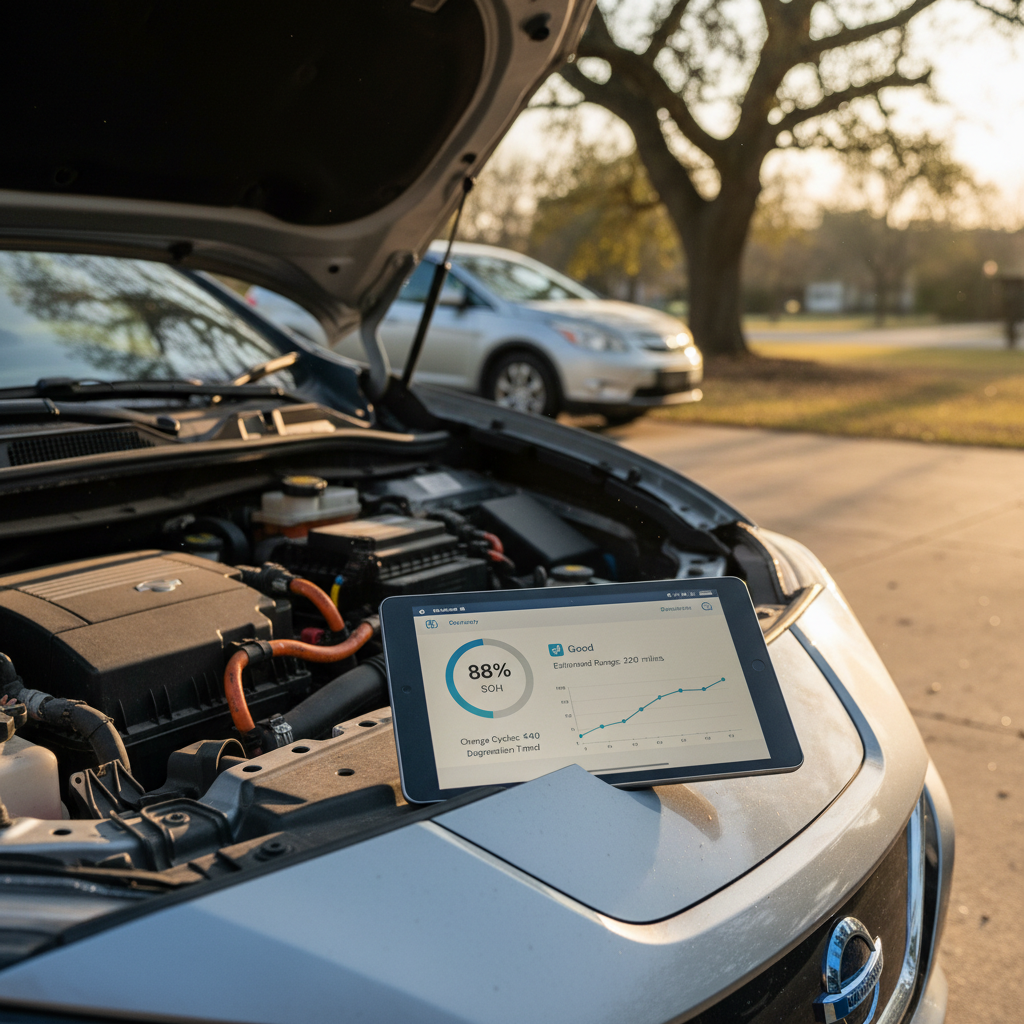
With used EVs, battery State of Health (SOH) often matters more than the badge on the hood. For the Mercedes EQS, which started life with a six‑figure MSRP, confident buyers want proof they’re not inheriting a weak pack.
How Battery Health Impacts Used EV Value
If you’re going to sell a Mercedes EQS in this market, showing a credible battery‑health report is no longer optional. It’s the difference between fielding low‑ball "what if the battery is weak?" offers and having serious buyers compete for a known‑quantity car.
How Recharged helps on battery transparency
Ready to find your next EV?
Browse Vehicles
Strategies to Maximize Your Mercedes EQS Sale Price
Once you’ve decided the timing is right, the way you prepare and market your EQS will determine whether you merely accept the market or beat it. Here’s how to tilt the odds in your favor.
Pre‑Sale Checklist for a Strong EQS Offer
1. Pull your service & software records
Download or print proof of routine maintenance, recall work, and software updates. Luxury EV buyers are skittish; a neat folder of records tells them this car was cared for, not experimented on.
2. Get a professional battery‑health report
Have the EQS diagnosed with a proper battery‑health tool and keep the documentation. Selling through a specialist like <strong>Recharged</strong> bakes this into the process via the Recharged Score Report.
3. Detail the car inside and out
High‑resolution photos in good light sell EVs. Have the EQS professionally detailed, then photograph it with clean, uncluttered backgrounds that match the vehicle’s premium positioning.
4. Fix small flaws, document bigger ones
Touch up curb‑rash, repair minor dents, replace worn wiper blades or floor mats. For anything significant you choose not to fix, photograph it clearly and price accordingly. Buyers reward transparency.
5. Know your walk‑away price
Research current EQS listings with similar year, mileage, and options. Decide your ideal price, realistic price, and minimum acceptable number before the first offer comes in.
6. Choose the right selling channel
Private sale may yield the highest top‑line, but it’s time‑intensive and harder with a niche EV. An EV‑focused marketplace like <strong>Recharged</strong> can combine nationwide exposure, financing, and trade‑in options to net you a strong result with less hassle.
Anchor your price smartly
Should You Sell the EQS Now or Keep It Longer?
Some owners ask a different question: "If the EQS has already dropped so much, shouldn’t I just keep it forever?" That can be a rational choice, but only if it still matches your needs and you’re realistic about future value.
Reasons to sell your EQS in 2026
- You’re in the 18–36‑month window. You’ve absorbed the worst hit but can still present it as a nearly new flagship.
- Your usage is changing. Longer commutes, more road trips, or regular cold‑weather driving might call for a different EV or a plug‑in hybrid.
- You’re nervous about out‑of‑warranty repairs. While EVs often cost less to maintain, complex luxury features and air‑suspension components can be expensive out of coverage.
- You want to benefit from newer EV tech. Faster charging, more efficient drivetrains, and better software in the next generation may matter more to you than squeezing out extra years in the EQS.
Reasons to keep your EQS longer
- You’ve already crossed 50–60% depreciation. The remaining drops may be smaller in dollar terms if you drive it another 3–5 years.
- You love how it drives and fits your life. Selling just because of headlines rarely pencils out if the car still does exactly what you need.
- Your battery health is strong. If diagnostics show 85–90% SOH or better, you may be able to enjoy reliable range for years with relatively modest further value loss.
- You’re comfortable "driving it into the ground." Treat the EQS like a long‑term appliance rather than a short‑cycle asset, and the depreciation looks less painful over a decade.
A practical rule for today’s market
Best Ways to Sell a Mercedes EQS Today
Choosing how to sell matters almost as much as when. With a niche, six‑figure‑MSRP EV, the right channel is the one that connects you to serious, informed buyers and can explain the vehicle in EV‑literate terms.
Comparing Selling Options for a Mercedes EQS
Match the channel to your priorities: price, speed, or simplicity.
Private sale
Pros: Highest potential selling price; you control every detail of listing, negotiation, and handoff.
Cons: You field all the EV questions, arrange test‑drives, and handle paperwork. Many buyers are nervous about luxury EVs and battery risk, which can slow the process.
Traditional dealer trade‑in
Pros: Fast and convenient, especially if you’re buying another vehicle immediately. One‑stop transaction.
Cons: Many dealers aren’t confident valuing used EQS models, so offers can be very conservative to protect against unknowns.
Specialist EV marketplace (Recharged)
Pros: EV‑savvy buyers nationwide, integrated Recharged Score battery diagnostics, financing, trade‑in options, and expert guidance from start to finish.
Cons: You may share a portion of the sale proceeds as a fee, but often still net more than a typical trade‑in with far less hassle than selling privately.
How Recharged fits into your timing strategy
FAQs About Selling a Mercedes EQS
Frequently Asked Questions
The Mercedes EQS is a remarkable piece of engineering, but the market treats it like what it is: an early luxury EV with a high starting price and aggressive depreciation. If you want to capture the most value, focus on selling in that 18–36‑month window, aim for late winter or spring if you can, and make battery health the centerpiece of your story. And if you’d rather not navigate all of that alone, partnering with an EV‑specialist like Recharged can turn a complicated sale into a straightforward, data‑driven transaction.