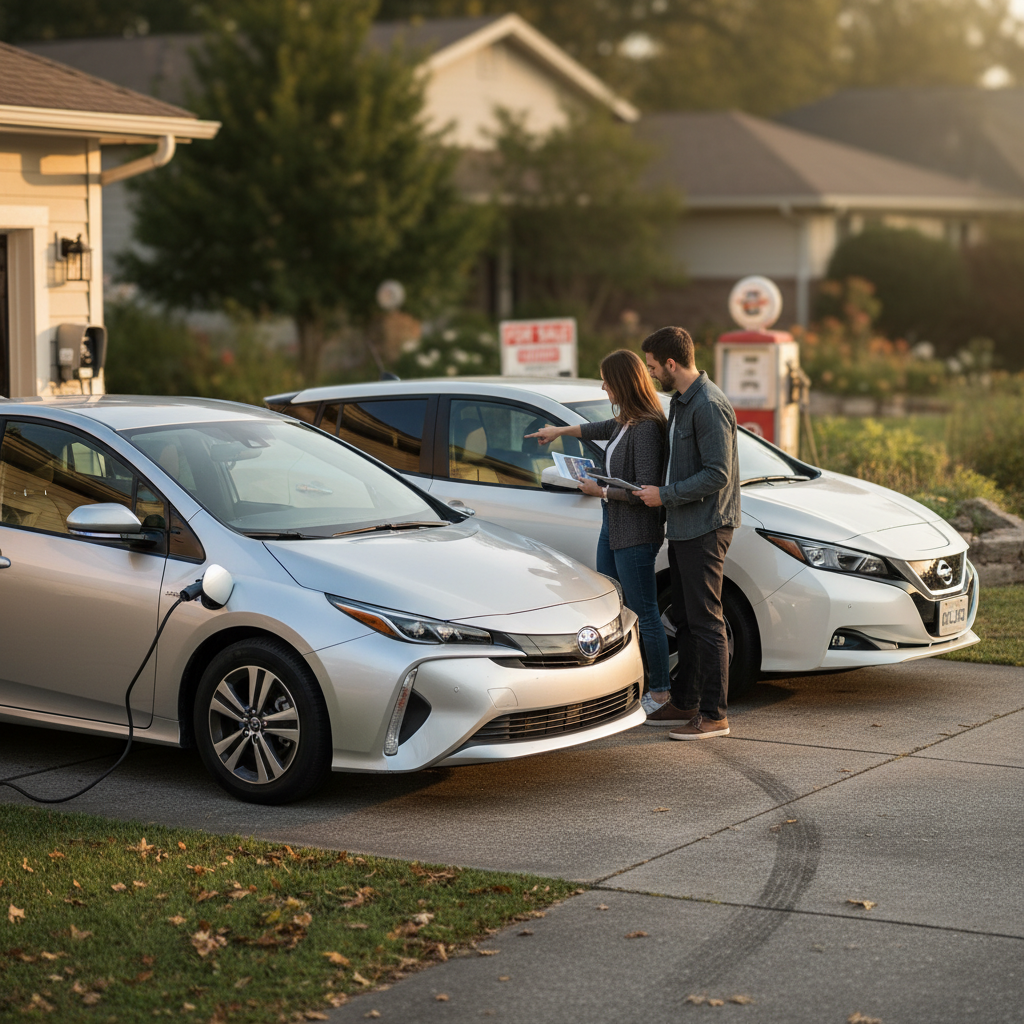
If you own a Chevy Bolt EUV, you’re sitting on one of the few genuinely affordable long‑range EVs. That also means you’re asking a smart question: what’s the best time to sell a Chevy Bolt EUV so you don’t leave thousands of dollars on the table? With production of the original Bolt EUV ending in 2023 and a new 2027 Bolt on the way, timing your exit in 2025–2026 actually matters more than it would for a typical gas crossover.
Quick answer
Why timing matters for your Bolt EUV sale
Unlike a typical gas compact SUV, the Bolt EUV sits at the intersection of EV technology cycles, battery warranties, and a model that was discontinued and is now being reintroduced. That cocktail can make resale values more volatile than you might expect from a small Chevy crossover.
Three forces shaping Bolt EUV resale value
Understanding these helps you pick your moment to sell
Battery & warranty exposure
EV buyers care deeply about remaining battery warranty and perceived degradation. Once your Bolt EUV ages out of that coverage, the buyer pool shrinks and shoppers expect a discount.
EV price swings
Used EV prices have been more volatile than gas cars, with large swings as tax credits, new models, and price cuts hit the market.
Discontinued, but coming back
The original Bolt EUV was discontinued after 2023, but a new 2027 Bolt is coming on an updated platform. That mix of scarcity and future competition changes how long your current EUV will be in demand.
Don’t wait for a perfect peak
How Chevy Bolt EUV depreciation really works
Depreciation on the Bolt family has been steeper than many owners expected, especially during the 2022–2024 period when new EV prices dropped and tax credits shifted. But the pattern is fairly clear once you zoom out.
What Bolt depreciation has looked like in the real world
The Bolt EUV behaves like most EVs: depreciation is front‑loaded. The first owner eats the biggest hit. After that, the curve tends to flatten, as long as the car still has plenty of battery warranty and doesn’t cross a scary mileage threshold in the eyes of buyers.
Bolt EV vs Bolt EUV
Market factors in 2025–2026 that affect when to sell
Timing isn’t just about your car; it’s also about where the market is headed. For Bolt EUV owners, four dynamics in 2025–2026 stand out.
- 1. The 2027 Bolt is coming back. GM has announced a new Bolt arriving around early 2026 as a 2027 model, with faster DC fast charging and a modernized interior. Once shoppers can buy a new Bolt again, likely under $30,000, the ceiling on used Bolt EUV prices gets lower.
- 2. Tax credit and incentive shifts. New EV tax rules have made some models eligible for point‑of‑sale credits while others don’t qualify. When a new crossover gets a big effective price cut, budget buyers may favor it over used Bolts unless you’ve priced competitively.
- 3. Used EV price reset. Used EVs, including the Bolt, already saw sharp price corrections as automakers cut new prices and Tesla slashed MSRPs. That big reset has largely happened; from here, price moves should be more gradual, unless there’s another major price war.
- 4. Charging standard changes. The new Bolt will adopt the NACS (Tesla) port, giving direct access to Superchargers. Your current EUV uses CCS, which is still widely supported but looks less future‑proof on paper. As more CCS‑to‑NACS adapters appear, this risk fades, but shoppers will still notice the difference in listings.
Strategic window
Best time to sell a Chevy Bolt EUV by owner profile
The “right” time to sell isn’t identical for everyone. It depends on when you bought your Bolt EUV, how you use it, and whether you’re eyeing another EV. Here’s how to think about it by owner type.
When to sell your Bolt EUV by owner profile
Use this as a starting point; your battery health and local market may nudge you earlier or later.
| Owner type | Current situation (2026) | Suggested sale timing | Why this window makes sense |
|---|---|---|---|
| Early adopter (2022–2023 EUV, high spec) | 3–4 years old, 30k–45k miles, lots of options | Sell between late 2025 and end of 2026 | You avoid crossing 60k miles and still have 4–5+ years of battery warranty left, very attractive to used buyers. |
| Budget keeper (2022–2024 EUV, base/ mid trim) | 2–4 years old, 20k–60k miles | Hold until 5–6 years old or ~70k miles, then sell | You’ve already absorbed the big depreciation hit; holding longer squeezes more value out of sunk cost before the warranty countdown spooks buyers. |
| Low‑mileage urban driver | <30k miles even on older EUV | Sell sooner, by 2026 | Low miles are gold. Selling while your odometer is well below peers can net a meaningful premium. |
| High‑mileage commuter | Already 70k+ miles or 15k–20k/yr usage | Consider selling in the next 12 months | Once you’re beyond 80k–90k miles, many retail buyers drop out. Dealers and marketplaces will price in a steep discount. |
Owner profiles assume typical U.S. driving of 10,000–12,000 miles per year.
Example 1: 2023 Bolt EUV Premier
You bought a fully loaded 2023 Premier in early 2023. By mid‑2026 it’s three years old with ~36,000 miles.
- Still 5 years of battery warranty left.
- Below 50,000 miles, positive psychological threshold.
- Shoppers comparing to the new 2027 Bolt will see yours as the cheaper, well‑equipped alternative.
This is an ideal moment to list it before you pile on another 20,000 miles.
Example 2: 2022 Bolt EUV LT
You grabbed a discounted LT in late 2022 and drive 15,000 miles a year. By late 2026 you’re approaching 60,000+ miles.
- High annual mileage accelerates depreciation.
- Buyers start worrying about out‑of‑warranty years, not just miles.
- Selling in 2026–2027 likely beats running it to 100k+ miles if you care about resale.
Here, selling in the next 12–18 months keeps you on the right side of major value cliffs.
Mileage, battery health, and avoiding the value cliff
For a used EV shopper, a Chevy Bolt EUV is essentially a battery with seats and wheels. That’s why the “best time to sell” question quickly becomes a question about mileage and battery condition.
Key thresholds that influence Bolt EUV pricing
These aren’t hard rules, but they’re where many buyers mentally re‑price cars.
30,000 miles
Below ~30k miles, your EUV still feels “nearly new.” You can often ask top‑of‑market prices if the battery health looks strong.
60,000 miles
Around 60k, some buyers start to worry about long‑term battery life, even with warranty left. It’s a good time to consider selling if you want to stay ahead of skepticism.
100,000 miles / 8 years
Once you’re near the end of the 8‑year/100k‑mile battery warranty, values take a noticeable step down. Many retail buyers simply won’t consider cars past this point.
Battery health > model year
If you’re hovering near one of these thresholds, the calculation is simple: every extra year and 10,000–15,000 miles you add between now and sale needs to be worth more to you in utility than what you’re giving up in resale value.
Seasonal timing and local demand for Bolt EUVs
Beyond model cycles and mileage, plain old seasonality still matters, even for EVs. You don’t have to obsess over it, but a little awareness can give you an extra edge when deciding the best time to sell your Chevy Bolt EUV.
Seasonal patterns to consider before listing your Bolt EUV
1. Spring buying bump
Tax refunds and better weather typically make <strong>March through May</strong> a strong period for used‑car demand. Listing your Bolt EUV then can mean more eyeballs and faster offers.
2. Back‑to‑school & commuter season
Late summer and early fall bring a surge of <strong>new commuters and students</strong> looking for efficient daily drivers. An affordable EV like the Bolt EUV fits perfectly into that narrative.
3. Winter range anxiety
In colder climates, shoppers often worry about winter range. If you sell in late fall or mid‑winter, be ready with <strong>realistic, honest range numbers</strong> from your own experience to keep confidence high.
4. Local policy changes
State and utility incentives change on specific dates. If your state announces <strong>new rebates or HOV perks</strong> for EVs starting on a certain date, listing just before or just after can change how attractive your car looks locally.
Think beyond your ZIP code
Trade-in vs private sale vs EV marketplace
Once you’ve narrowed down *when* to sell your Chevy Bolt EUV, the next decision is *how* to sell it. Each path trades convenience for money in slightly different ways.
Dealer trade‑in
- Pros: Fast, easy, applies directly to your next purchase, potential tax advantage in some states.
- Cons: Typically the lowest dollar outcome; dealers price in risk on EVs and battery uncertainty.
Best if you value speed and simplicity over maximum profit.
Private party sale
- Pros: Often brings the highest price if you find a serious buyer.
- Cons: You handle photos, listings, test drives, and buyers’ questions about EV charging and battery health.
Best if you’re willing to put in work and educate buyers about EV ownership.
Specialized EV marketplace
- Pros: Platforms like Recharged combine expert EV pricing, battery diagnostics, and nationwide reach.
- Cons: May charge a fee or margin, but usually less spread than a traditional dealer.
Best if you want EV‑savvy buyers and transparent pricing without going fully DIY.
How Recharged can help you sell
Ready to find your next EV?
Browse VehiclesSteps to maximize your Bolt EUV sale price
Even if you time the market perfectly, poor presentation can easily cost you $1,000–$2,000 on a used EV. Before you list or accept a trade‑in offer, work through a simple checklist.
Pre‑sale checklist for your Chevy Bolt EUV
1. Document battery health and charging behavior
Pull any available battery reports from your dealer, service history, or connected apps. If you sell with Recharged, our <strong>Recharged Score</strong> gives buyers a clear, third‑party battery assessment.
2. Stay on top of recall and software updates
Bolt models have had high‑profile battery recalls and software updates. Make sure <strong>all recall work is complete</strong> and note that in your listing, this can turn a concern into a selling point.
3. Detail the car and fix obvious wear
Buyers forgive small scuffs, but sticky interiors, curb‑rashed wheels, or unresolved warning lights kill confidence. A basic <strong>interior/exterior detail</strong> and taking care of cheap fixes often pays back several times over.
4. Include both charging cables and accessories
List (and photograph) <strong>all included charging gear</strong>: the portable Level 1/2 cord, any wall‑mounts, and storage bags. Replacing these is pricey; having them adds tangible value to your sale.
5. Be honest, but smart, about range
In your listing, share <strong>realistic range numbers</strong> based on your driving, climate, and charging habits. Framing it clearly (“I regularly get ~220 miles in mild weather”) builds trust and avoids disappointment.
6. Get multiple offers within the same week
If you’re not using a marketplace that shops your car around, manually collect <strong>2–3 trade‑in or instant‑offer bids</strong> at the same time. EV values can move quickly; you want truly comparable quotes, not ones weeks apart.

Frequently asked questions about selling a Bolt EUV
FAQ: Best time to sell Chevy Bolt EUV
Bottom line: when to sell your Chevy Bolt EUV
The best time to sell a Chevy Bolt EUV isn’t tied to a single magic date. It’s the point where three things line up: your mileage is still attractive, your battery warranty has meaningful years left, and the next‑generation Bolt hasn’t completely reset used‑EV pricing in your segment. For many owners, that’s going to fall between late 2025 and the end of 2026.
If you’d rather not guess, you can always get data instead. A platform like Recharged can assess your Bolt EUV’s battery health, fair market value, and timing trade‑offs, then help you list, finance a buyer, and arrange nationwide delivery, all without leaving your couch. However you choose to sell, going in with a clear timing strategy and a well‑prepared car is what turns your Bolt EUV from a depreciating asset into a strong exit.