If you own an Acura ZDX, you’re sitting on one of the most complicated stories in the EV world: a stylish, short‑lived electric SUV that went on sale for 2024 and was already discontinued by late 2025, right as federal EV tax credits disappeared. That mix of timing, incentives, and headlines has a big impact on the best time to sell an Acura ZDX in 2026 and beyond.
The short life of the modern Acura ZDX
Why timing matters so much for Acura ZDX sellers
On a normal crossover, value is mostly about miles, options, and how clean it looks in the driveway. On a discontinued EV like the Acura ZDX, timing layers on extra complexity: changing federal incentives, waves of lease returns, and shoppers who’ve read a few too many battery‑failure stories. Getting your timing wrong can easily mean several thousand dollars left on the table.
Acura ZDX & used EV market snapshot
Quick answer: The best time to sell an Acura ZDX
If you just want the headline, here it is: for most owners, the best time to sell an Acura ZDX is between spring and early fall of 2026, while your SUV is still under three years old, comfortably below 36,000 miles, and with a clean battery‑health report in hand.
- Seasonally, late March through June and again in September are prime months, when buyers shop hardest and weather cooperates for test drives.
- Historically, late‑model EVs lose value fastest in the first 3–4 years; selling before your ZDX hits major mileage milestones (30k, 50k, 75k miles) can keep you in a stronger pricing bracket.
- The federal EV tax credit is gone as of September 30, 2025, which actually nudges more payment‑sensitive buyers into used EVs in 2026, good for you as a seller.
Rule of thumb
How discontinuation and tax-credit changes hit ZDX values
When a carmaker pulls the plug on a brand‑new EV, the market reacts emotionally first and rationally later. The Acura ZDX was launched as a premium, tech‑forward SUV with a price that pushed into traditional luxury territory. When reports surfaced in 2025 that Acura would discontinue the model just as federal EV tax credits were ending, resale values immediately came under pressure.
What discontinuation means for your ZDX
Two sides of the same coin: fear and opportunity
Why some buyers get nervous
- They worry about future parts support on a short‑run model.
- They’ve seen early reports of battery‑related repairs and lawsuits.
- No new‑car buzz means fewer shoppers are searching “Acura ZDX” by name.
Why others see a bargain
- Discontinued models often sell well under original MSRP.
- Luxury features for the money look compelling versus new compact SUVs.
- Many buyers assume steep early depreciation is already baked in, especially on lease returns.
Layer on top of that the September 30, 2025 cutoff for federal new and used EV tax credits. New‑car ZDX shoppers lost up to $7,500 in potential savings overnight, while used‑EV buyers lost up to $4,000. That doesn’t help demand in a vacuum, but it does push more budget‑conscious shoppers to the used side, especially in 2026 when first‑wave leases start to roll off.
Don’t assume the ZDX is “collectible”
Seasonality: The best months of the year to sell
Car values move with the calendar. EVs are no exception. If you have flexibility, you can use the seasons to your advantage when choosing the best time to sell your Acura ZDX.
Best and worst times of year to sell an Acura ZDX
Use this as a guide for 2026–2027 if you can choose your selling window.
| Timing | Market mood for EVs | What it means for your ZDX |
|---|---|---|
| January–February | Slow, weather‑affected in many states | Fewer buyers, lower urgency; dealers stock carefully. You may wait longer or accept a softer offer. |
| Late March–June | Spring selling season | Tax refunds and better weather bring more shoppers; strong time to list or trade in your ZDX. |
| July–August | Mixed | Road‑trip shoppers are out, but heat and vacations can slow demand. Good time if your ZDX has great range and fast‑charge capability. |
| September | Back‑to‑school, pre‑winter | Dealers reload inventory and families shop; one of the best months to sell before winter hits. |
| October–early December | Steady but cautious | Shoppers balance holiday budgets; good‑condition ZDX examples still move, but pricing must be sharp. |
| Late December | Year‑end chaos | Dealers chase year‑end targets on new cars; used buying can either spike or stall depending on incentives. Plan ahead rather than counting on last‑minute magic. |
Exact timing will vary by region, but the patterns are consistent across most of the U.S.
If you’re looking at 2026 specifically
Mileage and age breakpoints that change your offer
Every used‑car buyer, dealers and private shoppers alike, reads mileage like a scorecard. With a discontinued EV like the ZDX, those numbers matter even more because they’re a proxy for how hard the battery has been asked to work.
Key mileage and age checkpoints for ZDX sellers
Under 15,000 miles (year 1–2)
This is your “nearly new” window. If you’re here in early 2026 with a low‑mile ZDX, you’ll attract shoppers who missed out on new inventory and don’t want to be early‑adopter guinea pigs.
15,000–35,000 miles (years 2–3)
Still very desirable, especially if you’ve had no major battery or high‑voltage repairs. This is the sweet spot for combining a lower price with enough miles to prove the car isn’t fragile.
35,000–60,000 miles (years 3–5)
You’re now competing with a wave of off‑lease EVs from other brands. Clean history and strong battery‑health numbers become critical. Expect sharper price negotiation in this band.
60,000–100,000 miles (years 5–8)
You’re pushing toward the end of the 8‑year/100k‑mile battery warranty. Buyers will either want a bargain or iron‑clad reassurance that your pack is healthy. Selling earlier usually nets more.
Age vs. model‑year perception
Even though the ZDX was built for a short period, buyers frame it like any other SUV: more than 5–6 model years old feels “old tech” in EV terms. The closer you sell to 2026–2027, the more modern it still feels.
Why 2026 is a pivot year for ZDX owners
Battery health: Why it matters more than paint shine
Early in the ZDX’s life, a handful of very public stories about high‑voltage issues and replacement battery packs spooked shoppers. Even if your car has been trouble‑free, buyers have long memories. To them, battery health is the new Carfax.
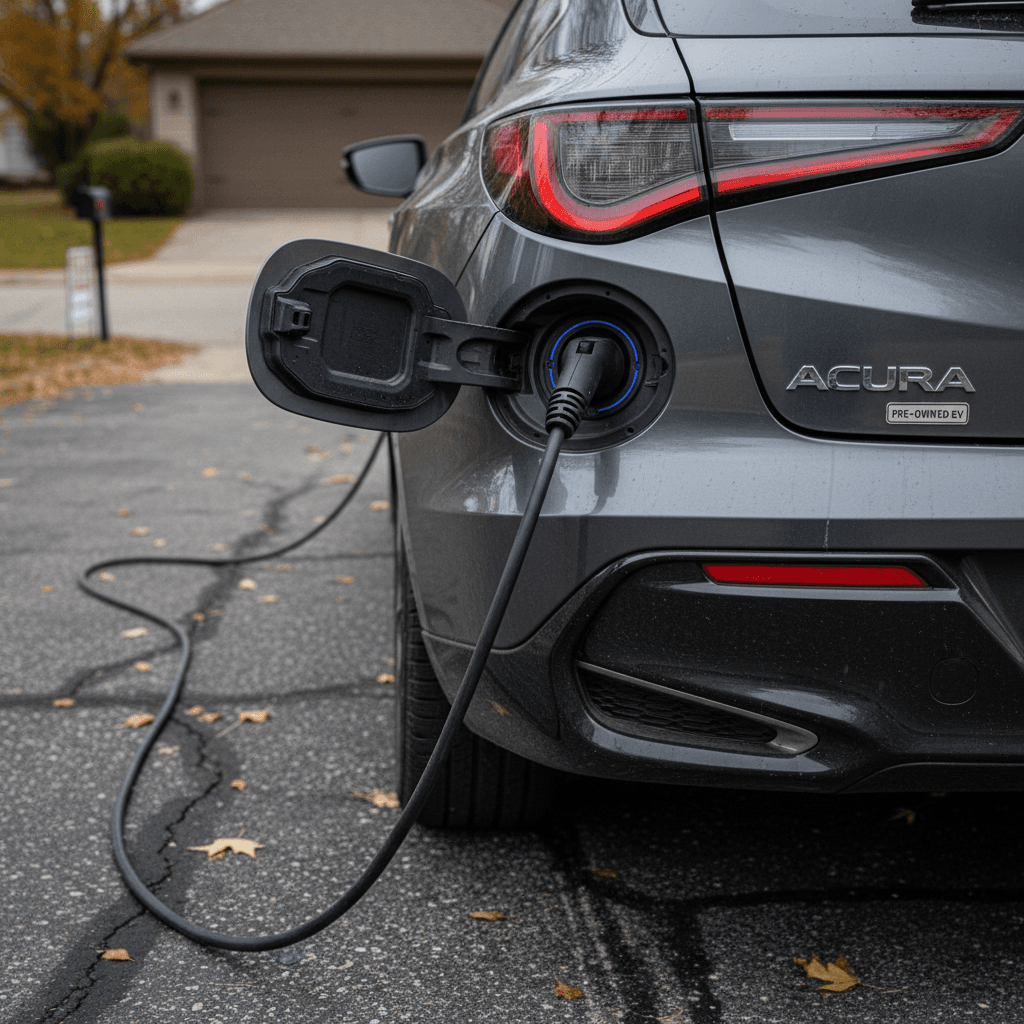
- Range is the headline metric buyers care about. If the ZDX can’t comfortably hit the EPA range in good weather, they’ll wonder what’s going on underneath.
- Battery replacements and high‑voltage component repairs, even if done under warranty, raise questions. It doesn’t kill a sale, but it demands very clear documentation.
- Unlike a gas SUV, a ZDX that’s been fast‑charged constantly, stored fully charged, or left sitting for months may show earlier signs of degradation. Savvy buyers know this.
How Recharged helps here
Reading the used EV market: 2024–2027 outlook
Used EV prices fell hard in 2023–2024 and into 2025, roughly mid‑teens percent on average year‑over‑year, before they started to stabilize. The ZDX was caught in that downdraft at the exact moment it was trying to establish itself, and aggressive new‑car discounts only pulled used values down faster.
2026: Stabilization and opportunity
- Prices have stopped free‑falling on most used EVs and are now adjusting more slowly.
- More selection than ever: a wave of lease returns from 2022–2024 means buyers can cross‑shop dozens of models.
- Shoppers who were spooked by early EV pricing are coming back now that values feel more realistic.
2027 and beyond: More competition
- New EVs with longer range, faster charging, and better software will keep launching, including from Acura’s rivals.
- By 2027, your 2024 ZDX will be just another older EV in listings unless you sell with exceptional condition and documentation.
- The longer you wait past 2027, the more your price reflects age and tech obsolescence, not just mileage.
Waiting for a rebound?
Should you sell now or wait? Real-world owner scenarios
Not every ZDX owner is in the same boat. Your best timing depends on how you bought the car, how you use it, and what you want next. Here’s how to think about it in plain language.
Three common Acura ZDX owner paths
Which one sounds like you?
1. You leased your ZDX
Best time to act: In the last 6–9 months of your lease.
- Get real‑world payoff vs. market value quotes well before the turn‑in date.
- If market value is above your residual, you may have equity, good time to sell or trade.
- If it’s below, turning it in on schedule may be your least‑stress option.
2. You bought it new in 2024
Best time to act: Between spring 2026 and the end of 2027.
- You’ve already taken the steepest depreciation hit.
- Selling in 2026–2027 keeps you within the early years of the battery warranty.
- Use a Recharged Score to prove your pack is solid and stand out from other listings.
3. You bought it used in 2025–2026
Best time to act: When a repair estimate or lifestyle change makes the math stop working.
- If a major battery or high‑voltage repair is looming out of warranty, consider selling before it hits your invoices.
- If the ZDX still fits your life and budget, keeping it and driving it to the end of the warranty may be cheaper than swapping again.
ZDX ownership roadmap: When selling makes sense
You’re worried about future reliability
Get a battery‑health report and full diagnostic now; don’t guess.
If the report is strong, you can list it confidently in 2026 while values are still comparatively higher.
If the report is marginal and you’re out of patience, treat 2026 as your exit year before more issues stack up.
You’re chasing the next‑gen EV
Shop next‑gen models and pre‑qualify financing so you know your budget.
Sell or trade the ZDX while it’s within the first half of its battery warranty.
Avoid waiting until your dream replacement is heavily discounted; by then, your ZDX will be too.
How to maximize your Acura ZDX sale price
Once you’ve circled the right season and year, the rest is about presentation, paperwork, and picking the right selling channel. With a tech‑heavy EV like the ZDX, buyers care as much about software, charging, and range as they do about leather and paint.
Essential steps before you list your ZDX
1. Get a professional battery‑health report
This is non‑negotiable in today’s used‑EV market. A third‑party or platform‑verified report (like the Recharged Score) gives buyers concrete data on pack health and helps justify your price.
2. Gather service, recall, and charging history
Print or download records for any high‑voltage work, software updates, and routine maintenance. If you’ve mostly charged at home versus constant DC fast‑charging, that’s worth mentioning, many buyers see it as a plus.
3. Fix small issues that spook EV shoppers
Resolve any warning lights, intermittent charging glitches, or key‑fob/electronic quirks before selling. A clean dashboard is worth real money in buyer confidence on a discontinued model.
4. Highlight remaining battery and bumper‑to‑bumper coverage
Spell out the in‑service date and mileage so buyers can see exactly how much factory warranty remains. The closer they are to 8 years/100k miles on the battery, the more they care.
5. Detail the car, but don’t hide reality
A professional detail helps photos pop, but don’t over‑filter or crop out minor wear. Transparent photos and honest descriptions lead to faster, smoother sales at fair prices.
6. Get multiple offers, not just one
Combine instant offers, local dealer quotes, and marketplace listings. Platforms like <strong>Recharged</strong> can show you fair‑market pricing based on real sales, not just guesses.
Avoid this ZDX pricing mistake
Selling your Acura ZDX with Recharged
A discontinued EV with a complex battery story is not the car you want to sell with shaky information and dim driveway photos. This is exactly where Recharged is built to help.
How Recharged can help you time and execute your sale
Pick the path that fits your schedule and stress level
Transparent pricing
Recharged Score Report
Flexible selling options
Ready to find your next EV?
Browse VehiclesIf you’re holding an Acura ZDX in 2026, you’re not stuck, you’re early. The model’s short run and timing around tax‑credit changes make it a tricky story, but they also mean shoppers can get a lot of EV for the money. Sell into that narrative on your terms: choose a strong season, sell before age and miles get ahead of you, and back up your asking price with rock‑solid battery data. That combination, more than any calendar date, is what turns a discontinued experiment into a smart, well‑timed sale.