If you’re wondering about the best place to sell a used car in Maryland, you’re really asking two questions: where will I get the most money, and where will the process be the least painful, especially with Maryland’s inspection rules and MVA paperwork. The right answer depends on your car, your timeline, and whether you’re selling a gas car or an EV.
Maryland is a little different
How to choose the best place to sell a used car in Maryland
Before we dive into CarMax, online offers, local dealers, and private sale, it helps to get clear on your priorities. For most Maryland sellers, there’s a three‑way tradeoff between price, speed, and hassle.
Your three main selling priorities
Pick the column that sounds most like you, then match it to the options below.
“Get me the most money”
If you’re willing to do photos, listings, and meet strangers, you’ll almost always net the highest price with a private sale. This is especially true for clean, low‑mile cars and popular EVs.
“Get this done fast”
If you just want it gone this week, your best bets are CarMax / large used‑car chains or online instant‑offer sites that operate in Maryland.
“I want zero hassle”
If you hate paperwork and MVA lines, look at CarMax, franchised dealers and for EVs, specialist buyers like Recharged who pair digital paperwork with concierge support.
Start with a “price baseline”
Quick comparison: best places to sell a used car in Maryland
Where to sell your used car in Maryland: pros, cons & who it fits
Use this at‑a‑glance table to match your situation to the right selling channel.
| Option | Typical price vs. trade‑in | Speed | Effort level | Best for |
|---|---|---|---|---|
| Private sale (Facebook, Craigslist, Marketplace) | +10–25% | Slow (1–4 weeks) | High | Max money, common models, you’re comfortable screening buyers |
| CarMax & big used‑car dealers | Baseline | Fast (same day) | Low | Clean title cars, mainstream brands, you want a simple in‑person process |
| Online instant‑offer sites (CarGurus, Peddle, etc.) | Baseline to slightly higher | Fast (1–7 days) | Low–medium | Cars in average condition, busy schedules, you prefer selling from home |
| Trade‑in at franchised dealer | Lowest | Fast (same day) | Low | You’re already buying another vehicle and value sales‑tax savings |
| EV‑specialist buyers/marketplaces (like Recharged for EVs) | Competitive, often above generic offers | Medium (few days to a couple weeks) | Low–medium | Used EVs where battery health and incentives matter to buyers |
Private sale usually yields the highest price in Maryland, but CarMax, online buyers, and EV‑specialist marketplaces can be better for convenience, safety, and complex vehicles like EVs.
Option 1: Private sale in Maryland (highest price, most work)
Selling privately, through Facebook Marketplace, Craigslist, Nextdoor or word‑of‑mouth, almost always delivers the highest selling price in Maryland. You cut out dealer margin, and buyers will often pay more for a well‑cared‑for car with good records than a dealer would offer you on trade.
Pros of private sale in Maryland
- Top dollar: You’re capturing retail value, not wholesale. It’s common to net hundreds or even a few thousand more than a trade‑in on late‑model vehicles.
- More control: You pick the buyer, the price, and the timing.
- Great for desirable EVs: If you’re selling a popular used EV with good range, private buyers may value it more than generic dealers who don’t specialize in EVs.
Cons of private sale in Maryland
- More work: Photos, listings, messages, test drives, and negotiation.
- Safety concerns: Meeting strangers with a valuable asset and handling payment.
- Maryland‑specific rules: Bills of sale, safety inspection expectations, and MVA title work are on you and the buyer to get right.
Private sale best practices in Maryland
1. Price it using Maryland‑realistic comps
Look at listings and recent sales of similar vehicles within Maryland or nearby states. Pay attention to mileage, trim and accident history. Remember that Maryland buyers may discount cars that still need a safety inspection.
2. Prepare for inspection questions
Most buyers know that Maryland typically requires a safety inspection before registration. Be upfront about whether the car has a recent Maryland Safety Inspection (and provide the documentation if it does).
3. Meet in safe, public locations
Use well‑lit parking lots (many police stations invite this) and avoid having strangers come to your home if you’re not comfortable. Bring a friend for test drives and verify that the buyer has a valid license and insurance.
4. Only accept secure payment
Certified bank checks issued in‑branch with you present, confirmed wire transfers, or cash at a bank are safer than peer‑to‑peer apps. Avoid “escrow services” suggested by the buyer, these are a common scam pattern.
5. Handle plates and MVA correctly
In Maryland, you usually <strong>keep your plates</strong> and return or transfer them yourself. The buyer can obtain temp tags or tow the vehicle. Don’t leave your plates on a car you no longer own.
Be careful with low advertised prices
Option 2: CarMax and local used‑car dealers in Maryland
If your priority is speed and simplicity, large used‑car chains like CarMax, as well as reputable local Maryland dealers, offer a strong middle ground. You’ll almost always get less than a private sale, but the process is structured and quick.
What you can expect when you sell to a dealer
Major chains with Maryland locations (and nearby Virginia/DC stores) will appraise your car for free and make a no‑obligation offer. Local independent dealers sometimes match or beat those offers if they need inventory, especially for easy‑to‑resell crossovers and commuter cars.
Use one dealer against another
Option 3: Online instant‑offer sites serving Maryland
Over the last decade, online buyers have turned selling a car into a mostly digital process. Platforms like CarGurus, Carvana, Vroom, Peddle and others operate in Maryland and will give you an instant or near‑instant cash offer once you enter your VIN, mileage and condition.
How online instant‑offer sites work in Maryland
The details vary a bit by company, but the basic flow is very similar.
1. Enter your car’s details
You’ll provide VIN or plate, mileage, options, accident history and payoff amount if you still owe money. Photos help you get a more accurate offer.
2. Receive and accept an offer
You’ll see a guaranteed offer or a range. If you accept, you schedule pickup or drop‑off. Some sites also shop your car to Maryland dealers to bid on.
3. Handoff & payment
A driver comes to you or you visit a partner location, sign the title, and hand over the keys. You’re typically paid via check or ACH, often on the same or next business day.
Watch out for conditional offers
Option 4: Trading in at a Maryland dealership
If you’re already buying another vehicle, new or used, from a Maryland dealer, a trade‑in is usually the least friction. You hand them your keys; they handle payoff, title work, and your old car disappears into their wholesale pipeline. The obvious downside is price: trade offers are almost always the lowest‑paying channel.
Why trade‑ins can still make sense
- Sales‑tax advantage: In many cases your taxable price is reduced by the trade‑in amount when you buy from a Maryland dealer, which can offset part of the lower offer.
- One‑stop transaction: Financing, purchase and sale of your old car are handled in the same contract.
- Great for rough vehicles: Dealers often prefer taking a high‑mileage or cosmetically rough car on trade rather than paying cash for it outright.
How to use trade‑ins smartly
- Get outside offers first so you know if your dealer’s number is competitive.
- Negotiate the price of the new vehicle separately from the trade‑in value to keep the math transparent.
- If an online or CarMax offer is meaningfully higher, ask your dealer to match or come close.
Selling a used EV in Maryland: what’s different?
If you’re selling a used electric vehicle rather than a gas car, the “best place” question changes. EV buyers in Maryland care a lot about battery health, real‑world range, and whether the car still qualifies for any state or federal incentives when purchased from a dealer. Many traditional used‑car channels still treat EVs like any other car, which can leave money on the table.
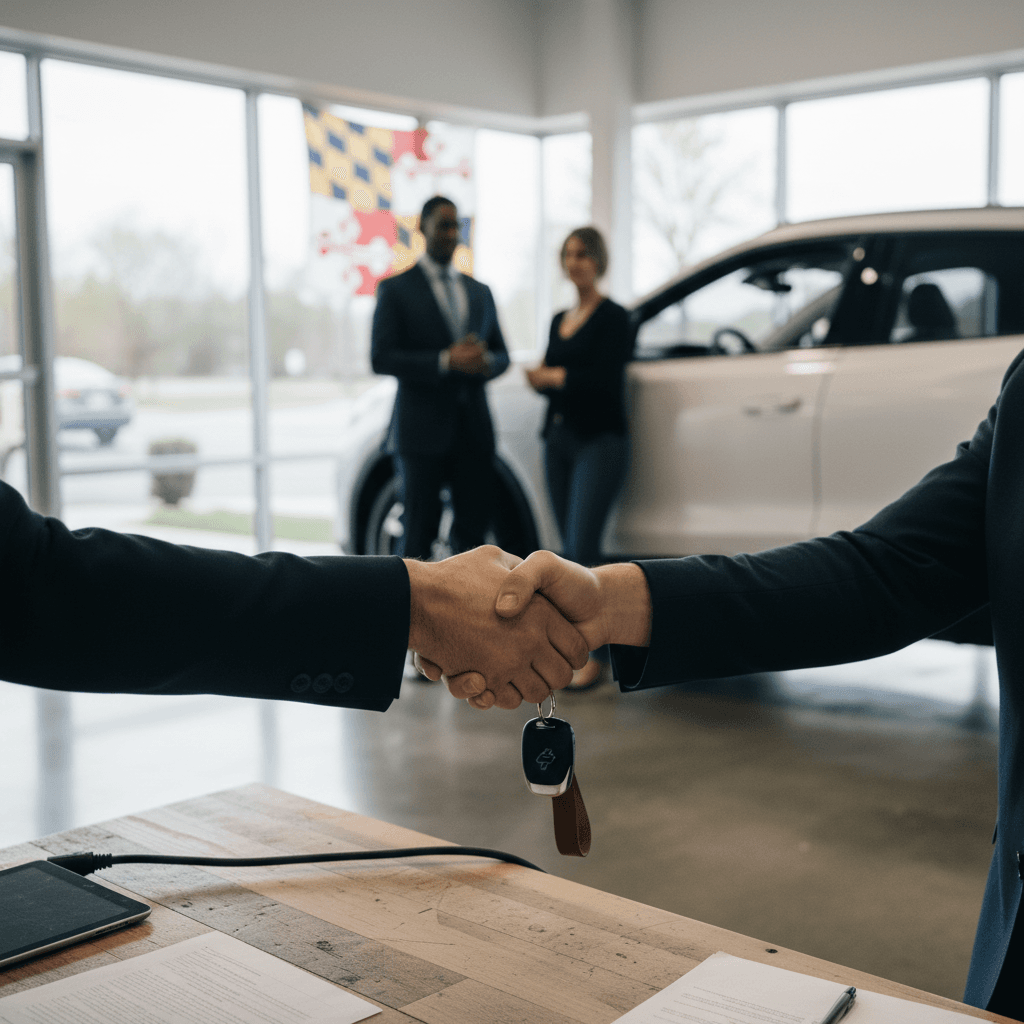
Key differences when selling a used EV in Maryland
These factors influence both where you should sell and what your car is worth.
Battery health is the new “engine”
EV shoppers want to know how much usable capacity is left. A third‑party battery health report can increase buyer confidence and value, especially in a private sale.
Charging & hardware details
Include home charging info, adapters (NACS/CCS), and any included Level 2 charger. In Maryland’s growing EV market, a well‑equipped car is easier to sell at a premium.
Incentives and demand
Maryland’s climate and clean‑transportation policies have supported strong EV adoption. That demand, and remaining tax incentives for buyers, tend to support used EV values versus similar gas cars.
Where Recharged fits in
Ready to find your next EV?
Browse VehiclesFor many Maryland EV owners, the ideal strategy is to get baseline offers from generic channels, then talk to an EV‑focused buyer like Recharged. If your car has strong range, rare options or remaining incentive eligibility, a specialist marketplace can sometimes justify a higher price than a generalist dealer or instant‑offer site.
Maryland legal and paperwork basics (don’t skip this)
No matter where you sell, private buyer, dealer, or online buyer, Maryland’s rules still apply. Here are the essentials you should understand before you hand over your keys.
Paperwork and legal essentials for Maryland sellers
Title and lien release
You must sign over a clean Maryland title to transfer ownership. If you still owe money, your lender will provide an electronic or paper lien release as part of payoff. Don’t complete a private sale without confirming how and when that lien will be cleared.
Odometer disclosure
Federal law and Maryland forms require an accurate odometer reading at the time of sale. On most modern titles there is a dedicated section to complete; fill this out carefully and keep a copy.
Bill of sale & price documentation
Maryland doesn’t always require a notarized bill of sale, but it’s wise to use one for private sales and keep your own copy. It protects both parties if questions about price or ownership arise later.
Plates, insurance and liability
In a private sale you normally remove your license plates and either transfer them to another vehicle or return them. Notify your insurer and the MVA promptly so you are not on the hook for tolls, tickets or accidents after the sale date.
Inspection expectations
Most used vehicles need a Maryland safety inspection before they can be registered. Dealers handle this for retail sales; in private sales, buyers generally arrange inspection, but a recent pass can make your car easier to sell.
Never sell a car with an undisclosed lien
Step‑by‑step checklist to sell your car in Maryland
To pull this all together, here’s a practical sequence that works well for both gas cars and EVs in Maryland. Follow these steps and you’ll know you’ve explored your options and handled the MVA basics properly.
Maryland selling sequence
1. Gather documents and key info
Collect your title (or lender information), registration, payoff amount, maintenance records, and for EVs, any battery health data you have. Jot down VIN, mileage, trim and options.
2. Get 2–3 baseline offers
Visit a CarMax or local dealer and try at least one online instant‑offer site. Now you know your low‑effort floor price and can decide whether private sale or a specialist EV buyer is worth pursuing.
3. Decide your channel
If speed and simplicity matter most, accept the best instant‑offer or dealer bid. If you have time and a desirable car, list it privately. For EVs, consider talking with Recharged to see if their EV‑focused marketplace can beat generic offers.
4. Prepare the car
Clean the interior, wash the exterior, fix inexpensive issues (bulbs, wipers, obvious cosmetic flaws). For private sale, take clear, honest photos. A reasonably presentable car can easily be worth a few hundred more.
5. Complete the handoff correctly
At sale time, verify buyer identity, sign the title and odometer section, exchange payment and keys, remove your plates, and provide a bill of sale. Notify your insurer and the MVA that the vehicle has been sold.
FAQ: Best place to sell a used car in Maryland
Frequently asked questions about selling a used car in Maryland
Bottom line: where should you sell in Maryland?
There is no single “best place” to sell a used car in Maryland, only the best place for your priorities and your vehicle. If you want top dollar and have time, lean toward private sale, especially for clean, in‑demand models. If you value speed and simplicity, CarMax, online instant‑offer platforms and trade‑ins at Maryland dealers are your low‑friction options. And if you’re selling a used EV, consider layering in an EV‑specialist like Recharged, where battery health, fair market pricing and expert guidance are built into the process.
Whichever route you choose, start by collecting a few offers, understand Maryland’s inspection and title rules, and don’t underestimate how much a clean car and clear documentation can add to your bottom line. That way, when you hand over the keys, whether on a dealer lot in Laurel or via a digital EV marketplace, you’ll know you squeezed the most value and the least stress out of selling your car in the Old Line State.