
If you’re trying to figure out the best place to sell a used car in Georgia, you’re really asking two questions: where will I get the most money, and how much hassle am I willing to put up with? Georgia adds its own flavor to the problem, title rules, emissions testing around Atlanta, and a used‑car market that’s still hungry for clean, well‑kept vehicles and especially for electric cars in the big metros.
Georgia’s used car market in a sentence
Where’s the best place to sell a used car in Georgia?
There’s no single “best” place for every Georgia seller. A retiree in Augusta dumping a second SUV, a commuter in Gwinnett trading up to a hybrid, and a tech worker in Midtown Atlanta off‑loading a used Tesla all have different priorities. In broad strokes, private sales tend to bring the highest prices, dealership trade‑ins are the least painful, and online instant‑offer buyers sit somewhere in between. If you’re selling an electric vehicle, you have a fourth lane: EV‑focused marketplaces like Recharged that understand battery health and can match you with buyers nationwide.
Why it’s worth selling smart in Georgia
Quick answer: Best place to sell your car in Georgia by priority
Pick your priority, then your selling option
Money, speed, or simplicity, Georgia gives you all three, just not at once.
Max money
Best: Private party sale (Facebook Marketplace, Craigslist, local listings, enthusiast forums).
Also consider: For electric vehicles, list with an EV‑focused marketplace like Recharged where buyers understand battery health and are willing to pay for it.
Fastest sale
Best: Instant‑offer sites and local car‑buying services (big national brands, regional buyers) that operate in Georgia.
They’ll often pick up the car at your home in Atlanta, Savannah, Macon, or Columbus and handle most paperwork.
Least hassle
Best: Trade‑in at a Georgia dealership when you’re buying another car.
You’ll give up some money, but you roll everything into a single transaction and avoid private‑sale headaches.
How to “benchmark” your car before you sell
Option 1: Private sale in Georgia (highest price, more effort)
A well‑run private sale, listing your car yourself, meeting buyers, and handling the paperwork, is still where most Georgians squeeze the most money out of a used vehicle. You cut out the middleman and capture the retail value instead of the wholesale number a dealer needs to make their margin.
- Where to list: Facebook Marketplace, Craigslist, Autotrader (headquartered in Atlanta), local community groups, and model‑specific forums if you’re selling a specialty car or EV.
- Best for: Clean titles, popular mainstream models, and cars with good maintenance histories. Late‑model crossovers, pickups, and well‑kept sedans do well here.
- Time to sell: Anywhere from a couple of days in metro Atlanta for a well‑priced car to a few weeks in smaller markets like Valdosta or Albany.
Georgia emissions can affect your sale
Pros of a private sale in Georgia
- Highest potential price: You’re essentially acting as your own dealer.
- Flexible timing: You can wait for the right buyer instead of taking the first offer.
- Great for well‑maintained cars: Service records and a clean history report are worth real money to private buyers.
Cons of a private sale
- More work: Photos, listings, messages, test drives, and the occasional no‑show.
- Safety concerns: You’re meeting strangers with large sums of money; insist on public locations and daylight.
- Paperwork risk: Fill out the Georgia title or bill of sale wrong and you’re in for a DMV headache.
Option 2: Trade‑in at a Georgia dealership
If you’re buying another car anyway, walking into a Georgia dealership with your keys and walking out with new keys is hard to beat. The dealer handles the title, payoff, and tax math in one shot. You’ll usually get less than private‑party value, but you gain time and simplicity.
- Where it shines: When your time is worth more than wringing every last dollar out of the car, or when your car has issues that will scare private buyers (cosmetic damage, high mileage, older fleet vehicles).
- Tax advantage: Georgia uses Title Ad Valorem Tax (TAVT). Trading in a vehicle when buying from a dealer can reduce the taxable amount on the new car, which softens the blow of a lower offer.
- Leased and financed cars: Dealers are generally the cleanest way to get out from under a lien or end a lease early without weird paperwork gymnastics.
Why the trade‑in number looks “low”
Option 3: Online instant‑offer sites in Georgia
The middle lane between a private sale and a dealership is the growing crop of national and regional car‑buying sites that operate in Georgia. You enter your VIN and condition, get an offer, upload a few photos, and schedule a pickup or drop‑off. They’re effectively remote dealers with slick apps.
Instant‑offer sites vs. local dealers
Same basic business model, different experience.
Why people like them
- Speed: You can go from offer to pickup in a couple of days in Atlanta and most mid‑size Georgia cities.
- Less haggling: The number rarely “moves” like it might in a dealer’s finance office.
- Home pickup: No awkward ride‑back logistics if you’re just selling, not trading.
Where they fall short
- Inspection surprises: The on‑site inspector can adjust your price if your car isn’t as described.
- One‑way street: No TAVT tax credit because you’re not buying another car from them.
- Limited EV nuance: Many generalist platforms still don’t know how to value battery health as precisely as EV‑focused marketplaces.
Option 4: Best place to sell a used electric car in Georgia
Georgia is one of the quiet success stories of EV adoption in the Southeast. There are tens of thousands of battery‑electric vehicles registered statewide, anchored by Atlanta’s tech and corporate corridors and fueled by new EV manufacturing plants farther south. That means there’s a real, active market for used EVs, if you sell them in the right venue and can prove the battery is healthy.
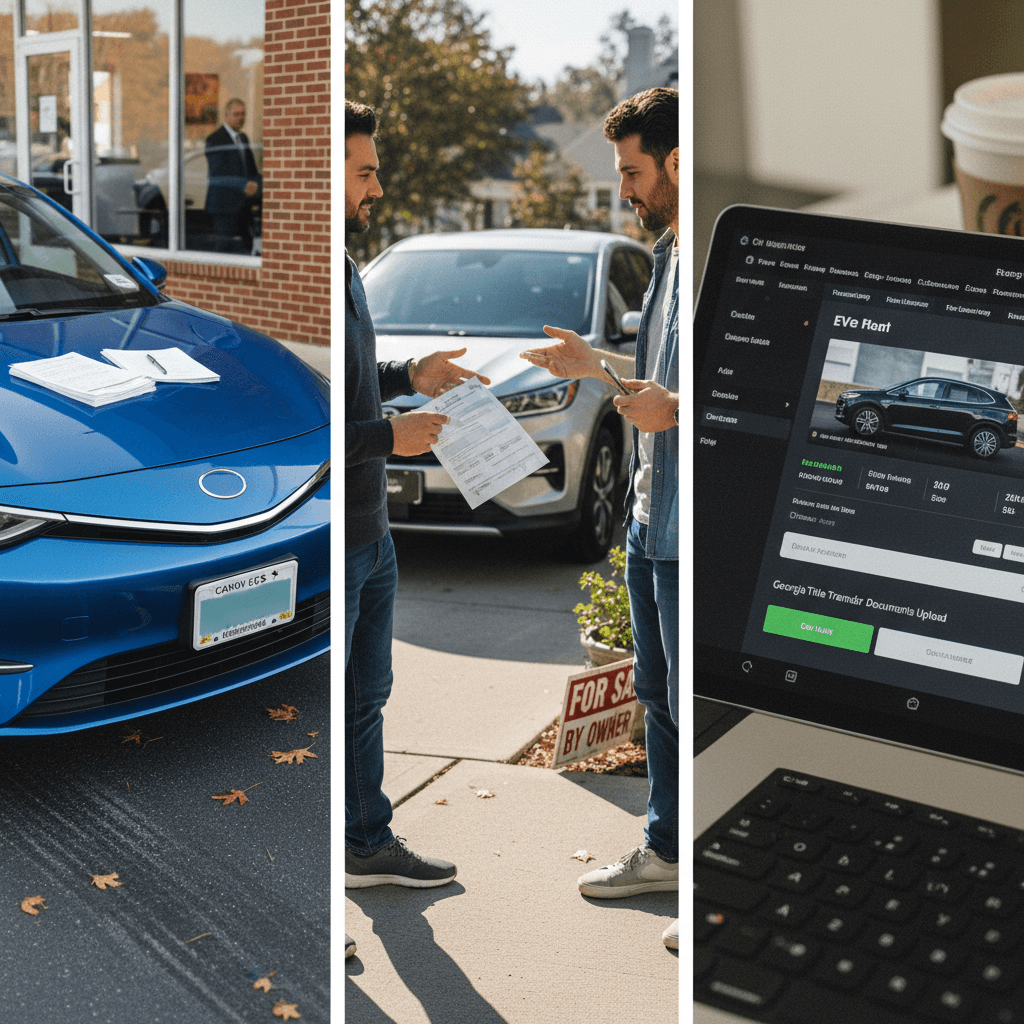
Throwing a used Nissan Leaf, Hyundai Ioniq 5, Tesla, or Chevy Bolt onto a generic classifieds site in Georgia is a little like selling a grand piano at a yard sale. You may get lucky, but the buyer pool is shallow, and few of them know what they’re looking at. EV shoppers care intensely about battery health, charging history, and range, details that most gas‑car buyers never think about.
Why EV‑focused marketplaces like Recharged work better for used EVs
You’re not just selling a car; you’re selling a battery, a charging profile, and a lifetime of software updates.
Verified battery health
Fair, data‑driven pricing
Nationwide EV buyers, local convenience
Ready to find your next EV?
Browse VehiclesSelling your used EV with Recharged
Georgia‑specific rules: Title, emissions, tax, and paperwork
No matter where you sell your car, Georgia expects the paperwork to be right. The state cares a lot less about who bought the car than about whether the title is properly transferred, the emissions rules are followed, and the taxes get paid. Mess this up and you can find yourself getting tickets for a car you no longer own.
Key Georgia requirements when you sell a car
These basics apply whether you sell privately, trade in, or use an online buyer.
| Requirement | What it means when you sell | Who handles it? |
|---|---|---|
| Title transfer | You complete the seller section on the back of the Georgia title with the buyer’s full legal name, date of sale, and odometer reading. | You (seller) and buyer; dealers/online buyers handle their side. |
| Bill of sale (Form T‑7) | Not a substitute for the title, but a smart backup document with VIN, sale price, and both parties’ info. | Strongly recommended for private sales; dealers generate their own paperwork. |
| Odometer disclosure | For 2011+ model years, federal rules require you to disclose mileage at transfer. | On the title or separate form; your buyer will need this for their title application. |
| Emissions test | Gas vehicles registered in the 13 metro Atlanta counties must have a current passing emissions test when sold. | For private sales, sellers usually pay for this; dealers bake it into recon costs. |
| Cancel registration | After selling privately, you cancel your Georgia registration so tickets and taxes don’t follow you. | You, with your county tag office or online if available. |
| Title Ad Valorem Tax (TAVT) | One‑time title tax based on vehicle value; usually paid when the buyer titles the car. | Buyer pays at the county tag office; dealers roll it into the deal. |
Always double‑check with Georgia DOR or your county tag office if your situation is unusual (heir vehicles, bonded titles, out‑of‑state buyers).
Never hand over a blank Georgia title
How to get top dollar for your used (or electric) car in Georgia
6 moves that make your Georgia car worth more
1. Fix cheap, obvious problems first
Burned‑out bulbs, filthy interiors, curb‑rashed wheels, and cracked windshield wipers all scream neglect. Spend a little at a car wash and parts store before you invite buyers, or inspectors, to judge the car.
2. Gather every scrap of maintenance history
Georgia buyers, especially in Atlanta’s competitive market, pay more when they can see oil changes, brake work, and tire rotations documented. Scan or photograph invoices and have them ready.
3. Run your own history report
Pull a Carfax or AutoCheck on your VIN before you list. If there’s an old minor accident or odometer correction, better to know and address it upfront than see a buyer walk away in your driveway.
4. Price against real comps, not wishful thinking
Use listings for similar year/mileage cars in your part of Georgia as a reference, not national averages. In‑demand SUVs near Atlanta, for example, may command more than the same car in rural areas.
5. For EVs, document charging and range
Take clear photos of your EV’s battery health screen and typical range at full charge. If you’re selling with Recharged, battery diagnostics in the Recharged Score Report do this heavy lifting for you.
6. Be honest in your description
Under‑describing damage or mechanical issues will only cost you later when a dealer, inspector, or savvy private buyer discovers them. Georgia buyers see a lot of cars; they can smell a story that doesn’t add up.
Step‑by‑step: How to sell a car in Georgia safely
Georgia’s legal process for selling a car is fairly straightforward once you know the beats. Whether you’re selling privately or to a business, the sequence is largely the same; only the other side of the table changes.
Your Georgia selling playbook
Private sale (gas or hybrid)
Prep the car: clean it, fix cheap items, gather maintenance and title documents.
Check emissions requirements if the buyer is in a metro Atlanta county; get a current test if needed.
List the car with clear photos, an honest description, and your preferred meeting locations.
Screen buyers via messages and phone; meet only in well‑lit public spots (many Georgia police stations offer “safe exchange” zones).
When you have a deal, complete the back of the Georgia title with buyer’s full legal name, date, sale price, and odometer reading; sign and have the buyer sign.
Write and sign a bill of sale; give the buyer title + bill of sale, keep copies and cancel your registration once the deal is done.
Selling an EV through Recharged
Request an offer or consignment evaluation from Recharged and share basic info about your EV, including VIN and photos.
Complete the Recharged Score battery‑health diagnostics so buyers can see verified pack condition and range expectations.
Work with a Recharged EV specialist to set a fair, market‑driven price based on battery health and Georgia market demand.
Let Recharged handle listing, buyer questions, financing options, and nationwide delivery logistics.
When the EV sells, complete the title transfer electronically or on paper as guided, and arrange pickup, without juggling strangers, test drives, or wire transfers yourself.
Protect yourself when accepting payment
FAQ: Selling a used car or EV in Georgia
Frequently asked questions about selling a car in Georgia
The best place to sell a used car in Georgia is the one that aligns with your priorities, and respects the realities of Georgia law and the local market. If you’re willing to do the legwork, a private sale can deliver the most money. If your sanity matters more than an extra few hundred dollars, a dealer or instant‑offer buyer will gladly trade convenience for margin. And if you’re selling an electric vehicle, consider stepping outside the usual playbook and working with an EV‑focused marketplace like Recharged, where battery health, fair pricing, and expert support are built into the process from the start.