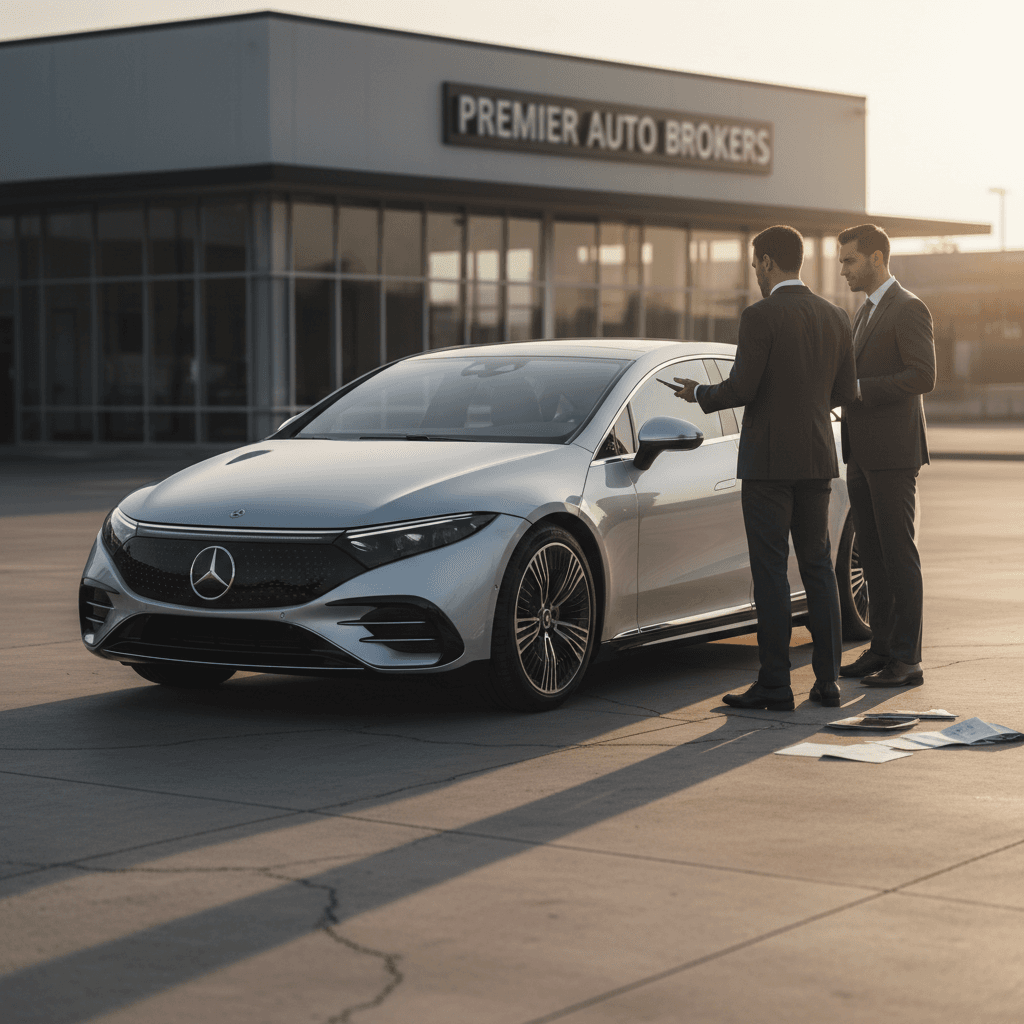
If you own a Mercedes EQE, you’ve probably noticed headlines about luxury EVs dropping in value faster than expected. That makes **where you sell your Mercedes EQE** in 2026 just as important as **when** you sell it. The right channel can mean thousands of dollars difference and a lot less hassle.
Quick take
Why where you sell your Mercedes EQE matters in 2026
The EQE sits in a tough corner of the market: it’s a **luxury sedan** and a **battery‑electric vehicle**. Both segments are under heavy price pressure. Several studies and real‑world listings show recent EQE sedans losing a large chunk of value in their first three to four years, especially if they were heavily discounted new or leased with aggressive incentives.
Mercedes EQE resale snapshot in 2026 (U.S.)
In this environment, some channels simply won’t pay much for an EQE because their buyers are nervous about EVs. Others specialize in electric cars and understand what your EQE is really worth. Your goal is to **put the car in front of buyers who actually want an EQE**, not just treat it like any other depreciating luxury sedan.
What really impacts Mercedes EQE resale value today
- Battery health and usable range. A clean battery report and realistic real‑world range will move the needle more than a panoramic roof or Burmester audio.
- Model year, trim and software. Newer EQE 350+ and 4MATIC models with updated software, DC fast‑charging behavior and driver‑assist features are easier to sell.
- Mileage and usage pattern. An EQE with 15,000–30,000 miles and regular charging history is more attractive than a low‑mile car that sat unused for long stretches.
- Market incentives and new‑car pricing. When Mercedes trims MSRP or offers big leases on new EQEs, used prices tend to adjust downward.
- Channel risk tolerance. Franchise dealers and some online buyers price EVs conservatively; EV‑specialist marketplaces and informed private buyers are often willing to pay more.
Don’t ignore your battery story
Main ways to sell a Mercedes EQE, compared
Where to sell a Mercedes EQE: pros and cons at a glance
How the main selling channels stack up for a depreciating luxury EV like the Mercedes EQE.
| Channel | Typical value for EQE | Speed | Effort level | Best for |
|---|---|---|---|---|
| Dealer trade‑in | Lowest to mid | Same day | Very low | Rolling equity into another car |
| Online car buyers (CarMax, Carvana, etc.) | Low to mid | 1–7 days | Low | Fast, mostly digital sale |
| Private‑party sale | Highest potential | 1–6+ weeks | High | Owners chasing every last dollar |
| Wholesale/auctions | Very low | Varies (dealer‑only) | N/A for retail sellers | Dealers unloading aging inventory |
| EV‑specialist marketplace (Recharged) | Mid to high | Days to a few weeks | Low to medium | Owners wanting strong price + EV‑savvy buyers |
Use this table as a starting point, then shop actual offers before you commit your EQE to any buyer.
Smart strategy
Option 1: Dealer trade-in or Mercedes store
Trading your EQE at a Mercedes‑Benz store or other franchise dealer is the **least painful way to exit** the car if you’re already buying something else. You hand them the keys, sign some papers, and your negative equity (if any) gets rolled into the next deal.
Dealer trade‑in for EQE: pros and cons
Fast and familiar, but often leaves money on the table for EVs.
Pros
- Convenient: One stop for sale and purchase, no separate buyer to deal with.
- Tax advantages in many states: Trade‑in can reduce the taxable amount on your next car.
- Good for underwater loans: Dealer can structure negative equity into the next contract.
Cons
- Often the lowest value: Many dealers are cautious with aging EVs and price them like any other fast‑depreciating luxury sedan.
- Limited EV expertise: Battery health and software may not be fully valued in the appraisal.
- Negotiation tangle: Trade‑in value, new‑car discount and financing can all get blended together.
Watch for this in the F&I office
Option 2: Online car buyers like CarMax and Carvana
Online and hybrid players like CarMax, Carvana and similar instant‑offer platforms have become a default option for many sellers. Surveys of retail customers regularly show these brands among the top destinations when people sell a car online, thanks to clear pricing and digital paperwork.
What they do well for EQE sellers
- Fast appraisal: You enter your VIN and condition, upload photos, and get a firm or near‑firm offer in minutes.
- Streamlined process: Many sales are completed in under a week, with pickup or drop‑off and digital signing.
- No haggling: The price is largely take‑it‑or‑leave‑it, which many sellers prefer.
Where they fall short on EQE pricing
- Conservative EV values: Their algorithms lean toward the wholesale market, which still heavily discounts some luxury EVs.
- Limited nuance: A clean battery, expensive options or recent software updates may not move the number much.
- One‑way door: Once you accept and sell, there’s no upside from future buyers who might have paid more.
How to use instant offers
Option 3: Private‑party sale (maximum price, maximum work)
Listing your Mercedes EQE yourself, through classifieds, social media, or enthusiast forums, can still produce the **highest raw sale price** in 2026. You’re cutting out dealer margins and wholesale spreads and tapping directly into buyers who understand the car.
If you sell your EQE privately, nail these basics
1. Price the car with reality, not emotion
Start with data from mainstream valuation guides and actual EQE listings near you. Luxury EVs often lose more than you expect; overpricing by 10–15% will just leave your ad sitting.
2. Lead with range and battery health
Serious buyers want proof: recent DC fast‑charge behavior, typical range at 80–90% charge, and any battery diagnostics you can share. This builds confidence fast.
3. Create a transparent listing
High‑quality photos, VIN, service history, software update details and any remaining warranty coverage should all be front and center.
4. Screen buyers and protect yourself
Use secure payment methods, meet in safe locations and consider completing the transaction at a bank or DMV office. Avoid buyers who won’t video‑chat or verify identity.
5. Be ready for “EV 101” questions
Many shoppers are new to EVs. Expect questions about charging, winter range and battery replacement, and decide in advance how much education you’re willing to provide.
Risk vs. reward
Option 4: Wholesale auctions and dealer-to-dealer channels
Most individual EQE owners will never sell directly through a wholesale auction, but it’s where many EQEs ultimately land once a dealer takes them in. Manheim, ADESA and other auction chains set a lot of the behind‑the‑scenes pricing that trickles down into retail offers.
In recent years, auction lanes have seen **steep adjustments on premium EVs** when demand softens or when new‑car incentives spike. That volatility is one reason some dealers bid low on EQEs, they don’t want to be stuck if the next auction run tells them the car is worth several thousand less than last month.
Why this matters to you
Option 5: EV‑specialist marketplaces like Recharged
A newer and increasingly important option is the **EV‑focused retailer or marketplace**. These platforms live and breathe electric vehicles, which changes how they value something like a Mercedes EQE compared with a traditional dealer group or generic online buyer.
Why an EV‑specialist marketplace can be the best place to sell a Mercedes EQE
Electric‑only platforms are built around battery health, range and EV shoppers, not just book values.
Battery‑driven pricing
Targeted EV shoppers
Digital, guided sale
With Recharged, you can get an **instant offer or choose consignment** if you’d rather let EV specialists market your EQE for a higher retail price. Every vehicle includes a Recharged Score Report, so buyers see verified battery health and fair‑market pricing up front, often translating into stronger values than you’d see from a non‑EV‑focused buyer.

Where Recharged fits in your search
Ready to find your next EV?
Browse VehiclesHow to get the best offer for your Mercedes EQE
5‑step playbook to maximize your EQE sale price
1. Gather your data first
Pull your registration, payoff amount (if you have a loan or lease), service records and any battery‑health reports or range logs you have. The more evidence you can show that the car was cared for, the easier it is to justify a stronger offer.
2. Clean, recondition and photograph smartly
Have the EQE professionally detailed if the numbers justify it, fix obvious cosmetic issues that are cheap to repair, and shoot photos in good daylight from multiple angles. Even if you sell to a dealer, good photos and condition notes can influence online appraisals.
3. Price check with the right benchmarks
Look at recent EQE listings on multiple sites, but also factor in <strong>recent EV price cuts and incentives</strong> on new Mercedes models. If new EQEs have gotten cheaper, used prices will feel that pressure too.
4. Collect at least three real offers
Request a dealer trade‑in quote, instant offers from one or two large online buyers, and an offer from an EV‑focused platform like Recharged. Use these as your comparison set, even if you ultimately decide to sell privately.
5. Look at net, not just gross
Compare **out‑the‑door proceeds**, not just headline numbers. Consider sales tax savings on trade‑ins, transport or inspection fees, marketplace commissions and how long your money will be tied up while you wait for a buyer.
Think in ranges, not single numbers
When is the best time to sell a Mercedes EQE
The Mercedes EQE doesn’t follow a perfect, predictable curve, but several patterns have emerged by 2026. The first 2–3 years tend to see the steepest drop, especially for models that were heavily incentivized new. After that, depreciation can level into a slower, more predictable slide, assuming the car ages well and software support remains strong.
- Before major new incentives hit. If Mercedes announces deep discounts or lease cash on new EQEs, used values feel it quickly. Selling ahead of those moves helps.
- Before warranty cliffs. Many buyers prefer at least some factory coverage remaining. If you’re approaching a big mileage or time milestone, it may pay to list a few months earlier.
- In spring and early summer. Historically, that’s when EV demand and test‑drive activity pick up in many parts of the U.S., especially for shoppers planning road‑trip season.
- Before mileage spikes. If you’re about to start a high‑mileage commute or road‑heavy job, selling now avoids dropping into a higher‑mileage bracket later.
Leased EQE? Mark your buyout date
FAQ: Selling a Mercedes EQE
Frequently asked questions about where to sell a Mercedes EQE
Bottom line: the best place to sell a Mercedes EQE
There’s no single answer that fits every owner, but a pattern is clear. If you want the **fastest exit**, a dealer trade‑in or instant‑offer site will get you there, usually at the cost of leaving money on the table. If you want **maximum dollars** and you’re willing to work for it, a private sale can win, if you price realistically and market the EQE’s battery story well.
For many Mercedes EQE owners in 2026, the best balance comes from an **EV‑specialist marketplace like Recharged**. You get expert guidance, transparent battery‑health reporting, financing and trade‑in support for buyers, and a national audience of EV shoppers who actually want a car like yours. Whatever path you choose, anchor your decision in real offers, not just estimates, and make sure your EQE’s true strengths, especially its battery, are front and center.