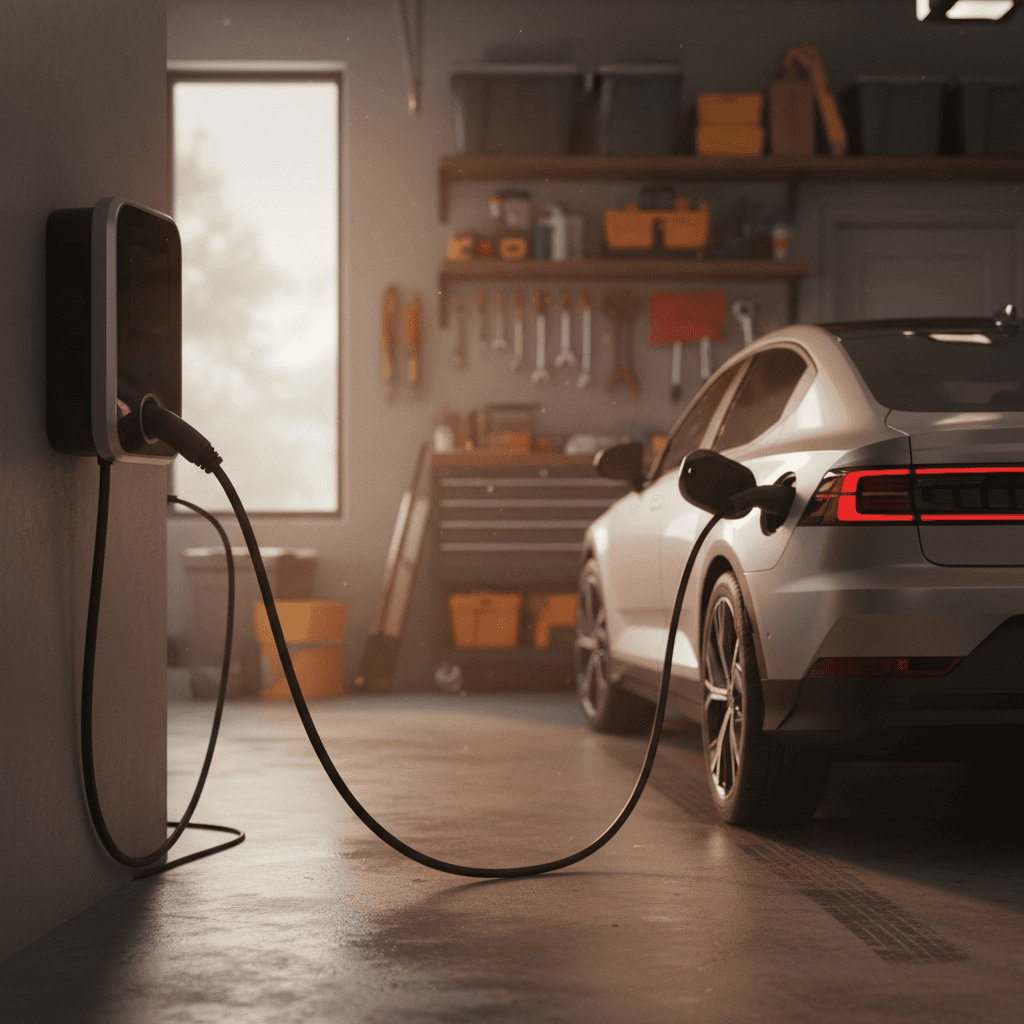
If you own an EV, or you’re about to buy a used one from a marketplace like Recharged, the single best upgrade you can make is a reliable home Level 2 charger. In 2025, public charging is growing quickly, but reliability and congestion are still mixed; home charging is where most real‑world convenience and low running costs come from. This guide breaks down the best home EV chargers in 2025, how they differ, and how to choose the right unit for your car, your home, and your budget.
Home charging is how most people actually fuel
Why home charging matters more than ever in 2025
Home charging and EV growth by the numbers
Public infrastructure is catching up, by early 2026 the U.S. had well over 300,000 public Level 2 and DC fast charging ports, but that still pales next to home charging growth. Reliability is also uneven, especially outside of Tesla’s Supercharger network. If you can charge at home, you insulate yourself from busy stations, broken hardware, and pricing games, and you can take advantage of cheaper off‑peak electricity rates.
Think like a homeowner, not a road‑tripper
How to choose the best home EV charger in 2025
1. Charging speed (amps and kW)
Home chargers are essentially smart switches. The important specs are amperage (A) and power (kW). A typical 40A Level 2 unit on a 240V circuit delivers up to ~9.6 kW, which can add roughly 25–35 miles of range per hour on many EVs. Going bigger (48A) can help if your car supports it and your panel has capacity; going smaller (32A) may be fine for light daily driving.
2. Plug type and connector (J1772 vs NACS)
In 2025 most non‑Tesla EVs still use the J1772 plug for AC charging, while Tesla and many future models use NACS. Thankfully, adapters are inexpensive, and many chargers now offer native NACS cables or interchangeable cable options. When in doubt, buy the plug that matches what your car uses today and plan on an adapter if you switch brands later.
Key decisions before you buy a home EV charger
Most drivers only need to get a few things right to be happy with their setup for years.
Right size for your panel
Match the charger’s max amps to what your electrical panel and wiring can safely handle. A 40A charger usually needs a 50A breaker; a 48A unit needs a 60A breaker. Oversizing the charger when your car or wiring can’t use the extra power is a waste of money.
Smart vs. simple
Wi‑Fi and app control let you schedule off‑peak charging, track energy use, and sometimes limit current. If you live where time‑of‑use rates matter, a smart charger can pay for itself. If your rates are flat and you just plug in overnight, a rugged "dumb" unit is fine.
Durability and warranty
Look for at least a 3‑year warranty, NEMA 4 or better enclosure for outdoor use, and a thick, flexible cable rated for cold weather if you live in a northern climate. A home charger lives a hard life on the wall, build quality matters more than flashy apps.
Don’t out‑spec your car
Best home EV chargers 2025: quick comparison
Top home EV chargers 2025 at a glance
These are widely available, well‑reviewed units that cover most U.S. home use cases in 2025.
| Charger | Max Amps / kW | Connector | Smart features | Approx. price | Best for |
|---|---|---|---|---|---|
| ChargePoint Home Flex | 50A / up to ~12 kW | J1772 (NACS cable coming) | Wi‑Fi app, scheduling, utility integrations | $649–$749 | Drivers who want app polish and utility rebates |
| Wallbox Pulsar Max | 48A / ~11.5 kW | J1772 or NACS options | Wi‑Fi/Bluetooth app, solar & load management | $649–$699 | Compact, feature‑rich home installs |
| Emporia Level 2 Smart | 48A / ~11.5 kW | J1772 | Wi‑Fi, detailed energy monitoring, solar‑aware | $399–$499 | Value buyers and solar homes |
| Grizzl‑E Smart Compact | 40–50A configurable | J1772 | Optional Wi‑Fi, basic scheduling | $399–$499 | Cold climates, outdoor durability |
| Tesla Universal Wall Connector | 48A / ~11.5 kW | NACS with built‑in J1772 adapter | Wi‑Fi, scheduled charging, access control | $595 | Homes with at least one Tesla or future NACS EV |
| Lectron or Autel budget units | 32–40A | J1772 (some NACS) | Basic smart features on select models | $299–$449 | Apartment garages, lighter daily driving |
Pricing is approximate U.S. street pricing as of early 2025 and can vary with promos and installation packages.
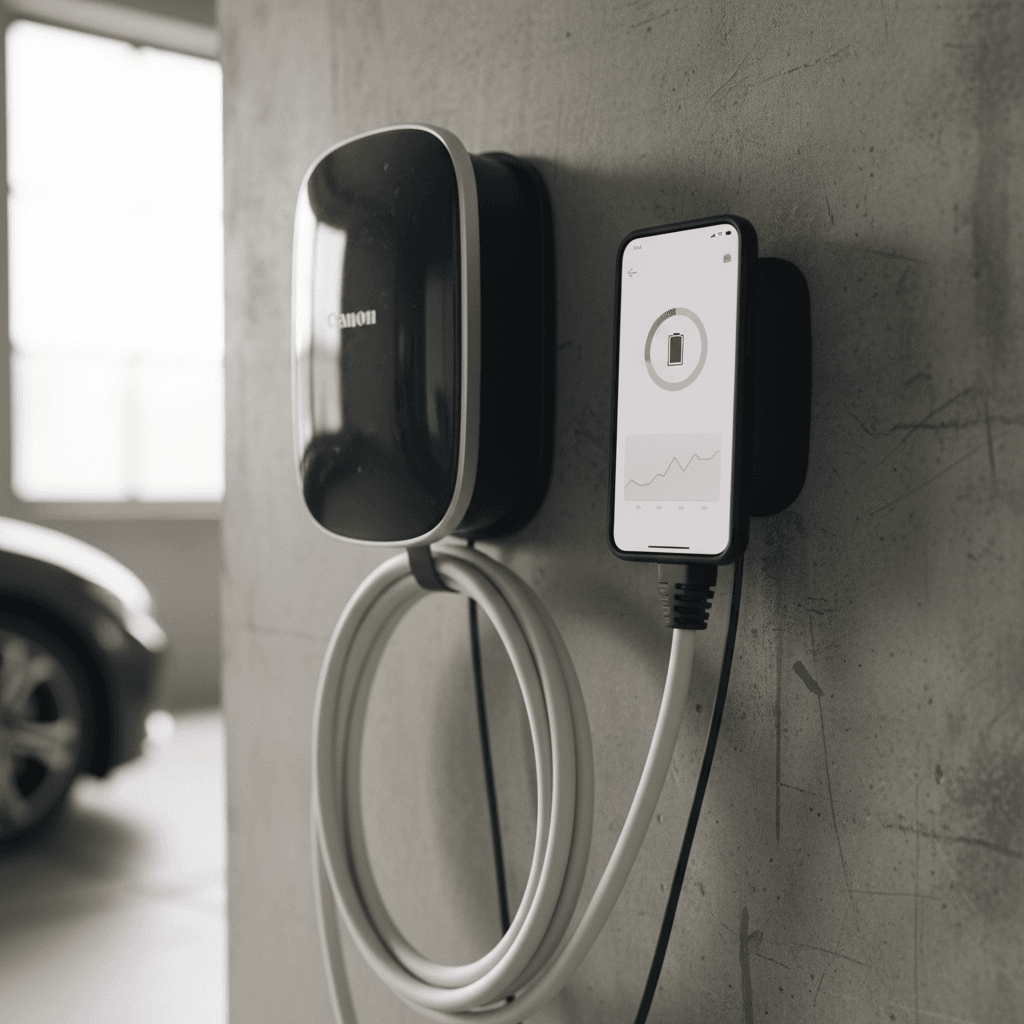
Best home EV chargers 2025: detailed reviews
ChargePoint Home Flex: best overall for most households
The ChargePoint Home Flex has been a default recommendation for years, and in 2025 it still makes a strong case. It can be hard‑wired or plugged into a NEMA 14‑50 outlet, supports up to 50A (user‑configurable), and integrates with many utility demand‑response programs. The app is polished, set‑and‑forget scheduling is easy, and its massive installed base means plenty of real‑world reliability data. The downside is price, you pay a premium over more bare‑bones competitors for software quality and brand reputation.
Why Home Flex still tops many lists
Wallbox Pulsar Max: compact and feature‑rich
The Wallbox Pulsar Max targets homeowners who want a discrete, modern‑looking charger with strong software. Its tiny footprint works well in tight garages, and the cable management is better than many chunky boxes. Wallbox’s app supports dynamic load management (limiting current if your home is near its panel limit), solar integration in some configurations, and over‑the‑air firmware updates. The Pulsar Max comes in J1772 or NACS variants, making it a good pick if you plan to keep a Tesla and a non‑Tesla EV side by side.
Good for growing EV households
Emporia Smart Level 2: best value for data nerds
The Emporia Level 2 Smart EV Charger consistently punches above its weight on price. For under $500 you get a 48A unit with Wi‑Fi, a surprisingly deep energy‑monitoring app, and tight integration with Emporia’s home energy monitors and solar solutions. It’s J1772‑only today, but that’s fine for most non‑Tesla owners, and Tesla drivers can use the standard adapter. The enclosure isn’t as slick as premium brands, but if you care more about granular kWh data per vehicle and smart home integration than curb appeal, Emporia is hard to beat.
Grizzl‑E Smart: best for harsh climates and simplicity
Built in Canada, the Grizzl‑E Smart is the opposite of a fragile, over‑designed gadget. It’s a simple metal box with a thick cable, NEMA 4 rating, and a reputation for surviving snow, ice, and rough handling. The "Smart" version adds Wi‑Fi and basic scheduling, but the core appeal is durability and configurable amperage (up to 40 or 50A depending on model) that can be set with DIP switches. If you’re mounting outdoors, in a carport, or at a vacation cabin, Grizzl‑E’s old‑school toughness is a real advantage.
Cold‑climate bonus
Tesla Universal Wall Connector: best for Tesla‑heavy households
For homes with at least one Tesla, or those planning for NACS‑based EVs, the Tesla Universal Wall Connector is one of the cleanest solutions in 2025. It uses a native NACS plug but includes a built‑in J1772 adapter that stays with the charger, so guests with non‑Tesla EVs can still plug in. Power tops out at 48A, and the hardware design is slim and understated. The app is more minimal than ChargePoint or Wallbox, but for most Tesla owners the big win is simplicity: one connector standard, a seamless experience in the Tesla app, and load‑sharing support if you install multiple units.
Mind the plug if you ever sell the house
Future‑proofing: NACS, Tesla compatibility, and bidirectional charging
The connector landscape is shifting quickly. By 2025, most major automakers selling EVs in North America have committed to NACS, Tesla’s plug standard, for new models launching in 2025–2026 and beyond. At the same time, millions of existing EVs still rely on J1772 for home AC charging. The good news is that AC home charging is relatively forgiving: adapters are cheap, and many chargers are now offered in both J1772 and NACS versions.
Practical plug strategy for 2025
- If your current EV uses J1772 and you expect to keep it 3–5 years, a J1772 charger is perfectly sensible.
- If your household already has a Tesla, or your next EV is likely to be NACS, consider a NACS charger plus a J1772 adapter.
- For mixed garages, dual‑connector solutions like Tesla’s Universal Wall Connector or chargers with swappable cables are ideal.
What about bidirectional (vehicle‑to‑home) charging?
Bidirectional home charging, using your EV to power your house, is real but still early. Only a minority of EVs sold in the U.S. today support it, and the required home hardware is expensive. Unless you have a specific, compatible vehicle and a clear need for backup power, it’s better to buy a solid conventional Level 2 unit today and revisit bidirectional options on your next EV.
Future‑proof with wiring, not just hardware
Installation, wiring, and what you really need at home
For many new EV owners, installation is more intimidating than picking a charger. The reality is simpler: you’re adding a dedicated 240V circuit, very similar to what a modern electric range or dryer uses. Costs vary with distance from your panel, local labor rates, and whether your panel has spare capacity.
Typical U.S. home Level 2 installation scenarios
Real‑world ballparks to help you budget, actual quotes will depend on your home.
Panel near garage
Best case: panel on garage wall, short wire run, existing capacity.
Often $300–$800 for a 40–50A circuit and outlet or hard‑wire, plus permit.
Longer run, some drywall
Panel in basement or opposite side of house, moderate wire run, some drywall work.
Commonly $800–$1,500 depending on complexity.
Panel upgrade needed
If your panel is full or undersized, upgrading to higher amperage service can add $1,500–$3,000+.
This is rare but worth checking before you assume a "cheap" install.
Safe home charger installation checklist
Confirm your EV’s max AC charge rate
Look up your car’s maximum AC charging power (kW) in the owner’s manual or manufacturer site. There’s no benefit to a 48A charger if your car tops out at 32A.
Review your electrical panel capacity
Check service size (e.g., 100A, 150A, 200A) and available breaker slots. Many utilities and electricians can do a quick assessment from panel photos before visiting.
Get at least two licensed electrician quotes
Share the exact charger model and desired location. Ask each electrician to price both a plug‑in (NEMA 14‑50) and hard‑wired option if your charger supports it.
Pull permits and pass inspection
Most jurisdictions require a permit and inspection for new 240V circuits. This protects you for insurance and future resale, don’t skip it.
Plan cable routing and mounting height
Think about where you park, how you’ll coil the cable, and trip hazards. A clean installation is safer and more pleasant to use every night.
Ask about load management options
If your panel is marginal, your electrician may be able to use load‑shedding devices or set the charger to a lower current rather than doing a full panel upgrade.
DIY is risky here
Using a home charger with a used EV
If you’re shopping for a used EV on Recharged or elsewhere, the right home charger can offset many of the usual worries about range and degradation. A healthy battery matters, but topping up at home while you sleep changes the math: even a used EV with less than original range can easily cover most commuting if you start every day near full.
Pairing charger speed with battery health
A Recharged Score Report or similar battery health check tells you how much usable capacity remains. With that number in hand, you can back into how much range you need to add overnight. In many cases, a 32–40A charger is plenty, even for an older pack, because you’re simply refilling whatever you used during the day.
Protecting an older pack
Home charging is also where you can be kindest to a used battery. Most smart chargers and EVs let you set a charge limit (say, 70–80%) for daily use and schedule charging to finish just before you leave. This avoids long periods at 100% and high pack temperatures, two key drivers of long‑term degradation.
Why Recharged and home charging pair well
Ready to find your next EV?
Browse VehiclesHome EV charger buying checklist
Step‑by‑step: choosing the best home EV charger in 2025
1. Confirm where you’ll park and plug in
Decide whether the charger will be indoors or outdoors, how far it is from the panel, and which side of the car the charge port is on. This drives cable length and enclosure rating (aim for NEMA 4 outdoors).
2. Match charger amperage to car and panel
Check your EV’s max AC kW and your panel capacity. For most U.S. homes, a 40A charger on a 50A breaker is a sweet spot. Only go 48–50A if your car and panel can use it.
3. Choose connector type (J1772 vs NACS)
If everyone in the house drives non‑Tesla EVs, J1772 is still a safe bet. If you own or expect to own a Tesla or NACS‑equipped EV, consider NACS plus adapters for older cars.
4. Decide how much “smart” you really need
If you have time‑of‑use rates, solar, or want detailed energy data, pick a smart charger like ChargePoint, Wallbox, or Emporia. If your power rates are simple and you just plug in every night, a rugged non‑networked unit like Grizzl‑E may be enough.
5. Shortlist 2–3 models that fit your use case
Compare warranty length, enclosure rating, cable flexibility, and app reviews, not just spec sheets. Our 2025 picks cover most scenarios: ChargePoint Home Flex, Wallbox Pulsar Max, Emporia, Grizzl‑E Smart, and Tesla Universal Wall Connector.
6. Get installation quotes before you click “buy”
A $400 charger with a $1,800 installation can be worse value than a $650 charger that qualifies for local rebates and a simple install. Talk to an electrician early; many can also recommend models they see hold up well.
7. Plan for resale and future EVs
Think about the next owner of your home and your next EV. Leaving a reputable, well‑installed Level 2 charger on the wall can be a selling point, especially as used EV adoption grows.
Frequently asked questions: best home EV charger 2025
Home EV charger FAQs for 2025
Bottom line: which home EV charger is best in 2025?
In 2025, the "best" home EV charger isn’t the one with the highest advertised kW, it’s the one that fits your car, your panel, and your routine. For most households, a 40–48A Level 2 unit from a reputable brand, professionally installed on a dedicated 240V circuit, will deliver all the charging speed you need and then some. ChargePoint Home Flex, Wallbox Pulsar Max, Emporia’s Level 2 Smart, Grizzl‑E Smart, and Tesla’s Universal Wall Connector each shine in different scenarios, from polished smart features to brutal‑weather durability.
If you’re pairing a home charger with a used EV, transparency and charging convenience matter even more. A Recharged vehicle with a clear Recharged Score Report, backed by a thoughtfully chosen home Level 2 charger, can be easier to live with than a brand‑new EV that depends entirely on public fast charging. Take the time to match your charger to your driving and your home, lean on EV‑savvy specialists when you need them, and you’ll only think about "fueling" your car for the few seconds it takes to plug in at night.