You’re not alone if the phrase “best gas and electric cars” makes your eyes glaze over. In 2025 you can buy regular hybrids, plug‑in hybrids, “extended‑range” hybrids, and full EVs, often on the same showroom floor. The trick isn’t memorizing acronyms; it’s matching the right powertrain to the way you actually live and drive.
What people really mean by “gas and electric”
How to Think About “Gas and Electric” Cars in 2025
Why gas–electric cars are having a moment
Battery prices are down, gas is still volatile, and automakers are hedging their bets. That’s why lineups like the Toyota RAV4, Lexus RX, Kia Niro, and Volvo XC90 now offer several flavors of electrification, from classic hybrids to plug‑in and full EV variants. For you, that’s good news: it’s easier than ever to find a car that sips fuel, shrugs off range anxiety, and doesn’t demand a 50‑amp service upgrade in your garage.
Start with your driveway, not the brochure
Gas–Electric Powertrains Explained in One Page
Hybrid (HEV)
Think of a hybrid as a super‑smart gas car. It can’t be plugged in. The electric motor and small battery help the gas engine, recapturing energy when you brake.
- Best for: Long commutes, high mileage drivers, low‑maintenance ownership.
- Upside: 45–57 mpg is normal now.
- Downside: You’ll still visit the gas station regularly.
Plug‑In Hybrid (PHEV)
A PHEV is a hybrid with a bigger battery you do plug in. It’ll run electric‑only for 20–50 miles, then behave like a regular hybrid.
- Best for: Home chargers, short daily drives, occasional road trips.
- Upside: Can feel like an EV during the week.
- Downside: More complex, usually pricier than HEVs.
Full EV (BEV)
No engine, no tailpipe, just a battery and motors. All your energy comes from plugging in.
- Best for: Drivers who can charge at home and want minimal running costs.
- Upside: Lowest fueling and maintenance cost, quiet and quick.
- Downside: Requires charging access and a bit of planning on road trips.
Don’t overbuy electric range
Best Gas and Electric Cars 2025: Top Hybrid Picks
Let’s start with the straightforward stuff: hybrids that simply use less gas. No plugging, no lifestyle change, just fewer stops at Chevron. These are the standouts in 2025 if you want maximum miles per gallon with minimum drama.
High‑MPG Hybrids to Put on Your Shortlist
All of these deliver around 47–57 mpg combined while driving like normal cars.
Toyota Prius (2025)
If fuel economy wore a crown, it would have a Prius logo on it. The latest Prius is no longer a rolling virtue signal; it’s genuinely handsome and quick enough.
- Why it’s great: Up to ~57 mpg combined, surprisingly fun steering.
- Best for: Solo commuters and couples who want maximum efficiency.
Hyundai Elantra Hybrid
Hyundai’s compact sedan plays the style card without sacrificing fuel economy, hovering in the low‑50s mpg combined.
- Why it’s great: Sleek design, generous tech, big‑car highway feel.
- Best for: Drivers who want hybrid mileage without Prius vibes.
Kia Niro Hybrid
Is it a wagon? A crossover? Yes. The Niro delivers compact‑SUV practicality with hybrid efficiency in the low‑50s mpg range.
- Why it’s great: Easy ingress/egress, useful cargo space, hybrid, PHEV, and EV versions.
- Best for: City families and dog owners who park in tight spaces.
Toyota Camry Hybrid (2025)
The once‑ordinary Camry is now hybrid‑only and can crack ~51 mpg combined in LE trim, wild numbers for a comfortable midsize sedan.
- Why it’s great: Huge range from a single tank, quiet and refined.
- Best for: Highway commuters and ride‑share drivers.
Honda Civic & Accord Hybrid
Honda’s Civic and Accord hybrids blend real‑world efficiency in the high‑40s with steering feel and chassis tuning other economy cars don’t bother with.
- Why they’re great: Grown‑up cabins, long‑legged road manners.
- Best for: Drivers who care as much about the way a car drives as what it costs to run.
Lexus UX 300h & ES 300h
If you want luxury with your frugality, Lexus has you covered. The UX 300h and ES 300h hover in the low‑40s mpg while feeling properly premium.
- Why they’re great: Plush cabins, reputation for reliability.
- Best for: Empty‑nesters and suburban commuters who like quiet.
When a simple hybrid is the right answer
Best Plug‑In Hybrid SUVs in 2025
Plug‑in hybrid SUVs are the automotive equivalent of having your cake and eating it. They’ll do school runs and office commutes on electricity, then behave like conventional hybrids when you blast to grandma’s three states away. Here are the standouts if you want an SUV that runs on both gas and electrons.
Top Plug‑In Hybrid SUVs for 2025
Approximate specs to help you compare gas–electric SUVs. Always check current EPA and manufacturer data before you buy.
| Model | Type | Approx. EV Range | Combined Power | Character |
|---|---|---|---|---|
| Mazda CX‑90 PHEV | 3‑row SUV | ~26 miles | 300+ hp | Upscale, fun‑to‑drive family hauler |
| Kia Niro Plug‑In Hybrid | Compact SUV | ~33 miles | ~180 hp | Budget‑friendly, very efficient |
| Hyundai Tucson Plug‑In Hybrid | Compact SUV | ~32 miles | 260+ hp | Comfortable, feature‑rich all‑rounder |
| Kia Sorento Plug‑In Hybrid | 3‑row SUV | ~31 miles | 260+ hp | Six‑passenger family shuttle |
| BMW X5 xDrive50e | Midsize luxury SUV | ~38 miles | 480+ hp | Serious speed with real EV range |
| Jeep Wrangler 4xe | Off‑road SUV | ~22 miles | 375 hp | Trails on the weekend, EV commuting all week |
Electric range figures assume you actually plug in most nights.
The secret to plug‑in hybrids
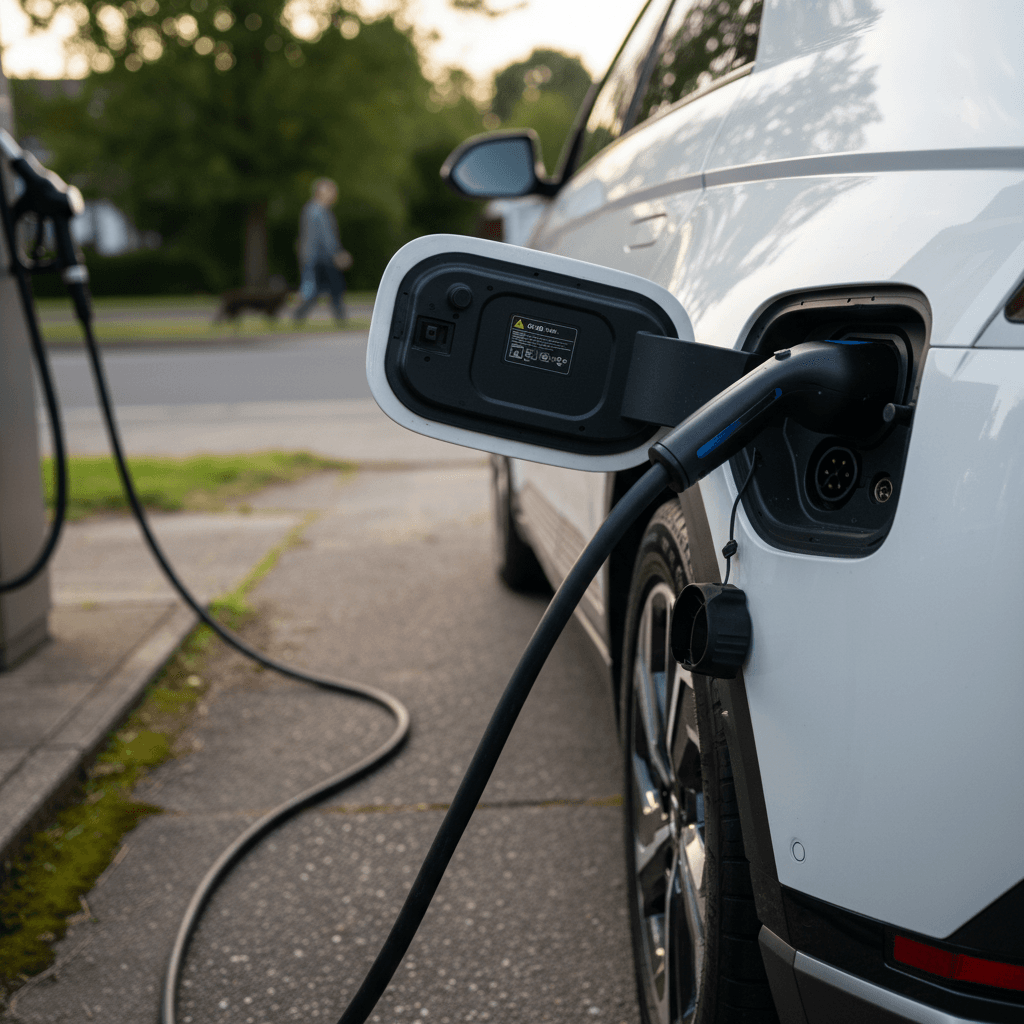
Hybrid vs Plug‑In Hybrid vs Full EV: What’s Actually Best?
When a hybrid wins
- You can’t reliably charge at home or work.
- You drive big yearly mileage, often on the highway.
- You want familiar ownership: oil changes, quick gas fill‑ups, nationwide service.
- Your budget is tight and you don’t want to pay for battery capacity you’ll rarely use.
Here, a Prius, Camry Hybrid, Civic or Niro Hybrid is the rational choice.
When a used EV wins
- You have off‑street parking and can plug in most nights.
- Your daily driving is under ~60–80 miles.
- You’d love to skip gas stations and most maintenance.
- You’re happy to plan ahead for a few long trips a year.
In this world, a well‑vetted used EV with 250–300 miles of range can cost less to own than a new hybrid.
The worst of both worlds
Cost of Ownership: Gas Hybrid vs Used EV
Sticker price is only the opening bid. Over 5–8 years, fuel, maintenance, and depreciation are where the real money moves. This is where used EVs start to look dangerous, in a good way, next to brand‑new hybrids.
Where the Money Actually Goes
A simplified comparison for a typical U.S. driver (~12,000 miles/year).
New hybrid sedan (e.g., 2025 Camry Hybrid)
- Fuel: Great mileage, but you’re still buying gas, oil changes, and filters.
- Maintenance: Less than an old‑school gas car, more than an EV.
- Depreciation: Fairly gentle; hybrids hold value well.
- Upshot: Predictable, low‑stress ownership if you log lots of miles and lack home charging.
Used EV from Recharged
- Fuel: Electricity usually beats gas on cost per mile by a wide margin.
- Maintenance: No oil changes, fewer moving parts, regenerative braking.
- Battery risk: Mitigated by a Recharged Score battery‑health report on every car.
- Upshot: If you can plug in at home, total cost of ownership can undercut a brand‑new hybrid.
How Recharged derisks used EVs
Which Gas–Electric Car Fits Your Life?
Quick Match: Your Life vs the Right Powertrain
The Apartment Urbanite
Street parking or shared garage, no guaranteed outlet.
Trips are mostly short: groceries, gym, work inside the city.
You hate hunting for a DC fast charger on a weeknight.
<strong>Best bet:</strong> High‑MPG hybrid hatch or compact SUV (Prius, Niro Hybrid, Civic Hybrid).
The Suburban Family
Driveway or garage with a 120V outlet, upgrade to 240V later.
School runs, Costco, soccer tournaments, plus a few road trips.
You care about safety tech and space more than 0–60 mph.
<strong>Best bet:</strong> Hybrid or plug‑in hybrid SUV (Tucson PHEV, Sorento PHEV, CX‑90 PHEV) or a 250+ mile used EV plus a cheap gas road‑trip car.
The Highway Warrior
20,000+ miles per year, mostly highway.
You live in the right lane with adaptive cruise control on.
Time is money; unscheduled charging stops are not cute.
<strong>Best bet:</strong> Comfortable hybrid sedan with big range (Camry, Accord, ES 300h).
The EV‑Curious Early Adopter
You can charge at home and like new tech.
You’re already using apps to plan flights, why not road trips?
You’re okay learning about charge rates, kilowatts, and networks.
<strong>Best bet:</strong> A quality used EV from Recharged with a verified battery and 250–300 miles of range.
Buying a Used EV Instead of a New Hybrid
Here’s the uncomfortable truth for new‑car showrooms: in 2025, a lot of buyers hunting for the “best gas and electric car” would actually be better served by a two‑ or three‑year‑old EV with a healthy battery. You get new‑car tech, lower running costs, and you let the first owner eat the spicy part of depreciation.
Used EV vs New Hybrid: Smart‑Shopper Checklist
1. Confirm how you’ll charge
Can you run a 240V outlet to your driveway or garage, or at least use a standard 120V outlet overnight? Daily charging is what unlocks EV savings.
2. Look past odometer anxiety
EV batteries care more about time, temperature, and charging habits than raw miles. A 40,000‑mile car can be healthier than a 20,000‑mile one that fast‑charged constantly.
3. Demand battery‑health data
Never buy blind. A <strong>Recharged Score battery report</strong> shows estimated remaining capacity and how the pack has been treated, data you’ll never see on a typical hybrid.
4. Compare real monthly costs
Don’t just compare stickers. Factor in fuel, insurance, maintenance, and financing. A slightly higher payment on a used EV can still win once you subtract gas and oil changes.
5. Test‑drive your charging routine
Before you commit, practice plugging in at home or a nearby public charger for a week with your current car. If it feels easy, you’re a great EV candidate.
Checklist: Before You Pick Gas, Hybrid, Plug‑In or EV
One Page That Clarifies Your Choice
Log your driving for two weeks
Use your phone or your car’s trip computer to track daily miles and how often you exceed 150 miles in a day. That data is more helpful than any ad copy.
Audit your parking situation
Write down where your car actually sleeps 80% of nights. Driveway, garage, on‑street, shared garage with outlets? This dictates how much charging is realistic.
Check local electricity and gas prices
A cheap‑electricity, expensive‑gas region tilts the math strongly toward EVs and plug‑ins. The opposite makes ultra‑efficient hybrids more compelling.
Consider your tolerance for planning
If you live by the calendar already, planning charging stops is no big deal. If you hate thinking ahead, a hybrid may fit your temperament.
Run the numbers with a pro
Talk to an EV‑savvy advisor. At Recharged, EV specialists can walk you through total cost of ownership and help you decide if a used EV, plug‑in, or hybrid actually pencils out for you.
FAQ: Best Gas and Electric Cars
Frequently Asked Questions About Gas–Electric Cars
The Bottom Line: Skip the Guesswork
The phrase “best gas and electric car” hides a more useful question: how much engine do you still need, and how much electricity can you realistically use? For heavy‑mileage drivers without home charging, a simple hybrid is still a rational, boringly excellent choice. For anyone with a driveway outlet and a bit of planning tolerance, plug‑in hybrids and especially used EVs start to look like cheat codes for your monthly budget.
You don’t have to untangle all of this alone. Recharged exists to make EV ownership simple and transparent, from verified battery health via the Recharged Score to expert guidance, financing, trade‑ins, and nationwide delivery. If you’re torn between a gas–electric hybrid, a plug‑in SUV, and a used EV, talk to an EV specialist who can run the numbers for your exact situation and help you land on the car that actually fits your life, not just the marketing tagline.