If you search for the best EV SUV in 2025, you’ll get a dozen different answers, often from people who care more about clicks than whether the vehicle actually fits your life. The reality is that “best” depends on how far you drive, how many people you haul, where you can charge, and whether you’re shopping new or used.
Quick Take
What “Best EV SUV” Really Means in 2025
Automakers and influencers love to crown a single winner, but in 2025 there’s no one-size-fits-all best electric SUV. The right answer depends on a few core dimensions:
- Range & efficiency: How many real-world miles you get per charge, not just the marketing number.
- Space & versatility: Seating for 2, 5, or 7? Easy car-seat access? Usable cargo with the third row up?
- Charging speed & network: How quickly you can add miles and how easy it is to find reliable fast chargers on your routes.
- Price & incentives: Purchase price, EV tax credits, state/local incentives, and financing terms.
- Ownership experience: Software quality, driver-assistance, dealership or direct-sales experience, and long-term reliability.
- Used-market value: How much depreciation you avoid, or inherit, by buying used instead of new.
How to Read This Guide
Our Editor Picks: Best EV SUVs of 2025
Why Electric SUVs Dominate the 2025 EV Market
Based on recent comparison tests, third-party awards, and where the market is heading, here’s a pragmatic short list of the best EV SUVs for different buyers in the U.S. for the 2025 model year and beyond:
Best EV SUVs by Buyer Type
Use this as your short list, then fine-tune based on charging and budget.
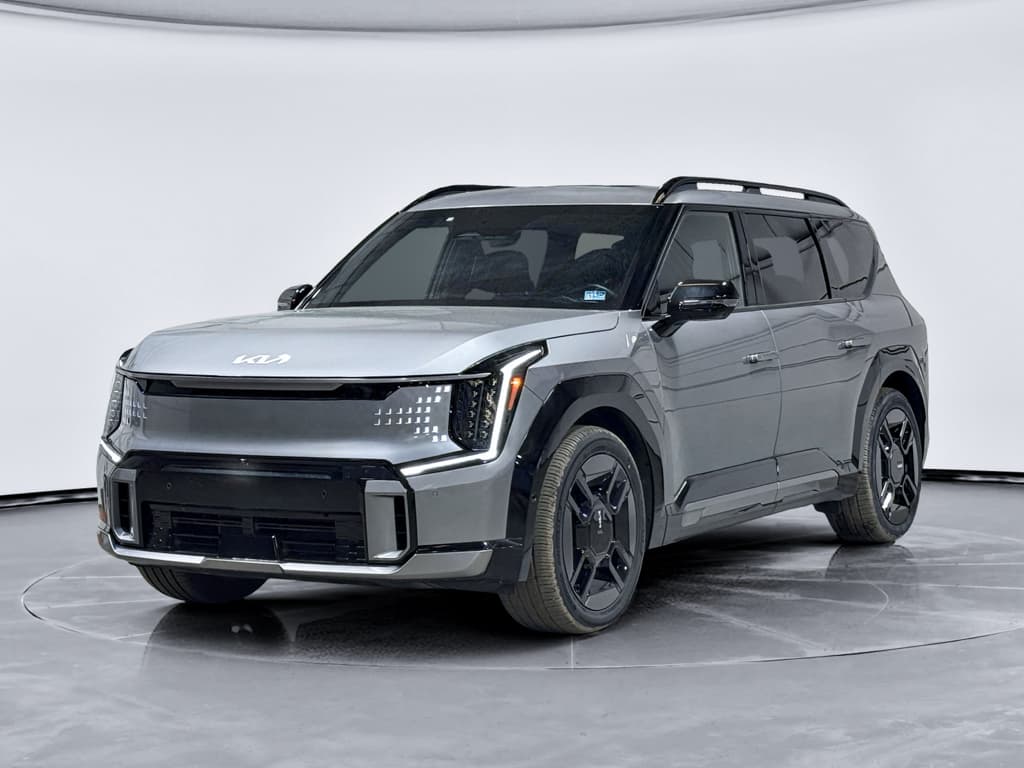
Best Overall Family EV SUV: Kia EV9
The Kia EV9 is the first mainstream 3-row electric SUV that actually feels ready for American families: genuine 3-row space, 230–304 miles of range depending on trim, and DC fast charging that can add serious miles in a coffee stop. It’s not cheap, but it’s hugely versatile.
Best for Range & Efficiency: Tesla Model Y
The Tesla Model Y still combines strong range, brisk performance, and class-leading efficiency. Recent updates improved cabin quality, and the Supercharger network, plus industry-wide adoption of NACS, keeps road-trip friction low.
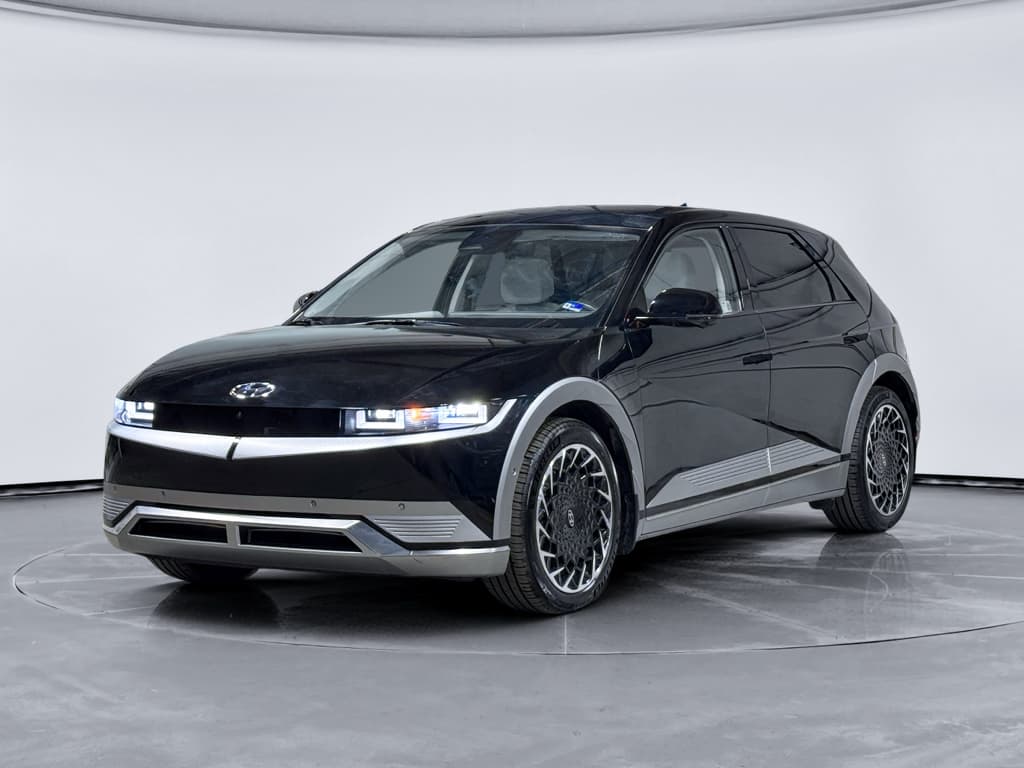
Best Value & Comfort: Hyundai Ioniq 5
The Hyundai Ioniq 5 keeps winning comparison tests for good reason: spacious cabin, fast 800V charging, and a price that undercuts many rivals. Its boxy shape hides a surprisingly roomy interior that works well for families of four.
Best Adventure & Luxury: Rivian R1S
The Rivian R1S blends off-road capability, 3-row seating, and up to around 410 miles of range in a package that feels more like an adventure gadget than a family wagon. You pay for it, but there’s nothing else quite like it.
Best Compact Premium: Volvo EX30
The Volvo EX30 is a small SUV with a premium feel and ~261 miles of range, priced aggressively for a luxury-branded EV. It’s ideal if you prioritize quality and design over sheer size.
Best Budget-Friendly Options (New & Used)
New compact EV SUVs like the Volkswagen ID.4 or Subaru Solterra can be compelling with incentives. On the used side, early Model Y, Mustang Mach-E, and ID.4 models often deliver the best bang-per-mile, if you verify battery health.
Remember Regional Availability
Head-to-Head: Compare the Top EV SUVs
You’ll see lots of lists, but what shoppers actually need is a clear view of trade-offs. Here’s a simplified comparison of mainstream EV SUVs that Americans are cross-shopping most in late 2025.
Quick Comparison: Leading EV SUVs (2025 Model Year)
Approximate specs for popular trims; always confirm exact numbers for the specific model and year you’re considering.
| Model | Seats | Max EPA Range (mi) | Fast Charging (10–80%) | Starting Price (approx.) | Notable Strength |
|---|---|---|---|---|---|
| Kia EV9 | 6–7 | ~230–304 | ≈25–30 min on DC fast charger | $56k+ | True 3-row family SUV with solid range |
| Tesla Model Y | 5 (optional small 3rd row) | Up to mid-300s | ≈25–30 min on Supercharger | Mid-$40k+ | Efficiency, software, and charging network |
| Hyundai Ioniq 5 | 5 | Up to ~318 | ≈18–20 min on 800V DC fast charger | Low-to-mid $40k | Comfort, value, ultra-fast charging |
| Ford Mustang Mach-E | 5 | Up to ~320 | ≈25–30 min | Low-to-mid $40k | Fun to drive, strong performance trims |
| Volkswagen ID.4 | 5 | Up to ~291 | ≈30–35 min | Low $40k | Comfortable, approachable, good value |
| Rivian R1S | 7 | Up to ~410 | ≈30–40 min (pack-dependent) | High $70k+ | Adventure-ready, high range, luxury feel |
Key specs that matter for real-world EV SUV ownership.
About These Numbers
Pick the Best EV SUV for Your Life, Not the Spec Sheet
Daily Commuter & Occasional Road Trips
If you mostly drive under 60 miles a day with a few road trips a year, you don’t need to chase the longest-range SUV on the market.
- Best fits: Hyundai Ioniq 5, Volkswagen ID.4, Ford Mustang Mach-E, Volvo EX30.
- Why: All deliver comfortable range, fast charging, and more approachable pricing than bigger three-row SUVs.
- Charging: Home Level 2 is ideal, with public fast charging as a safety net.
Large Families & Crew-Haulers
If you’re moving five to seven people regularly, prioritize space and access over 0–60 times.
- Best fits: Kia EV9, Rivian R1S, some Model Y 3-row configurations if your third-row passengers are small.
- Why: Third-row packaging matters more than spec-sheet range when every school run is full.
- Charging: Bigger packs mean more energy per stop, but also more time to refill if the charger is slow.
Adventure, Towing & Off-Roading
If you tow or leave pavement regularly, range ratings become more theoretical and hardware matters.
- Best fits: Rivian R1S, selected trims of Mustang Mach-E, Model Y, and eventually off-road-oriented variants of other SUVs.
- Why: Ground clearance, suspension, drive modes, and tow ratings matter as much as kilowatt-hours.
- Pro tip: Expect 30–50% range loss when towing or driving at high speeds in cold weather.
City Dwellers & Apartment Parking
If home charging is complicated, lean toward vehicles with excellent fast-charging support and compact footprints.
- Best fits: Hyundai Ioniq 5, Volvo EX30, Tesla Model Y, VW ID.4.
- Why: Easier to park, flexible cargo space, and better access to large fast-charging networks.
- Charging strategy: Treat fast chargers like weekly fuel stops and plan them around groceries, gyms, or kids’ activities.
Key Insight
Should You Buy a New or Used EV SUV?
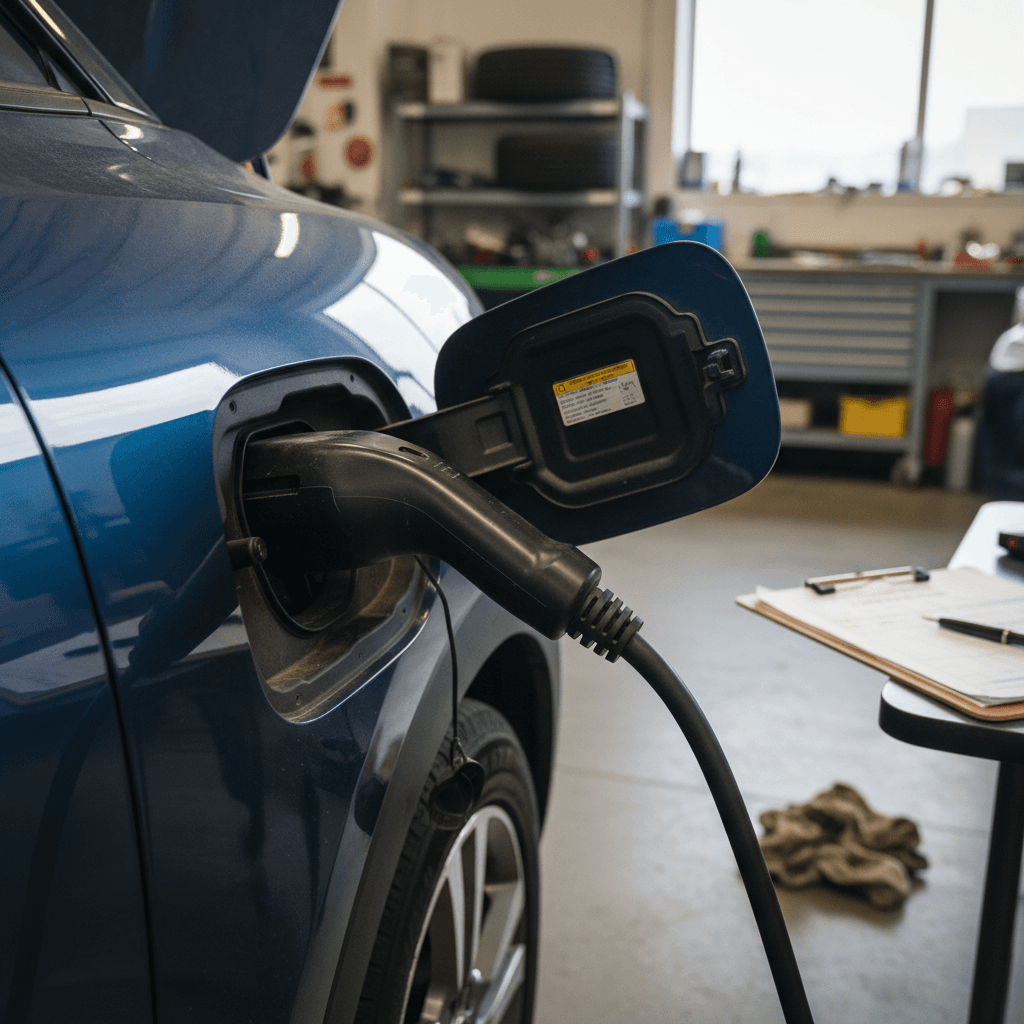
For many buyers, the smartest move in 2025 isn’t chasing the latest trim level, it’s letting the first owner eat the depreciation. EV SUVs tend to drop quickly in the first few years, which creates real opportunity if you buy selectively.
New vs. Used EV SUV: Pros and Cons
There’s no universally right answer, only what fits your budget and risk tolerance.
Buying New
- Pros: Full warranty, latest range and charging tech, fresh battery, and access to the newest safety and infotainment features.
- Cons: Highest sticker price, steeper first-year depreciation, and sometimes dealer markups or limited availability.
Buying Used
- Pros: Lower purchase price, slower future depreciation, and access to higher-end trims for the same monthly payment.
- Cons: Battery health can vary, earlier software versions may be less refined, and some early fast-charging hardware is already dated.
Where Recharged Fits In
Battery Health, Range, and Charging: What Actually Matters
The battery pack is the single most expensive component in an EV SUV, and its health defines how long the vehicle will feel "like new." But battery degradation doesn’t work like a phone: most modern packs lose some capacity early on, then stabilize.
- Healthy degradation curves: Many modern EVs lose roughly 5–10% of capacity in the first few years, then slow down. That early drop is normal.
- DC fast charging vs. home charging: Regularly fast-charging at high power and frequently running to 0% or 100% can accelerate wear. Consistent Level 2 home charging is easier on the pack.
- Thermal management: Vehicles with liquid-cooled battery packs and smart preconditioning tend to age better than those with minimal temperature control.
- Software & buffers: Automakers often reserve part of the battery as a hidden buffer. Over-the-air updates can adjust usable capacity and even published range figures over time.
Don’t Buy Blind on Battery Health
Financing, Incentives, and Total Cost of Ownership
Headline prices get the clicks, but monthly cost and long-term expenses are what actually hit your bank account. EV SUVs can look expensive up front yet end up cheaper to own than comparable gas SUVs once you factor in fuel and maintenance.
- Incentives: Federal and state credits can reduce the effective cost of many new EV SUVs, and in some cases used ones, depending on your income and where you live.
- Financing: EVs often qualify for competitive rates, especially when lenders understand their higher resale value and lower running costs.
- Fuel savings: Going from 18–22 mpg in a gas SUV to an efficient EV can save hundreds of dollars a year, even with today’s electricity prices.
- Maintenance: No oil changes, fewer moving parts, and regenerative braking generally reduce routine maintenance, though tires can wear faster on heavier EV SUVs.
- Insurance & repairs: Insurance can be higher, and out-of-warranty collision or electronics repairs may be more expensive, another reason to compare total cost, not just MSRP.
Use Total Cost, Not Sticker Shock
EV SUV Buying Checklist
9-Step Checklist for Choosing the Best EV SUV for You
1. Define your real range needs
Track a few weeks of driving (your phone or car may already do this). If you rarely exceed 150–200 miles in a day, you don’t need the very longest-range EV SUV, just a solid buffer for weather and detours.
2. Map your charging reality
Do you have (or can you install) a 240V outlet at home? How many fast chargers are near your regular routes? Your answers heavily influence which brands and battery sizes make sense.
3. Choose your size class
Decide whether you truly need a 3-row SUV or if a 2-row compact/midsize will do. Bigger packs and bodies cost more and can be harder to park.
4. Shortlist 2–3 models
Based on your needs and budget, identify a small set of candidates, say, Kia EV9 vs. Model Y vs. Ioniq 5, rather than shopping the entire market at once.
5. Compare real trims, not base specs
Look at the specific battery, motor, and wheel combination you’d actually buy. Base trims often have smaller packs and fewer features than the mid-trim you’d be happy living with.
6. Test-drive for comfort and usability
Sit in every row, install a child seat if relevant, test visibility, and play with the infotainment. A brilliant EV ruined by a frustrating interface doesn’t age well.
7. Evaluate charging experience
If possible, fast-charge each candidate at least once or talk to owners about real-world experience. How does the car locate chargers, route you, and precondition the battery?
8. Decide new vs. used strategically
If buying used, insist on battery health data and check remaining warranty coverage. This is where a curated EV retailer like Recharged can save you from expensive surprises.
9. Run the numbers
Compare total monthly cost, including estimated energy, not just sticker prices. A slightly more expensive EV SUV that’s cheaper to run can be the smarter buy.
FAQ: Best EV SUV Questions Answered
Frequently Asked Questions About the Best EV SUVs
Bottom Line: How to Choose Your Best EV SUV
The "best EV SUV" in 2025 isn’t the one with the wildest acceleration figure or the biggest marketing budget; it’s the one that cleanly fits your range needs, family size, charging reality, and budget. For many households that means a practical two-row like the Hyundai Ioniq 5 or Tesla Model Y. For bigger families or adventurers, the Kia EV9 and Rivian R1S finally bring true SUV practicality into the electric age.
If you’re shopping new, treat range and charging like tools, not trophies, and don’t underestimate the impact of software and ergonomics on everyday life. If you’re shopping used, make battery health your north star and use specialized resources, like the Recharged Score Report, EV-focused financing, and expert guidance, to stack the odds in your favor. Get those fundamentals right, and the best EV SUV for you becomes much easier to spot on a spec sheet or a test drive.