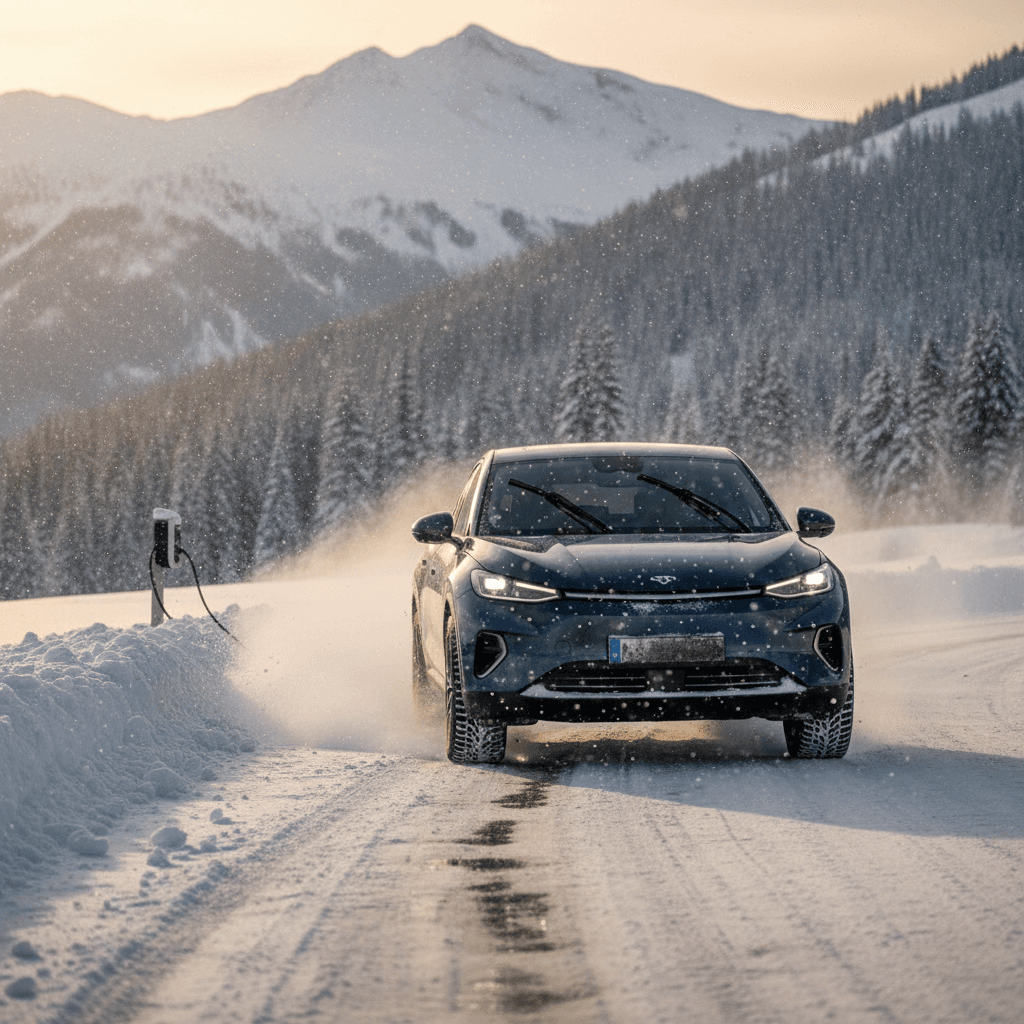
If you live where snowplows have names and the wind cuts sideways off the lake, the phrase “best electric cars for cold weather” isn’t academic. It’s survival. Winter punishes EVs: range drops, charging slows, traction gets dicey. But some electric cars handle January in Duluth or Buffalo with the same nonchalance they bring to a mild April commute.
Cold-weather headline
Why cold weather is tough on EVs
1. Batteries hate the cold
Lithium‑ion cells are like athletes: they perform best warm. In cold temps, internal resistance rises, chemistry slows, and you get less usable energy from the same pack. That’s why you see the range gauge sink on a bitter morning, even before you drive.
2. You’re heating a whole cabin with electricity
Gas cars get “free” cabin heat from engine waste. EVs must burn battery power to stay cozy. Old‑school resistive heaters are basically giant toaster coils; newer heat pumps are far more efficient and are a key reason some EVs shine in winter while others just cope.
Cold also slows fast charging. A chilled battery can’t accept power quickly, so winter road trips live or die on good thermal management and smart preconditioning, warming the pack before you charge or drive.
What actually makes an EV good in winter
Key traits of a strong cold‑weather EV
Look for these features before you fall for the spec sheet.
Smart battery thermal management
Active liquid cooling/heating and automatic preconditioning (often tied to navigation or departure times) keep the pack in its sweet spot so you lose less range and charge faster in the cold.
Efficient cabin heating
A heat pump cuts winter energy use versus a simple resistive heater. Not every EV has one, and on some models it’s optional, check the window sticker or spec sheet, especially on older model years.
All‑wheel drive & tuning
AWD with smart traction control helps you get moving on slick surfaces. But tuning matters: some EVs meter torque with surgeon‑like finesse, others just light the tires. Scandinavian brands tend to take snow seriously.
Reasonable ground clearance
You don’t need a rock crawler, but a crossover‑style EV with good clearance rides above the slush and crusted snow that can beach a low sedan.
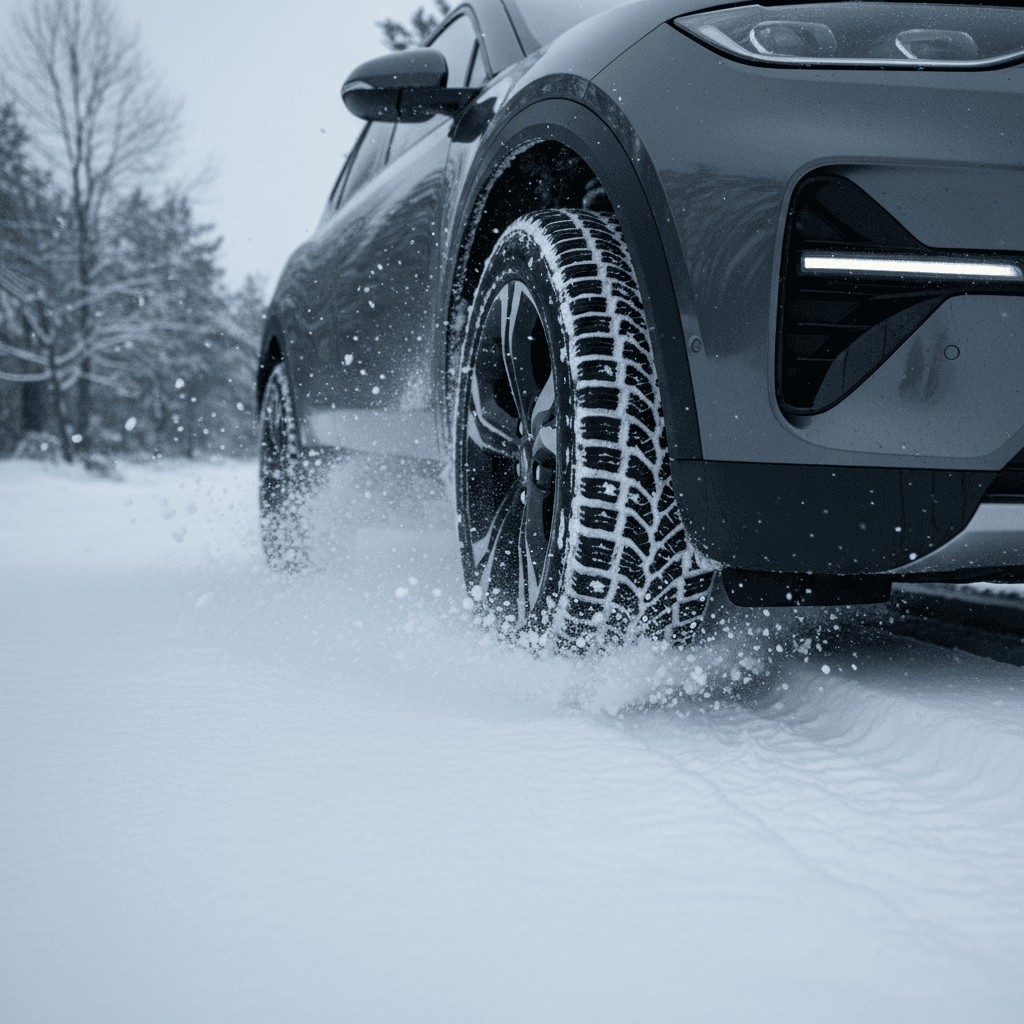
Good winter tires
No EV can cheat physics. Dedicated winter tires do more for snow and ice confidence than any drive mode or traction wizardry. Budget for a second wheel/tire set if you’re in serious winter country.
Honest winter efficiency
Independent winter tests consistently show some models losing far less range than others. Polestar, Volvo, Tesla Model Y, Hyundai Ioniq 5, and Kia EV6 often land at or near the top in cold‑weather range and efficiency tests.
Used EV shopping tip
Best electric cars for cold weather: quick shortlist
Winter‑strong EVs that consistently test well
Best electric cars for cold weather (2025–2026)
Real‑world winter performance depends on conditions and driving style, but these models stand out in cold‑weather testing and owner reports.
| Model | Drivetrain | Key winter strengths | Good option used? |
|---|---|---|---|
| Volvo EX30 Twin Motor | AWD | Fast battery heating, strong traction tuning, modest winter range loss | Coming soon as used |
| Tesla Model Y Long Range | AWD | Excellent winter efficiency, quick preheating, strong DC fast‑charge network | Yes, plenty on used market |
| Hyundai Ioniq 5 (AWD) | AWD | Efficient heat pump, 800V fast charging, comfortable in snow | Yes, 2022+ models |
| Kia EV6 (AWD) | AWD | Good winter fast‑charge speeds, Snow mode, composed chassis | Yes, 2022+ models |
| Polestar 2 Dual Motor | AWD | Scandinavian winter tuning, stable on ice/snow | Limited but growing |
| Volkswagen ID.4 AWD | AWD | Balanced winter manners, decent ground clearance | Yes, especially 2021–2023 |
| Subaru Solterra / Toyota bZ4X (AWD) | AWD | Subaru‑style traction logic, off‑pavement confidence | Limited, check regional availability |
| Hyundai Kona Electric (new gen) | FWD | Excellent efficiency, compact size helps in snow, available heat pump | Yes, especially in cold‑weather packages |
| Tesla Model 3 Long Range | AWD | Strong efficiency, quick pack pre‑warm, low‑slung but composed | Yes, abundant inventory |
| Polestar 3 (upcoming in US) | AWD | Large‑pack winter range, very small cold‑weather range loss in early tests | Future used buy |
Models shown are widely available or coming soon in North America, with trims suited to winter climates.
Standout winter EVs, explained
Volvo EX30: Small, ruthless winter tool
Volvo’s EX30 is a subcompact SUV with a Scandinavian accent and a ruthless approach to winter. Independent winter rankings in 2025 consistently put the EX30 Twin Motor near the top for cold‑weather composure: quick battery warm‑up, AWD that doesn’t thrash for grip, and insulation that keeps the cabin toasty without demolishing range.
Reality check on availability
Tesla Model Y Long Range: Range is the best winter feature
The Tesla Model Y is the Subaru Outback of EV crossovers: you see them everywhere for a reason. In cold‑weather testing, Model Y Long Range AWD regularly sits near the top for actual winter range. Its heat pump and aggressive battery preconditioning keep losses in check, and the tallish ride height and quick‑acting traction control make it a solid snow‑day family car.
Supercharger advantage
Hyundai Ioniq 5 & Kia EV6: 800‑volt winter road‑trippers
Hyundai’s Ioniq 5 and Kia’s EV6 ride on an 800‑volt architecture that can take big charging hits when the battery is warm. In winter tests they don’t always lead the pack on efficiency, but they make up ground at the plug: you can arrive at a DC fast charger in the teens (°F), preconditioned, and still see legitimately quick charge curves. Their available heat pumps are efficient, and Snow modes tame throttle response on slick departures.
Polestar 2 & Polestar 3: Quietly consistent performers
Polestar has become a quiet overachiever in the cold. Norwegian and Canadian winter range tests have shown single‑digit to low‑teens percentage losses versus rated range for some Polestar models when many rivals are giving up 20–30%. That doesn’t make them magical, physics still applies, but it does suggest careful work on pack heating, HVAC efficiency, and traction tuning.
Cold-weather range: how much you really lose
Plan around the winter penalty
Recent winter range tests from Canada, Norway, and Europe show a wide spread. Some standouts like Polestar 3 and a handful of compact crossovers have posted single‑digit percentage losses versus rated range in freezing conditions, while others, including popular sedans and SUVs, have shown 30–40% drops on the same route. Lab ratings don’t account for things like a 10°F headwind, studded tires, or a ski box on the roof.
- Highway driving is harsher than city driving in winter, air resistance rises and you rarely recover energy with regen in stop‑and‑go.
- Short trips are brutal, warming a frozen pack and cabin for a five‑mile drive is the efficiency equivalent of lighting a $20 on fire.
- Parking outside overnight without preconditioning exaggerates the loss; a garage, even unheated, helps more than you’d think.
- Heat‑pump cars generally do better than resistive‑heater cars on long winter drives.
How to choose a great used winter EV
If you’re shopping the used market, the trick is to separate genuinely winter‑savvy EVs from cars that just happen to have heated seats. Here’s how to do that without standing in a frozen lot squinting at tires.
Used EV winter checklist
Confirm heat pump and cold‑weather package
On many models, Hyundai, Kia, Volkswagen, even some Teslas, a heat pump or “cold‑weather” package was optional in early years. Verify it’s present; it can mean noticeably better winter efficiency and faster defogging.
Prioritize AWD or traction‑smart FWD
AWD isn’t mandatory, but it’s a confidence multiplier. If you’re in a hilly or rural area, an <strong>AWD crossover</strong> with good winter tires beats a rear‑drive performance EV every day of the week from November to March.
Check ground clearance and approach angles
Urban buyers can live with a low sedan. If your driveway plow guy is “when I get there,” you want a bit more belly height so the car doesn’t snow‑plow on the untracked stuff.
Ask for a battery health report
Cold exaggerates weak batteries. A used EV with significant degradation will feel especially range‑starved in winter. Recharged’s <strong>Score Report</strong> includes verified battery health so you know how much usable capacity you’re actually buying.
Look for preconditioning options
Best case, the car lets you schedule departure times, warm the cabin and pack from shore power, and pre‑heat before fast charging. That’s free winter range compared with hopping in cold and driving off.
Inspect (or budget) for winter tires
If the car doesn’t come with a separate winter wheel/tire set, assume you’ll buy one. Figure $800–$1,500 depending on size and brand; it’s the cheapest way to make any EV into a winter car.
Where Recharged fits in
Ready to find your next EV?
Browse VehiclesWinter EV driving tips that matter more than the badge
Before you leave
- Precondition on the plug. Warm the cabin and battery while still connected. You’ll start with a full pack and better regen.
- Use seat and wheel heaters first. They sip power compared with blasting cabin heat.
- Knock snow off the aero bits. Packed snow in wheel wells and underbody panels adds drag and can affect handling.
- Plan extra stops. On a 10°F day, treat your 300‑mile EV like a 190–220‑mile car.
On the road
- Dial back acceleration. EV torque is hilarious until it’s pointed at a patch of black ice.
- Try a dedicated Snow or Eco mode. Softer throttle and more conservative regen can make the car calmer on slick surfaces.
- Watch regen on ice. Strong regenerative braking can unsettle the car on a downhill sheet of glaze. Many EVs let you step it down in winter.
- Keep the pack above ~20%. Batteries don’t like being both cold and nearly empty; leave yourself margin for weather or detours.
Don’t skip the basics
FAQ: best electric cars for cold weather
Frequently asked questions about winter EVs
Bottom line: the best EVs for cold weather
The best electric cars for cold weather aren’t the ones with the loudest marketing or the biggest battery numbers. They’re the quietly over‑engineered ones: heat pumps instead of space heaters, smart battery preconditioning, traction logic tuned by people who know what a February commute feels like in the dark. Names like Volvo EX30, Tesla Model Y, Hyundai Ioniq 5, Kia EV6, Polestar 2 and 3, and Subaru Solterra keep surfacing in winter tests for a reason.
If you’re shopping used, focus less on the badge and more on the winter recipe: AWD or confident FWD, a heat pump, honest real‑world range, and verifiable battery health. That’s where Recharged leans in, pairing transparent battery diagnostics, fair market pricing, financing, trade‑in options, and nationwide delivery with EV‑specialist guidance. Get those fundamentals right, bolt on a set of proper winter tires, and your EV will feel less like a compromise in January and more like a quiet, warm revenge on the internal‑combustion past.