If you’re under about 5'5", choosing the best electric car for short drivers in 2026 isn’t just about range and price. It’s about whether you can actually see out of the car, reach the pedals without hugging the airbag, and drive for an hour without your back or shoulders aching. The good news: several 2026 EVs, and many used models, are especially friendly to shorter drivers if you know what to look for.
Quick takeaway
Why short drivers need a different EV checklist
Most EV reviews are written from the perspective of an average‑to‑tall driver, someone around 5'9"–6'0". If you’re 5'4" or below, the usual advice about "sporty seating" and "low, coupe‑like rooflines" can be exactly what doesn’t work for you. You’re more likely to battle thick roof pillars, dashboards that sit too high, and pedals that feel just out of reach unless you’re sitting uncomfortably close to the steering wheel.
Common pain points for short EV drivers
If these sound familiar, you’re not alone
Poor visibility
Awkward reach
Seat discomfort
Because EV batteries are mounted in the floor, many electric cars already ride a bit higher than comparable gas sedans. That’s a plus for visibility, but it doesn’t solve everything: seat track travel, steering column reach, and pedal placement still vary a lot between models. That’s why "best EV" lists that ignore driver size are only half‑useful for shorter drivers.
Fit matters: Key ergonomic features to prioritize
Before we get into specific models, it helps to know which features make an EV genuinely short‑driver friendly. Think of this as your shopping checklist, especially helpful if you’re browsing used EVs online and can’t sit in the car yet.
Short‑driver EV feature checklist
1. Wide seat height adjustment range
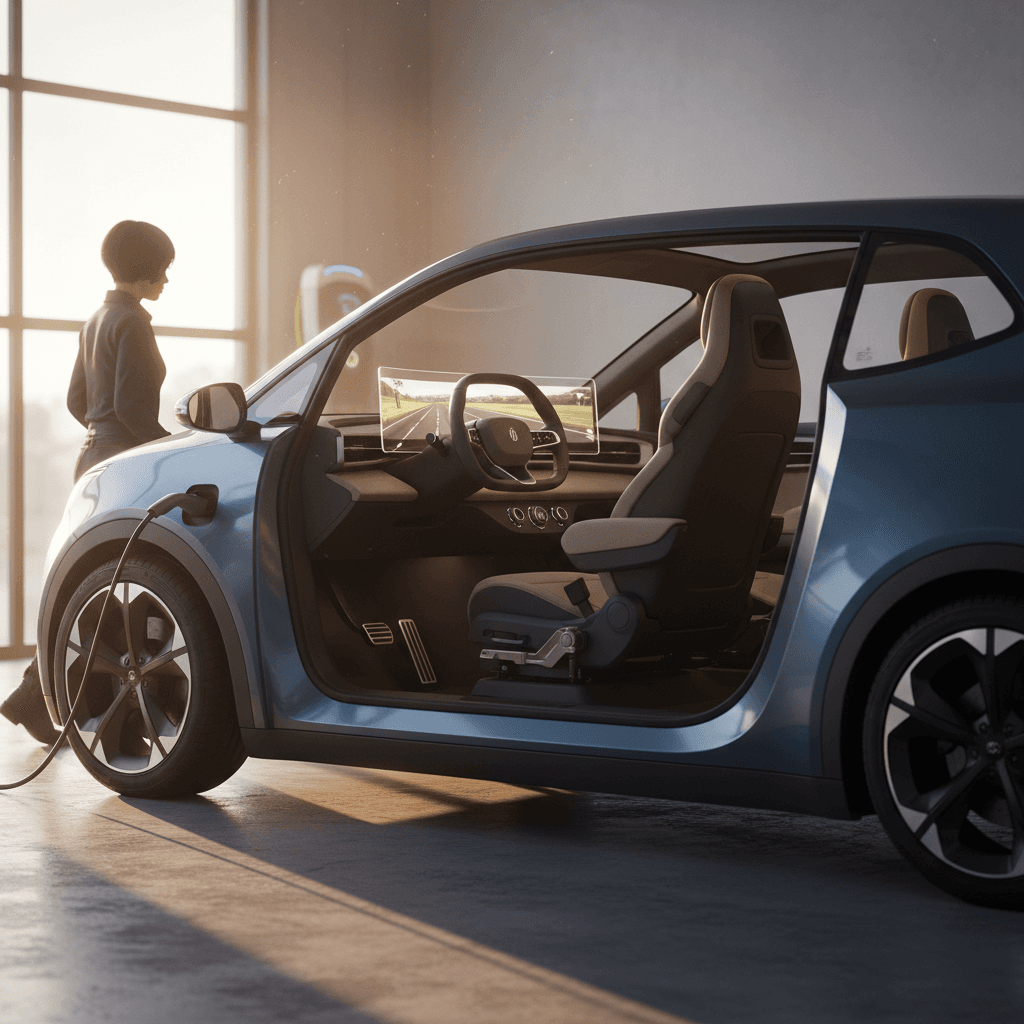
You want a driver’s seat that can rise <strong>high enough</strong> that you can clearly see over the dash and hood while still maintaining a comfortable bend in your knees. Many compact EV SUVs and crossovers offer more vertical adjustment than low sedans.
2. Tilt-and-telescoping steering wheel
A steering column that both tilts and telescopes lets you move the wheel <strong>toward you</strong> while keeping a safe distance from the airbag. This is critical if you need the seat fairly close to reach the pedals.
3. Short, low dashboard and thin pillars
Look for EVs with a relatively low cowl (the top of the dashboard) and large windows. Thin A‑pillars, generous glass area, and upright seating all help you see traffic, curbs, and pedestrians sooner.
4. Easy seatback and cushion angle adjustment
Power seats with fine adjustment, or at least well‑designed manual levers, make it easier to dial in lumbar support and thigh support so you’re not leaning forward or slouching to see over the wheel.
5. Reachable controls and touchscreen
In some EVs, the big center screen or climate controls sit just a bit too far away for shorter drivers. During a test drive, make sure you can reach key controls without leaning out of your seat or lifting your shoulder from the backrest.
6. Low, predictable step‑in height
Too tall and you’ll be climbing; too low and you’ll be dropping into a bucket. Many small electric crossovers hit a sweet spot where you can <strong>slide sideways</strong> into the seat rather than jump up or down.
Pro tip: Scan the spec sheet
Best electric cars for short drivers in 2026: Top picks
Below are EVs that tend to work well for shorter drivers based on seat height, visibility, and control reach. Availability will vary by region and many of these are also strong used EV buys, an area where Recharged specializes.
Short‑driver friendly EVs for 2026 (new & late‑model)
Quick comparison of EVs that tend to work well for shorter drivers. Always confirm exact features and seating in the specific trim and model year you’re considering.
| Model | Body style | Why it suits short drivers | Notes |
|---|---|---|---|
| Volvo EX30 | Subcompact SUV | Upright, high seating position with big windows in a small footprint; good visibility for city driving. | Cabin is minimalist; try the center‑screen‑only layout to be sure you’re comfortable. |
| Hyundai Kona Electric | Subcompact SUV | Manually height‑adjustable driver’s seat and relatively tall, upright seating help shorter drivers see well. | Some drivers find armrest and steering reach tricky; a careful test drive is key. |
| Volkswagen ID.4 | Compact SUV | Higher seating and large glass area with a relaxed driving position; many trims offer power driver’s seat with height and lumbar adjustment. | Touch‑sensitive controls aren’t for everyone, make sure you can easily use them without stretching. |
| Chevrolet Equinox EV | Compact SUV | Low step‑in, simple controls, and a relatively high seating position make it easy to get comfortable if you’re shorter. | Rollout is still ramping up; inventory may be limited depending on where you live. |
| Tesla Model Y | Compact SUV | Elevated seating compared with Model 3, large windshield, and extensive power seat and wheel adjustment help a wide range of driver sizes fit. | All‑screen interface means most controls live on the central display; verify you can reach and see everything clearly. |
| Nissan Leaf (2nd gen) | Compact hatchback | Historically good outward visibility, relatively high seating, and a short hood make it easy to place on the road. | Older design and modest range, but an excellent value on the used EV market. |
Use this table as a starting list, then verify seating and visibility during your own test drive.
Watch trim‑level differences
Used EVs that work well for short drivers
If you’re shopping used, which is where EV values can get especially compelling, there are a few standout models that shorter drivers often like, provided you pick the right configuration.
Short‑driver friendly used EV picks
Good visibility and seat adjustment without new‑car pricing
Nissan Leaf (2018–2024)
Volkswagen ID.4 (early build years)
Hyundai Kona Electric (2019+)
When you’re browsing used listings, it’s hard to evaluate seating and visibility from photos alone. This is one reason Recharged pairs each vehicle with a Recharged Score Report, including battery health details and transparent equipment lists, and connects you with EV specialists who can talk through whether a particular model and trim are likely to work for your height.
How to test‑drive an EV if you’re short
A quick spin around the block isn’t enough to know if an EV will fit you for years. Use this short‑driver‑specific routine during your test drive, whether at a dealer, a used‑car lot, or a Recharged Experience Center visit.
Short‑driver test‑drive checklist
1. Start with a neutral seat setup
Lower the seat slightly, slide it back, and reset the steering wheel closer to the dash. Then work forward: adjust the <strong>seat distance</strong> so you can fully press the brake with a comfortable bend in your knee.
2. Raise the seat for visibility, then re‑set the wheel
Raise the seat until you can clearly see over the dash and hood and out the side windows. Then pull the steering wheel <strong>toward you</strong> until your elbows are slightly bent with your shoulders against the backrest.
3. Do the "traffic light" check
Pull up to a real intersection and stop. Can you see the traffic light without ducking under the windshield frame? If you have to crane your neck or lean forward, the dash and roofline may be too high for comfort.
4. Check mirror coverage
Adjust side mirrors and the rearview mirror until you minimize blind spots. Make sure you can see along both sides of the vehicle without twisting your torso, especially important in EVs with thick rear pillars.
5. Practice common maneuvers
Try parallel parking, tight U‑turns, and backing into a space. Notice whether you can judge the car’s corners using just your seating position and windows, not only the cameras.
6. Sit for at least 20 minutes
Stay in the seat with your usual posture for at least 20 minutes, ideally on a mix of streets and highway. Discomfort that shows up after 10–15 minutes on a test drive will be unbearable on daily commutes.
How Recharged can help
Ready to find your next EV?
Browse VehiclesSafety considerations for short EV drivers
Comfort is important, but safety is non‑negotiable. Shorter drivers sometimes compensate for hard‑to‑reach pedals or poor visibility by moving dangerously close to the steering wheel. In a modern EV with powerful airbags and seatbelt pretensioners, that’s a problem.
Maintain a safe airbag distance
Ideally, you want at least 10 inches (about the length of your forearm) between your chest and the center of the steering wheel. If you can only reach the pedals by moving closer than that, the pedals or seat travel simply don’t suit your height.
In some EVs, raising the seat slightly lets you slide it back a notch while still reaching the pedals comfortably, improving both visibility and airbag clearance.
Mind shoulder belts and head restraints
On very short drivers, the shoulder belt can sit uncomfortably across the neck if the B‑pillar is high. Look for height‑adjustable seatbelts and test whether you can lower the anchor point.
Also check that the head restraint adjusts low enough that the top is roughly level with the top of your head, not pushing it forward. Some tall, fixed headrests in EVs are more friendly to taller than shorter torsos.
Never add pedal extenders without expert advice
EV buying roadmap for short drivers
To pull this all together, here’s a simple roadmap you can follow from research to purchase, whether you’re looking at new 2026 EVs or late‑model used examples.
Step‑by‑step path to an EV that fits you
Online research phase
Make a shortlist of EVs known for upright seating and good visibility (EX30, Kona Electric, ID.4, Model Y, Leaf, Equinox EV).
Filter out trims without a height‑adjustable driver’s seat or tilt‑and‑telescoping steering wheel.
If you’re shopping used, review battery health, range, and charging speed alongside ergonomics, Recharged’s <strong>Score Report</strong> packages these into one view.
In‑person test‑drive phase
Schedule back‑to‑back test drives of at least two or three contenders so seating differences are obvious.
Use the <strong>test‑drive checklist</strong> above; don’t be shy about taking 20–30 minutes in each vehicle.
Bring another short driver (partner, teen, or parent) if possible and have them try the passenger and driving positions too.
Decision & purchase phase
Rule out any EV where you can’t achieve both: clear visibility and at least a forearm’s distance from the airbag.
Factor in your real daily driving needs (commute length, home charging) so you’re not overpaying for range you won’t use.
If you’re buying through Recharged, ask your specialist to walk through comparable options by <strong>fit</strong>, not just price and range, before you commit.
FAQ: Best electric car for short drivers 2026
Frequently asked questions about EVs for short drivers
Bottom line: Best EVs for short drivers in 2026
If you’re a short driver, the best electric car for you in 2026 is the one that lets you see clearly, sit comfortably, and stay safely back from the airbag, before you even start thinking about range or 0–60 times. Compact and subcompact electric SUVs like the Volvo EX30, Hyundai Kona Electric, Volkswagen ID.4, Tesla Model Y, Chevrolet Equinox EV, and proven used choices like the Nissan Leaf give you a strong starting pool.
From there, your job is to be picky: insist on a height‑adjustable driver’s seat, a tilt‑and‑telescoping steering wheel, and a test‑drive routine that focuses on visibility and reach, not just driving feel. If you’re buying used, a partner like Recharged can help you narrow the field, verify battery health, and even arrange nationwide delivery so you end up with an EV that fits your body as well as your budget and lifestyle.