If you’re considering a Hyundai Kona Electric, depreciation should be part of your math. EV prices have been on a roller coaster, and the Kona Electric is no exception. The good news: its depreciation rate looks steep on paper, but that can make it an excellent value as a used EV, especially when you can verify battery health and ownership costs up front.
Key takeaway
Hyundai Kona Electric depreciation at a glance
Hyundai Kona Electric: quick depreciation snapshot
Across multiple data sources looking at resale and ownership costs, the Hyundai Kona Electric depreciation rate clusters around 55–60% value loss over five years. In other words, a Kona EV that sold new for about $38,000–$42,000 often trades hands around the low‑ to mid‑$20,000s five years later, sometimes less depending on incentives and mileage.
How to use this guide
How fast does a Hyundai Kona Electric depreciate?
Let’s translate percentages into something closer to what you’d see in the real world. Exact numbers vary by year and trim, but here’s a realistic pattern for recent U.S.‑market Kona Electrics:
Typical Hyundai Kona Electric depreciation curve (recent U.S. models)
Illustrative values based on recent MSRP ranges and observed asking prices for 2020–2023 Kona Electrics.
| Ownership age | Approx. value retained | Example price if new was $40,000 | What this means for owners |
|---|---|---|---|
| 1 year | ≈75–80% | $30,000–$32,000 | Most of the big rebate and first‑year hit is already baked in. |
| 3 years | ≈55–60% | $22,000–$24,000 | Sweet spot for many used‑EV buyers, steep early depreciation is behind you. |
| 5 years | ≈40–45% | $16,000–$18,000 | You’re into budget‑friendly territory if the battery checks out. |
| 7+ years | ≈30–35% | $12,000–$14,000 | Pricing is driven heavily by battery health and local demand. |
Use this as a directional guide; always check current market data for your specific model year and trim.
Several national analyses of 5‑year EV depreciation place the Kona Electric around 58% value loss, slightly better than the EV average but still worse than many hybrids, trucks, and popular gas crossovers. That’s not a Kona‑specific flaw so much as a reflection of how quickly EV technology and pricing have shifted since 2019.
Don’t over‑weight the sticker price
3‑year vs 5‑year Kona Electric depreciation
Three years into ownership is usually when the Kona Electric’s depreciation curve starts to flatten. The steepest drop happens in the **first 3 years**, especially if the vehicle was purchased before aggressive EV discounting became common.
Around year 3
- Expect roughly 40–45% depreciation from original MSRP for typical mileage.
- The vehicle is usually still well within the 10‑year/100,000‑mile battery warranty window.
- Many 3‑year‑old Kona Electrics show solid remaining range and limited degradation.
Around year 5
- Total loss commonly reaches 55–60%, with used prices dropping into the mid‑ to high‑teens for earlier model years.
- Battery warranty runway is shorter, so buyers scrutinize health more closely.
- Competing newer EVs offer more range and faster charging, putting downward pressure on prices.
Why 3 years is a sweet spot
Why the Kona Electric depreciates the way it does
On paper, the Kona Electric should hold value reasonably well. It delivers excellent efficiency, independent testing has found around 4.3 miles per kWh, and Hyundai’s 10‑year battery warranty is one of the best in the business. So why do resale values still fall as quickly as they do?
- Rapid EV price cuts and incentives. As automakers cut prices and stack rebates, used values are forced downward to compete.
- Technology moves fast. New EVs offer longer range, faster DC fast‑charging, and more modern interiors, making earlier models feel dated more quickly than a similar‑age gas SUV.
- Limited “halo” factor. Unlike performance‑or luxury‑oriented EVs, the Kona Electric is practical rather than aspirational. That’s great for daily driving, but it doesn’t create the kind of used‑market bidding wars you see with some halo models.
- Charging infrastructure anxiety. Some shoppers still prefer brands associated with huge fast‑charging networks, which can weigh on demand for non‑Tesla EVs in certain regions.
What the Kona Electric has going for it
Kona Electric vs. other EVs and gas SUVs
How Hyundai Kona Electric depreciation compares
Big picture: it’s better than many EVs, but worse than most gas SUVs and trucks.
Versus other EVs
A five‑year depreciation figure around 58% puts the Kona Electric slightly ahead of some EVs that lose 60–65% or more. It’s not the worst in its class, but the entire EV segment depreciates faster than the industry average.
Versus gas subcompact SUVs
Gas‑powered subcompact crossovers often lose 40–50% of their value in five years. That means the Kona Electric tends to depreciate faster than an equivalent gas Kona, in line with broader EV trends.
Versus trucks and hybrids
Popular pickups and hybrids have been resale all‑stars, sometimes retaining 60–70%+ of their value in five years. Against those, the Kona Electric’s depreciation looks steep, but again, that’s exactly why it can be such a bargain used.
Don’t compare EVs to trucks on value alone
Real‑world used prices for Hyundai Kona Electric
Used‑market data for the Kona Electric changes month by month, but several themes have been consistent heading into 2026:
- Nationwide pricing trackers show average used Kona Electric prices in the high‑teens, with year‑over‑year declines around 4–7% as EV supply increases.
- Newer model years, 2022, 2023, 2024, command a premium, but have seen some of the sharpest recent drops as discounts on new EVs ripple through the market.
- Earlier models (2019–2020) are now commonly listed in the low‑ to mid‑teens, depending on mileage, options, and battery health.
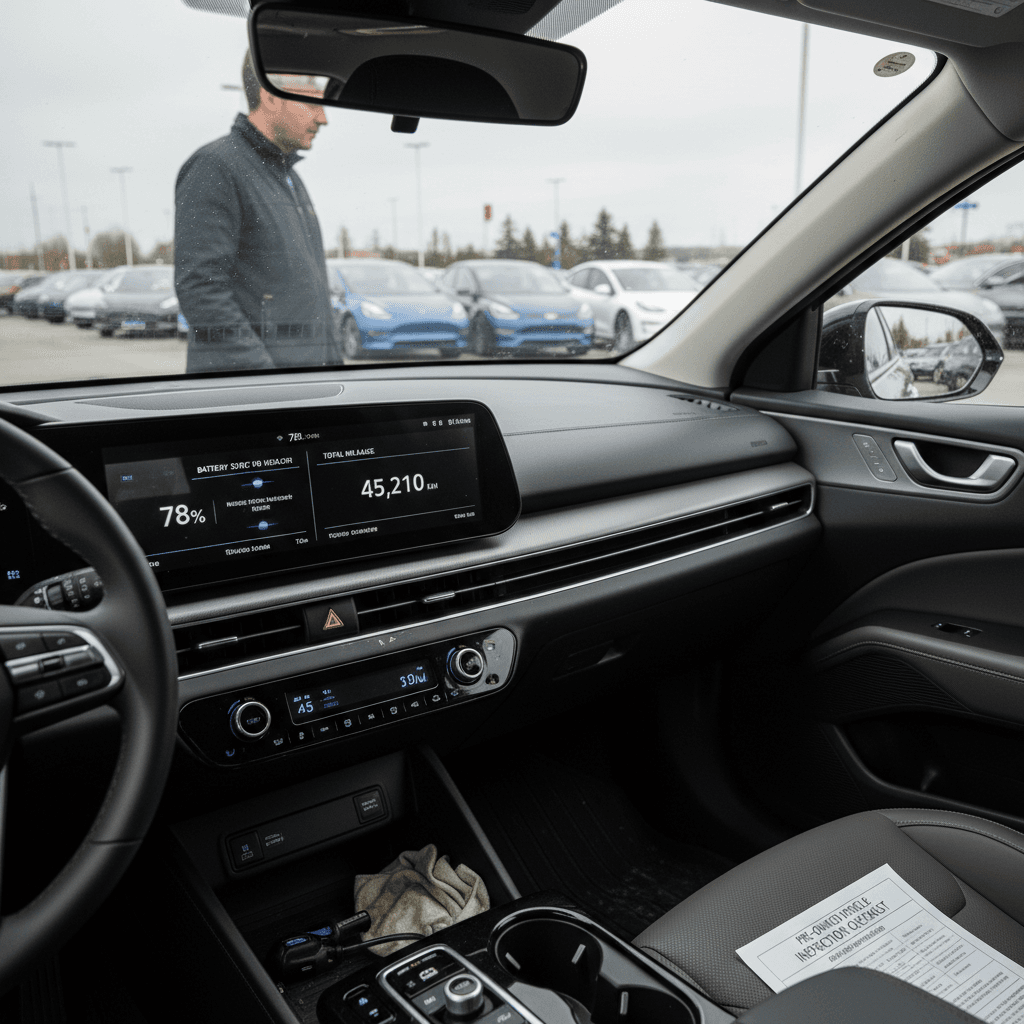
Market varies by zip code
How battery health affects Kona Electric resale value
Depreciation percentages only tell half the story. With any used EV, and especially a compact one like the Kona Electric, battery health is the make‑or‑break variable for real‑world value. A Kona EV with a healthy pack and near‑original range is worth substantially more than one that’s lost 15–20% of its capacity.
Key battery factors that influence Kona Electric depreciation
1. Remaining usable capacity
How much of the original kWh capacity the pack can still deliver. A car that still gets close to its original EPA range will command a stronger price than one that’s noticeably degraded.
2. Fast‑charging history
Frequent DC fast‑charging, especially in very hot or cold climates, can accelerate degradation. A history of mainly Level 2 home charging is usually a plus for long‑term health.
3. Mileage and duty cycle
High annual mileage is less of a red flag if it’s mostly highway and the car was charged conservatively. Lots of short trips and constant 100% top‑offs can be tougher on the pack.
4. Climate and storage habits
Battery packs age faster in extreme heat. Kona Electrics that lived in temperate climates and weren’t parked outside at 100% charge in summer generally age better.
5. Warranty status and service history
Hyundai’s battery warranty is generous, but a documented service history and any past warranty work can give buyers confidence, and support a higher resale price.
Never buy a used EV blind on battery health
Tips to minimize your depreciation losses
Whether you’re buying new or used, you have more control over depreciation than you might think. The trick is to buy at the right point in the curve and protect the battery and cosmetics as much as possible.
Owner strategies to keep Kona Electric depreciation in check
These habits help your Kona hold more value over time.
Time your purchase wisely
- Leaning used? Target 2–4‑year‑old Kona Electrics where early depreciation is done but warranty coverage is still strong.
- Buying new? Look for manufacturer rebates, dealer discounts, and tax credits that immediately lower your effective cost.
Protect the battery and interior
- Avoid constantly charging to 100% unless you need full range.
- Limit repeated DC fast‑charging in very hot weather.
- Keep the interior and exterior clean; small cosmetic issues add up at trade‑in time.
- Keep miles in check. EV shoppers pay close attention to mileage. If you know you’ll pile on miles, consider buying used instead of new so someone else absorbs the steepest part of the curve.
- Stay current on software updates. Updated software can improve range estimates, charging behavior, and even efficiency, all positives for future buyers.
- Document maintenance and charging habits. Detailed records help reassure the next owner and can pay off in higher private‑party value.
How Recharged can help
Ready to find your next EV?
Browse VehiclesBuying a used Hyundai Kona Electric: smart strategies
If you’re shopping specifically for a used Kona Electric, depreciation works in your favor. The key is to cherry‑pick the examples where the previous owner took the biggest hit but left you with a healthy, efficient EV and plenty of useful life.
What to look for in a used Hyundai Kona Electric
Match your budget with age, mileage, and expected depreciation already absorbed.
| Buyer profile | Target model years | Typical price band* | Why this slice of the market works |
|---|---|---|---|
| Value‑focused commuter | 2019–2021 | Low‑ to mid‑teens | You benefit from heavy early depreciation; expect shorter remaining warranty runway but often solid efficiency. |
| Balanced value & warranty | 2021–2023 | Mid‑teens to low‑20s | A strong blend of modern features, remaining battery coverage, and more modest additional depreciation ahead. |
| Latest tech, low miles | 2023–2025 | High‑teens to high‑20s+ | You pay more up front but get fresher styling, updated tech, and maximum remaining warranty time. |
These are general patterns, individual cars will vary based on condition and battery health.
Use a structured inspection checklist
FAQ: Hyundai Kona Electric depreciation
Frequently asked questions about Hyundai Kona Electric depreciation
Bottom line: Is a Hyundai Kona Electric a good value used?
If you’re only judging by the Hyundai Kona Electric depreciation rate, the numbers can look discouraging, especially compared with some gas SUVs, hybrids, and trucks that are resale stars in today’s market. But depreciation cuts both ways. For used‑EV shoppers, it means you can often step into a well‑equipped, efficient Kona Electric for the price of a much older or higher‑mileage gas vehicle.
The smart play is to let someone else take the big initial hit, then buy a Kona Electric with verified battery health, solid range, and plenty of warranty life ahead. That’s exactly the gap Recharged is designed to fill, with battery‑health diagnostics, fair‑market pricing, and EV‑savvy advisors who live this market every day. If you’re EV‑curious and value‑conscious, a carefully chosen used Kona Electric can be one of the most rational ways to go electric in 2026.