If you’re hunting for the best cars under $10K in 2026, you’ve probably noticed the bad news first: used-car prices are still high, and that “$5,000 cream puff” your uncle brags about is basically a unicorn. But there’s good news, too. With realistic expectations, smart targeting, and a little flexibility on age and mileage, you can still land a safe, dependable car, or even a used EV, without blowing past $10,000.
A quick reality check
Why $10,000 Feels Different in 2026
Used-car market snapshot for 2026
Those numbers shape what “best cars under $10K” really means in 2026. Instead of nearly-new crossovers, you’re usually weighing three buckets: 1. Older but durable gas cars from reliability standouts like Toyota and Honda. 2. High‑mileage hybrids that can slash your fuel bill if the battery pack is still healthy. 3. Early‑generation EVs that have fallen in price but need careful battery-health checks. The trick is knowing which specific models age gracefully, and which ones become money pits.
Can You Still Find Good Cars Under $10K?
What $10,000 realistically buys in 2026
Gas, hybrids, and EVs each come with different trade-offs
Gas cars
Typical buy: 2012–2016 compact or midsize sedan with 110K–170K miles.
- Lower purchase price
- Simpler to maintain
- Watch for rust and transmission issues
Hybrids
Typical buy: 2010–2015 hybrid with 130K–200K miles.
- Excellent fuel economy
- Battery pack condition is critical
- Need service records
Used EVs
Typical buy: 2011–2016 small EV with 60–120K miles.
- Very low running costs
- Shorter range (especially in winter)
- Battery health and charging options matter most
Use price filters strategically
Best Gas Cars Under $10K in 2026
If reliability and parts availability sit at the top of your wish list, an older gas car is still the easiest way to stretch a tight budget. You’ll usually get more choice, simpler diagnostics, and cheaper repairs than with hybrids or EVs.
Gas cars that still make sense under $10,000
Model-year ranges and what you can realistically expect at this price point in 2026.
| Model | Target years for <$10K | Typical mileage at $10K | Why it’s a smart pick |
|---|---|---|---|
| Toyota Corolla | 2012–2016 | 110K–170K | Simple, durable drivetrain; cheap parts; strong reliability history. |
| Toyota Camry (4-cyl) | 2011–2015 | 120K–180K | Comfortable highway cruiser with a long track record of going past 200K miles. |
| Honda Civic | 2012–2016 | 110K–170K | Efficient, easy to live with; be picky about rust and accident history. |
| Honda Accord (4-cyl) | 2010–2014 | 130K–190K | Roomy, refined; focus on maintenance records and transmission servicing. |
| Mazda3 | 2012–2016 | 110K–160K | Fun to drive; watch for rust in snow-belt states but otherwise strong. |
| Hyundai Elantra / Kia Forte | 2015–2018 | 90K–150K | Newer model years for the money; prioritize models with clean Carfax and service history. |
Exact availability and pricing will vary regionally, but these nameplates tend to deliver solid value when well maintained.
Be careful with bigger, cheaper SUVs
Best Hybrids Under $10K in 2026
Hybrids can be the sweet spot for 2026 shoppers: cheaper than comparable EVs, but with significantly better fuel economy than a traditional gas car. The trade-off is complexity, battery packs and power electronics add failure points, so choosing the right model (and verifying its history) is crucial.
Hybrid workhorses that often dip below $10K
Look for meticulous maintenance and, where possible, documented battery work.
Toyota Prius (Gen 2 & 3)
Target years: ~2007–2014 for sub‑$10K examples.
- Legendary efficiency and taxi‑fleet durability.
- Plenty of high‑mileage examples, prioritize those with documented battery and inverter service.
- Interior wear and suspension clunks are common but usually fixable.
Honda Insight & Civic Hybrid
Target years: ~2010–2014.
- Good fuel economy and Honda driving feel.
- Battery packs are smaller than Prius but can still be expensive to replace.
- Have a hybrid‑savvy shop evaluate any warning lights before you buy.
Hybrid battery sticker shock
Best Used EVs Under $10K in 2026
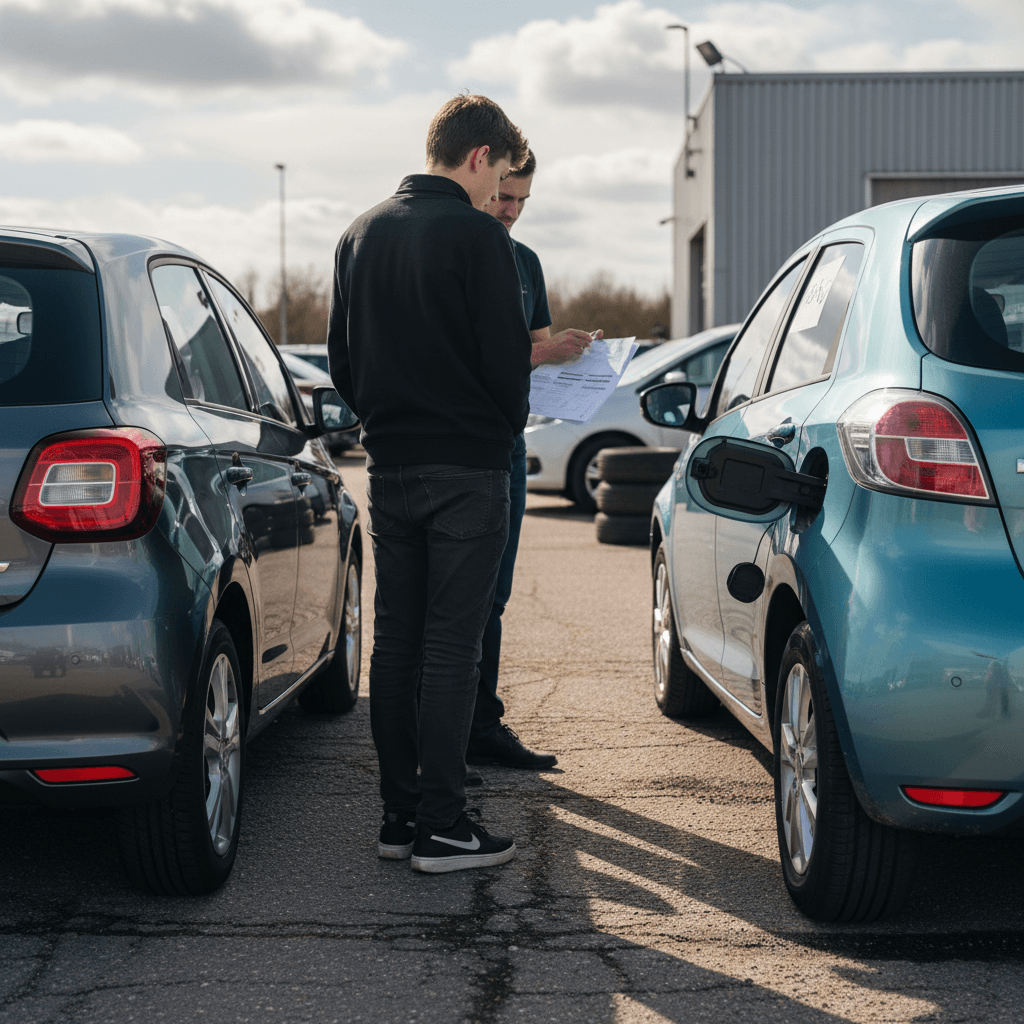
Used EV prices have come down faster than gas cars in recent years, and by 2026 some early models are finally drifting below $10,000. That makes them attractive for city commuters and second‑car duty, if you go in with clear eyes about range and battery health.
Used EVs you may find under $10,000 in 2026
These early electric models often appear in the sub‑$10K range, especially with higher mileage or cosmetic flaws.
| Model | Target years for <$10K | Approx. original EPA range | Realistic range today* | Best use case |
|---|---|---|---|---|
| Nissan Leaf (24 kWh) | 2011–2015 | 73–84 miles | 40–65 miles | Short urban commutes, school runs, local errands. |
| Nissan Leaf (30 kWh) | 2016–2017 (higher miles) | 107 miles | 60–80 miles | Suburban commuters with reliable Level 2 home charging. |
| Fiat 500e | 2013–2016 | 87 miles | 50–75 miles | City drivers who value easy parking and low running costs. |
| Chevrolet Spark EV | 2014–2016 | 82 miles | 50–75 miles | Quick, efficient around‑town car where DC fast charging is available. |
| Ford Focus Electric | 2012–2016 | 76–115 miles | 50–80 miles | Quiet commuter for households that already own a longer‑range vehicle. |
Always verify battery health and real‑world range before committing to any used EV.
About that “realistic range today”
How to Actually Buy a Car Under $10K in 2026
Step-by-step game plan for a $10K purchase
1. Set your true out-the-door budget
Taxes, title, registration, and dealer fees can eat $1,000 or more. If you’ve got $10,000 total, focus your search around $8,500–$9,000 asking prices so you have room for fees and immediate maintenance.
2. Cast a wide but specific search
Use national search tools and filter for your budget, then add reliability filters: exclude salvage titles, flood vehicles, and open recalls. Expand your radius 100+ miles if you’re in a hot market.
3. Prioritize maintenance history over mileage
A 150K‑mile car with stack of service records is usually a safer bet than a 110K‑mile car with nothing documented. Look for regular oil changes, transmission services, and, on EVs and hybrids, battery or cooling‑system work.
4. Get a pre-purchase inspection
On any sub‑$10K car, spend $150–$250 for an independent inspection. Ask the shop to prioritize safety items (brakes, tires, suspension) and any big‑ticket repairs likely in the next 12–24 months.
5. Use days-on-market as leverage
Cars that have sat 40+ days are prime candidates for negotiation. Polite, data‑backed offers, especially with cash or pre‑approved financing, often get more traction than lowball haggling.
6. Budget an immediate repair fund
Even a solid used car will need attention. Try to keep $500–$1,000 in reserve for tires, fluids, and surprise repairs during the first year.
Where Recharged fits in
Ready to find your next EV?
Browse VehiclesBattery Health Matters Most on Used EVs
Why odometer alone is misleading
With EVs, a 70,000‑mile car that was fast‑charged daily in a hot climate can have worse battery health than a 110,000‑mile car that mostly charged slowly at home. That’s the opposite of how traditional gas cars age.
Instead of focusing just on mileage, you need a view into state of health (SoH), what percentage of the original battery capacity remains.
How to check used EV battery health
- Ask for a battery report from the seller or franchised dealer, especially for Nissan Leaf and other early EVs.
- Use model-specific apps (like LeafSpy) when the seller allows, or bring a shop that knows EV diagnostics.
- Look at range estimates after a full charge and compare them to the original EPA figure.
On Recharged, the Recharged Score bakes this into a simple battery‑health grade, so you don’t have to decode raw data yourself.
Avoid “mystery range” cars
Financing and Trade-In Strategies on a $10K Budget
In 2026, interest rates on used‑car loans remain elevated compared with pre‑pandemic years. That matters even on lower price points, because a high interest rate can quietly erase the savings you thought you were getting on a cheap car.
Should you finance a sub-$10K car?
How to keep borrowing costs from eating your budget.
When cash (or mostly cash) wins
- If you have 70–100% of the purchase price saved.
- You can leave an emergency cushion after purchase.
- You’re looking at an older, high‑mileage car you may replace sooner.
Paying cash simplifies the deal and avoids paying high interest on a car that may not outlast the loan term.
When smart financing makes sense
- You can pre‑qualify with a credit union or online lender at a competitive rate.
- You’re stretching slightly above $10K for a much newer, safer car or EV.
- You plan to own the car long enough to justify a modest loan.
At Recharged, you can pre‑qualify for financing online with no impact to your credit, so you know your real budget before you start shopping.
How to squeeze more value from your trade-in
Clean and photograph your car properly
A thorough interior and exterior detail, plus clear photos, can add perceived value and make both dealers and online buyers more comfortable offering stronger numbers.
Gather maintenance records
Receipts for oil changes, tire rotations, and major repairs prove you cared for the car and can justify a higher trade‑in or instant‑offer value.
Get multiple offers
Compare <strong>instant‑offer platforms, local dealers, and consignment options</strong>. At Recharged, you can get an instant offer or explore consignment if you’re selling an EV and want top dollar.
Know your payoff and equity
If you still owe money on your current car, understand whether you have positive equity, are breaking even, or will roll negative equity into the next loan, something that’s especially risky on older vehicles.
FAQ: Best Cars Under $10K in 2026
Frequently asked questions about $10K car shopping
Bottom Line: Best Cars Under $10K in 2026
Shopping for the best cars under $10K in 2026 means accepting that you’re working below the market’s center of gravity. You’ll be looking at older, higher‑mileage gas sedans; well‑used hybrids with batteries to evaluate; and early EVs that trade range for low running costs. There are still good cars in that mix, but only if you stay disciplined about maintenance history, independent inspections, and realistic expectations.
If an early EV is on your radar, make battery health your North Star. A cheap electric car with a worn‑out pack isn’t a bargain at any price. That’s where EV‑focused tools like the Recharged Score Report, EV‑specialist support, and flexible financing and trade‑in options can help you decide whether stretching a bit beyond $10K buys you dramatically more long‑term value. In a tight market, the smartest move isn’t just finding the lowest number on the windshield, it’s finding the car that will still be starting, charging, and getting you to work years from now.