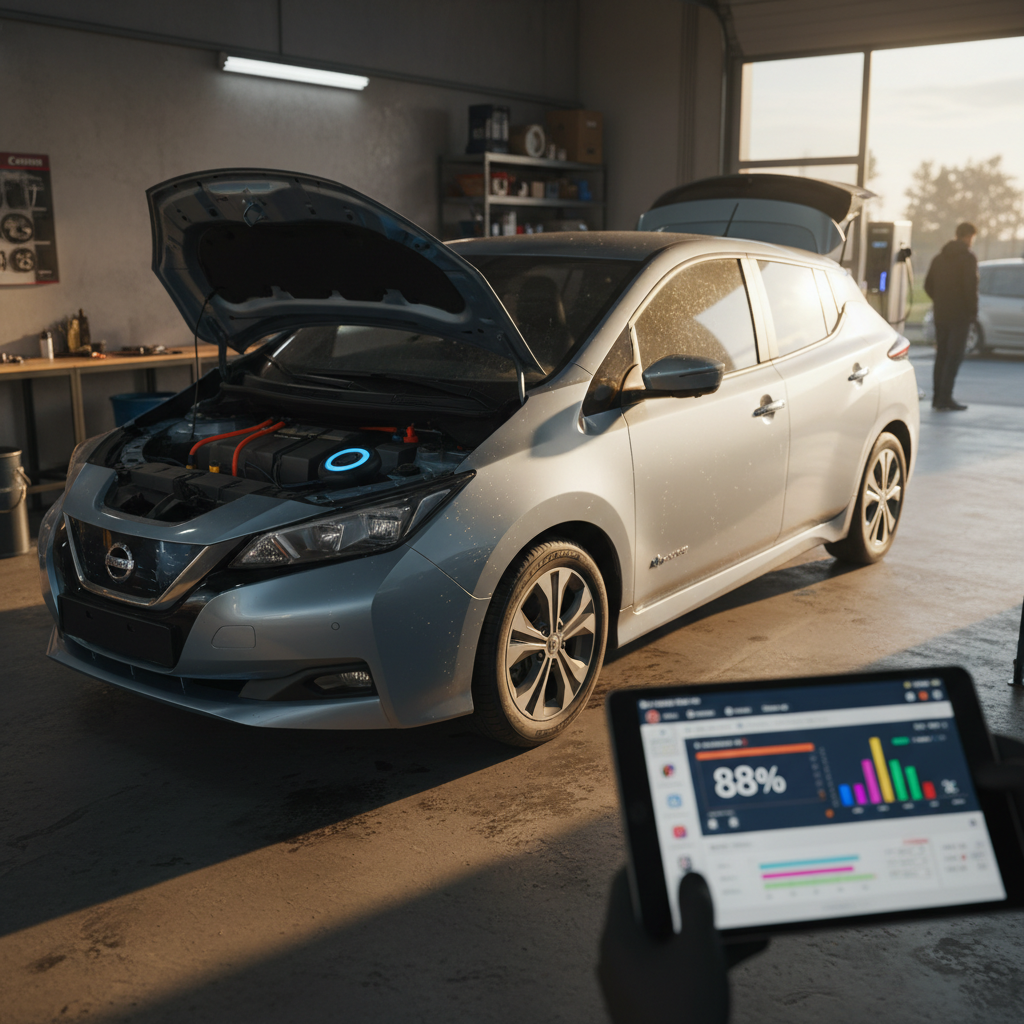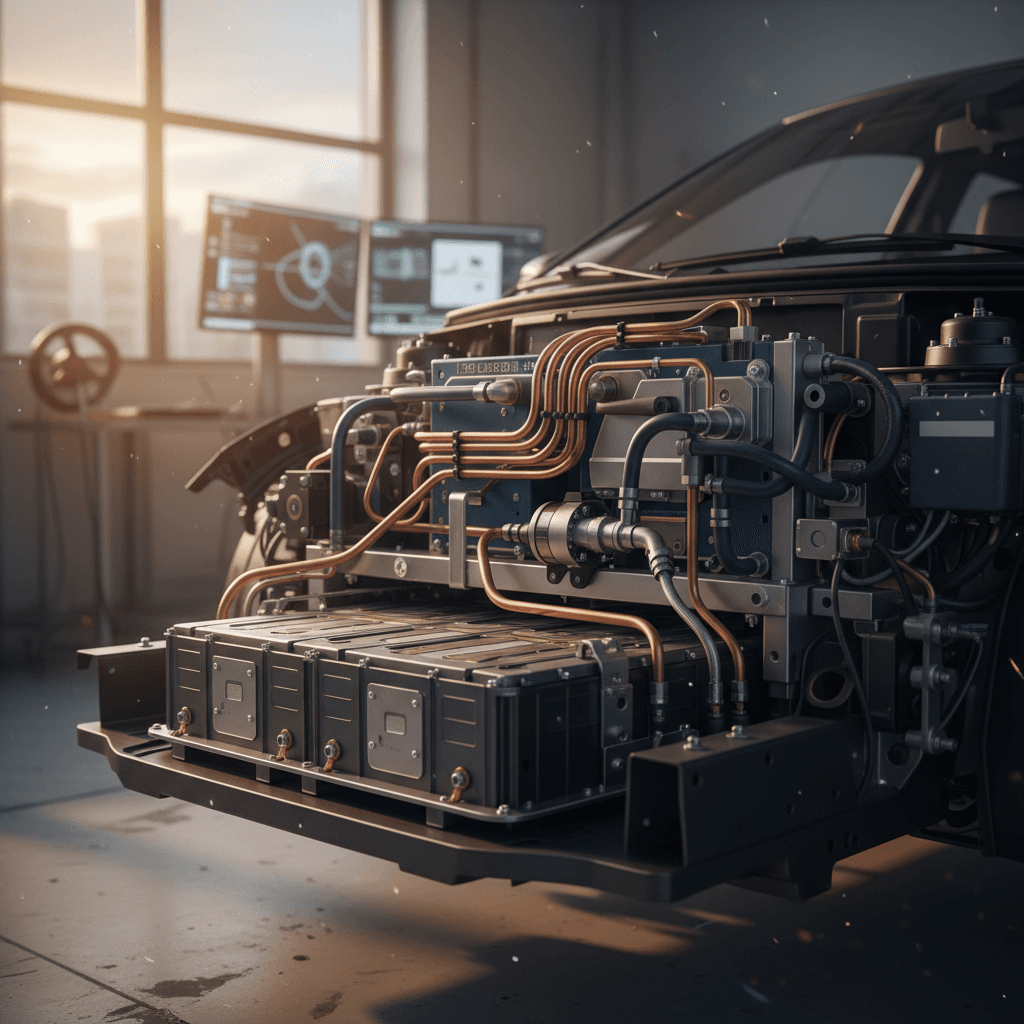
The battery cooling system for an electric vehicle is one of those things you never see and rarely think about, until something goes wrong. Yet it quietly determines how far you can drive, how fast you can fast‑charge, how long the pack will last, and even how safe the car is in a worst‑case scenario.
Quick definition
Why EV battery cooling matters
Why temperature control is a big deal for EV batteries
Lithium‑ion cells are happiest in a narrow temperature band. Run them too cold and you lose power and charging speed; run them too hot and you accelerate capacity fade and increase the risk of thermal runaway, a chain reaction where a failing cell can overheat its neighbors. Modern EV cooling systems are designed to keep thousands of cells working together at nearly the same temperature all the time, in Phoenix summers and Minnesota winters alike.
Think of it like engine cooling, only more demanding
How a battery cooling system for an electric vehicle works
Engineers lump cooling, heating, and monitoring together under the term battery thermal management system (BTMS). While designs vary, most modern EVs with liquid‑cooled packs follow a similar recipe:
- A web of sensors monitors temperatures across modules and inside the pack.
- The battery management system (BMS) constantly calculates cell temperatures, health, and how much power or charging speed is safe.
- A coolant loop, usually a water‑glycol mix, runs through channels, tubes, or cold plates sandwiched against the cells or modules, picking up heat.
- A pump pushes coolant through the battery, then to a radiator or chiller where the heat is dumped to ambient air or the cabin HVAC refrigerant circuit.
- In many EVs, the system can also reverse roles and heat the battery using electric heaters or a heat pump when it’s too cold for good charging or performance.
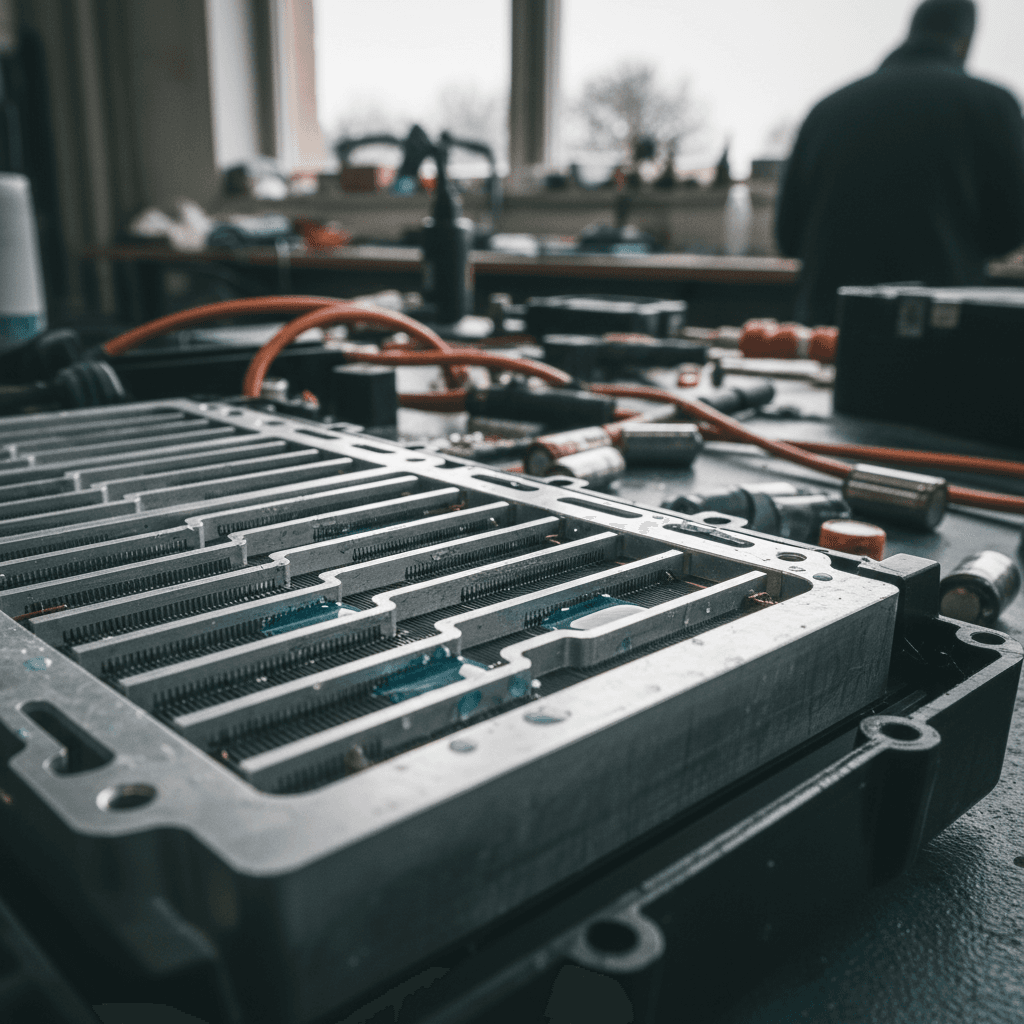
Liquid cold plates: the workhorses you’ll never see
Main types of EV battery cooling systems
When you pop the hood of different EVs, or more realistically, read the spec sheets, you’ll find several approaches to battery cooling. Here’s how they stack up. At a high level, systems split into passive vs. active cooling and air vs. liquid vs. advanced hybrids.
Core cooling approaches in modern EVs
Most current EVs rely on active liquid cooling; older or low‑cost models may use simpler air systems.
Air cooling
How it works: Fans blow cabin or outside air past the pack or through ducts between modules.
Pros: Simple, cheap, no liquid leaks to worry about.
Cons: Air has poor heat capacity, so this struggles with large packs and high fast‑charge rates.
Indirect liquid cooling
How it works: A water‑glycol coolant flows through tubes or plates attached to modules or integrated in the pack base.
Pros: Excellent cooling, tight temperature control, supports high‑power fast charging.
Cons: More complex and expensive; requires careful sealing and monitoring.
Advanced & hybrid systems
How it works: Combines liquid cooling with phase‑change materials, heat pipes, or even dielectric fluids that can contact cells directly.
Pros: Handles extreme loads, smooths out hot spots, can be more compact.
Cons: Mostly in development or high‑end applications today.
Air-cooled battery systems
Some early EVs and many hybrids relied on air cooling. The battery pack sits in a box; ducts and a fan move air across or between modules. It’s simple, but as pack sizes and fast‑charge speeds climbed, air couldn’t keep up. Air‑cooled packs can run hotter during repeated fast charges or high‑speed driving in hot weather, which can mean more rapid degradation over many years.
What this means if you’re shopping
Liquid-cooled battery systems
Today, liquid cooling is the dominant solution for full battery‑electric vehicles. A coolant loop runs through cold plates or channels in the pack floor, very close to the cells. The coolant then flows through a heat exchanger that can dump heat to outside air or into the cabin HVAC circuit. This approach is now used in a wide range of EVs from Tesla, Volkswagen, Hyundai, BYD, and many others.
- Supports high DC fast‑charge rates without overheating.
- Keeps cells within a tight temperature band, improving longevity and usable capacity.
- Allows clever tricks like pre‑conditioning the battery (warming or cooling it before you reach a fast charger).
Direct-contact and hybrid cooling
The frontier now is hybrid systems that mix liquid cooling with phase‑change materials (PCMs), heat pipes, or dielectric fluids that can contact cells directly. PCMs temporarily soak up large amounts of heat as they melt, smoothing out temperature spikes. Heat pipes move heat very quickly with small temperature differences. Research prototypes are even using nanofluids to boost coolant performance and cut pump power. These designs are aimed at ultra‑fast charging and high‑performance EVs, but the principles will slowly trickle into mainstream cars over the next decade.
How cooling affects fast charging and performance
If you’ve ever wondered why your EV doesn’t always hit the big number on the fast‑charger screen, the answer usually lives in the cooling system and the BMS. When the pack is too cold or too hot, the BMS limits charging power to protect the cells. The better the cooling (and heating), the more often the car can sit in that sweet spot for maximum charge rate.
Cooling during DC fast charging
High‑power charging shoves a lot of current through the cells in a short time, and that generates heat. A strong liquid‑cooling system:
- Pumps coolant faster when temperatures climb.
- Uses larger or more efficient cold plates to spread heat.
- Can tap into the cabin A/C system as a chiller in hot weather.
Pre‑conditioning and real‑world speed
Many modern EVs can pre‑condition the battery before you arrive at a fast charger, warming or cooling it for optimal power. The result is:
- Shorter charging stops on road trips.
- Less stress on the cells over time.
- More consistent performance in very hot or cold climates.
Road‑trip tip
Battery cooling and thermal runaway safety
Thermal runaway is the nightmare phrase that headlines love. In practice, EV fires remain rare, but the industry takes them seriously. Cooling systems are part of a layered defense that also includes robust pack housings, fuses, current limits, venting paths, and crash structures.
- A healthy cooling system helps prevent cells from ever reaching the temperatures where internal reactions can accelerate out of control.
- If a single cell does fail, good thermal design and materials can slow or prevent heat spreading to neighboring cells.
- Liquid cold plates, thermal barriers, and carefully engineered venting all work together to keep a bad day from becoming catastrophic.
What actually triggers thermal runaway?
Cooling’s winter twin: battery heating and heat pumps
Cooling gets the headlines, but in winter heating is just as important. Lithium‑ion cells don’t like to charge fast when they’re cold. That’s why many EVs purposely warm the battery before or during fast charging in low temperatures.
Two sides of battery thermal management
Your EV quietly juggles cooling and heating to keep the pack happy year‑round.
Battery heating
Cars in cold climates often use:
- Electric resistance heaters built into the pack.
- Coolant loops that steal waste heat from motors or power electronics.
- Heat pumps that move heat into the pack efficiently.
Battery cooling
In hot conditions or under load, the same hardware can:
- Circulate chilled coolant from the cabin A/C system.
- Dump heat to a dedicated radiator.
- Balance temperatures between modules to avoid hot spots.
Why this matters to you
What to look for in battery cooling when you buy an EV
You won’t see a line on the window sticker that says “cooling: good” vs. “cooling: bad.” But you can read between the lines. Here’s how to factor battery thermal management into your next‑EV decision.
Battery cooling checklist for new EV shoppers
1. Confirm it has liquid cooling
Most modern battery‑electric vehicles sold in North America use liquid cooling, but some older or budget models may not. If you fast‑charge often or live in a hot climate, <strong>prioritize a liquid‑cooled pack</strong>.
2. Look for battery pre‑conditioning
Check whether the car can pre‑heat or pre‑cool the pack before fast charging. This is your clue that the <strong>HVAC and cooling systems are tightly integrated</strong> with the battery.
3. Study fast‑charge behavior, not just peak kW
Marketing loves a big peak number, but what you care about is the <strong>charging curve</strong>, how long the car can hold high power. Cars with stronger cooling can sustain higher power longer without overheating.
4. Consider your climate and driving profile
If you live in Phoenix and road‑trip regularly at 75–80 mph, you’ll lean more on the cooling system than someone commuting gently in Seattle. Match the EV’s <strong>thermal sophistication</strong> to your reality.
5. Ask about software and warranties
Battery cooling and the BMS are joined at the hip. Look for <strong>robust battery warranties</strong> and a track record of software updates focused on charging and thermal behavior.
Where Recharged fits in
Battery cooling systems in used EVs
If you’re looking at a used EV, you’re really buying two things: the car you can see, and the battery history you can’t. Cooling plays a starring role in that unseen story.
How cooling history shapes battery health
- Years in a hot climate with lots of fast charging put more stress on cells.
- Parking outside in extreme heat can raise pack temperatures even when the car is off.
- Some EVs quietly run their cooling systems while parked to protect the pack, this is good for longevity, even if it costs a little energy.
Questions to ask (or data to pull)
- Does this model use liquid or air cooling?
- Has the car lived mostly in very hot or very cold regions?
- How often was it DC fast‑charged versus home or workplace charged?
- Has it had any battery or cooling‑system service or recalls?
How Recharged helps on the used side
FAQ: Battery cooling systems in electric vehicles
Frequently asked questions about EV battery cooling
The bottom line on EV battery cooling
A battery cooling system for an electric vehicle isn’t just plumbing in the background, it’s central to how the car drives, charges, and ages. Liquid‑cooled packs, smart BMS software, and integrated heating all work together to keep thousands of cells in their comfort zone, whether you’re crawling through winter traffic or hammering out a summer road trip on fast chargers.
When you’re evaluating EVs, especially used ones, look beyond the range and the badge. Ask how the thermal management system is designed, how the car has been used, and what the real‑world battery health looks like today. If you’d like a partner in that process, Recharged combines objective battery diagnostics, transparent pricing, and EV‑savvy specialists to help you find an electric car that will stay cool, charge confidently, and serve you well for years to come.