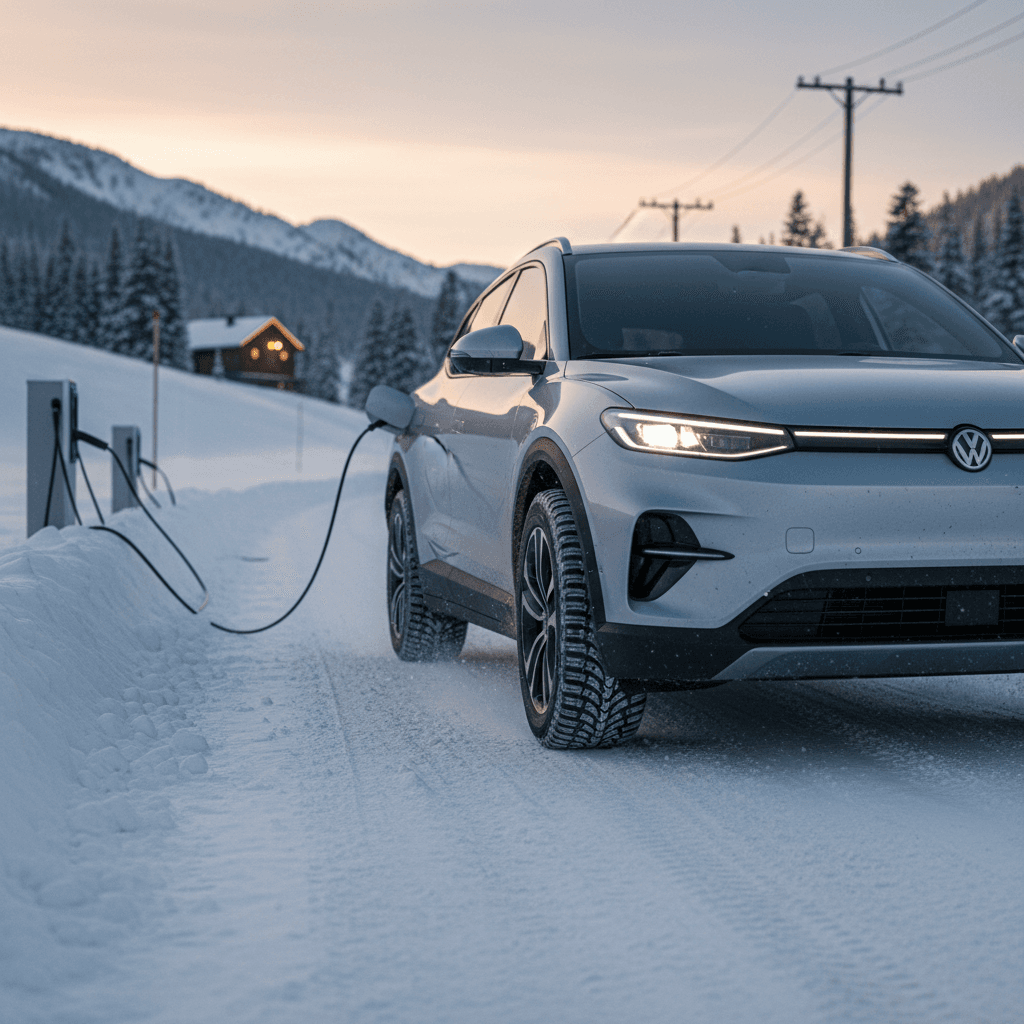
AWD electric vehicles are no longer a niche. In the 2025 model year, nearly every major EV lineup offers at least one all-wheel-drive option, from compact crossovers to luxury sedans and full-size pickups. If you live where it snows, tow a trailer, or just like instant traction off the line, AWD electric cars and SUVs are worth a close look, but they’re not automatically the right choice for everyone.
Quick take
Why AWD electric vehicles are so popular now
AWD is becoming the default for many EVs
Traditional gas SUVs made AWD popular for snow and light off‑roading. With EVs, AWD became even easier to engineer: automakers simply add a second motor to the axle that would normally be unpowered. That’s why you see dual‑motor AWD options on everything from the Hyundai Ioniq 5 and Kia EV6 to the Ford Mustang Mach‑E and Tesla Model Y.
For many buyers, the appeal comes down to three things: - Confidence in bad weather – Extra traction when roads are wet, icy, or unpaved. - Performance – Dual‑motor EVs put down instant torque with minimal wheelspin. - Brand positioning – Automakers use AWD to justify higher trims and price points. The question isn’t whether AWD electric vehicles are good, they are. The question is whether they’re the right investment for your daily use.
How AWD works in electric vehicles

On an internal‑combustion vehicle, AWD or 4WD requires a complex web of driveshafts, differentials, and transfer cases. In an AWD electric vehicle, each axle typically gets its own electric motor, and software constantly decides how much torque to send to each end of the car.
- Single‑motor FWD or RWD EV: One drive unit powers either the front or rear wheels. Simpler, lighter, and usually more efficient.
- Dual‑motor AWD EV: One electric motor on the front axle and another on the rear. The car can shift power instantly for traction or performance.
- On‑demand AWD: Many EVs run mostly on one axle for efficiency, then spin up the second motor only when needed.
Because computers can react far faster than human drivers, torque distribution in an AWD EV is usually smoother and quicker than in a mechanical AWD system. Some models even allow “torque vectoring,” slightly over‑driving one wheel to help the car turn in more sharply during spirited driving.
Why EV AWD feels different
AWD EVs vs RWD/FWD: key pros and cons
Advantages of AWD electric vehicles
- Traction in snow and rain – Power at both axles helps you get moving and stay in control on low‑grip surfaces.
- Better straight‑line performance – Dual‑motor setups dramatically improve 0–60 times.
- Stability when towing – AWD can help with traction when you’re pulling a trailer or climbing grades.
- Peace of mind – Many drivers simply feel more confident knowing all four wheels can help pull the car forward.
Trade‑offs vs 2‑wheel‑drive EVs
- Higher price – AWD trims are often several thousand dollars more new.
- Less range – Extra weight and drivetrain losses usually shave 5–10% off the rated range compared with the most efficient 2WD version.
- More complexity – Two motors instead of one means more hardware that can eventually need service or repair.
- Not a braking miracle – AWD helps you go; it doesn’t shorten stopping distances on ice. Winter tires still matter.
Don’t confuse traction with grip
Notable AWD electric vehicles in 2025
If AWD is on your must‑have list, you have a long roster of choices in 2025. According to recent model‑year listings, dozens of EVs offer AWD, from mainstream crossovers to high‑performance luxury models.
Sample AWD electric vehicles available for 2025
This isn’t a complete list, but it highlights popular AWD EVs across different segments.
| Segment | Model (AWD available) | Notable traits |
|---|---|---|
| Compact crossover | Hyundai Ioniq 5 (including XRT) | Dual‑motor AWD, NACS fast‑charging, family‑friendly packaging |
| Compact crossover | Ford Mustang Mach‑E | Multiple AWD trims, strong performance, good DC fast‑charging support |
| Compact crossover | Tesla Model Y | Standard dual‑motor AWD, strong Supercharger access on compatible trims |
| Midsize crossover | Chevrolet Blazer EV | Available AWD, competitive range, GM’s Ultium architecture |
| Midsize crossover | Nissan Ariya | Optional e‑4ORCE dual‑motor AWD with refined ride |
| 3‑row SUV | Kia EV9 | Available AWD, three rows, family‑sized cargo space |
| Pickup | Ford F‑150 Lightning | Standard dual‑motor AWD, strong towing capability |
| Luxury SUV | BMW iX | Dual‑motor AWD, premium cabin, long‑range variants |
| Luxury sedan | Tesla Model S Dual Motor | Very quick acceleration, big battery, AWD standard on most trims |
| Performance | Hyundai Ioniq 5 N | Track‑ready AWD tuning with high‑output dual motors |
Always confirm the specific trim and options, many of these models also come in 2‑wheel‑drive versions.
AWD isn’t always standard
AWD electric vehicles for snow and bad weather
If you live in the Snowbelt, think the upper Midwest, Rockies, or Northeast, AWD electric vehicles can make winter driving less stressful. Instant torque is great, but on a slick surface it can easily spin a single set of driven wheels. Splitting that torque between both axles gives the car more ways to find grip.
What matters most for winter EV driving
AWD helps, but it’s just one piece of the puzzle.
Tires first
Dedicated winter tires dramatically improve acceleration, turning, and stopping on snow and ice, often more than AWD alone.
Cold‑weather range
All EVs lose some range in cold weather. Plan on 20–40% less real‑world range in deep winter and use pre‑conditioning when plugged in.
Charging access
Home Level 2 charging is a game‑changer. In winter, being able to start each day with a full battery matters more than AWD vs. RWD.
AWD pays off most when you regularly face: - Unplowed side streets and driveways - Hilly terrain that gets icy in shoulder seasons - Mixed conditions where some lanes are clear and others slick If your winters are mostly cold but dry, and your roads are well plowed, a rear‑wheel‑drive EV with good tires can still be a smart, more efficient choice.
EVs and traction control
Range and efficiency: what AWD really costs
Every extra motor adds weight, complexity, and a bit of drag. That’s why AWD electric vehicles usually sacrifice some range versus their most efficient 2‑wheel‑drive siblings. The exact hit varies by model, but drops of roughly 5–10% are common when you compare apples‑to‑apples batteries.
Typical range differences: AWD EV vs most efficient 2WD trim
Illustrative ranges based on current model‑year data; always check EPA or WLTP ratings for a specific configuration.
| Example model | Drivetrain | Approx. rated range* | Notes |
|---|---|---|---|
| Hyundai Ioniq 5 | RWD long‑range | 300+ miles | Efficiency‑focused single‑motor trim |
| Hyundai Ioniq 5 | AWD long‑range | mid‑260s miles | Dual‑motor traction with modest range trade‑off |
| Ford Mustang Mach‑E | RWD extended‑range | 300+ miles | Varies by wheel size and options |
| Ford Mustang Mach‑E | AWD extended‑range | mid‑280s miles | More performance, slightly less range |
| Tesla Model Y | RWD | around 260–280 miles | Entry trims focus on efficiency and price |
| Tesla Model Y | AWD Long Range | mid‑280s to near 300 miles | Higher performance with competitive range |
Some AWD trims pair with larger batteries, which can partly offset the efficiency loss.
How to think about the trade‑off
Should you buy AWD on your next EV?
AWD EV decision checklist
1. Where do you live and drive?
Frequent snow, ice, gravel, or steep unpaved roads all push you toward AWD. Mild climates with mostly dry pavement make 2‑wheel drive easier to justify.
2. How often do you road‑trip?
If you regularly drive close to the edge of your range between fast chargers, the extra efficiency of a 2‑wheel‑drive EV might matter more than AWD traction.
3. Do you care about quickest acceleration?
Performance‑oriented EVs (and trims with “GT,” “N,” or “Performance” badging) nearly always pair their strongest acceleration with AWD dual motors.
4. Can you invest in winter tires?
If you’re willing to run a dedicated winter tire setup, a rear‑wheel‑drive EV can be surprisingly capable in snow, often at lower cost than stepping up to AWD.
5. What’s your budget ceiling?
On a new EV, AWD can add several thousand dollars. On a used EV, the price gap between AWD and 2‑wheel‑drive trims may be much smaller, or occasionally, nonexistent.
6. Do you plan to tow?
If you’re pulling a small camper, boat, or utility trailer, the extra traction and stability of AWD are valuable, especially on wet ramps or gravel lots.
When AWD isn’t optional
Buying a used AWD electric vehicle
The used market is where AWD electric vehicles can become especially attractive. Depreciation has already taken a bite out of the original sticker price, yet AWD hardware and dual‑motor performance are still baked into the vehicle. Your job as a shopper is to confirm you’re getting the traction you want without inheriting someone else’s problems.
What to look for in a used AWD EV
Focus on battery health, true equipment, and how the vehicle was used.
Verified battery health
EVs don’t have engine oil changes, but their battery condition is critical. A detailed battery health report, like the Recharged Score, helps you see how much usable capacity remains versus when the car was new.
Confirm AWD equipment
Online listings can be wrong. Check the VIN build sheet or window sticker for dual‑motor or AWD descriptions, and verify that the instrument cluster or drive‑mode screen actually shows an AWD layout.
Service and usage history
Ask how the vehicle was used. A commuting crossover that saw occasional snow is different from a heavily loaded delivery vehicle. Look for documented maintenance and recall work.
Total cost of ownership
Beyond price, consider insurance, tires, and charging. AWD EVs may use wider, more expensive tires, and performance‑oriented trims can carry higher insurance premiums.
At Recharged, every used EV comes with a Recharged Score Report that includes verified battery health, fair‑market pricing, and expert EV inspection. If you’re comparing a used AWD electric SUV against a 2‑wheel‑drive model, our specialists can walk you through the real‑world trade‑offs for your climate and driving style, before you buy.
Make AWD part of your test drive
FAQ: AWD electric vehicles
Frequently asked questions about AWD EVs
Bottom line on AWD electric vehicles
AWD electric vehicles give you exactly what most drivers want more of: traction, performance, and confidence when the weather turns ugly. The cost is higher purchase price, a little extra complexity, and usually a modest range penalty versus the most efficient 2‑wheel‑drive trims.
If you regularly deal with snow, gravel, or steep driveways, or if you simply love the way a dual‑motor EV launches, AWD is easy to justify. If you live in a mild climate, rarely road‑trip, and value maximum range per dollar, a well‑equipped 2‑wheel‑drive EV plus a good set of tires might make more sense.
When you’re ready to shop, a used AWD electric SUV or crossover can offer tremendous value. With Recharged, you get verified battery health through the Recharged Score, transparent pricing, financing options, and nationwide delivery, all guided by EV specialists who’ve helped many drivers make exactly this AWD vs. 2‑wheel‑drive decision. That way, you don’t just buy an EV; you buy the electric vehicle that genuinely fits your life.