Search for “auto repair shops with free diagnostics” and you’ll see a flood of offers: free code scans, free multipoint inspections, free “health checks.” In 2025, it’s easier than ever to get a free look at what’s going on with your car, but that doesn’t mean every free diagnostic is created equal, especially if you drive a modern hybrid or electric vehicle.
Quick takeaway
Why so many shops offer “free diagnostics” now
For years, dealerships and many independent shops charged a flat hour of labor just to hook up a scan tool and investigate a warning light. Today, with competition heating up and diagnostic tools getting cheaper, more businesses are using free or low-cost diagnostics as a marketing tool to win your repair work later.
Car diagnostic costs in 2025: The benchmarks
Against that backdrop, a sign that says “Free Check Engine Light Scan” looks pretty appealing compared with a $120 diagnostic at the dealer. But to make a smart decision, you need to understand exactly what you’re getting for free.
What free diagnostics really include (and what they don’t)
Common types of “free diagnostics”
From quick scans to basic inspections, here’s what most shops mean by “free.”
OBD-II code scan
Most common offer: a staff member plugs a scan tool into your vehicle’s OBD-II port and pulls stored codes.
- Identifies which system triggered the light
- Often done at parts stores in a few minutes
- Usually doesn’t include deep troubleshooting
Visual safety check
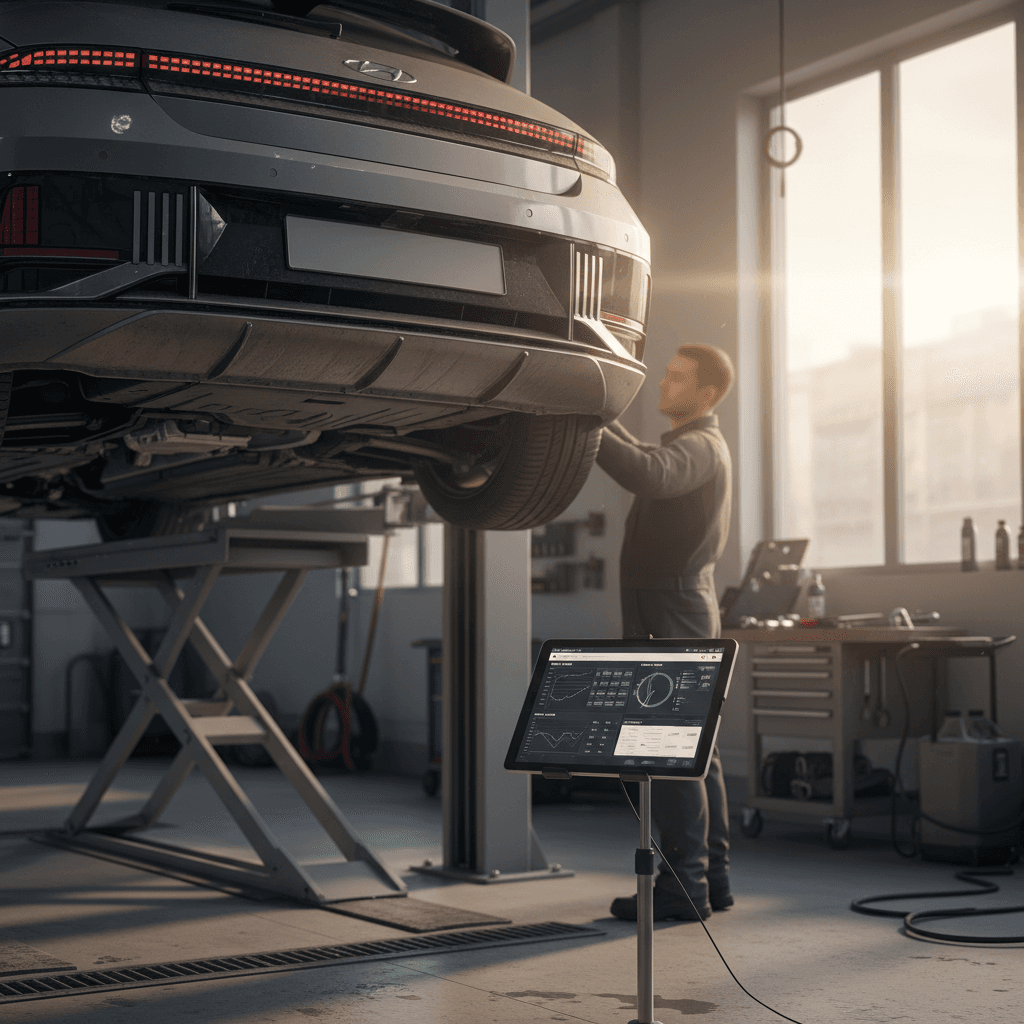
Quick look at brakes, tires, fluids, and obvious leaks while the car is on a lift.
- Often bundled with oil changes or seasonal promos
- Helpful for catching worn tires or low brake pads
- Not a substitute for a full inspection
Battery / charging check
Simple battery and alternator test, often free at parts stores or quick-lube chains.
- Good for “no start” or dim lights issues
- Results are usually printed for you
- Doesn’t diagnose complex electrical faults
What’s usually NOT free
Think of a free diagnostic as a headline, not the full story. A quick scan might tell you there’s an EVAP leak or a misfire on cylinder 3. It won’t tell you whether the problem is a sensor, wiring, mechanical wear, or something failing inside the engine.

Where you can actually get free car diagnostics
Nationwide, there are a few reliable places to start if you’re hunting for free diagnostics, especially for a check engine light or basic electrical issues.
Typical sources of free diagnostics
What you can expect from common providers offering free tests.
| Provider type | Examples | What’s usually free | Best for |
|---|---|---|---|
| Auto parts chains | AutoZone, O’Reilly, Advance, NAPA | OBD-II code scan, basic battery/charging test | Check engine light, weak battery, quick “is it safe to drive?” questions |
| National tire/repair chains | Pep Boys, Firestone, Goodyear | Promotional code scans or inspections, often tied to recommended repairs | Suspension, brake, or tire issues when you’re open to having them do the work |
| Independent repair shops | Local garages and specialty shops | Often a free quick look or waived diagnostic fee if you approve repairs | Recurring drivability issues where you want an ongoing relationship |
| Dealerships | Brand-specific franchises | Occasional service specials, or diagnostic fee credited toward repair | Complex problems on late-model or luxury vehicles, warranty concerns |
Always call ahead, offers can vary by location and change over time.
How to find free diagnostics near you
Free vs. paid diagnostics: What’s the real cost?
Across the U.S. in 2025, car diagnostic tests typically range from about $20 on the low end to $400 or more for complex or high-end vehicles. Dealerships often charge toward the higher end because of brand-specific tools and training, while independent shops and mobile mechanics tend to fall in the middle.
When a free diagnostic is usually enough
- Check engine light just came on and the car drives normally.
- You suspect a loose gas cap or other minor issue.
- You want to know whether it’s safe to keep driving until you schedule a repair.
- You’re price-shopping and want a quick second opinion on a code or symptom.
In these situations, a quick code read and basic check can give you useful information without opening your wallet.
When paying for diagnostics saves money
- Persistent or intermittent issues (stalling, rough shifting, no-starts).
- Advanced systems involved: ABS, airbags, ADAS, hybrid or EV components.
- Previous free scans led to parts-swapping but the problem remains.
- You’re approving a major repair and want a confident root-cause diagnosis.
Here, a proper 60–90 minute diagnostic by a skilled technician often costs less than guessing and replacing parts one by one.
Questions to ask before you say yes to a paid diagnostic
1. Is the diagnostic fee flat or hourly?
Clarify whether you’re authorizing a single flat fee (for example, $120) or an open-ended hourly investigation. Ask for a cap if the problem turns out to be complex.
2. Will you credit the fee toward the repair?
Many shops apply all or part of the diagnostic fee to the repair if you approve the work. That can make a “paid” diagnostic effectively free if you were going to fix the issue anyway.
3. What will I get in writing?
Request a printout of codes, test results, and the tech’s notes. This documentation is invaluable if you need a second opinion later.
4. Who will perform the diagnostic?
Don’t be shy about asking whether a master technician, an apprentice, or a general service tech is doing the work, especially on complex vehicles or safety systems.
EV and hybrid diagnostics: Why they’re different
If you drive a hybrid or a fully electric vehicle, “free diagnostics” get a lot more complicated. Many general repair shops still aren’t comfortable chasing high-voltage issues, and some national chains don’t touch EV powertrains at all. That’s one reason used EV shoppers are paying closer attention to battery health reports instead of relying on a generic scan or quick test drive.
Gas vs. EV diagnostics: key differences
Why a simple “free scan” doesn’t tell you much about battery health.
Gasoline vehicles
- Standard OBD-II codes readable by almost any scan tool
- Common issues: misfires, emissions leaks, sensor failures
- Free code scan often enough to decide next steps
EVs and hybrids
- Battery state of health and cell balance require factory-level access
- High-voltage safety rules out DIY probing
- Many “free” offers don’t apply to traction batteries
How Recharged approaches diagnostics
For day-to-day ownership, most EVs will still trigger standard OBD-II codes for things like HVAC issues or sensor faults, some of which a general repair shop can scan. But when you’re talking about range loss, rapid degradation, or high-voltage warnings, it’s worth seeking out an EV-experienced shop or a brand-specific service center instead of relying on whatever comes free.
How to use free diagnostics without getting upsold
Free diagnostics are a classic loss leader: the shop gives you free information, you’re more likely to buy parts or approve repairs there. That doesn’t make it a bad deal, just something you should walk into with a plan.
Smart playbook for free diagnostics
Decide your goal before you go
Are you trying to decide if the car is safe to drive? Price-shop a repair? Confirm what another shop told you? Knowing your goal makes it easier to say no to pressure.
Write down symptoms in advance
Note when the problem happens, what you feel or hear, and whether warning lights are flashing or solid. Better descriptions help the tech, or the next shop, diagnose accurately.
Ask for the actual code(s)
Don’t settle for “it’s probably an O2 sensor.” Ask for the specific OBD-II codes (like P0420) so you can research them or get a second opinion if needed.
Pause before saying yes to repairs
If you’re surprised by the recommended repair or the price, thank them for the information, take the printout, and get quotes from at least one more shop.
Watch out for parts-swapping
Buying a used car or EV? How diagnostics fit in
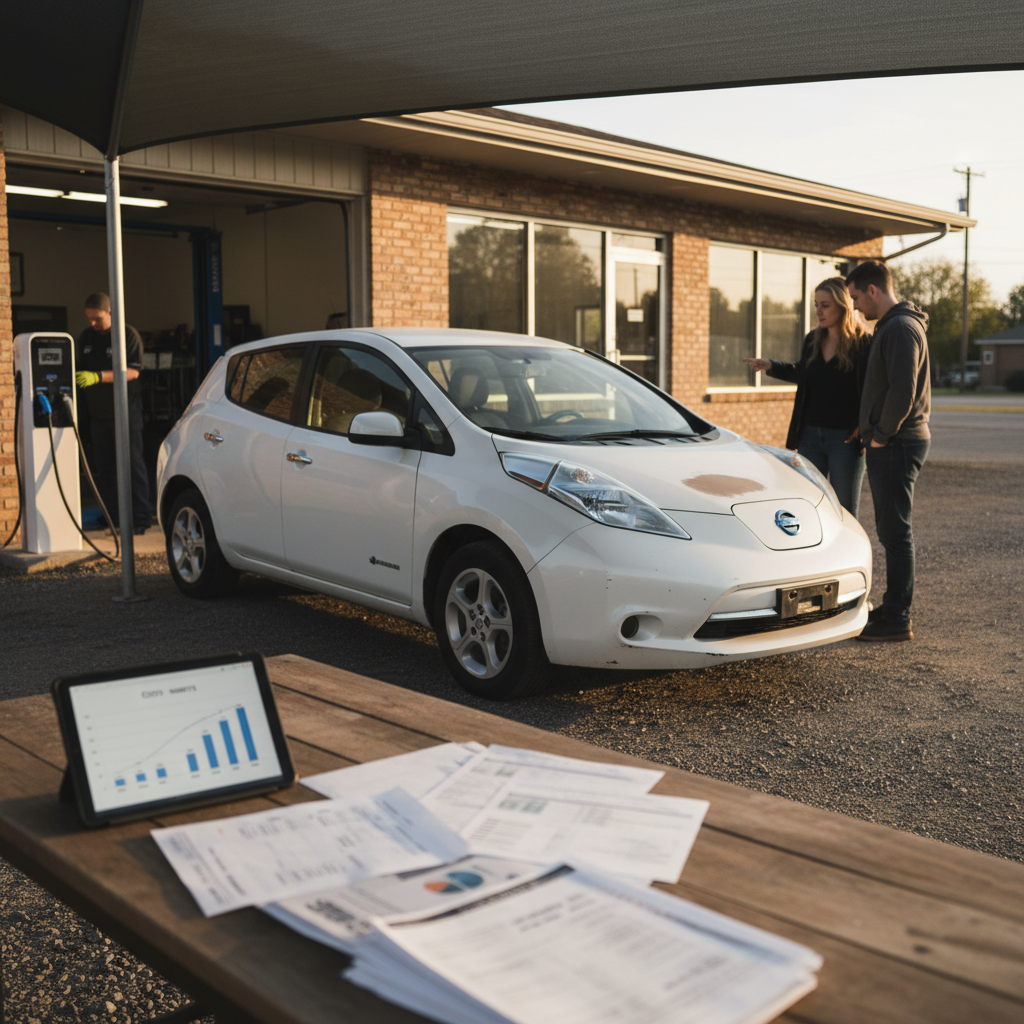
A free diagnostic can be a useful screening tool when you’re shopping for a used car. If a check engine light is on during a test drive, a quick free code scan can tell you whether you’re dealing with something minor or the first chapter in an expensive story. But it’s only one piece of the puzzle.
How to use free diagnostics when shopping
- Ask the seller if they’ve already scanned for codes and request proof.
- If a warning light is on, get a free scan before negotiating price.
- Use the results to decide whether to walk away or budget for repairs.
- Remember that clearing codes right before a sale is a red flag.
Where Recharged fits in
On Recharged, every used EV comes with a Recharged Score Report that goes far beyond a basic scan:
- Independent battery health diagnostics
- Pricing benchmarked to national EV resale data
- Itemized vehicle condition notes
- EV-specialist support to explain what the data means
That kind of transparency helps you compare the cost of a used EV with realistic expectations for future maintenance, not just whether the dash is free of warning lights today.
Layer your protection
Frequently asked questions about free diagnostics
Free diagnostics: your questions answered
Bottom line: When a free diagnostic is actually a good deal
Auto repair shops with free diagnostics can absolutely save you money, as long as you understand the trade-offs. A quick, no-cost scan at a parts store is perfect when a check engine light pops on and the car still drives fine. It’s less useful when you’re chasing a serious drivability problem, planning a major repair, or evaluating a used vehicle’s long-term health, especially if that vehicle is an EV.
Use free diagnostics for what they’re best at: triage and basic information. When the stakes get higher, invest in a proper diagnostic at a reputable shop and, if you’re in EV territory, lean on tools like Recharged’s battery health diagnostics and Recharged Score Reports. Spending a bit more on the right data up front is often the cheapest way to drive with confidence later.