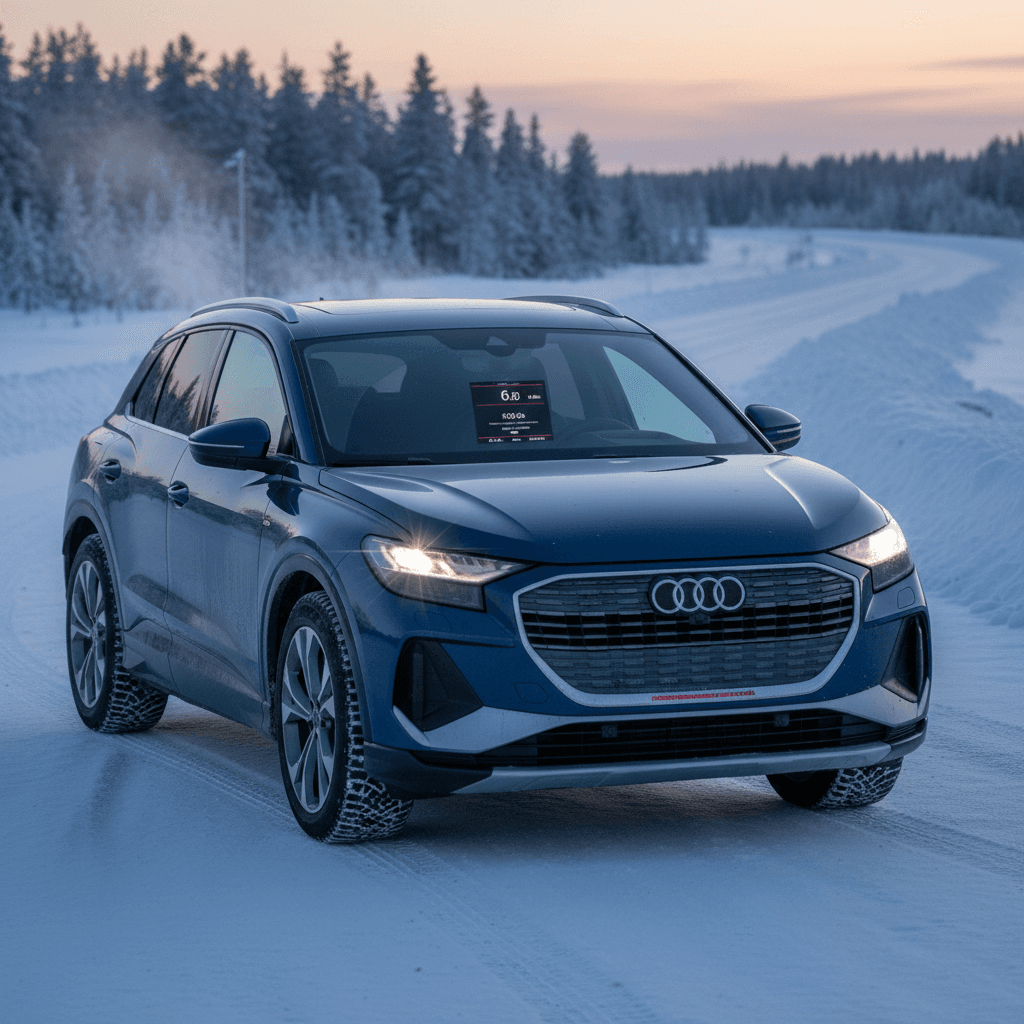
If you’re trying to figure out the Audi Q4 e-tron winter range loss percentage, you’ve probably seen everything from mild 15% dips to horror stories of losing half your range on a cold commute. The truth, as usual, lives in the dull middle, but it matters, because that middle decides whether you glide past the next charger or arrive white‑knuckled at 2%.
EV winter range in one sentence
Audi Q4 e-tron winter range loss: the short answer
Typical Audi Q4 e-tron winter range loss
For the Audi Q4 e-tron specifically, most owners who pay attention to their energy use see roughly 20–30% winter range loss in what you’d call a normal cold climate, think teens to 30s °F, some highway, some city, cabin set to the low 70s. In truly nasty weather (single digits, lots of 70–75 mph running, constant defrost) seeing around one‑third off the EPA number is entirely normal, not a sign your battery is dying.
Don’t judge your battery by one awful day
Audi Q4 e-tron winter range loss percentage by temperature band
Let’s talk numbers, because “a bit less range in the cold” is useless when you’re staring at a 140‑mile estimate and a 120‑mile drive.
Audi Q4 e-tron winter range loss by conditions
Approximate winter range retention for common U.S. driving scenarios. These are directional, not guarantees, but they’re far closer to reality than the brochure.
| Conditions | Temp (°F) | Driving Profile | Climate Use | Expected Loss | Usable Range |
|---|---|---|---|---|---|
| Mild winter day | 30–40° | Mixed city/highway 45–60 mph | Eco cabin 68–70° | 10–20% | 210–240 mi |
| Cold commute | 20–30° | Mostly city, short trips | Normal heat 70–72° | 20–25% | 200–215 mi |
| Cold highway run | 15–25° | 70 mph highway, 1–2 hr | Normal heat + light defrost | 20–30% | 185–210 mi |
| Deep-freeze highway | 0–10° | 70–75 mph highway, 2–3 hr | Warm cabin 72–74° + frequent defrost | 30–35% | 170–185 mi |
| Short errands, parked outside | 0–20° | Many 5–10 min trips | Frequent max defrost | 35–40% | 160–175 mi equivalent |
Assumes a Q4 40 e-tron rated around 265 miles EPA. Adjust up or down slightly for other trims.
Two things to notice. First, temperature is only half the story; short trips and heater use are just as important. Second, the Q4 e-tron generally behaves like a well‑sorted modern EV in winter, not magic, not terrible. If you mentally knock 20–30% off the EPA number whenever the daytime high has a minus sign in front of it, you’ll be in the right neighborhood.
Real-world winter range examples: turning percentages into miles
Percentages are great for spreadsheets, less so when you’re wondering if you can skip the next charger. Here’s how Audi Q4 e-tron winter range loss percentages translate into miles you can actually use.
Audi Q4 e-tron winter scenarios in plain English
Three common ways Q4 owners run into winter range surprises
Scenario 1: Suburban winter
Setup: Q4 40 e-tron, EPA around 265 miles. Mixed suburban driving at 40–55 mph, temps in the 30s, car garaged overnight.
- Typical consumption: 2.7–3.0 mi/kWh in winter.
- Loss: roughly 10–20% vs summer.
- Realistic range: 210–240 miles on a full charge.
Scenario 2: Cold interstate run
Setup: Q4 50 e-tron quattro, 70–75 mph interstate, temps in the high teens, car parked outside, cabin at 72°.
- Typical loss: 25–35% vs EPA.
- Realistic range: that 236–265 mile sticker behaves more like 170–190 miles.
- Plan stops every 120–150 miles for comfort.
Scenario 3: Deep cold & short hops
Setup: Any Q4, single digits °F, lots of 5–10 minute errands, cabin set warm with frequent defrost.
- Energy is poured into reheating cabin and pack.
- Loss: 35%+ equivalent on those short legs.
- Gauge can show scarily low “full” estimates until weather and habits improve.
Watch Wh/mi, not just the guess‑o‑meter
Why the Audi Q4 e-tron loses range in winter
The Q4 e-tron doesn’t get a special exemption from physics because it has four rings on the nose. It faces the same four winter villains as every other modern EV; Audi just throws decent thermal management and (in some trims) a heat pump at the problem.
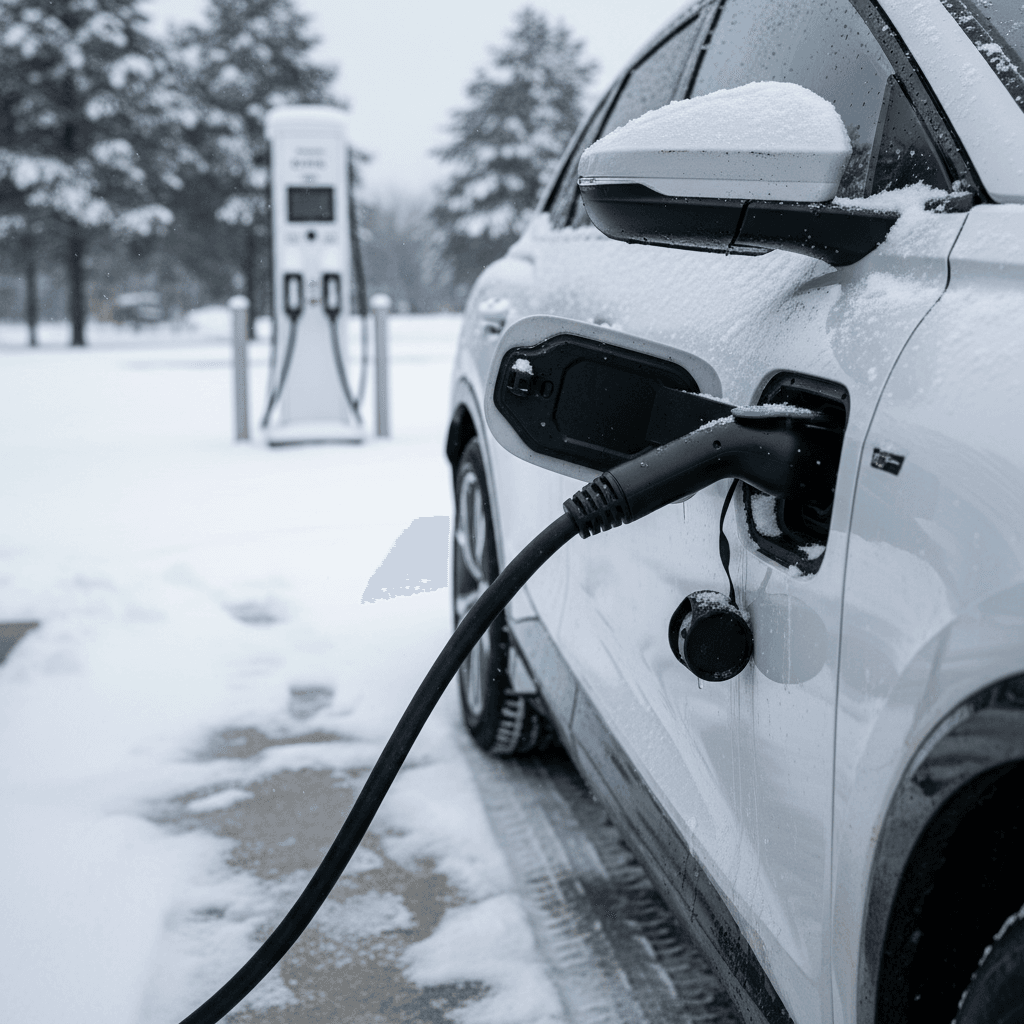
- Cold battery chemistry: Lithium-ion cells hate the cold. Their internal resistance rises, so you can’t pull energy out as efficiently until the pack warms up. You still have roughly the same total kWh; you just can’t reach all of it easily when it’s 10°F and the pack is ice‑cube cold.
- Cabin heating load: A gas car gets “free” heat from waste engine energy. Your Q4 has to spend battery power to warm you and the battery. A resistive heater can pull several kilowatts; a heat pump uses a lot less, which is why the option matters.
- Aerodynamic drag and slush: Cold, dense air plus winter tires, snow, and slush all drive consumption up, especially at 70–75 mph. The same highway run that uses 280 Wh/mi in June can jump to 340–380 Wh/mi in January.
- Short-trip penalty: Each time you hop in for a 10‑minute drive from a cold soak, the Q4 spends disproportionate energy reheating the cabin and pack. Lots of short trips in the cold will always look “worse” than one long, steady drive.
When winter range loss looks like degradation
Heat pump, trims, and model years: why some Q4s do better
Audi’s own technical literature points out that its optional heat pump is there specifically to cut climate‑related range loss in winter. On the Q4 e-tron, though, the story gets a little messier because availability and default equipment have changed by market and model year.
Heat pump vs no heat pump
- With heat pump: Cabin heat and pack conditioning are much more efficient. Across EVs that use them well, real‑world data often shows several percentage points less winter loss compared with resistive‑only systems.
- Without heat pump: The car leans more on resistive heating. You’ll feel the penalty most on long, cold highway trips and during constant defrost use.
- If you’re shopping used in a cold climate, the presence of a heat pump is worth prioritizing right up there with all‑wheel drive and winter tires.
Q4 trims and battery basics
- Most U.S.-spec Q4s use an 82‑kWh gross pack with usable capacity in the high‑70‑kWh range, shared with the Volkswagen ID.4.
- Single‑motor rear‑drive variants (like Q4 40) tend to post slightly better winter efficiency than dual‑motor quattro models simply because they have less hardware to spin.
- Newer software revisions have improved charging behavior and efficiency at speed; a 2024 Q4 can behave a bit better on the highway than an early build if everything is up to date.
Shopping used? Ask for real data, not just the brochure
Ready to find your next EV?
Browse VehiclesHighway vs city: how winter hits Q4 e-tron range differently
In winter, your Q4 seems to live a double life. Around town it can feel almost normal; on the interstate the range melts like a popsicle on a radiator. That’s not your imagination.
Winter efficiency: city versus highway
Why the same temperature can produce very different range losses
City & suburban driving
- Lower average speeds mean less aerodynamic drag.
- Regen braking recovers some energy each time you slow down.
- Once the pack and cabin are warm, energy use stabilizes.
- Typical winter loss: around 15–25% for many Q4 owners in real‑world city/suburban use.
Highway & interstate driving
- At 70–75 mph, aero drag dominates; cold dense air makes it worse.
- Little regen, just continuous high load.
- Heater and defrost stay on the whole time.
- Typical winter loss: 25–35% is absolutely normal on long cold highway runs.
The 65 mph rule of thumb
10 ways to cut Audi Q4 e-tron winter range loss
Winter range checklist for your Q4 e-tron
1. Precondition while plugged in
Use the myAudi app or in‑car settings to warm the cabin and battery <strong>before</strong> you drive, while the car is still on AC power. You’ll start with a warm pack and waste less energy getting everything up to temperature.
2. Use seat and wheel heaters first
Heated seats and steering wheel sip energy compared with blasting cabin air. Set the climate a couple of degrees cooler and lean on the surfaces that touch you.
3. Avoid lots of tiny trips
Batch errands whenever you can. One 40‑minute drive is much kinder to your winter range than four 10‑minute hops from a cold soak.
4. Dial back highway speed
Dropping from 75 to 65 mph in the cold can easily save <strong>10–15%</strong> energy use on a Q4, which is exactly the winter penalty many people complain about.
5. Keep tires properly inflated
Cold air drops tire pressure. Underinflated winter tires crank up rolling resistance and chew through miles; check pressures regularly and follow Audi’s spec for your load and tire type.
6. Use an efficient route, not just the shortest
A slightly longer route at lower speeds can use less energy than a shorter one at 75 mph. Let the nav choose eco‑friendly routes when time allows.
7. Clear snow and ice before driving
Snow‑packed wheel wells and ice on bodywork hurt aero and rolling resistance. Brushing the car off completely isn’t just safe, it’s good for range.
8. Don’t obsess over 100% charges
For most winter driving, charging to 80–90% is plenty and healthier for the pack long‑term. Save 100% for truly long trips when you need every mile.
9. Update software and navigation
Make sure your Q4 is running the latest software. Automakers regularly tweak efficiency, charging behavior, and range estimation logic via updates.
10. Learn your personal winter baseline
Spend a week tracking Wh/mi or mi/kWh and note the temps, speeds, and routes. Once you know your car’s “normal” winter profile, scary‑looking gauges lose their power.
Planning winter road trips in a Q4 e-tron
On a crisp October day, the Q4 e-tron is an easy road‑trip partner. In February, you have to drive like an adult and plan like a pessimist. The good news is that once you budget for the winter haircut, the car is entirely viable for long‑distance work.
Simple winter planning rules
- Start with your trim’s EPA highway‑ish range (for many Q4s, call it 236–265 miles).
- Apply a 25–30% winter discount for cold‑weather interstate driving.
- Plan fast‑charge stops every 120–150 miles rather than stretching to the limits.
- Arrive at chargers with 10–20% state of charge; there’s no prize for rolling in at 1% sweating through your parka.
Charging strategy when it’s cold
- Use DC fast chargers that let you stay inside and keep the cabin at a moderate temp while charging.
- If possible, navigate to the charger in advance so the car can precondition the battery on the way.
- In deep winter, accept that charge curves will be slower and build an extra 10–15 minutes into each stop.
- If a long winter road trip is part of your regular life, consider shopping for a Q4 with a heat pump and verified strong battery health, exactly the sort of thing our Recharged Score is built to surface.
Beware the first leg of the day
Is a used Audi Q4 e-tron a good winter EV?
If you live where the plows are out before sunrise, the idea of a compact luxury EV from a brand better known for quattro ski‑slope commercials may look tempting. The Q4 e-tron is not a range monster, but as a winter car it’s fundamentally sound if you go in with realistic expectations.
Audi Q4 e-tron as a winter daily: pros and cons
What you’re really signing up for in snow country
Winter strengths
- Available quattro all‑wheel drive and decent weight distribution give confident traction on snow and ice.
- Good thermal management compared with some mass‑market EVs.
- Comfortable, quiet cabin that makes winter miles less tiring.
Trade-offs
- Real‑world winter highway range more like 170–200 miles, not the mid‑200s on the window sticker.
- Heat pump availability varies; without it you’ll feel more of the winter penalty.
- Fast‑charging performance is solid but not class‑leading, especially in the cold.
Buying used smartly
- Ask for verified battery health, not just state of charge screenshots.
- Confirm whether the car has a heat pump and winter‑friendly options like heated steering wheel and seats.
- When buying through Recharged, your Q4 includes a Recharged Score Report so you know exactly what range and battery performance to expect, summer and winter.
Audi Q4 e-tron winter range loss: FAQ
Frequently asked questions about Q4 e-tron winter range
The headline on the Audi Q4 e-tron’s window sticker doesn’t survive January intact, but that doesn’t mean the car is secretly broken. In most real‑world use you’re looking at roughly a quarter of your range gone to winter, sometimes a third on hard interstate days. Once you bake that discount into your mental math, and pick the right spec if you’re shopping used, the Q4 becomes exactly what Audi promised: a compact, confident, quietly competent winter EV. And if you want someone to sanity‑check the battery and range before you buy, that’s literally what Recharged was built for.