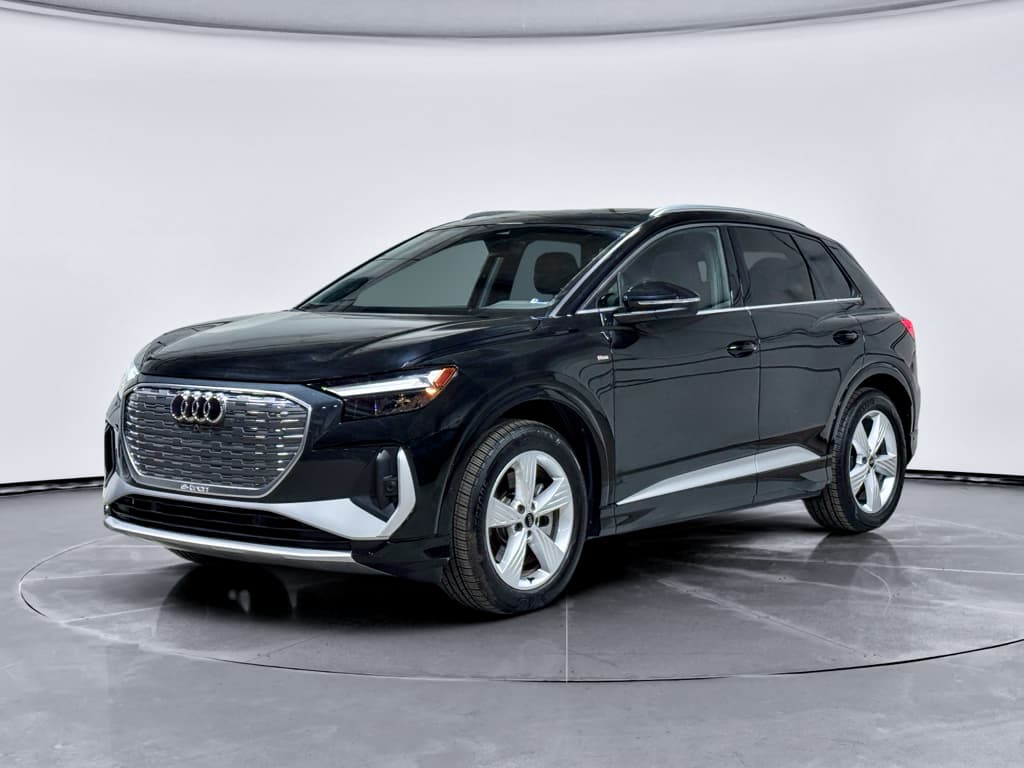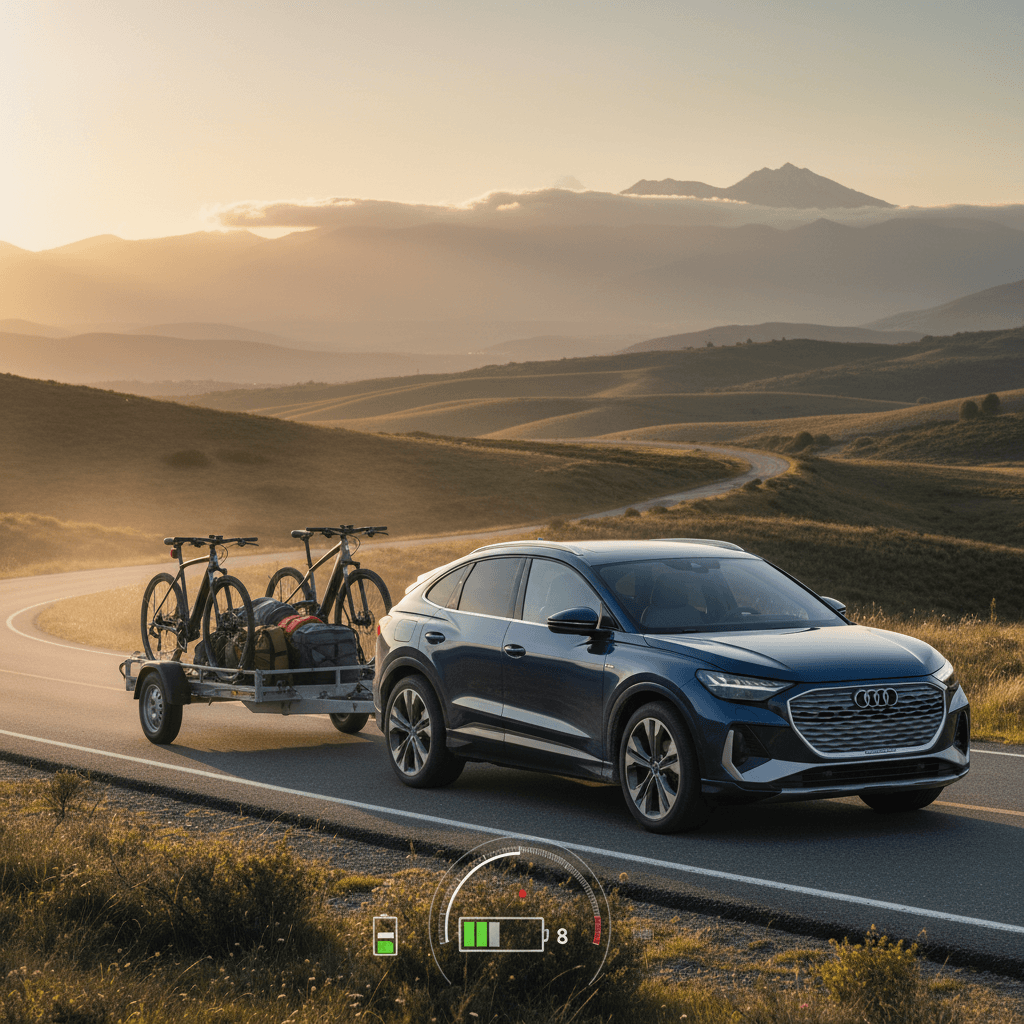
Hooking a trailer to an EV still feels a bit like a science experiment, and the Audi Q4 e-tron is no exception. On paper, its towing capacity looks solid for a compact luxury SUV, but the real question you’re probably asking is: how much range loss are you going to suffer when you actually tow?
Quick takeaway
Audi Q4 e-tron towing at a glance
Audi Q4 e-tron towing & range snapshot
If you treat the Q4 e-tron like a small diesel SUV, hook up a big boxy trailer and blast down the interstate at 80 mph, you’ll be disappointed. But if you right-size the trailer, slow down a touch, and plan your charging stops, it becomes a very usable light-duty tow vehicle for camping, bikes, small boats, and cargo.
Tow ratings by Audi Q4 e-tron variant
Audi’s ratings vary slightly by motor layout and market, but broadly, the Q4 e-tron and Q4 Sportback e-tron sit in the same towing neighborhood. Always confirm numbers in your own owner’s manual, but here’s a simplified view of what most owners will see:
Indicative Audi Q4 e-tron tow ratings (North America & similar markets)
Approximate manufacturer ratings. Always verify exact limits in your owner’s manual and on the vehicle’s certification label.
| Variant | Drive | Approx. braked tow rating | Approx. unbraked rating | Max tongue weight* |
|---|---|---|---|---|
| Q4 40 e-tron | RWD | ~2,200 lb (1,000 kg) | ~1,650 lb (750 kg) | ~220 lb (100 kg) |
| Q4 45 e-tron quattro / 50 e-tron quattro | AWD | ~2,650 lb (1,200 kg) | ~1,650 lb (750 kg) | ~265 lb (120 kg) |
| Q4 Sportback equivalents | RWD or AWD | Similar to matching SUV models | Similar | Similar |
Unbraked trailers are typically limited to a much lower rating; the heavier number assumes a properly braked trailer and factory tow package.
Ratings are hard limits
- Tongue weight usually needs to land around 8–12% of the trailer’s total weight.
- Passenger and cargo weight inside the Q4 e-tron eat into your remaining payload for tongue weight.
- The tow bar itself must match or exceed the vehicle’s rating.
How towing actually hits your Q4 e-tron range
The Q4 e-tron’s battery doesn’t magically shrink when you hook up a trailer. What changes is how hard the car has to work to push that extra frontal area and weight through the air. EVs are brutally honest: every extra kilowatt-hour shows up instantly on the consumption readout.
Why range drops so sharply when towing
Four main culprits turn your sleek Audi into a brick with a barn attached.
1. Aerodynamic drag
2. Extra weight
3. Higher steady power draw
4. Temperature & thermal management
The single biggest lever: speed
Real-world Q4 e-tron towing range examples
Let’s translate the physics into something you can actually plan around. Assume a Q4 e-tron with the larger battery, realistic solo highway range in the 230–250 mile band when new, driven sensibly.
Scenario A: Lightweight utility trailer
Think open 5×8 utility trailer with a motorcycle or lawn equipment, total trailer weight around 1,500 lb.
- Speed: 60–65 mph
- Conditions: Mild temps, light wind, mostly flat
- Consumption: roughly 30–35 kWh/100 mi
- Range hit: about 25–35% vs. driving solo
A car rated for ~240 highway miles solo might reasonably manage 150–180 miles per charge in this scenario, assuming you’re using most of the battery.
Scenario B: Small camper or cargo trailer
Now picture a 12–16 ft single‑axle camper or tall cargo trailer, total around 2,000–2,500 lb and much more frontal area.
- Speed: 60–65 mph
- Conditions: Mixed terrain, some hills, moderate temps
- Consumption: often 40–50+ kWh/100 mi
- Range hit: commonly 40–50% vs. solo
That same ~240-mile SUV suddenly feels like a 110–150-mile EV between fast charges, totally usable, but you must plan your stops.
When it can go really wrong
Planning road trips in a Q4 e-tron with a trailer
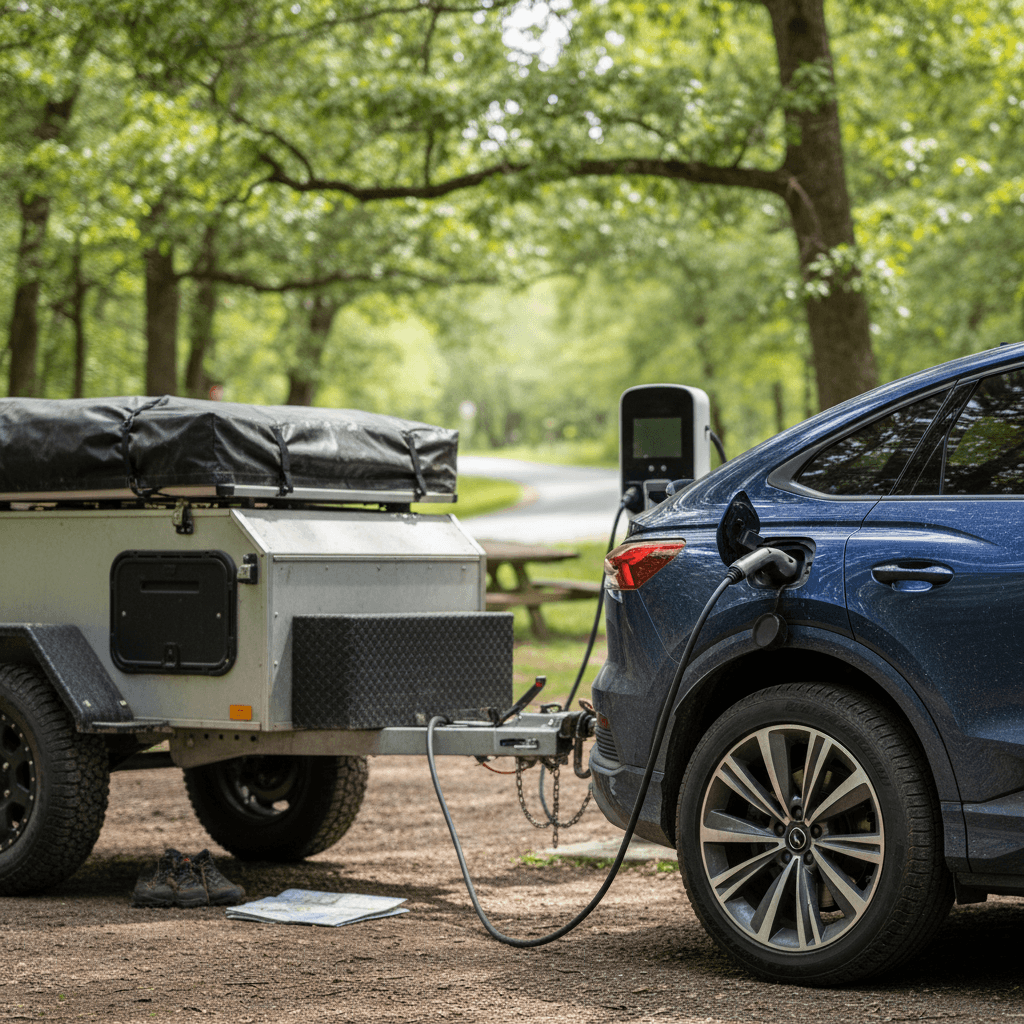
EV towing isn’t fundamentally harder than towing with gas, it’s just less forgiving when you wing it. A bit of planning turns your Q4 e-tron into a perfectly competent adventure rig.
Road-trip planning checklist for Q4 e-tron owners
1. Choose the right trailer
Keep trailer weight well under the Q4’s rated capacity and prioritize <strong>low frontal area</strong>. A compact pop‑up camper will tow much more efficiently than a tall box trailer at the same weight.
2. Map fast chargers along your route
Use apps like PlugShare, A Better Routeplanner, or your navigation system to plot <strong>DC fast chargers every 60–100 miles</strong>. Filter for high‑power stations with room to maneuver a trailer.
3. Plan for trailer-friendly stops
Not all chargers are trailer‑friendly. Look for stations with back‑in or pull‑through access where you can stay hitched. When in doubt, plan a few sites where unhooking is easy and safe.
4. Start with a bigger buffer
When towing, treat <strong>20–25% battery</strong> as your practical “empty.” Leave margin for headwinds, detours, and chargers that are out of service or ICE’d.
5. Dial in your speed early
On day one, run an early test segment: set cruise at 60–65 mph, reset your trip computer, and watch your consumption over 30–50 miles. Use that real number, not guesses, to refine your charging plan.
6. Use preconditioning & cabin discipline
Precondition the battery and cabin while plugged in before departure. On the road, use seat heaters and moderate cabin temps instead of blasting HVAC, which chips away at range when you’re already working harder.
Aim for rhythm, not records
Protecting battery health while towing
Towing doesn’t automatically destroy your battery any more than highway driving does. What’s hard on an EV pack is heat and time spent at very high or very low state of charge, especially when combined with repeated DC fast charging.
- Avoid hammering up long grades at full throttle with a cold or very hot battery, use the right lane and let the car settle into an efficient pace.
- When possible, fast‑charge between roughly 10–70% instead of insisting on 90–100% every stop. The upper end of the pack charges slower and adds more thermal stress.
- Use the car’s built‑in towing mode or stability systems if available; they’re designed to manage weight transfer and regen more gracefully.
- Don’t store the Q4 e-tron at 100% state of charge for days before a trip. Charge to full right before you leave or stick to 70–80% if you don’t need the extra range.
How Recharged can help here
Is the Audi Q4 e-tron actually good for towing?
The Q4 e-tron is not a half-ton pickup hiding in a German tuxedo, and it shouldn’t be treated like one. But within its lane, light‑duty trailers, toys, and compact campers, it’s better than many buyers expect.
Audi Q4 e-tron towing: strengths vs. limitations
Understand what it does well and where it falls short before you buy.
Where the Q4 e-tron shines
- Strong low‑speed torque for smooth launches on hills or in campgrounds.
- Excellent stability control and traction management from the EV drivetrain.
- Low center of gravity thanks to the battery pack, which helps stability.
- Quiet powertrain makes long towing days less tiring.
Where it’s out of its depth
- Modest tow rating vs. gas SUVs and trucks; this isn’t for large travel trailers.
- Charging logistics can be awkward with a trailer at older or cramped stations.
- Steep range penalty with big, boxy trailers or high speeds.
- Payload constraints if you’re carrying four people, gear, and tongue weight.
Buying a used Audi Q4 e-tron for towing
If you’re shopping used, the Q4 e-tron can be an appealing alternative to a thirsty small SUV, especially if most of your miles are unplugged commuting and you only tow on weekends. But towing adds a few extra inspection items you shouldn’t skip.
Used Q4 e-tron towing buyer’s checklist
Confirm factory tow prep
Look for evidence of a <strong>properly installed tow package</strong>, ideally factory or dealer fitted. Home‑brew hitches on EVs are a red flag unless you can verify the hardware and wiring were done correctly.
Inspect hitch and rear structure
Check for rust, bent hardware, or signs of impact where the hitch mounts to the body. Excess wear on the receiver or ball mount can hint at frequent or overweight towing.
Review tires and brakes
Towing is hard on consumables. Uneven tire wear, budget tires, or tired brakes suggest the previous owner wasn’t meticulous, especially important when you’re adding trailer weight.
Ask about towing history
A Q4 e-tron that towed a small camper a few times a year is very different from one that hauled a trailer every weekend. Service records, hitch wear, and seller honesty matter here.
Get a real battery health report
Fast‑charge‑heavy usage and frequent towing can accelerate battery wear. With Recharged, every vehicle comes with a <strong>Recharged Score battery health diagnostic</strong>, so you’re not guessing about pack condition.
Run the numbers on your use case
Be clear about your trailer, routes, and climate. If you regularly tow in extreme cold or mountain terrain, you may want more capacity, or plan for slower days and more frequent stops.
Why shop a Q4 e-tron on Recharged?
Ready to find your next EV?
Browse VehiclesFAQ: Audi Q4 e-tron towing capacity and range loss
Common questions about Q4 e-tron towing & range
Bottom line: know your limits, enjoy the trip
The Audi Q4 e-tron is not a magic electric pickup, and towing exposes every weakness in aerodynamics and charging access. But within its design brief, a compact luxury EV for daily driving that occasionally spends weekends dragging a modest trailer, it’s surprisingly capable, so long as you respect its limits.
If you stay well inside the towing capacity, factor in a realistic range loss of 30–50%, and build your route around trailer‑friendly fast chargers, the Q4 e-tron can take you, your gear, and your family to some very pleasant places. And if you’re shopping used, pairing that planning mindset with a smart used‑EV checklist and a verified battery health report from Recharged is the best way to make sure the car you buy lives up to the adventures you have in mind.