If you’re wondering what your Ford Mustang Mach-E trade in value should look like in 2026, you’re not alone. Early Mach-E leases are ending, used supply is growing, and EV pricing has been more volatile than most gas SUVs. The good news: with the right prep and the right buyer, you can usually beat a quick “what’s it worth?” dealer number, especially if your battery is healthy.
A quick reality check
Ford Mustang Mach-E trade-in value in 2026: what to expect
By early 2026, used Ford Mustang Mach-E values in the U.S. tend to fall into a few broad ranges depending on model year, trim, and condition. For late‑model examples, major appraisal tools show 2025 Mustang Mach-E trade-in prices from the mid-$20,000s to high-$30,000s for typical mileage and clean condition, with retail asking prices usually several thousand higher.
Typical 2025 Ford Mustang Mach-E value snapshots
Keep in mind that "trade-in" is what a dealer offers you for the car as-is, usually assuming they’ll recondition it and resell it. Private-party sale prices and retail dealer prices will be higher than trade-in, but they also require more work and risk on your part.
Current Mustang Mach-E values by year and trim
Exact numbers for your Mach-E depend on mileage, options, and condition, but it helps to ground your expectations with realistic ranges from late-2024 and early-2025 transaction data. Below is a simplified snapshot for U.S. vehicles with typical mileage and clean history; your specific offers will fall above or below these depending on battery health, wear, and local demand.
Illustrative Mustang Mach-E value ranges (U.S., early 2026)
Approximate trade-in and retail asking price ranges for common Mach-E years and trims in average to clean condition. These are ballpark figures to set expectations, not guaranteed offers.
| Model year | Trim examples | Typical mileage | Typical trade-in range | Typical retail asking range |
|---|---|---|---|---|
| 2021 | Select / Premium | 30k–45k | $15,000–$22,000 | $19,000–$27,000 |
| 2022 | Select / Premium / GT | 25k–40k | $18,000–$26,000 | $23,000–$32,000 |
| 2023 | Select / Premium / GT | 20k–35k | $20,000–$30,000 | $25,000–$36,000 |
| 2024 | Select / Premium / GT | 10k–25k | $23,000–$34,000 | $28,000–$40,000 |
| 2025 | Select / Premium / GT | 5k–15k | $25,000–$39,000+ | $30,000–$45,000+ |
Your actual Ford Mustang Mach-E trade in value will reflect specific mileage, battery state of health, options, color, and local market conditions.
Ranges, not promises
How depreciation hits the Mustang Mach-E
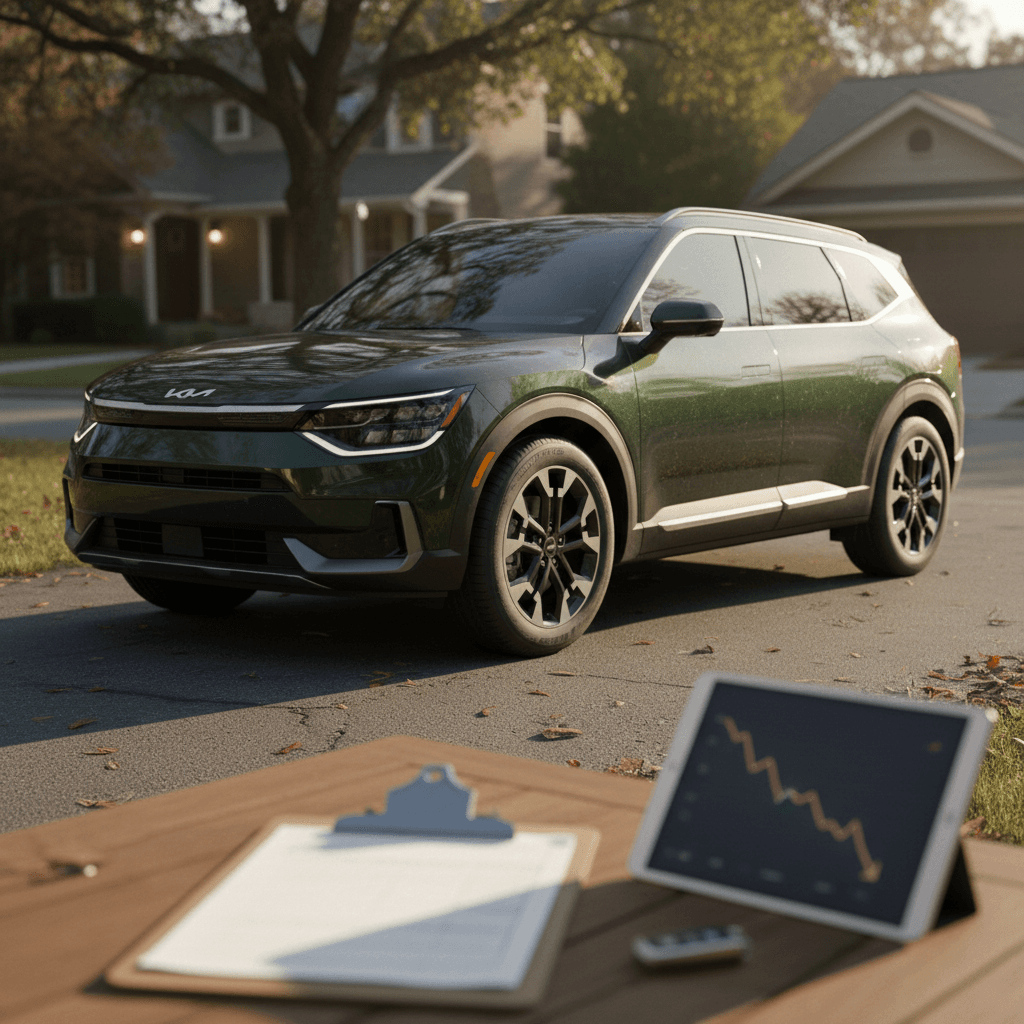
Like most EVs, the Mustang Mach‑E takes its biggest hit in the first few years, then depreciation slows as prices bottom out. Across multiple data sources, a typical Mach‑E bought new is expected to lose roughly 55–60% of its value over the first 5 years, landing around the high‑teens to low‑$20,000s in resale value for a mid‑$40k original price.
- Early-model Mach‑E SUVs (2021–2022) have already absorbed their steepest drop and now trade more on mileage, battery health, and condition than on age alone.
- Later-model years (2024–2025) benefit from updated hardware and software, but still face EV‑segment headwinds: rapid tech evolution, new competition, and shifting incentives.
- Performance trims like the GT and California Special often lose a bit more in dollar terms, but can retain stronger demand if they’re clean and well‑optioned.
How this compares to gas SUVs
7 factors that move your Mach-E trade-in value up or down
What appraisers look at on a Mustang Mach-E
These levers often explain why two Mach‑Es that look similar online get very different offers.
1. Battery health
2. Mileage & usage
3. Condition & reconditioning cost
4. Accident & title history
5. Local EV demand
6. Trim, options & software
Where Recharged fits in
Ready to find your next EV?
Browse VehiclesBattery health: the single biggest swing factor
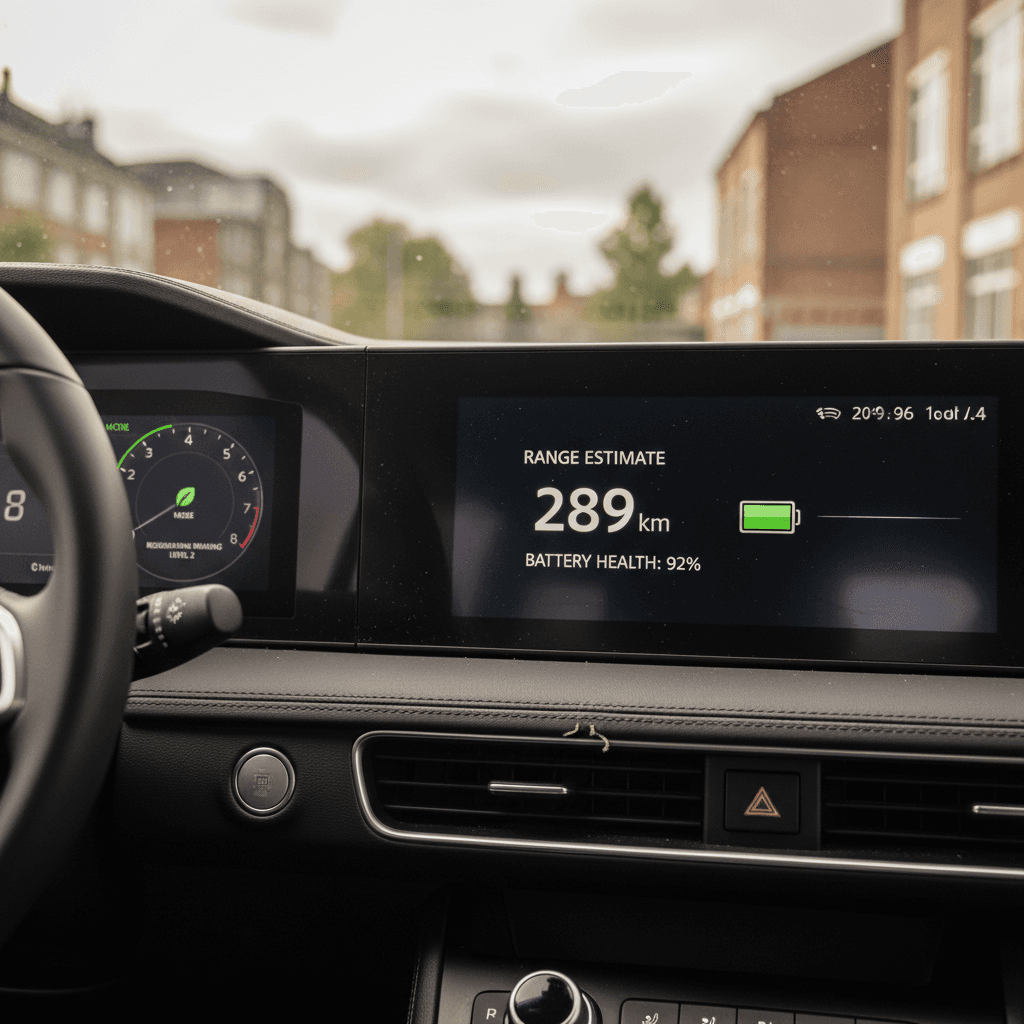
On a gas Mustang, compression numbers and service records tell the story. On a Mustang Mach‑E, it’s the high‑voltage battery. Range loss and fast‑charging abuse are the biggest long‑term risks buyers worry about, which is why battery transparency is now the main differentiator in used EV pricing.
What hurts your Mach‑E battery value
- Heavy DC fast‑charging on road‑trip corridors without enough cool‑down time.
- Long stretches sitting at 100% state of charge, especially in hot climates.
- Consistently running the pack down to very low state of charge ("running on zero") before charging.
- Missing or delayed software updates that optimize thermal management.
What helps your battery value
- Mostly AC Level 2 charging at home or work, with moderate DC fast‑charge use.
- Keeping the car between roughly 20–80% state of charge for daily use.
- Parking in a garage or shade to reduce heat exposure.
- Complete, documented battery health diagnostics from a trusted source like the Recharged Score.
Turn invisible value into visible dollars
Recalls, accidents, and history: what buyers notice
The Mach‑E has seen its share of software and hardware recalls, including issues with door latches and, more recently, potential problems with the electronic park system. Most of these are handled via over‑the‑air or dealer software updates, but unresolved recalls will spook buyers and suppress offers until they’re addressed.
Before you get any trade-in offers, do this
1. Run your VIN for open recalls
Check Ford’s site or NHTSA’s recall tool and make sure all open Mustang Mach‑E recalls, especially latch or park‑related campaigns, are completed and documented.
2. Gather service and charge records
Download service history from FordPass, collect invoices, and if possible, document how often the car used DC fast‑charging versus home Level 2.
3. Pull a history report
Having a recent Carfax or similar report ready builds trust and helps you quickly address any prior damage or ownership questions before they drag on negotiations.
4. Fix obvious, inexpensive issues
Replace burned‑out bulbs, address warning lights, and handle simple maintenance items. A car that needs “unknown work” gets lowballed to cover worst‑case scenarios.
Don’t ignore safety recalls
How to maximize your Ford Mustang Mach-E trade-in offer
You can’t control the broader EV market, but you can absolutely control how your Mach‑E presents to buyers. Think like a wholesaler: every scratch, question mark, or missing record is another excuse to shade the offer down. Remove those excuses and you’ll usually see the number climb.
Step-by-step: prepping your Mach-E for top dollar
1. Time it around major payments and incentives
If you’re near the end of a lease or financing term, align your sale so you’re not rolling significant negative equity into the next car. Also watch for seasonal spikes in EV demand in your area.
2. Get a professional detail
A clean interior, de‑salted carpets, and polished exterior signal that the car was cared for. It’s one of the cheapest ways to boost your perceived condition grade from “average” to “clean.”
3. Fix curb appeal items selectively
Small paintless dent repairs, wheel refinishing, or fresh wiper blades can move the needle. But don’t spend $2,000 on cosmetic bodywork to chase a $1,000 higher offer, be strategic.
4. Resolve warning lights and basic maintenance
A check engine or high‑voltage warning light will tank your trade‑in value. Get diagnostic documentation; even if you choose not to repair everything, you’ll at least control the narrative.
5. Document battery health with a Recharged Score
If you sell through Recharged, your Mach‑E gets a <strong>Recharged Score battery health report</strong> that quantifies pack condition and DC fast‑charging history, giving buyers concrete confidence in your specific car.
6. Collect both sets of keys and accessories
Missing keys, charge cables, or floor mats sound minor, but replacing them is expensive. Having everything neatly packaged makes your car easier to retail and worth more to a buyer.
Trading in at a dealer vs. selling through Recharged
Once you know your Ford Mustang Mach‑E trade in value ballpark, the next question is how to sell: take the quick dealer trade‑in, shop around for instant‑cash offers, or list with an EV‑focused marketplace like Recharged. Each path has different trade‑offs between speed, price, and effort.
Traditional dealer trade-in
- Pros: Fast, convenient, everything handled in one visit when you buy your next car.
- Cons: Dealers often under‑value EV batteries, may not separate Mach‑E from generic compact SUVs, and build in wide safety margins, especially if they’re not confident selling used EVs.
- Best for: If you’re badly upside‑down, or need same‑day disposal and are willing to leave money on the table for convenience.
Selling or trading through Recharged
- Pros: EV‑specialist pricing, Recharged Score battery diagnostics, nationwide buyer pool, digital process, and help with financing, trade‑in, and consignment.
- Cons: Not as instant as handing the keys to a local dealer; you’ll schedule an inspection and coordinate pickup or drop‑off.
- Best for: Owners who want transparent, battery‑aware pricing and are willing to wait a bit longer to capture more of their Mach‑E’s true value.
How Recharged can help you sell smarter
Ford Mustang Mach-E trade-in value: FAQ
Common questions about Mach-E trade-in value
Bottom line: what your Mach-E is really worth
In 2026, a Ford Mustang Mach‑E’s trade-in value is shaped by more than just year, miles, and a generic guidebook. EV‑specific realities, battery health, software status, and buyer confidence, can be the difference between a disappointing number and a deal you feel good about. If you treat your Mach‑E like a long‑term asset, keep recalls and maintenance current, and document the pack’s condition, you’ll be positioned at the top of the value range for your year and trim.
If you’re ready to explore selling or trading your Mach‑E, consider starting with a battery‑aware perspective. Recharged was built for exactly this moment in the EV market: transparent pricing, expert guidance, and a Recharged Score Report that shows buyers, and lenders, what your Mustang Mach‑E is truly worth.