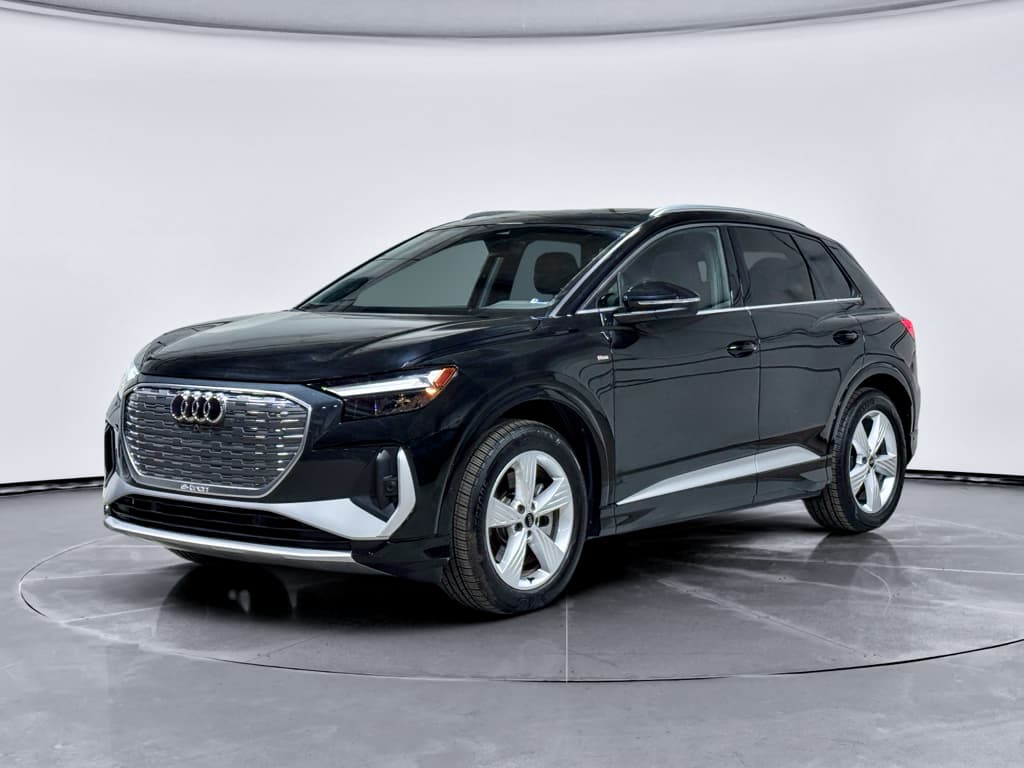
You’re not imagining it: electric luxury SUVs like the Audi Q4 e-tron took some bruises on resale value in their early years. But by 2026, the Q4 has settled into a more predictable pattern. If you own one, or you’re eyeing a used Q4, understanding how it’s depreciating right now is the key to not leaving thousands of dollars on the table.
A quick note before we dive in
Audi Q4 e-tron resale value in 2026: big picture
Audi Q4 e-tron resale snapshot for 2026
Compared with Tesla and some mainstream EVs, the Audi Q4 e-tron depreciates faster than average in its first few years. The upside for 2026: early-adopter pain is largely baked in. If you’re buying used, you’re stepping in after the steepest part of the curve. If you’re selling, you’re operating in a much more stable, predictable market than owners saw in 2022–2023.
Luxury EV reality check
What is a used Audi Q4 e-tron worth in 2026?
Resale value isn’t one number; it’s a range shaped by model year, trim, mileage, condition, and battery health. But if you want rough guidance for early 2026, here’s where typical clean, average‑mileage Q4 e-trons are landing when sold to a dealer or traded in, not top‑dollar retail.
Approximate 2026 U.S. Audi Q4 e-tron values by model year
Realistic trade‑in or dealer‑purchase ranges for clean, average‑mileage examples in early 2026. High‑mile, accident, or poor‑battery cars can land well below this; one‑owner, low‑mile, perfect battery examples can push higher.
| Model year | Typical mileage in 2026 | Rough trade‑in range* | Well‑presented retail asking range |
|---|---|---|---|
| 2021 | 35,000–45,000 miles | $19,000–$23,000 | $23,000–$28,000 |
| 2022 | 25,000–40,000 miles | $21,000–$25,000 | $26,000–$31,000 |
| 2023 | 18,000–30,000 miles | $24,000–$28,000 | $30,000–$35,000 |
| 2024 | 10,000–22,000 miles | $27,000–$31,000 | $33,000–$38,000 |
| 2025 | 5,000–15,000 miles | $30,000–$36,000 | $37,000–$43,000 |
Use this as a directional guide. For an exact number, always price against live listings and condition reports.
About these numbers
If those numbers sting compared with the original sticker, you’re not alone. Many 2022–2024 Q4s that left the showroom around $55,000 are now realistically trading in the mid‑$20,000s to low‑$30,000s. The good news is that by 2026, the floor is clearer: barring catastrophic battery issues or accidents, values aren’t falling off a cliff month‑to‑month the way they did during the early EV price corrections.
Depreciation trends: how fast the Audi Q4 e-tron drops in value
The Audi Q4 e-tron followed the playbook for premium electric SUVs: fast early depreciation, then a plateau. Data from national value guides and large resale studies suggests the Q4 can lose roughly 55–60% of its value in the first three years, and close to 70% by year five, relative to original MSRP.
- Years 0–3: the steepest drop. Incentives, rapid new‑model improvements, and luxury‑EV oversupply dragged values down quickly.
- Years 3–5: depreciation slows as most cars settle into the mid‑$20Ks to mid‑$30Ks, depending on spec and mileage.
- Years 6–8: values hinge more on battery health, repair history, and how robust the remaining warranty coverage looks to a used buyer.
Why 2026 feels calmer
How battery health affects Audi Q4 e-tron resale value
On any used EV, what you can’t see matters most. For the Audi Q4 e-tron, verified battery health and warranty coverage are the two biggest wild cards in resale value.
Battery health vs. resale: what buyers are thinking
Most used‑EV shoppers will pay more when they can trust the pack.
State of health (SOH)
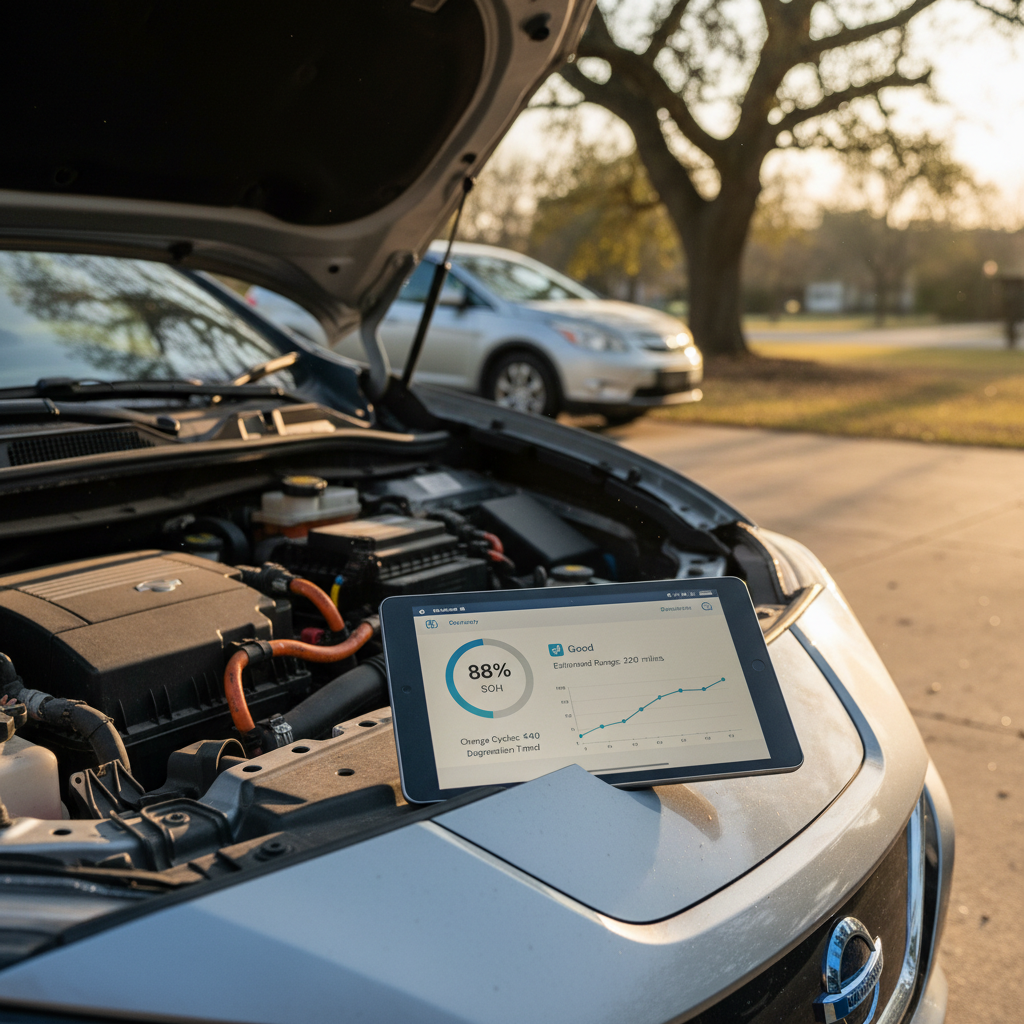
Buyers want to know how much of the original battery capacity is still usable. A Q4 that shows strong SOH and real‑world range close to new is far easier to sell, and worth more.
Remaining warranty
Most U.S. Q4 e-trons have an 8‑year/100,000‑mile high‑voltage battery warranty. A 2022 model in 2026 still has years of coverage left, which props up its value.
Independent verification
Third‑party battery diagnostics, like the Recharged Score Report, reassure buyers that they’re not taking a blind gamble on pack health or hidden degradation.
Battery problems are value killers
This is where Recharged leans in. Every Audi Q4 e-tron listed on our marketplace includes a Recharged Score Report that independently verifies battery health, compares it with similar EVs, and checks pricing against live market data. That transparency helps you justify a stronger asking price and gives buyers fewer reasons to haggle.

2021–2025 Audi Q4 e-tron: year‑by‑year resale outlook for 2026
2021–2022: early adopters, early depreciation
These are the oldest Q4 e-trons on the road in 2026. They suffered the sharpest price cuts as newer model years added range and charging improvements. By now:
- Many are in the high‑teens to mid‑$20Ks on trade‑in, depending on mileage and trim.
- They’re attractive to value‑hunters who care more about price than the latest tech.
- Battery warranty still has runway, which keeps them from falling into true beater territory.
If you own one, 2026–2027 can be a smart exit window before you cross 60,000+ miles and fall off more buyers’ CPO wish lists.
2023–2025: the resale sweet spot
Later model years, especially after Audi started rolling in incremental range and charging updates, are where the healthiest resale lives. In early 2026:
- Most 2023 Q4s still bring mid‑$20Ks to high‑$20Ks on trade‑in, more in a great private sale.
- 2024–2025 examples with low miles routinely list in the low‑to‑mid $30Ks or higher.
- Shoppers see these as the right balance of modern tech, warranty coverage, and price.
If you’re shopping used, this is where you’ll see the best mix of value and long‑term livability.
Trims, specs, and options that help (or hurt) resale
Not all Q4 e-trons age the same. The market has already started to separate heroes from headaches based on trim, powertrain, and options. Here’s what’s helping the most in 2026.
Spec decisions that move Audi Q4 e-tron resale
Some choices age gracefully. Others don’t.
Range & power levels
Longer‑range, higher‑output versions (like dual‑motor quattro models with the larger battery) hold value better than base configurations. Shoppers don’t want to compromise range in 2026.
AWD vs. RWD
In snow‑belt states, quattro all‑wheel drive is a big plus for resale. In milder climates, rear‑drive is fine but rarely commands a premium.
Sportback body style
The Sportback’s sleeker look tends to command a modest premium with design‑conscious buyers, especially in higher trims. That won’t rescue a rough example, but it can add a bit of sparkle to a clean one.
Premium & Prestige trims
Buyers who shop Audi expect luxury. Well‑optioned Premium Plus and Prestige Q4s usually sell faster and for more than bare‑bones base models.
Tech & driver‑assist packages
Packages that bundle upgraded infotainment, advanced driver assists, and better lighting remain desirable. Missing features can make your Q4 feel dated next to newer rivals.
Colors and wheels
Conservative exterior colors (white, gray, black, dark blue) and reasonably sized wheels age better than wild hues and huge, curb‑rash‑prone rims. Condition always trumps style when you’re talking resale.
Modifications that spook buyers
Best time to sell your Audi Q4 e-tron in 2026
Timing matters almost as much as mileage. The best moment to sell is when your Q4 still looks and feels current, but before mileage and cosmetic wear start to narrow your buyer pool.
Smart exit windows for Audi Q4 e-tron owners
2021–2022 owners
Consider selling in 2026–2027, while you still have meaningful battery warranty left.
Aim to list before passing ~60,000 miles; many CPO shoppers see that as a psychological cutoff.
If your Q4 is high‑mileage already, selling sooner may net more than hanging on until it’s truly old.
2023–2024 owners
3–4 years in (roughly 2026–2028) is the classic sweet spot for luxury EV resale.
You’ll capture buyers who want modern tech but don’t want brand‑new pricing.
If you drive low miles, you can justify stretching ownership a bit longer without cratering value.
2025 buyers thinking ahead
If you bought new in 2025, watch how quickly competitors evolve between 2026–2028.
A planned exit around 4–5 years can balance enjoyment and value retention.
If Audi releases a major upgrade with much better range or charging, expect a nudge downward on older models and time your sale before the market fully resets.
Seasonality still matters
7 ways to maximize your Audi Q4 e-tron’s resale price
Pre‑sale checklist: turn your Q4 into the best version of itself
1. Gather every service record you can
A thick folder, or a clean digital trail, of maintenance, software updates, and warranty work is gold. It reassures buyers (and dealers) that your Audi has been cared for and that any early issues were handled correctly.
2. Get a battery health report
Don’t just say the range is good, prove it. Tools like the <strong>Recharged Score Report</strong> use independent diagnostics to show real battery health, not just what the dash guesses. This can easily justify a higher asking price.
3. Fix small cosmetic problems first
Curb‑rashed wheels, chipped paint, cracked glass, and scuffed interiors drag down offers far more than the repair usually costs. A couple of well‑chosen reconditioning jobs can return more than you spend.
4. Detail like a pro
A thorough interior and exterior detail, shampoo carpets, clean crevices, decontaminate paint, dress tires, transforms how buyers feel about your car. A clean Q4 says “well cared‑for,” which usually equals “worth more.”
5. Price against real comparables, not wishes
Study live listings that match your year, trim, mileage, and options. If you’re asking thousands more than near‑identical Q4s, you’ll just help them sell faster. Use tools or marketplaces that pull in live data, not just book values.
6. Be honest about flaws in your listing
Point out any minor issues up front, curb rash, small dents, windshield chips, and price accordingly. Buyers hate surprises more than blemishes. Transparency can actually speed up a sale and reduce low‑ball offers.
7. Consider selling where EV shoppers already are
Listing on a mainstream classified site is fine, but a dedicated EV marketplace like <strong>Recharged</strong> connects you with buyers who already understand electric range, charging, and battery health, and who appreciate the added transparency of a Recharged Score.
Trade-in, private sale, or Recharged? Pros and cons
Once you know what your Audi Q4 e-tron is worth, the next question is how to turn it into cash, or equity for your next EV. Each selling path has its own trade‑offs in 2026.
Dealer trade‑in
- Pros: Fast, easy, rolled into your next deal. Less paperwork, no strangers at your house.
- Cons: Usually the lowest dollar amount. Dealers build in margin for reconditioning and market risk, especially on EVs.
- Best for: Owners prioritizing convenience over squeezing every last dollar out of resale.
Private sale
- Pros: Often brings the highest sale price if you’re patient and know how to market your car.
- Cons: Time‑consuming, requires great photos, strong listing copy, and some comfort negotiating with strangers.
- Best for: Owners who are detail‑oriented and willing to invest time for a better price.
Selling through Recharged
- Pros: EV‑savvy audience, expert support, and every car gets a Recharged Score battery health report and fair‑market pricing analysis.
- Cons: Not every single configuration will be in equally high demand; the market still sets the ceiling.
- Best for: Owners who want a modern, digital‑first selling experience with EV specialists guiding the process.
How Recharged can help you sell smarter
Ready to find your next EV?
Browse VehiclesAudi Q4 e-tron resale value FAQ (2026)
Frequently asked questions about Audi Q4 e-tron resale value in 2026
Bottom line: is the Audi Q4 e-tron holding its value?
If you bought an Audi Q4 e-tron brand‑new, you’ve already felt the sting of early luxury‑EV depreciation. By 2026, though, the story is less about panic and more about planning. The Q4 isn’t the king of resale value, but a well‑equipped, well‑maintained example with a strong battery report can still command real money, especially in the 3–5‑year window when it looks current and still sits comfortably inside its battery warranty.
Your job now is to play the hand you’ve got: know what your specific Q4 is worth, lean on independent battery diagnostics, clean up the cosmetics, and choose the right selling lane for your appetite and timeline. Whether you trade in, sell privately, or work with an EV‑specialist marketplace like Recharged, going into 2026 with a clear resale strategy can easily be the difference between a disappointing offer and a deal you feel good about long after the keys change hands.