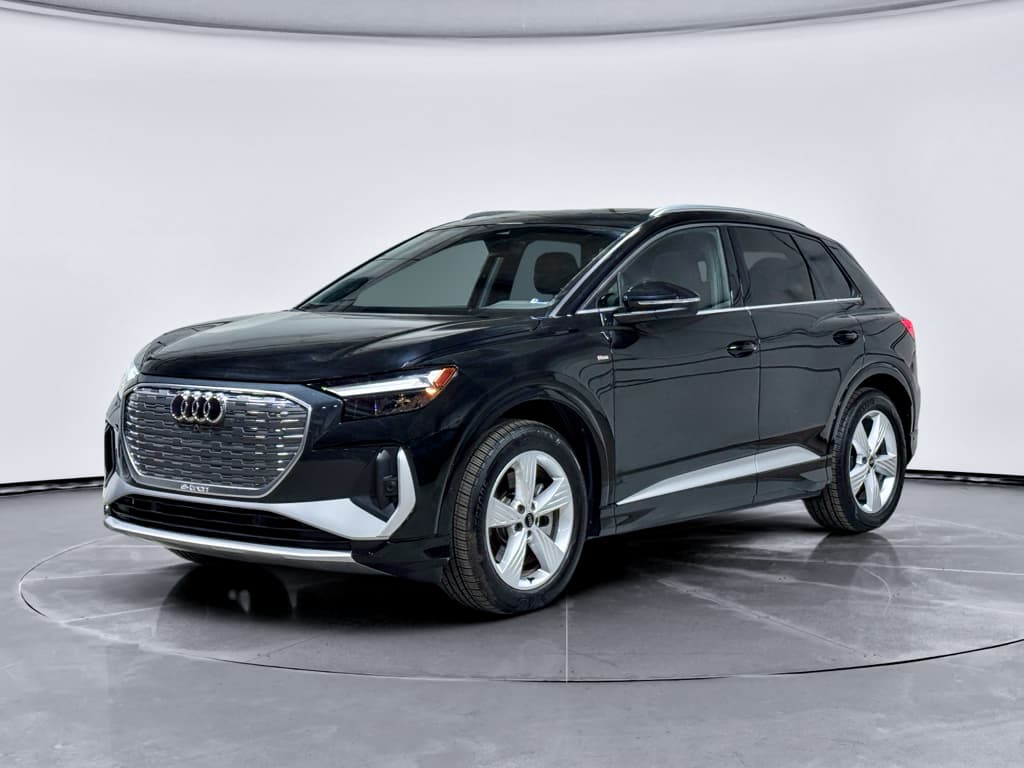
If you’re eyeing a used Audi Q4 e-tron or wondering what your current one will be worth in a few years, depreciation is the number that quietly shapes your total cost of ownership. The Audi Q4 e-tron depreciation rate is steeper than for gas SUVs, and even steeper than for some other luxury EVs, but the story changes a lot depending on model year, mileage, and battery health.
Why depreciation matters more with EVs
Audi Q4 e-tron depreciation rate at a glance
Key Audi Q4 e-tron depreciation signals
Luxury EVs lose value faster
How fast does an Audi Q4 e-tron depreciate?
Depreciation isn’t identical for every Q4 e-tron, but the broad pattern is clear. Early‑run 2022–2023 models took a sharper hit than newer 2024–2025 builds, both because they’re older and because later updates improved range and performance. In other words, the market is discounting the first iterations more heavily while holding newer ones closer to MSRP.
- In the first year, newer Q4 e-trons have seen relatively modest drops, with some 2024 models still retaining over 90% of MSRP in early used sales.
- By year two to three, retention often falls into the low‑to‑mid‑50% range versus original MSRP, meaning roughly half the sticker price is gone on older model years.
- Over a five‑year horizon, broader EV studies suggest the Q4 e-tron may lose around two‑thirds of its value, outpacing the typical gas SUV but staying in line with other luxury compact EV SUVs.
One-year vs. three-year story
Year‑by‑year depreciation curve for the Q4 e-tron
To make the Audi Q4 e-tron depreciation rate more concrete, it helps to translate percentage drops into rough dollar terms. The numbers below assume an original MSRP around $55,000 for a well‑equipped Q4 e-tron, which is common for mid‑ and upper‑trim models. Your actual figures will vary by trim and options, but the shape of the curve tends to look similar.
Illustrative 5‑year depreciation for an Audi Q4 e-tron
Approximate value trajectory for a Q4 e-tron that originally stickered at $55,000. These are directional, market‑based estimates, not guaranteed resale values.
| Age | Estimated retention | Estimated value | Typical story |
|---|---|---|---|
| Brand new (MSRP) | 100% | $55,000 | You’re paying sticker or close to it; buyers are absorbing all future depreciation. |
| 1 year | ≈70–75% | $38,500–$41,250 | Early depreciation hit; lightly used Q4s start to look compelling versus new. |
| 2 years | ≈60–65% | $33,000–$35,750 | Tech improvements in newer builds and EV incentives push more buyers to used. |
| 3 years | ≈50–55% | $27,500–$30,250 | Where many 2022–2023 Q4 e-trons are landing; big savings vs. new if the battery checks out. |
| 5 years | ≈30–35% | $16,500–$19,250 | Heavier discounting as newer generations arrive; battery health and charging standards matter most. |
Real‑world values will depend heavily on mileage, condition, incentives and local demand.
Don’t treat this as a guaranteed forecast
Factors that move the Q4 e-tron depreciation needle
What really drives Q4 e-tron resale value
Beyond age and miles, these six levers matter most.
Battery health & warranty
Local EV demand
Charging standards & speed
Range & efficiency
Brand & segment competition
Condition & maintenance records
Lean on real‑time market data
How the Q4 e-tron compares with other luxury EVs
Against gas and mainstream SUVs
Compared with a similarly sized gas crossover or a mainstream EV like a Hyundai Ioniq 5, the Audi Q4 e-tron usually depreciates faster. Luxury badges tend to magnify early‑year value loss, and incentives on new EVs can further undercut used pricing.
If you’re cross‑shopping brands purely on resale, a well‑equipped gas compact SUV may hold value better over five years, but you’ll give up the lower running costs and driving experience of an Audi EV.
Against other luxury EV crossovers
Within the luxury EV compact SUV set, the Q4 e-tron’s depreciation falls in the middle of the pack. Tesla’s Model Y historically held value better, but aggressive price cuts on new Teslas have narrowed that gap and pressured used prices.
On the flip side, some lesser‑known luxury EVs without strong brand recognition or dealer support can depreciate even faster than the Q4 e-tron, making Audi look relatively stable by comparison.
Real market prices: what used Q4 e-trons sell for
So what do those percentages look like on actual listings? Recent U.S. used‑car data shows Audi Q4 e-trons clustered largely in the $20,000s to low $30,000s, depending on age and trim. Early model‑year 2022 and 2023 vehicles with typical mileage often advertise in the mid‑$20Ks, while newer 2024 examples can stretch into the mid‑$30Ks when still low‑mile and heavily optioned.
Recent used Audi Q4 e-tron asking prices by model year
Illustrative U.S. online listing ranges, assuming average mileage and clean history. Actual prices vary by region and equipment.
| Model year | Typical price band | Notes |
|---|---|---|
| 2022 | $22,000–$28,000 | Early‑run Q4s, some higher‑mileage lease returns, bigger discounts from MSRP. |
| 2023 | $24,000–$32,000 | Mix of off‑lease and first‑owner trade‑ins; strong candidates for value if battery checks out. |
| 2024 | $27,000–$36,000 | Newer tech updates and remaining warranty keep prices higher, but deals appear as incentives shift. |
These are asking‑price ranges, not guaranteed transaction numbers.
Where Recharged fits in
Ready to find your next EV?
Browse VehiclesHow battery health impacts Audi Q4 e-tron resale value
For any used EV, the battery pack is the single most expensive component. With the Audi Q4 e-tron, small differences in state of health (SoH) can translate into thousands of dollars in resale value differences, because they affect both range and buyer confidence.
- A Q4 e-tron showing high‑80s to low‑90s SoH after several years will generally command stronger money than one that’s already dipped into the low‑80s, even if mileage is similar.
- Buyers are increasingly asking for third‑party battery diagnostics in addition to a traditional pre‑purchase inspection, and dealers are responding by offering more transparent reports.
- Vehicles that fast‑charge constantly at high power or live in extremely hot climates may see noticeably faster degradation, which the market is beginning to price in.
Use battery data as a negotiation lever
Practical ways to reduce your Q4 e-tron depreciation
Six ways to protect your Audi Q4 e-tron’s value
Simple ownership habits that pay off when it’s time to sell or trade in.
1. Respect the battery
2. Optimize home charging
3. Keep meticulous records
4. Protect the exterior & interior
5. Avoid accident history if you can
6. Time your exit
Buying a used Audi Q4 e-tron: smart shopper checklist
If you’re leaning into the depreciation curve and targeting a used Audi Q4 e-tron, you’re already thinking like a value‑oriented buyer. Use this checklist to separate the strong candidates from the problem children.
Used Audi Q4 e-tron due‑diligence checklist
Confirm the original MSRP and options
Ask for the original window sticker or a build sheet so you can benchmark today’s price against what the Q4 e-tron actually cost new. Higher‑trim models depreciate more in absolute dollars, but can be great value used if priced right.
Check battery warranty status
Audi’s battery warranty typically covers 8 years or a set mileage threshold. Note the in‑service date and remaining coverage, buyers will pay more for Q4 e-trons that still have several years of battery warranty left.
Get a battery health report
Don’t guess. Use a third‑party battery diagnostic or a platform like <strong>Recharged</strong> that includes a <strong>Recharged Score Report</strong> with state‑of‑health readings so you can compare this Q4 e-tron against peers.
Review service and charging history
Look for regular maintenance, software updates, and evidence that the car wasn’t fast‑charged exclusively. Gaps in history aren’t necessarily a red flag, but they should be priced in.
Inspect for accident and cosmetic damage
Pull a full history report, then walk the car yourself. Dents, mismatched paint and bent wheels affect both current value and future resale, even if the car drives fine.
Benchmark against the wider EV market
Before you sign, compare that Q4 e-tron’s price to similar EVs, Tesla Model Y, Mustang Mach‑E, Volvo XC40 Recharge. If the Audi is significantly more expensive without a clear advantage, depreciation may bite harder later.
How Recharged simplifies the used Q4 e-tron decision
FAQ: Audi Q4 e-tron depreciation and resale value
Common questions about Audi Q4 e-tron depreciation
Bottom line: is the Audi Q4 e-tron a good value used?
The Audi Q4 e-tron depreciation rate is undeniably steep, especially in the first three to five years, but that’s exactly why sharp shoppers increasingly target it on the used market. If you let the first owner absorb the big hit, then focus on battery health, warranty status, and fair market pricing, you can wind up with a premium electric SUV at a monthly cost that rivals far more ordinary vehicles.
The key is to treat depreciation as a tool, not just a risk. Use real‑time data, battery diagnostics and transparent pricing, whether that’s through a specialist marketplace like Recharged or a thorough independent search, to find Q4 e-tron examples that buck the worst of the curve. Do that, and the Audi rings in as one of the more compelling luxury EV values you can park in your driveway.