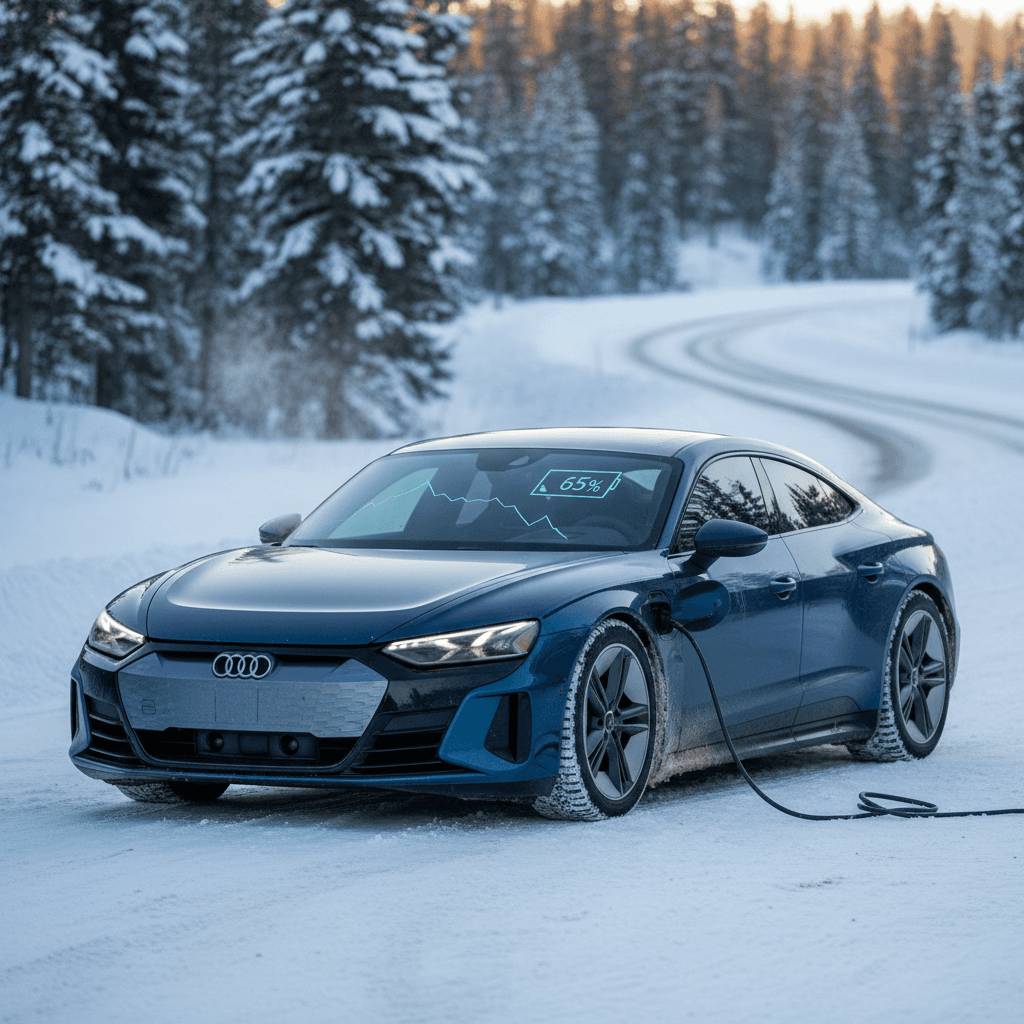
If you own an Audi e-tron GT, or you’re eyeing a used one, winter range is probably one of your big question marks. How much range will you actually lose when the temperature drops, and is the Audi e-tron GT winter range loss percentage any better or worse than other EVs?
Cold weather reality check
Audi e-tron GT winter range loss: overview
Let’s start with a top‑line answer. Across owner reports and broader EV data, a well‑maintained Audi e-tron GT typically sees the following winter range loss compared with mild‑weather driving:
- Mild winter (around 32°F / 0°C): roughly 10–20% range loss in mixed driving
- Normal cold (teens to 20s °F / −10 to −5°C): more like 20–30% range loss for most drivers
- Deep winter (single digits °F / below −15°C), short trips, no preconditioning: 30–40%+ loss isn’t unusual
That lines up with large‑sample winter studies on EVs in general, which consistently find that most electric vehicles keep roughly 70–80% of their usual range in normal freezing conditions, with bigger losses only in extreme cold or on short, heater‑heavy trips.
Don’t compare worst‑case stories to best‑case ratings
Rated range vs real-world winter range
To understand winter range loss percentages, you first need to know which “starting point” you’re using. The Audi e-tron GT has different rated ranges depending on test cycle and trim:
Audi e-tron GT rated range figures
Key official range numbers that drivers commonly reference when calculating winter range loss percentages.
| Model / Test | Official rating | What most owners actually see in mild weather |
|---|---|---|
| e-tron GT quattro – EPA (US) | ≈ 238 miles | About 250–270 miles on the highway with calm driving |
| RS e-tron GT – EPA (US) | ≈ 232 miles | Roughly 240–260 miles in mixed driving |
| e-tron GT quattro – WLTP (Europe) | ≈ 280–300 miles | Typically 240–260 real‑world |
| RS e-tron GT – WLTP (Europe) | ≈ 260–290 miles | Typically 230–250 real‑world |
Your real‑world winter range will be lower than these lab numbers, especially at highway speeds in cold weather.
Most drivers in mild temperatures don’t quite hit the optimistic WLTP numbers, but the e-tron GT often beats its EPA rating on the highway when you’re gentle with your right foot. In winter, your loss percentage can be measured against either rating, just be consistent when you’re comparing numbers.
The most honest baseline
Typical Audi e-tron GT winter range loss percentages
Putting all of this together, here’s a reasonable, experience‑based band for Audi e-tron GT winter range loss percentage in different scenarios, assuming a healthy battery and proper tire pressures:
Audi e-tron GT winter range loss at a glance
The e-tron GT’s efficient heat pump and big battery generally keep it in the lower half of those loss bands compared with less efficient crossovers. In other words: if an average EV is losing 30% that day, an e-tron GT driven thoughtfully might be closer to 20–25%.
Where the e-tron GT quietly shines in winter
What actually causes winter range loss in the e-tron GT
Cold doesn’t just make you reach for a parka, it makes your battery and drivetrain work harder, too. In the e-tron GT, winter range loss comes from three main buckets:
- Battery chemistry slows down: Lithium‑ion cells can’t move ions as easily when they’re cold, so internal resistance goes up. Until the pack warms, you get lower efficiency and sometimes slightly reduced peak power.
- Cabin and battery heating draw energy: Unlike a gas car, there’s no free waste heat from an engine. The e-tron GT’s heat pump is efficient, but heating 4,000+ pounds of car and a cold cabin still costs you miles.
- Winter roads and rolling resistance: Cold, dense air, wet or slushy pavement, and winter tires all raise drag. At highway speeds, aero drag is a big slice of the pie, and dense cold air makes it worse.
Battery: less efficient until it warms
On a 20°F morning, the e-tron GT’s pack will spend the first miles waking up. That means higher kWh per mile, just like a gas car burns more fuel when it’s cold. Once the pack is thoroughly warm, especially after DC fast charging or a long drive, your efficiency creeps back toward normal.
Cabin: a constant overhead on short hops
Every time you hop in for a 5‑mile errand and tell the car to be at 72°F, you’re lighting up the HVAC system. On short trips, that overhead is a big fraction of total energy use, so your displayed range plunges even though the car is behaving normally.
The short‑trip trap
City vs highway: how driving style changes winter loss
In warm weather, EVs are often more efficient in slower city and suburban driving than at 75 mph on the highway. In winter, that relationship can flip depending on how you drive and whether you precondition.
How driving style changes winter range loss
Same car, same temperature, very different outcomes based on speed and trip pattern.
Urban / suburban driving
- Lots of stops and starts mean regeneration helps offset some losses.
- If trips are long enough and you precondition while plugged in, winter loss can stay in the 15–25% range.
- If trips are short with a cold car, you can see 30–40%+ loss in the guess‑o‑meter even though you’re not going far.
Highway driving
- Cold, dense air and higher speeds increase aero drag, which dominates energy use.
- Once the pack and cabin are warm, efficiency stabilizes, but you may still see 20–30% lower range than a mild‑weather highway run.
- Wind, snow, and roof racks amplify the penalty.
Pick a realistic winter cruise speed
Daily driving vs road trips: planning around the loss
The same percentage loss feels very different when you’re commuting 25 miles a day versus trying to string together 200‑mile highway stints. Here’s how that shakes out in the e-tron GT.
What winter loss feels like in real miles
Approximate real‑world mileages for an e-tron GT quattro with a healthy battery, based on typical owner reports, not official ratings.
| Scenario | Assumed mild‑weather range | Winter loss % | Approx winter range |
|---|---|---|---|
| Daily mixed driving, mild winter day (~32°F) | 260 miles | 15% | ≈ 220 mi |
| Daily mixed driving, colder day (~20°F) | 260 miles | 25% | ≈ 195 mi |
| Highway road trip, typical winter (~20°F) | 250 miles | 25–30% | ≈ 175–190 mi between 10–80% charge |
| Deep‑cold, short‑trip heavy use (<10°F) | 240 miles | 35–40% | Displays ≈ 140–155 mi, though you’re rarely using full pack |
Use this as a planning tool, not a promise, your driving style and weather will nudge you up or down.
For most owners, winter doesn’t suddenly turn the e-tron GT into a short‑leash car. It just tightens your comfortable buffer on longer legs. Instead of planning 220‑mile non‑stop winter drives, you plan 150–180‑mile stints between high‑speed chargers and arrive with more cushion.
Used e-tron GT shoppers: think in legs, not numbers
How to cut winter range loss in your Audi e-tron GT
You can’t turn winter off, but you can keep it from stealing a disproportionate chunk of your range. The e-tron GT gives you good tools; using them well can easily shift you from the "bad" side of the range‑loss band to the "good" side.
Practical playbook to reduce winter loss
1. Precondition while plugged in
Use the myAudi app or the car’s timer to warm the cabin and, when possible, the battery <strong>before</strong> you leave, especially ahead of highway stints. Plugged‑in preconditioning moves some of that energy draw off the battery and lets you start with a warm pack.
2. Favor seat and wheel heaters over blasting air
The seat and steering‑wheel heaters sip power compared with cranking cabin temperature. You can often run the cabin a couple of degrees cooler and still feel toasty, shaving a few percentage points off winter loss.
3. Avoid lots of short, separate trips when it’s brutally cold
Combine errands into one longer loop instead of several cold starts. The more time the car spends fully warmed up, the closer your consumption will stay to normal.
4. Check tire pressures regularly
Cold air drops tire pressures. Under‑inflated winter rubber adds rolling resistance and can easily cost you another 5% of range. Set pressures to the door‑jamb spec when tires are cold.
5. Tame your highway speed in deep winter
If it’s 10°F with a headwind and you’re trying to cover distance, backing down 5–10 mph saves more range than any driving “hack.” The e-tron GT is quiet and planted, so it’s easy to drift into range‑eating speeds without realizing.
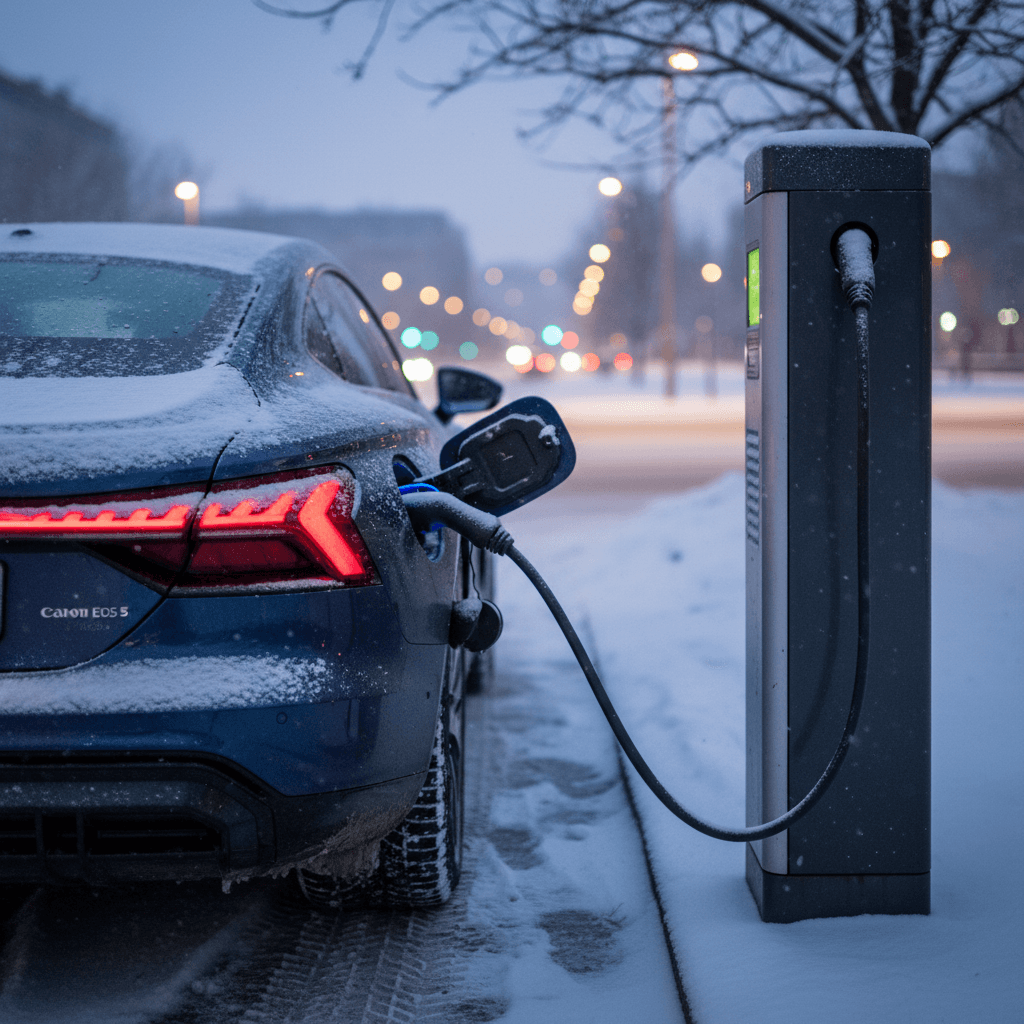
6. Use DC fast charging to your advantage on trips
Because the e-tron GT can pull high DC power when the pack is warm, plan stops around 10–70% or 10–80% instead of trying to charge to 100%. You’ll spend less time charging and keep the battery in its efficient temperature window.
Be realistic about accessories
Battery health, winter range, and used e-tron GTs
Cold weather range loss and long‑term battery health are cousins, not twins. Winter might make your range look worse, but that doesn’t necessarily mean the battery is degrading faster. In fact, batteries generally age more slowly at cooler average temperatures than in scorching heat, as long as you’re not fast‑charging constantly from a frozen start.
How to tell cold vs degradation
- Compare winter range to what you saw in the same temperatures last year, not to a marketing number.
- Look at summer vs summer, winter vs winter, rather than jumping between seasons.
- If you’re losing a lot more range than other e-tron GT owners in similar conditions, it’s worth a health check.
Why a battery report matters on a used e-tron GT
A proper battery‑health diagnostic tells you how much capacity the pack can still hold, independent of the weather that day. At Recharged, every used EV, including Audi e-tron GTs, comes with a Recharged Score Report that verifies usable battery health and helps explain what that means for your real‑world range in all seasons.
Shopping used? Ask these winter‑specific questions
Ready to find your next EV?
Browse VehiclesAudi e-tron GT winter range FAQ
Audi e-tron GT winter range: frequently asked questions
Key takeaways on Audi e-tron GT winter range loss
Winter takes a bite out of every EV’s range, but the Audi e-tron GT handles the cold with more composure than the horror stories suggest. For most owners, the pattern looks like this: a 10–20% loss on milder freezing days, 20–30% in more serious cold, and higher losses only when you combine extreme temperatures with short hops and no preconditioning.
If you use the tools Audi gave you, preconditioning, efficient HVAC, sensible highway speeds, and you plan your trips with realistic legs rather than perfect‑world ratings, the e-tron GT remains a confident winter companion. And if you’re considering a used e-tron GT, pairing these expectations with a proper battery‑health report, like the Recharged Score that comes with every EV at Recharged, turns winter range from a worry into just another line on your trip‑planning checklist.