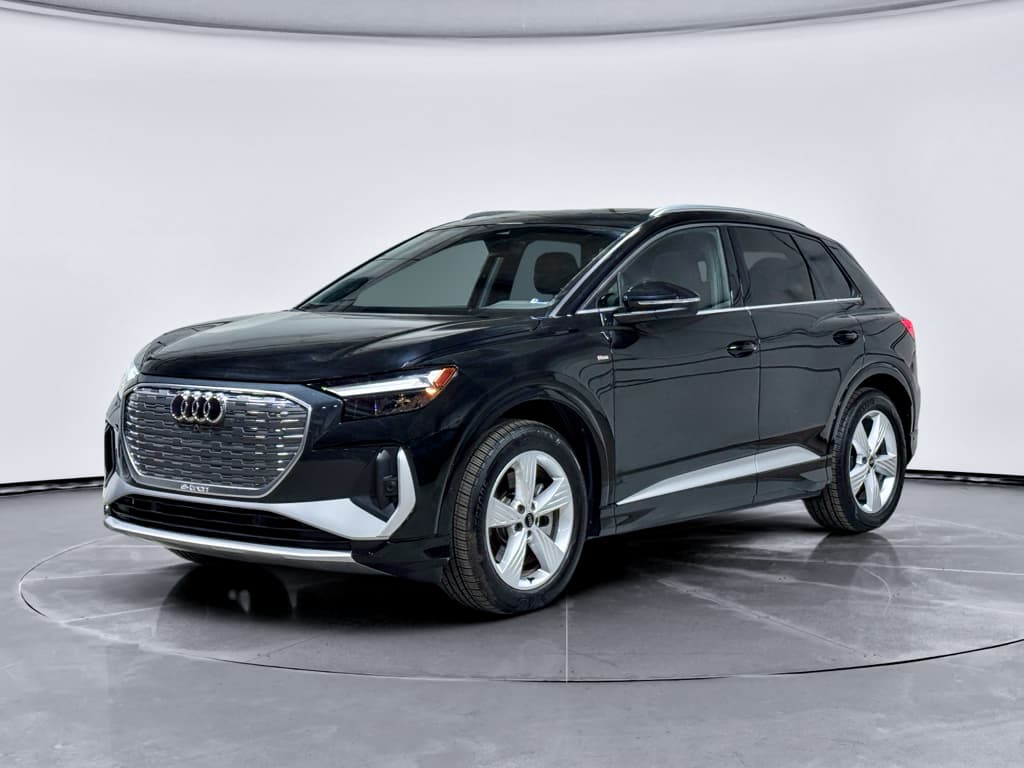
If you’re cross‑shopping the Audi e-tron GT against a gas performance sedan like an Audi S7, the obvious question is: which one is actually cheaper to own once you factor in energy, maintenance and depreciation? This guide walks through a clear, U.S.-based total cost of ownership comparison so you can see how the Audi e-tron GT’s total cost stacks up against a gas equivalent over five years.
Quick takeaway
Why compare the Audi e-tron GT to a gas equivalent?
You don’t shop the e-tron GT against a base A6. It competes with fast, luxurious gas sedans, cars like the Audi S7, Mercedes‑AMG GT 4‑Door, or BMW 8 Series Gran Coupé. To make the total cost comparison meaningful, we’ll use the Audi S7 as a reference point: similar size, premium interior, strong performance and all‑wheel drive, but powered by a twin‑turbo V6 instead of dual electric motors.
Framed this way, you’re weighing two different ways of buying the same experience: a rapid, refined grand‑touring Audi. One leans on the gas network you already know; the other leans on a battery, home charging, and a rapidly evolving public charging ecosystem.
Audi e-tron GT vs Audi S7: headline 5‑year numbers (typical U.S. case)
The comparison setup: assumptions you should know
All total cost of ownership comparisons live or die on their assumptions. Before we run the numbers, here’s exactly what we’re assuming for a typical U.S. driver in 2026. You can tweak these later using our checklist to match your reality.
Key assumptions for this Audi e-tron GT vs S7 cost comparison
National‑average energy prices and typical efficiency numbers as of 2024–2026.
| Variable | Audi e-tron GT (EV) | Audi S7 (gas) | Notes |
|---|---|---|---|
| Annual miles driven | 12,000 miles | 12,000 miles | Roughly U.S. average for a single car commuter |
| Energy efficiency | ~43 kWh/100 miles | 22 mpg combined | EPA‑type figures for mixed driving |
| Home electricity price | $0.19/kWh | , | Approximate 2025 U.S. residential average |
| Public fast charging | $0.45–$0.55/kWh | , | Typical DC fast‑charging pricing bands |
| Gasoline price | , | $4.00/gal | Early 2026 national average hovering around $4 |
| Ownership period | 5 years | 5 years | Finance or keep; similar horizon for both |
| Battery health | Normal degradation | N/A | No major battery issues assumed; we’ll discuss risk separately |
You can adjust any of these inputs to mirror your own driving, utility rate and fuel costs.
Your local prices matter
Energy cost per mile: Audi e-tron GT vs Audi S7
Let’s start with raw energy cost per mile, because this is where EVs typically shine. The Audi e-tron GT is not a hyper‑efficient economy EV, it’s a heavy, dual‑motor performance sedan, but it still converts electricity into motion more efficiently than an S7 burns gasoline.
e-tron GT energy cost per mile
- Efficiency: about 43 kWh/100 miles (0.43 kWh/mile) in mixed driving.
- Home electricity: roughly $0.19/kWh for U.S. residential average.
- Home charging cost per mile: 0.43 × $0.19 ≈ $0.082/mile.
- Public fast charging: around $0.50/kWh is common for DC fast.
- Fast charging cost per mile: 0.43 × $0.50 ≈ $0.215/mile.
So depending on how much you fast‑charge, you’re somewhere between 8 and 22 cents per mile in electricity.
Audi S7 fuel cost per mile
- EPA combined efficiency: about 22 mpg.
- Gas price: assume $4.00/gal (national average flirting with or above $4 in early 2026).
- Cost per mile: $4.00 ÷ 22 ≈ $0.18/mile.
At $4 gas, the S7 costs roughly 18 cents per mile in fuel. Drop gas to $3 and that falls to about 14 cents per mile; push it to $5 and you’re over 22 cents per mile.
A simple rule of thumb
Five-year fuel vs electricity costs
Translate those per‑mile numbers into a five‑year ownership window and you can see how quickly the gap adds up. We’ll look at three scenarios based on how much you rely on public fast charging.
Five‑year energy cost: three realistic e-tron GT scenarios vs an S7
12,000 miles per year, 60,000 miles over five years.
Scenario 1: 90% home, 10% fast charge
e-tron GT:
- Home: 54,000 miles × $0.082 ≈ $4,430
- Fast: 6,000 miles × $0.215 ≈ $1,290
- Total 5‑yr electricity: ≈ $5,700
Audi S7:
- 60,000 miles × $0.18 ≈ $10,800
Energy savings: roughly $5,000 over five years.
Scenario 2: 60% home, 40% fast charge
e-tron GT:
- Home: 36,000 miles × $0.082 ≈ $2,950
- Fast: 24,000 miles × $0.215 ≈ $5,160
- Total 5‑yr electricity: ≈ $8,100
Audi S7: still ≈ $10,800 in fuel.
Energy savings: about $2,700 over five years.
Scenario 3: 10% home, 90% fast charge
e-tron GT:
- Home: 6,000 miles × $0.082 ≈ $490
- Fast: 54,000 miles × $0.215 ≈ $11,600
- Total 5‑yr electricity: ≈ $12,100
Audi S7: ≈ $10,800 in fuel.
Result: Fast‑charge‑heavy driving can actually make the e-tron GT more expensive per mile on energy than the S7.
When an e-tron GT can be a fuel‑cost loser
Maintenance, tires and repairs
On maintenance, the e-tron GT looks more like a typical EV: fewer moving parts than a gas V6, no oil changes, no exhaust system, and reduced brake wear thanks to regeneration. But this is still a 5,000‑pound luxury performance sedan with massive wheels, so consumables aren’t cheap on either side.
e-tron GT typical 5‑year maintenance
- No oil changes or spark plugs.
- Brake wear is usually modest thanks to regen, unless you drive very hard.
- Tires: 20–21" performance tires typically last 20–30k miles. Expect at least two full sets over 60k miles, often at $1,200–$2,000 per set installed.
- Cabin filters, brake fluid changes, and inspections still add up.
All‑in, a realistic 5‑year maintenance and tires budget is often in the $6,000–$7,500 range, skewed heavily toward tires.
Audi S7 typical 5‑year maintenance
- Regular oil changes (often $150–$250 each) and more frequent fluid services.
- More complex powertrain: turbo plumbing, emissions equipment, more things that can leak or fail out of warranty.
- Same story on tires: big, expensive, and short‑lived.
It’s common to see 5‑year maintenance and tires for a car like the S7 in the $8,000–$10,000 range, particularly if dealer‑serviced.
Why EV maintenance savings are real, not hype
Insurance, taxes and fees
Insurance is noisy because it depends on where you live, your record and how you use the car. Broadly, insurers still tend to rate EVs like the e-tron GT slightly higher than mainstream gas cars because of repair complexity and high parts prices, but the gap versus an S7 is narrower because both are expensive, high‑performance Audis.
- For many U.S. drivers, expect similar or slightly higher premiums on an e-tron GT vs an S7, think a few hundred dollars a year either way, not thousands, assuming similar MSRP and driver profile.
- Some states tack on EV registration fees to make up for lost gas‑tax revenue. These might add $100–$250 per year, which partially offsets your fuel‑tax savings at the pump.
- On the gas side, you pay fuel taxes embedded in every gallon of gasoline; with the e-tron GT, that road‑fund contribution shifts into registration fees and electricity rates.
Net impact on total cost
Depreciation and resale value
The hardest part to quantify precisely, especially in a fast‑moving EV market, is depreciation. Early e-tron GTs saw fairly steep used‑market drops as supply caught up with pandemic‑era demand and as rates rose. The S7, meanwhile, follows a more familiar German luxury‑sedan curve: heavy initial depreciation, then a slower slide.
New purchase, 5‑year horizon
- Assume a new e-tron GT around the low‑to‑mid $100k range out the door, depending on trim and options.
- Assume an S7 perhaps $10k–$15k lower when similarly equipped.
- After five years, both might lose roughly 45–55% of their value, but the e-tron GT’s dollar loss is bigger because you start higher.
Result: On a new purchase, depreciation often favors the S7 in pure dollars, though percent‑wise they’re comparable.
Used purchase, 3–5‑year horizon
- Buy a 3‑year‑old e-tron GT that’s already taken the steepest part of its depreciation curve, ideally with verified battery health and warranty remaining.
- Compare that to a 3‑year‑old S7 with similar mileage.
- At this point, depreciation risk can be more balanced, and the EV’s lower operating cost starts to dominate the total cost story.
This is exactly the niche where marketplaces like Recharged are focusing: used EVs with transparent battery health so depreciation and longevity aren’t a guessing game.
How Recharged helps on the depreciation side
Real-world scenarios where the e-tron GT wins or loses
Total cost isn’t one number; it’s a range of outcomes depending on how and where you drive. Here are a few realistic scenarios that show when the Audi e-tron GT’s total cost beats, or struggles to beat, an S7.
Common ownership scenarios for an Audi e-tron GT vs S7
Same driver, same miles, different charging and fuel realities.
Suburban homeowner with Level 2
Profile: 12k miles/year, home Level 2, occasional road trips, mostly home charging.
Energy: e-tron GT saves ≈ $4k–$5k vs S7 over 5 years.
Maintenance: e-tron GT likely $2k–$3k cheaper.
Depreciation: Similar %, more dollars lost on the EV if bought new; neutral if bought used.
Net: Over five years, total cost is often similar or modestly better for the e-tron GT, with a larger edge if you keep it longer.
Urban apartment dweller, no home charging
Profile: Same miles, but relies on workplace and public DC fast charging.
Energy: e-tron GT may only break even or even cost more than S7 on energy, depending on kWh pricing.
Maintenance: Still tilts in the EV’s favor, but less dramatically if you’re paying high diagnosis and software‑related labor.
Net: Total cost advantage is uncertain; here you’re choosing the e-tron GT primarily for how it drives and charges, not pure savings.
Road‑trip enthusiast
Profile: 18k+ miles/year, frequent interstate trips.
Energy: More miles magnify whichever energy cost curve you’re on: the e-tron GT wins big if you can still do most kWh at home, loses if you’re chained to DC fast charging.
Charging vs fueling time: The S7 still wins on raw convenience; whether that matters depends on your tolerance for charging stops.
Long‑term keeper (8–10 years)
Profile: You keep cars until they’re genuinely old.
Energy + maintenance: As the years pile on, the EV’s lower running costs add up substantially vs a twin‑turbo gas car that ages into more repairs.
Battery risk: Be honest about battery degradation and potential out‑of‑warranty pack or module work; this is where verified battery health and good warranty coverage matter.
Net: In many of these cases, the e-tron GT can be the cheaper lifetime car, even if it depreciates hard up front.
How buying used changes the math
For many shoppers, the most rational way to approach a car like the e-tron GT is to let someone else take the steepest depreciation hit, then buy used once prices and expectations have cooled off.

In the used market, we’ve seen e-tron GT examples fall tens of thousands of dollars below original MSRP within just a few years. That creates an opportunity: you’re still getting a cutting‑edge 800‑volt performance EV, but at a price where total cost of ownership vs an S7 starts to look decisively favorable, especially if you can charge at home.
What to look for in a used e-tron GT
Checklist: how to run your own numbers
No online guide can match your exact electricity rate, gas price and driving pattern. Use this checklist as a framework to plug in your own numbers for an Audi e-tron GT vs whatever gas car you’re considering (S7 or otherwise).
DIY total cost of ownership comparison
1. Gather your real annual miles
Pull odometer readings or app data to estimate how many miles you actually drive per year. If you’re over 15k miles/year, energy savings matter more; under 8k and depreciation usually dominates.
2. Pull your local electricity rate(s)
Check your utility bill for your kWh rate, including any time‑of‑use off‑peak pricing you can exploit for overnight charging. If you’ll rely on public chargers, look up their posted kWh prices too.
3. Use realistic efficiency numbers
For the e-tron GT, start around 40–45 kWh/100 miles. For a gas equivalent like the S7, use EPA combined mpg or your own historical average if you already own one.
4. Calculate energy cost per mile
For each vehicle: divide your fuel or electricity price by your efficiency (mpg or kWh/mi). Multiply by annual miles to get yearly energy cost. Then multiply by your planned ownership years.
5. Estimate maintenance and repairs
Search typical maintenance schedules, ask a trusted independent shop, or use ownership‑cost tools. Assume fewer routine services for the EV but don’t forget tires. Be conservative with both numbers.
6. Model depreciation realistically
Look at today’s used prices for 3‑ and 5‑year‑old examples of both cars relative to their original MSRPs. Use those real‑world gaps to approximate what your new or used purchase might be worth when you’re done with it.
7. Add insurance, taxes and fees
Get quotes for both cars with the same driver profile. Then factor in any EV‑specific registration fees in your state along with estimated sales or property taxes.
8. Compare 5‑ and 8‑year horizons
Total cost rankings can flip depending on how long you keep the car. Run a 5‑year scenario and then a longer 8‑ or 10‑year one, especially if you tend to drive cars for a decade.
FAQ: Audi e-tron GT total cost vs gas car
Frequently asked questions about Audi e-tron GT vs gas total cost
Bottom line: is the Audi e-tron GT cheaper to own?
If you’re comparing the Audi e-tron GT to a gas car like the Audi S7, the honest answer is that total cost of ownership depends heavily on how you use the car. With solid home charging, average U.S. electricity rates and typical miles, the e-tron GT usually wins on energy and maintenance, and that advantage gets larger the longer you keep it. Buy new and sell quickly, or live on DC fast charging in a cheap‑gas region, and the math can tilt back toward the S7.
Where the e-tron GT really shines is as a used buy with verified battery health. In that scenario you sidestep the steepest depreciation, lock in lower operating costs, and still get a uniquely capable grand‑touring EV. If you’re ready to run your own numbers, start by browsing used e-tron GT listings with a Recharged Score Report and see how the total cost stacks up against the gas cars you know.