If you’re shopping for an Audi e-tron GT, or already own one, you’ve probably heard about a handful of recalls: batteries, airbags, camera glitches. This Audi e-tron GT recalls list pulls everything into one place so you can see what’s been recalled, which years are affected, and what to do next, especially if you’re considering a used car.
What this guide covers
Overview: Every major Audi e-tron GT recall so far
Audi e-tron GT recall landscape at a glance
Most e-tron GT recalls are software or wiring related, not fundamental design failures. They’re serious enough to fix, and the battery recall deserves your full attention, but none of them automatically make the car a bad bet if repairs have been done and the car has been cared for. The key is knowing exactly which recalls apply to the VIN in front of you.
Safety first, resale second
Recall timeline by Audi e-tron GT model year
Audi e-tron GT recalls by model year (U.S.)
High-level view of major federal safety recalls affecting the e-tron GT and RS e-tron GT. Always verify individual VINs on NHTSA’s site or with a dealer.
| Model year | Key recalls | What they involve | Typical fix |
|---|---|---|---|
| 2022 | Rearview camera software; rear child-seat anchor obstruction; front air-suspension strut; early battery module monitoring | Infotainment unit can boot to a black screen; center rear seat-belt wiring blocks child-seat lower anchors; retaining ring on front air struts may come loose; certain packs need monitoring for potential internal short. | Infotainment software update, re‑routing or replacing rear buckle harness, inspecting/replacing front struts, online battery data monitoring and, if needed, module replacement plus 80% charge limit until fixed. |
| 2023 | Passenger airbag / PODS fault; ongoing battery campaign coverage | Passenger occupant detection system wiring fault may switch off the front passenger airbag; some 2023 cars built on older battery modules remain in the battery campaign population. | Replace passenger seat cushion with updated PODS wiring; apply battery monitoring software and replace suspect modules where flagged. |
| 2024 | High-voltage battery module recall (extended population) | Certain LG battery modules can develop an internal short, risking thermal events. Affects 2022–2024 e-tron GT and RS e-tron GT built roughly March 2021–February 2024. | Interim software to monitor pack and limit charge to 80%, followed by physical high-voltage module replacement as parts and final fix are released. |
| 2025 | Camera/software and battery recalls still relevant on early‑build cars | Some unsold/early-titled inventory may still be in open recall status if not remedied by the dealer before sale. | Same as above: ensure all recall campaigns show as closed on the specific VIN. |
Not every car in a model year is affected by every recall, production dates and options matter.
Campaign numbers vs. recall names
High-voltage battery recall: overheating and 80% charge limit
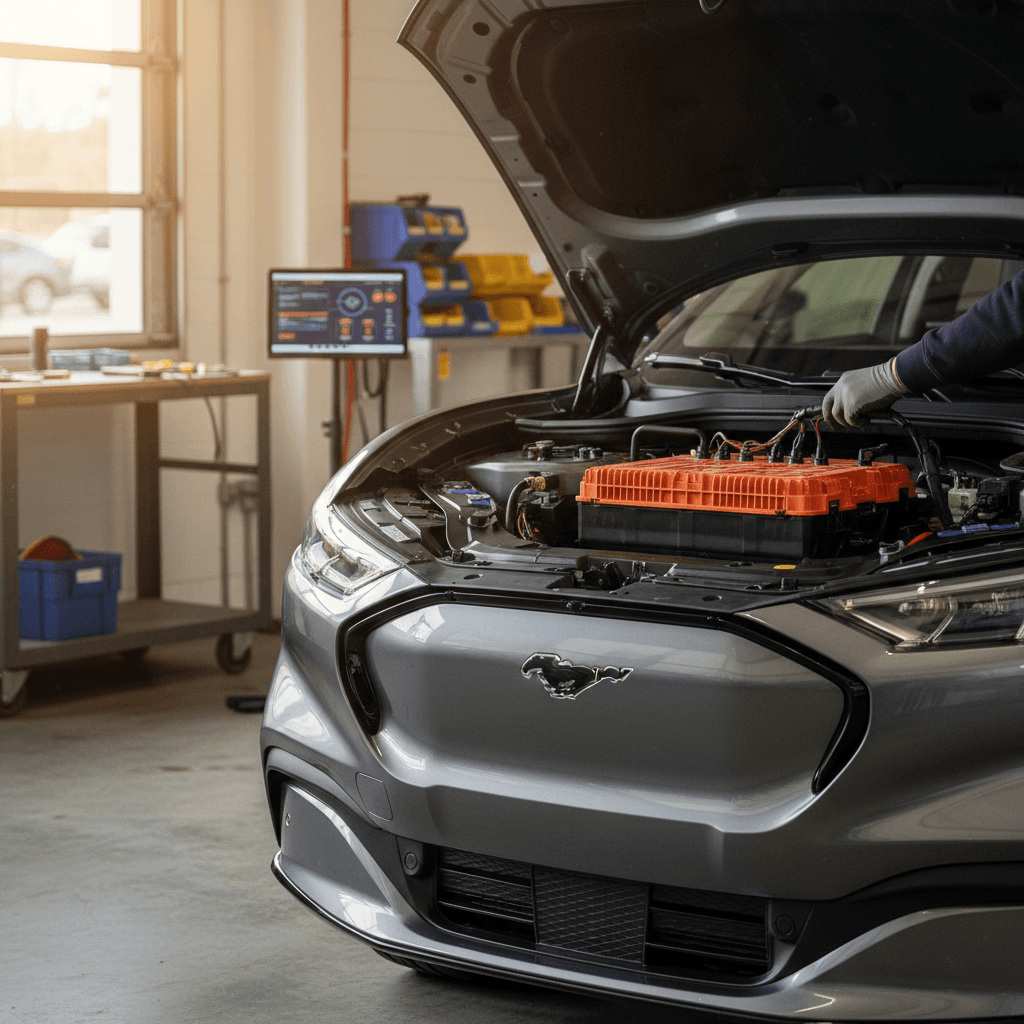
The recall that gets the most attention is the high-voltage battery recall affecting 2022–2024 Audi e-tron GT and RS e-tron GT models. Audi traced a potential short-circuit risk to specific LG Energy Solution battery modules built before late May 2023. In rare cases, internal damage to a module can lead to overheating and, in the worst scenario, a thermal event.
- Roughly 4,900–5,000 U.S.-market e-tron GTs from 2022–2024 are in scope, plus about 1,500 RS e-tron GTs built between March 2021 and February 2024.
- The recall does not automatically mean your battery will fail; it means the modules need monitoring and possibly replacement.
- Audi is rolling out a software update that closely tracks battery behavior and flags suspect modules.
- As an interim step, many owners are instructed to limit DC and AC charging to 80% state of charge until their pack is inspected and remediated.
How to live with the battery recall
Signs your e-tron GT may be affected
- New warning messages about the high-voltage system or battery health.
- Dealer or Audi connected services advising you not to charge above 80%.
- Notice in the mail referencing a high-voltage battery module recall or campaign 931A/931B.
What the dealer typically does
- Applies updated battery-management software and checks logs for anomalies.
- If flagged, replaces one or more battery modules with newer parts.
- Removes the 80% charge restriction once the fix is complete and verified.
All recall work should be free of charge on affected vehicles.
Don’t ignore battery-related recalls
Passenger airbag / PODS recall on 2022–2023 cars
A separate recall hits many 2022–2023 Audi e-tron GT and RS e-tron GT sedans: the Passenger Occupant Detection System (PODS) can malfunction due to a faulty wiring connection in the seat cushion. When that happens, the car may think the front passenger seat is empty and shut off the passenger airbag even when someone is sitting there.
PODS recall: what owners see and what Audi does
Understanding the airbag issue in real‑world terms
Who’s affected
About 3,700 U.S. cars from model years 2022–2023, including both e-tron GT and RS e-tron GT, built roughly January 2022–March 2023.
How the issue shows up
- Airbag warning light in the cluster
- “Passenger Airbag OFF” light illuminated
- Chime and message in the driver display
The permanent fix
Dealers replace the entire front passenger seat cushion with an updated unit that includes revised PODS wiring and crimp connections.
Don’t just clear the light
Rearview camera & infotainment screen recalls
Several Volkswagen Group models, including the 2022 Audi e-tron GT, were recalled because the rearview camera image can disappear or fail to appear when you shift into Reverse. In some cases it’s a pure software bug in the infotainment unit; in others, newer campaigns target signal noise that makes the camera feed go blank or freeze.
- On some 2022 e-tron GTs, the main infotainment unit can boot into a state where the camera never appears, just a black or blank screen. Audi’s fix is a software update or, if needed, replacing the unit.
- A broader Volkswagen Group campaign targets interference affecting rear-visibility on certain Audi and Porsche vehicles through mid‑2020s model years. e-tron GTs inside that population receive an updated software package to clean up the camera signal.
- Because rearview cameras are now federally required, a dead camera isn’t just annoying, it’s a compliance issue and a legitimate safety risk in tight parking or around kids and pets.
Quick camera self-check
Seat-belt, child-seat anchor & suspension recalls
Early 2022 Audi e-tron GTs also picked up some traditional hardware recalls, the unglamorous but important stuff around child seats and suspension hardware. These may not make headlines, but they matter if you carry kids or drive hard enough to lean on the air suspension.
Smaller recalls that still matter
2022 Audi e-tron GT hardware campaigns
Rear child-seat anchor / seat-belt wiring
On some 2022 cars, the wiring harness for the center rear seat‑belt buckle was routed in a way that blocked access to the right‑side lower LATCH anchors.
That makes it hard or impossible to properly secure a child seat. The fix is to reroute and secure the harness and replace any damaged buckle components.
Front air-suspension strut retaining ring
Another 2022 recall covers the retaining ring on the front air‑suspension struts. If the ring comes loose, it can affect support and ride height, worst case, you’re looking at a sudden change in handling.
Dealers inspect the struts and replace them if there’s any sign of a loose or incorrect retaining ring.
The good news on “small” recalls
How to check if your Audi e-tron GT has an open recall
Recalls are tied to specific VINs, not just model years. Two identical-looking 2023 e-tron GTs can have very different recall status depending on build date, option content, and whether prior owners actually went to the dealer. Here’s how to check your car properly.
Step-by-step: Checking Audi e-tron GT recalls by VIN
1. Grab the full 17-character VIN
You’ll find it on the lower driver-side windshield, on the driver-door jamb sticker, and on registration or insurance documents. Double‑check that all characters match, one wrong digit will give you the wrong recall list.
2. Search your VIN on NHTSA.gov
Head to the official NHTSA recall lookup tool and enter your VIN. This will show all <strong>federally reported safety recalls</strong> that are open or incomplete for that specific car.
3. Cross-check with Audi’s recall page
Audi maintains its own VIN lookup on its U.S. website. Plug in the same VIN to confirm campaigns on their side, including any brand-specific service campaigns that may not appear as NHTSA safety recalls.
4. Call an Audi dealer’s service department
Give them the VIN and ask for a printout of open and completed recalls and service campaigns. You’re looking for campaign codes like 74HC (PODS), 91DZ (rear camera software), 72M6 (child-seat anchor), 42L2 (suspension), and the 931A/931B battery actions.
5. Verify completion dates and paperwork
For any recall marked “completed,” ask when and at what mileage the work was done. If you’re buying a used car, having the service invoice or a screenshot from the dealer’s system is valuable proof.
6. Save everything in a digital folder
Screenshots from NHTSA, PDF service records and dealer emails should all live together. If you sell the car later, that folder becomes part of your documentation package and helps justify your price.
Pro move for buyers
Buying a used Audi e-tron GT? Recall checks that actually matter
As a used buy, the e-tron GT is compelling: Taycan bones, Audi design, and depreciation doing you a favor. The flip side is complexity, especially around the battery and software. That’s where a disciplined recall and health check separates the good cars from the future headaches.
If you’re buying privately or from a non‑EV dealer
- Do your own NHTSA and Audi VIN recall checks.
- Ask for proof of recall completion, especially the battery campaign and PODS seat-cushion replacement.
- Consider an independent EV inspection focusing on battery state of health, DC fast‑charge history and underbody damage.
- Budget time for recall appointments after purchase if anything is still open.
How Recharged approaches used e-tron GTs
- Every car gets a Recharged Score Report with verified battery health and charging history, not just a generic OBD scan.
- We verify recall status and factor any outstanding campaigns into pricing, reconditioning and our advice to you.
- EV specialists walk you through which recalls matter most for your exact car and how they affect long‑term ownership.
- If you’re trading in an e-tron GT, we’ll review your recall and service history to help you highlight positives to the next owner.
You can browse current inventory or sell us your EV entirely online, or visit our Experience Center in Richmond, VA.
Recalls vs. reliability: how worried should you be?
The real luxury in a complex EV isn’t the leather or the ambient lighting. It’s knowing exactly what’s happening in the battery pack, and having paperwork that proves someone competent has been there before you.
FAQ: Audi e-tron GT recalls and ownership
Common questions about Audi e-tron GT recalls
Bottom line: Recalls, risk, and choosing the right e-tron GT
The Audi e-tron GT is a deeply impressive car, a grand-touring EV with real character, not just a battery stapled to a sedan. Its recall history reflects what it is: a complex, early‑generation performance EV built in low volumes and updated in real time as the industry learns. If you respect that complexity, check every VIN for open recalls, and favor cars with documented battery and airbag fixes, you can enjoy the best of the platform without inheriting someone else’s unfinished business.
If you’d rather not navigate that alone, buying through Recharged means every used e-tron GT comes with a Recharged Score Report, verified battery health, and recall status baked into pricing and advice. Whether you’re browsing inventory, trading in, or just trying to understand the car in your driveway, the right data, and the right partner, turns recall alphabet soup into a clear, confident decision.