The Audi e-tron GT is one of the great modern grand tourers: low, wide, wickedly fast, and anchored by a big lithium‑ion battery pack. That pack is also the single most expensive component in the car. If you own an e-tron GT, or you’re shopping for a used one, learning how to maximize battery life isn’t academic. It’s about protecting range, performance, and resale value for the long haul.
Quick context: what you’re working with
Why Audi e-tron GT battery care matters
Audi gives the e-tron GT an 8‑year / 100,000‑mile high‑voltage battery warranty in the U.S., separate from the basic 4‑year / 50,000‑mile vehicle warranty. That’s reassuring, but it’s not a promise of zero degradation, every lithium‑ion pack loses some capacity over time as a function of use, temperature, and how it’s charged.
- The battery is a major chunk of the car’s value, especially on the used market.
- Real‑world owners commonly see 10–20% capacity loss over 8–10 years in well‑treated EVs.
- Range loss shows up long before any hard failure that would trigger a warranty replacement.
- How prior owners charged and drove the car can matter as much as the odometer reading.
Good news
Audi e-tron GT battery basics in plain English
Key facts about the e-tron GT battery
Understanding these makes the rest of the advice make sense
Big, buffered pack
The e-tron GT’s pack (early cars ~93.4 kWh gross, newer ~105 kWh) only exposes a portion as usable energy. Audi reserves a buffer at the top and bottom you can’t touch, this acts as a shock absorber for cell wear.
High charging power
On a capable DC fast charger, the e-tron GT can briefly pull around 250–270 kW from roughly 5–10% up to ~60–70% state of charge, then gradually tapers. That’s great for road trips, but it’s also the most stressful way to push energy into the pack.
Thermal management
The car constantly heats and cools the pack to keep it in a happy temperature window. Cold batteries can’t charge or deliver power as well; very hot batteries age faster. Your job is mostly to work with this system, not against it.
If you remember nothing else, remember this: lithium‑ion batteries hate extremes. Extreme state of charge (very high or very low), extreme temperature, and repeated maximum‑power DC fast charging all accelerate wear. The e-tron GT is engineered to handle abuse better than most, but subtle habit changes can slow degradation noticeably over the life of the car.
Daily charging settings to maximize battery life
The biggest lever you have on e-tron GT battery life is how far you charge it on a typical day. Audi itself has recommended charging to around 80% for vehicles that mostly see short trips, and that advice lines up with broader battery research and what we see in long‑term EV fleets.
Ideal daily charging setup for an e-tron GT
1. Set a daily charge limit around 70–80%
Use the in‑car menu or myAudi app to set a target level, 70% if you have plenty of buffer, 80–85% if you regularly use a big chunk of the pack. Try not to let the car sit at 100% for hours unless you’re about to leave on a trip.
2. Use Level 2 home charging as your default
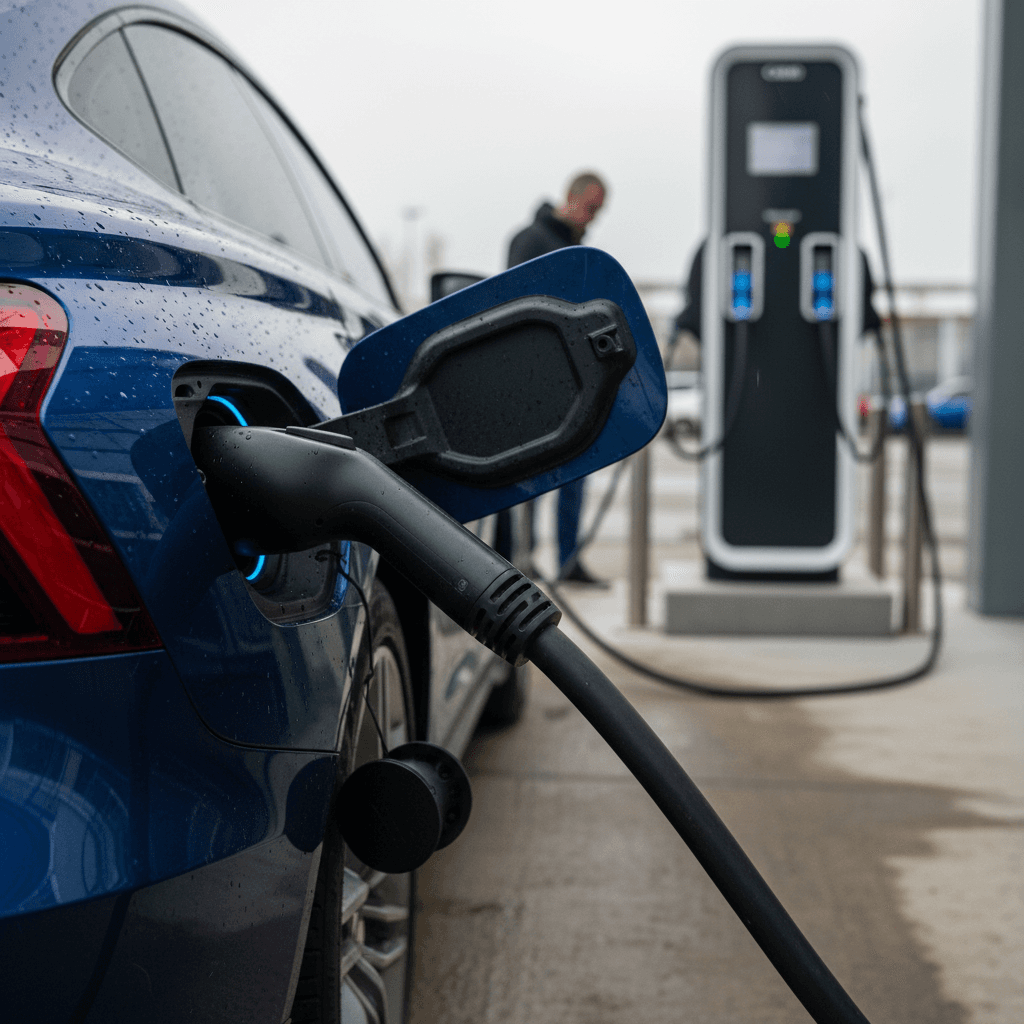
Whenever you can, plug into a 240V Level 2 charger at home or work and let the car refill at a moderate rate overnight. Level 2 charging is gentler on the pack than repeated DC fast charging and still easily restores a full day’s driving by morning.
3. Schedule charging to finish near departure
If your utility offers off‑peak rates, or you simply care about the battery, set a departure time so the car finishes charging within an hour of when you leave. This shortens the time the pack spends sitting at a higher state of charge.
4. Avoid deep discharges in daily use
Try not to run the battery down into the single digits unless you have to. Living between about 10–15% and 70–80% is ideal. Going to 0% occasionally won’t kill the car, but making a habit of it isn’t kind to the chemistry.
5. Only charge to 100% when you truly need it
If you’ve got a road trip or an unusually long day, by all means charge to 100%, just time it to hit full near departure. Don’t top off to 100% nightly “just in case” and then let the car sit like that.
Don’t chase 100% every night
Smart DC fast-charging strategy for e-tron GT
One of the e-tron GT’s party tricks is how brutally fast it can slurp electrons. Under ideal conditions, Audi quotes roughly 5–80% in about 22–23 minutes on a 270 kW DC fast charger. That’s Porsche Taycan‑adjacent territory, and part of why this car makes such a good highway device.
How to use DC fast charging without punishing the battery
- Think in windows, not full charges. On road trips, treat 10–80% (or 15–75%) as your working window. That’s where the car charges fastest and the battery is happiest.
- Start sessions at lower SOC. If you can, plug in below ~40%. Beginning your DC charge at 60–70% just to “top off” is slower, more expensive, and harder on the pack.
- Unplug once power tapers. When the charger has ramped down well below 100 kW and you’re past ~80%, you’re into diminishing returns. Pack up, pull out, and let the next driver have the stall.
How often is “too often” for DC fast charging?
Modern packs like the e-tron GT’s can handle frequent DC fast charging better than previous generations, but there’s still a difference between “often” and “exclusively.”
- If you fast charge a few times a month for trips, you’re fine, this is exactly what the car was built for.
- If you rely on DC fast charging several times a week as your only refueling source, long‑term degradation will almost certainly be higher than a home‑charged twin.
- Whenever possible, blend: DC fast on the road, Level 2 at home the rest of the time.
Precondition the battery for fast charging
Driving habits that protect your e-tron GT battery
You bought an e-tron GT because it’s quick. Possibly violently quick. The good news is that short bursts of acceleration, even very hard ones, are not the primary enemy of battery life. It’s sustained abuse and heat that cause trouble.
Three simple driving rules that quietly help the battery
Watch sustained high speeds
Running 90 mph for hours increases energy draw, heat, and charging frequency on long trips. It’s not just a ticket risk, it means more full‑to‑empty cycles per year, which adds up on the battery.
Avoid repeated 0–100 sprints
Occasional launches are fine; using launch‑mode‑level power over and over until the car warns you is a different story. High discharge rates raise pack temperature and can accelerate wear if they become your default driving style.
Use efficiency modes in bad conditions
In heavy rain, snow, or headwinds, Efficiency mode and calmer driving can cut energy use by 10–20%. Fewer kWh burned per mile means fewer full cycles over the life of the car.
Think in cycles, not miles
Temperature management: winter and summer tips
The e-tron GT’s thermal system is sophisticated, but physics is still physics. Very cold or very hot conditions can hurt both immediate range and long‑term health if you ignore them. The trick is to let the car handle the hard work while you avoid the worst scenarios.
Cold weather (winter) tips
- Precondition while plugged in. Use the app or in‑car timer to warm the cabin and battery before you leave. The energy comes from the grid instead of the pack, and the battery starts your drive closer to its ideal temperature.
- Expect slower fast charging when very cold. A cold pack simply can’t accept high power safely, so charging curves flatten. That’s normal, not a sign of degradation.
- Don’t panic about 100% charges on ski days. A full charge here and there, especially in the cold, won’t ruin anything. Just don’t leave the car sitting for days at full in sub‑freezing weather if you can avoid it.
Hot weather (summer) tips
- Avoid baking the car at high SOC. A dark‑painted e-tron GT sitting outside at 95°F, charged to 100%, is a worst‑case scenario for cell life. Shade, garages, or carports help more than you’d think.
- Let the car cool the pack after hard use. After a track day or a long, hot highway run followed by a fast‑charge stop, don’t immediately shut the car down and trap heat. A short, slower drive or leaving it on briefly can help the cooling system do its thing.
- Watch for repeated DC fast charges in heat. Back‑to‑back high‑power sessions on a scorching day are survivable, but they’re not what you want to normalize if you care about longevity.
The “hot and full” scenario to avoid
Regeneration, braking, and battery wear
The e-tron GT offers multiple regeneration (regen) settings, from strong one‑pedal‑style deceleration to near‑coasting. It’s natural to wonder if more regen equals more battery stress, since you’re constantly shoving energy back into the pack.
How regen style affects battery and driving feel
You won’t ruin your battery with regen, but some modes suit some situations better than others.
| Regen setting | Best use case | Battery impact | Driving feel |
|---|---|---|---|
| High / strong | City traffic with lots of stop‑and‑go | Slightly more micro‑cycling, but still gentle compared with DC fast charging | One‑pedal feel, sharp decel when you lift |
| Medium | Mixed driving, suburban errands | Good balance of recovery and coasting | Natural, ICE‑like engine braking |
| Low / off | Steady highway cruising | Minimizes small charge/discharge fluctuations | Smooth, gliding feel; rely more on friction brakes when needed |
Choose regen levels based on conditions and preference, not fear of battery damage.
In practice, regen choice is much more about comfort and efficiency than battery wear. The power levels are modest compared with hard acceleration or DC fast charging, and the car’s BMS (battery management system) is always policing limits. Use whatever setting helps you drive smoothly and confidently.
Battery warranty, degradation, and what’s normal
In the U.S., the e-tron GT’s high‑voltage battery is generally covered for 8 years or 100,000 miles, whichever comes first. The fine print matters: the warranty is designed to cover manufacturing defects and, in some cases, extreme capacity loss, not every mile of ordinary, gradual degradation.
Battery life by the numbers (big picture)
Degradation vs. defect
Used e-tron GT: how to check battery health
If you’re shopping for a used e-tron GT, battery life isn’t an abstract engineering question; it’s whether the car will still do your commute in five winters, and what it’ll be worth when you’re done with it. Two otherwise identical cars can age very differently based on prior owners’ habits.
Battery health checks for a used Audi e-tron GT
What to look for before you sign anything
1. Check indicated range vs. EPA at similar SOC
Fully charge the car (or to the seller’s typical limit) and note the projected range. Compare it to when new, adjusted for wheel size and tires. A healthy e-tron GT with normal use might show a modest reduction; a much bigger gap can warrant deeper investigation.
2. Ask about charging history
High‑mileage cars that mostly saw home Level 2 charging and occasional road‑trip fast charging are ideal. A low‑mileage car that lived at 100% and lived on DC fast chargers is less attractive than its odometer suggests.
3. Get a professional battery health report
Third‑party tools and dealer diagnostics can estimate usable capacity and flag imbalanced modules. A Recharged Score battery health report goes a step further, combining diagnostics and real‑world testing so you’re not buying blind.
4. Confirm warranty and software status
Verify in‑service date, recall history, and any battery‑related software updates. A car that’s been properly maintained at an Audi dealer, with updates applied, is usually a safer long‑term bet.
Where Recharged fits in
When to worry about battery life, and when to relax
Signs you should dig deeper
- Sudden, noticeable range drop over a short period without a clear cause (weather, driving style, tire change).
- DC fast‑charging speeds far below peers on the same charger and same conditions, repeatedly.
- Warning lights or messages related to the high‑voltage system, battery cooling, or charging system.
- Huge mismatch between odometer and apparent wear, for example, a low‑mileage car that feels tired on range.
Situations where you can probably relax
- A gradual loss of, say, 10–15% range over 6–8 years with high mileage and frequent use, that’s par for the EV course.
- Slower fast‑charging in very cold or very hot weather, or when starting at high state of charge.
- Minor differences in indicated range after software updates or tire changes.
- Occasional 100% charges for road trips, especially if you’re timing them to depart soon after.
Your habits matter more than your anxiety
FAQ: Audi e-tron GT battery life
Frequently asked questions about e-tron GT battery life
Bottom line: maximizing e-tron GT battery life
The Audi e-tron GT is a deeply impressive piece of hardware, an EV that can be brutal one moment and eerily serene the next. Underneath the theatrics is a very serious battery system, designed to fast‑charge hard and repeat the trick for years. Your job isn’t to baby it; it’s to avoid the handful of habits that age it before its time.
- Set a sane daily charge limit (around 70–80%) and use 100% only when you’ll actually use it.
- Make Level 2 home or workplace charging your default; save DC fast charging for trips and true needs.
- Avoid letting the car sit at high state of charge in extreme heat whenever you can.
- Use preconditioning in winter and summer so the battery starts in its comfort zone, not at the extremes.
- Drive the car the way it was meant to be driven, but don’t treat every commute like qualifying at Spa.
Do those things, and the e-tron GT’s pack should remain a willing partner for far longer than the average finance term. If you’re stepping into a used car, this is exactly the kind of nuance a Recharged Score battery report and EV‑specialist support are built to unpack, so you can enjoy the car’s theatrics without worrying what’s happening silently underneath the floor.